
Sauna Humidity Australia: The Complete Science | Psycle
Sauna Humidity Australia: The Complete Science Guide

Key Takeaways
- Authentic Finnish sauna humidity sits at 10–20% at rest and spikes to 40–60% during löyly — this range is where the cardiovascular and respiratory benefits are maximised.
- Heater stone mass is the single biggest driver of quality löyly: the HUUM DROP 9kW in the Genesis carries 60kg of Olivine diabase stone vs 20kg in comparable competitors — three times the thermal reservoir.
- Infrared saunas cannot produce humidity. They operate at 40–60°C with zero steam capacity — no stones, no löyly, no humidity benefit.
- Australian coastal climates (QLD, NSW, Byron Bay) add 60–80% ambient humidity to your baseline — heater stone mass compensates by maintaining stable radiant heat regardless of external moisture load.
- A landmark 20-year Finnish study (Laukkanen et al., JAMA Internal Medicine, 2015) found sauna use 4–7 times per week reduced fatal cardiovascular disease risk by 50%.
- The Genesis runs at approximately AU$0.50–$1.00 per 45-minute session — less than a coffee, less than 1% of a weekly physio appointment.
- Correct water-pouring technique — 100–150ml per pour, every 5–10 minutes — is the difference between therapeutic steam and a scalding shock to the airways.
By Psycle Wellness · Last updated: May 2026 · 12 min read
Sauna humidity in Australia refers to the relative moisture level inside a Finnish-style sauna cabin, typically 10–20% at rest and 40–60% when water is poured onto heated stones. That range is what separates an authentic heat-therapy session from a dry, uncomfortable box. The science behind it, and the engineering required to achieve it, is what most Australian buyers never get told before they purchase.
Why Most Australian Saunas Get Humidity Wrong
Most home saunas sold in Australia are assembled from glued MDF panels, particleboard framing, and undersized heaters with minimal stone beds. Heat them to 90°C and two problems compound: toxic off-gassing from formaldehyde-laden adhesives is the first. The second is structural. A 3kW heater with 5kg of stone has no thermal mass to stabilise temperature when you introduce moisture. Pour water and the temperature crashes. Pour more and the air turns clammy rather than clean. The experience feels wrong because it is wrong.
This is not a minor inconvenience. It is the difference between a passive hot room and an active therapeutic environment. Humidity is not incidental to the sauna experience; it is the mechanism. Without the right stone mass, the right temperature, and the right ventilation working together, you are not replicating Finnish sauna therapy. You are sitting in a warm cabinet.
If you are actively comparing sauna types before buying, our complete guide to traditional sauna benefits in Australia explains the full breadth of evidence behind heat therapy and why the mechanism matters as much as the outcome.
The Science of Sauna Humidity: What the Research Actually Shows
Sauna humidity is measured as relative humidity (RH), the percentage of water vapour in the air relative to what the air can hold at that temperature. At 80–100°C, even 20% RH delivers a significant perceived heat load because hot, moist air transfers heat to the skin far more efficiently than hot, dry air at the same temperature.
A landmark 20-year cohort study of 2,315 Finnish men by Laukkanen et al., published in JAMA Internal Medicine (2015), found that sauna use 4–7 times per week reduced the risk of fatal cardiovascular disease by 50% compared to once-weekly bathing. That research was conducted in traditional Finnish saunas: stone-heated, steam-capable, operating at 80–100°C with periodic löyly. Not infrared. Not steam rooms. The specific humidity profile of the Finnish sauna is embedded in every health outcome that research documents.
The respiratory benefit of steam is equally specific. Warm, moist air at 40–60% RH opens airways, loosens mucus, and reduces airway resistance. These are effects that dry infrared heat at 50°C cannot replicate. Your lungs know the difference, even if the marketing does not acknowledge it.
Löyly and Stone Mass: The Engineering Behind Real Sauna Steam
Löyly is the Finnish word for the steam produced when water is poured onto hot sauna stones, and it is the defining act of authentic Finnish sauna culture. Understanding löyly means understanding why stone mass is not a spec-sheet detail but the core engineering variable that determines whether your sauna works. Our dedicated guide to löyly in sauna covers the cultural and technical depth in full, but the physics here matter before you compare heaters.
When 100ml of water hits a stone heated to 300°C, it flash-vaporises in under a second. The resulting steam cloud rises, mixes with the hot air, and creates the löyly effect: a soft, enveloping wave of heat that raises perceived temperature by 5–10°C without the sharp sting of overheated dry air. The stones must not drop below 250°C during the pour. If they do, the water partially vaporises and partially pools, creating cold-spot steam that feels harsh and clammy, not clean.
This is where stone mass becomes decisive. A heater with 10–20kg of stone has a limited thermal reservoir. Pour water and the surface temperature of the stone bed drops rapidly. Pour again within five minutes and you are pouring onto partially cooled rock. The löyly degrades, the humidity spikes unevenly, and the cabin temperature drops. Most Australian sauna buyers have accepted this as normal.
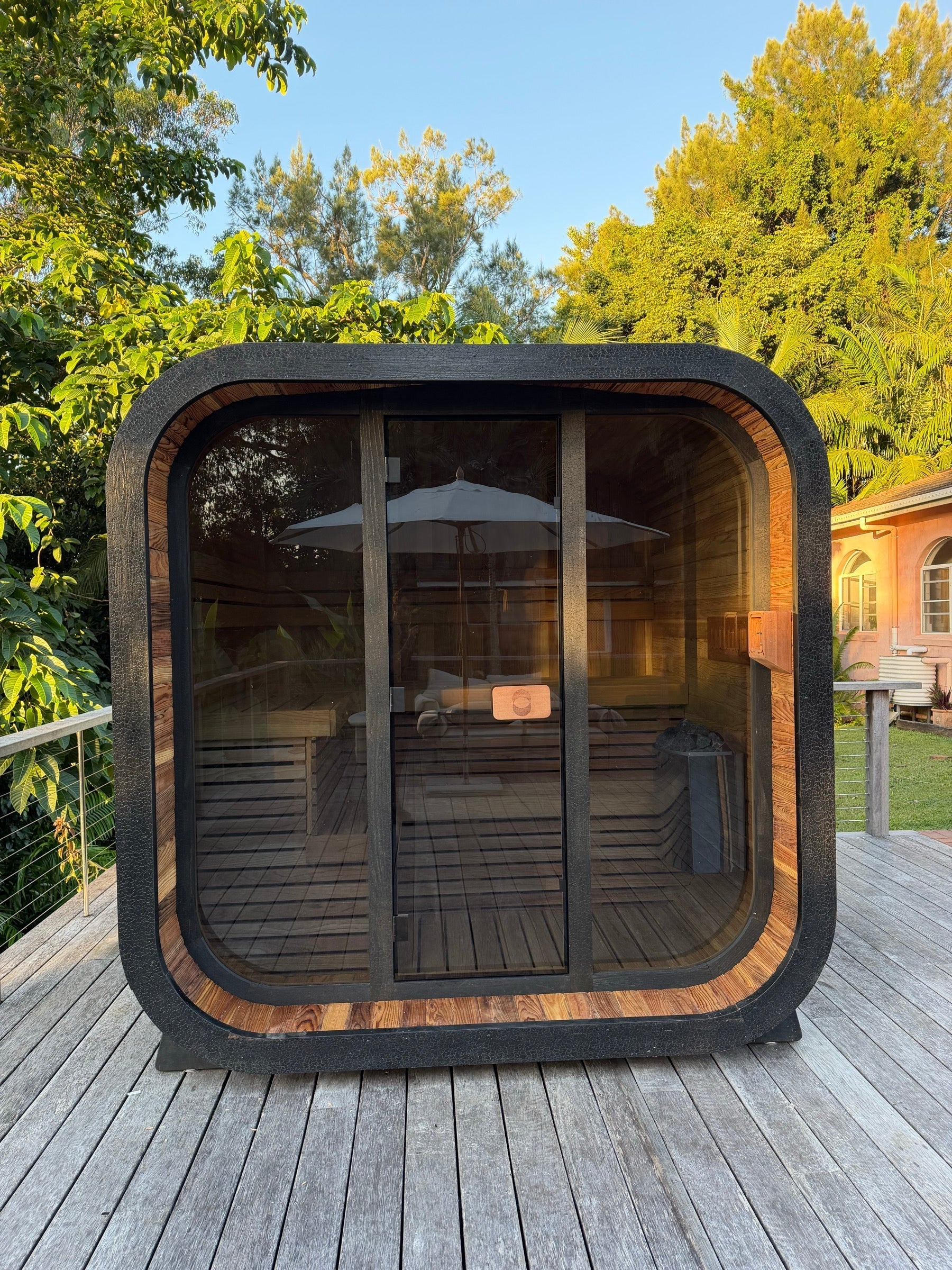
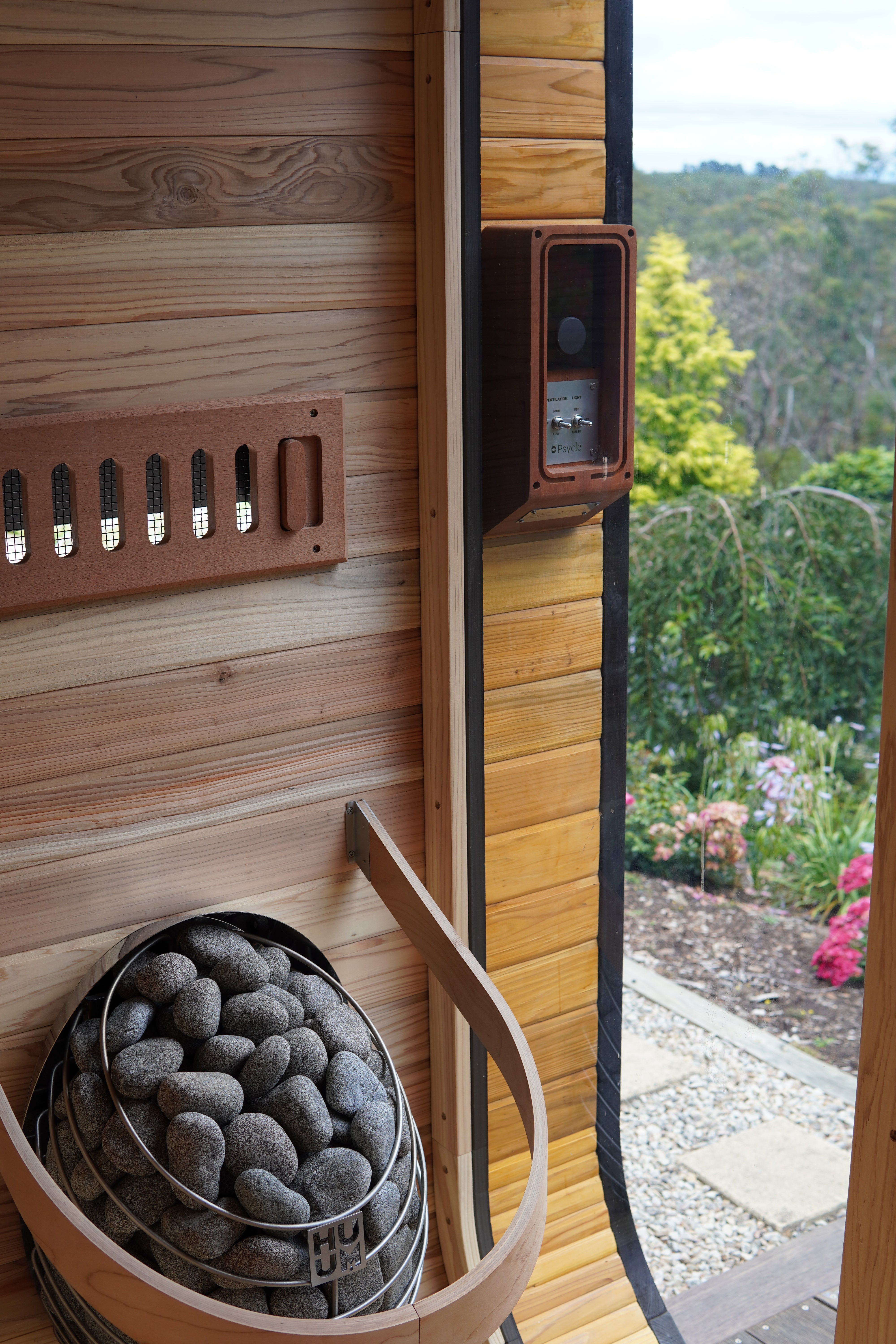
The HUUM DROP 9kW heater fitted in the Genesis carries 60kg of Olivine diabase stone. That is three times the stone volume of a 20kg competitor heater. The thermal mass is large enough to absorb repeated pours without significant surface temperature loss. The löyly stays clean, the humidity spikes are controlled and consistent, and the session does not degrade between pours.

Olivine diabase is not a generic stone choice. It is a volcanic basaltic rock selected for its high heat retention, low cracking rate under thermal cycling, and mineral stability. It does not leach impurities into steam at high temperatures. The stone you pour water onto determines the quality of the air you breathe. That is material science, not a marketing claim.
Zero-Toxin Sauna. Real Löyly. 60kg of Stone.
Japanese Cedar exterior. HUUM DROP 9kW heater. Zero-glue construction. Built to last decades, not sessions.
SEE THE GENESIS →Temperature and Humidity: The T/H Ratio Explained
Temperature and humidity in a Finnish sauna are not independent variables. They operate as a ratio, and understanding that ratio separates experienced sauna users from those who either overheat themselves or never achieve a therapeutic session. For a full breakdown of how heat levels interact with session duration, read our complete guide on how hot a sauna should be.
The Finnish standard sits at 80–100°C with 10–20% RH at rest. When löyly is introduced and humidity rises to 40–60%, the perceived heat increases substantially even though the actual air temperature may not change. Moist air at 90°C transfers heat to the skin via convection more efficiently than dry air at the same temperature. Your body reads it as hotter because physiologically, it is.
The practical implication: if your sauna runs at 70°C with poor stone mass, adding humidity does not rescue the session. It makes the air feel heavy and uncomfortable without the radiant-heat benefit. The temperature must already be high enough for löyly to work as intended. Heater power rating and stone mass cannot be separated from the humidity discussion. They are the same variable expressed differently.
The Perceived Heat Index: What 90°C at 50% RH Actually Feels Like
At 90°C and 10% RH, the dry rest state, most experienced sauna users rate the heat as manageable and deeply warming. At 90°C and 50% RH during peak löyly, the perceived heat index climbs sharply. Experienced Finnish sauna practitioners describe this as the “rolling wave” effect: the heat hits in a wave rather than building gradually. It triggers a faster and deeper sweat response, elevates heart rate more rapidly, and creates the skin-flush that drives the cardiovascular and microcirculatory benefits.
Research by Laukkanen et al. in Neurology (2018) found that sauna bathing 4–7 times per week was associated with a 61% lower risk of stroke compared to once-weekly use. These outcomes are linked to the cardiovascular stress response that only authentic Finnish sauna conditions, including steam, reliably produce. A 50°C infrared session does not generate the physiological response that research documents. The temperature and humidity profile is the intervention. Not the timber. Not the brand name.
Australian Climate Considerations: Humidity, Coastal Heat, and Heater Spec
Australian coastal climates, Queensland, northern New South Wales, the Byron Bay hinterland, present a specific challenge that most sauna guides written for Nordic or North American audiences completely ignore. Ambient relative humidity on a summer morning in Byron Bay can sit at 75–85% before 9am. That external moisture does not stay outside your sauna cabin.
In a poorly sealed, poorly ventilated sauna, high ambient humidity infiltrates the cabin during heat-up and adds to the baseline RH before a single ladle of water is poured. The result is a clammy, oppressive atmosphere that peaks above the therapeutic range before the session begins properly. The sauna feels heavy, not hot. Sweating is profuse but the session never achieves the clean, elevated radiant-heat state that drives the health outcomes the research documents.
The Genesis addresses this directly with active mechanical ventilation at 88–120 m³/hr. Fresh air is pulled in and spent air exhausted on a controlled cycle. Combined with 38mm Japanese Cedar walls, a timber with natural hygroscopic properties that moderate internal moisture absorption, the cabin holds a stable internal humidity environment regardless of what the Byron Bay morning is doing outside. For tropical and subtropical Australian installations, this is not a luxury spec. It is the functional requirement for a session that actually works. Our guide to sauna ventilation in Australia covers the technical requirements in full.
For those building outdoor sauna setups on a deck or in a garden, a genuinely common configuration in coastal NSW and QLD, the Genesis is rated with an optional Colorbond roof kit for fully exposed outdoor placement. The IP67-rated lighting withstands Australian weather year-round. The complete guide to outdoor sauna installation in Australia walks through the site requirements, electrical specifications, and placement considerations for deck and garden setups.

Health Benefits Driven by Humidity: Respiratory, Cardiovascular, and Skin
The health outcomes attributed to regular sauna use are not temperature-only phenomena. The specific combination of dry heat and periodic steam creates a physiological environment that passive heating, infrared or otherwise, does not fully replicate.
Respiratory Health
Warm, humidified air at 40–60% RH reduces airway resistance and supports mucociliary clearance, the mechanism by which the respiratory tract clears particulate matter and pathogens. Regular sauna steam exposure has been associated with reduced incidence of common respiratory conditions in Finnish epidemiological data. For Australians managing dust, pollen, and coastal air quality, the respiratory benefit of consistent löyly sessions is clinically meaningful, not incidental.
Cardiovascular Function
The KIHD cohort study by Laukkanen et al. (2015, JAMA Internal Medicine), following 2,315 men over 20 years in Finland, found that men who used the sauna 4–7 times per week had a 40% lower risk of all-cause mortality compared to once-weekly users. The mechanism, passive cardiovascular conditioning through repeated heat exposure, requires core body temperature to rise sufficiently. That thermal response is deeper and faster in a steam-capable Finnish sauna than in a dry or infrared environment. The complete science guide to sauna and cardiovascular health in Australia examines the full evidence base.
Skin
Finnish sauna humidity opens pores and promotes deep sweating, the mechanism behind improved skin texture and tone with regular use. The combination of steam hydration and a subsequent cold rinse or cold plunge produces a vasoconstriction-dilation cycle that improves microcirculation at the dermal layer. Dry infrared sessions can produce surface-level sweating, but the steam-driven benefit to skin barrier function is specific to the humidity range a stone heater provides. For the full skin science, read our evidence-based guide on sauna benefits for skin.
What Australian Sauna Owners Say
“The HUUM heater in the Genesis is genuinely different to anything I tried before buying,” says one Byron Bay owner, a former competitive triathlete who installed the Genesis Charcoal edition on his deck in late 2024. “I had a cheap sauna for two years. The stones were small and the temperature would drop the moment I poured water. The Genesis holds heat through three or four pours without losing the feel. I run it post-training three times a week and my recovery markers don't lie.”
That experience is consistent across Genesis owners. The stone mass and heater spec are not numbers on a brochure. They are the reason every session feels like a Finnish sauna rather than a warm room. If you are looking at the broader category before committing, our complete buyer's guide to the best home saunas in Australia benchmarks the market honestly.
60kg of Stone. Zero Compromises. Built for Australian Conditions.
Active mechanical ventilation. IP67 lighting. 38mm Japanese Cedar walls. The Genesis handles what the Australian climate throws at it.
EXPLORE THE GENESIS →Running Costs and the Real Value Calculation
At 9kW and Australian electricity rates of AU$0.30–$0.35 per kWh, a 45-minute Genesis session costs approximately AU$0.50–$1.00. The heat-up period adds a modest load. The HUUM DROP reaches operating temperature in approximately 30–40 minutes from cold, but the total energy cost per session remains well under a dollar for most Australian households.
Compare that against a gym recovery membership at AU$1,200–$2,400 per year, or a weekly physio appointment at AU$100–$160 per session. The Genesis pays for itself in access alone: no booking, no travel, no sharing with strangers. The sauna is in your backyard, ready at 5:30am or 9pm, delivering the same session quality every time. For a full cost breakdown and comparison by product tier, our complete guide to home sauna costs in Australia covers the numbers honestly.
The $1,000 pre-order deposit is fully refundable. The 120-day lead time means ordering now for delivery in the right season, and the time between order and delivery is time you can use to prepare the electrical circuit (50A dedicated, single or three phase), the site, and the deck. Our home sauna installation guide for Australia covers every site requirement from slab to circuit.
Practical Water-Pouring Technique: How to Control Sauna Humidity
How you pour water onto sauna stones is one of the most important and least-discussed variables in the home sauna experience. Most first-time owners pour too much at once, pour too frequently, or pour onto the wrong part of the stone bed. All three produce poor steam quality and a degraded session.
Bring the sauna to full temperature first
Wait until the cabin reaches 80–90°C before pouring any water. The stone bed must be fully saturated with heat — typically 30–40 minutes from cold with a quality heater like the HUUM DROP.
Pour 100–150ml per ladle, onto the upper stone layer
A standard wooden sauna ladle holds approximately 150ml. Aim for the top third of the stone bed where temperatures are highest. Do not dump the full ladle at once — pour slowly in a thin stream for more even steam distribution.
Wait 5–10 minutes between pours
With a 60kg stone bed, the thermal mass recovers quickly — but letting the steam dissipate between pours keeps the humidity in the 40–60% therapeutic range rather than pushing it above 70%, where the air becomes uncomfortable and respiratory benefit diminishes.
Add eucalyptus or birch infusion for respiratory benefit
A few drops of eucalyptus oil in the bucket is an Australian adaptation that amplifies the respiratory-clearing effect of the steam. Use food-grade or sauna-specific essential oil — never synthetic fragrance which degrades at high temperature.
End with a cold rinse or cold plunge
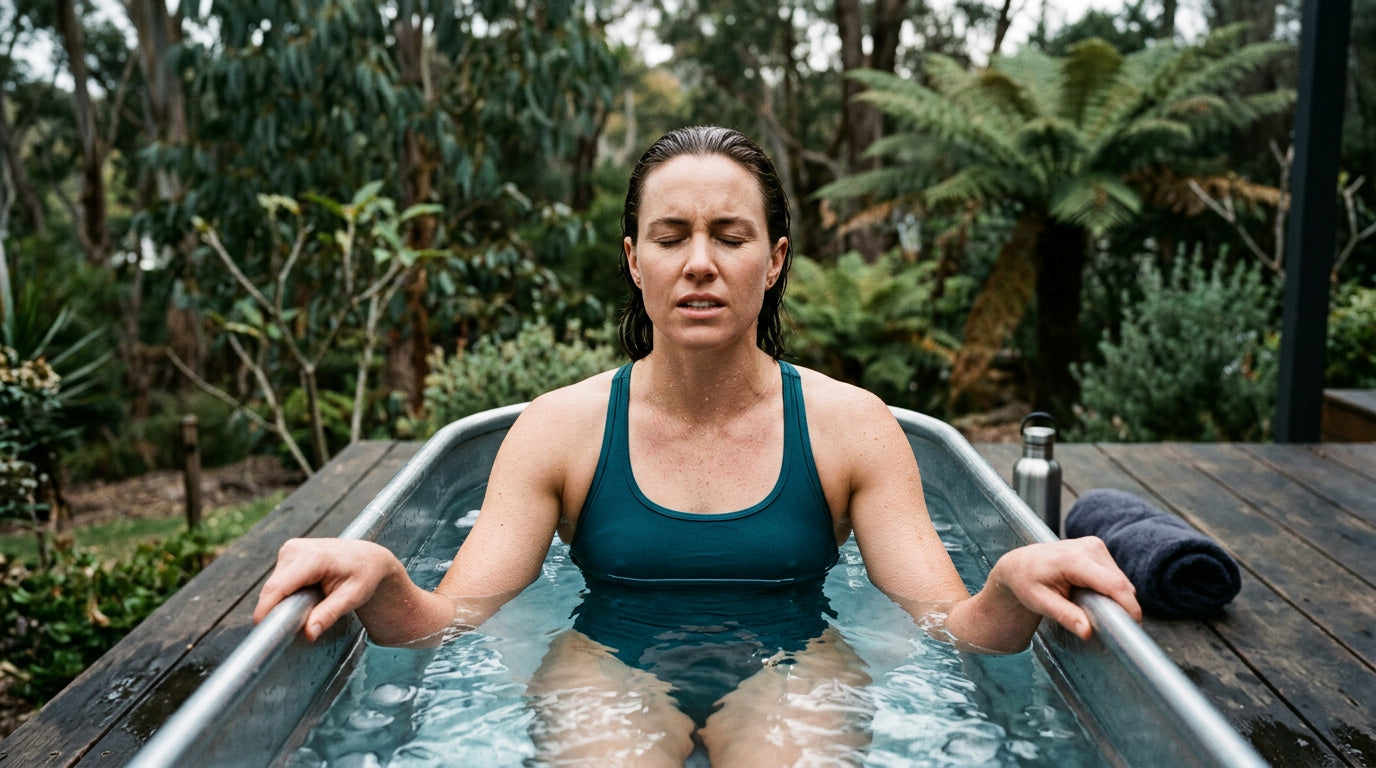
The contrast between peak sauna humidity and cold water immersion is where the cardiovascular and recovery benefit compounds. The Origin cold plunge paired with the Genesis creates the full contrast protocol — and it is the reason we built the Contrast Kit as a purpose-built pair.
For guidance on how long to spend in each round and how to structure the full session, our complete guide to how long to stay in a sauna breaks down timing by goal, experience level, and protocol type.
Traditional Finnish Sauna vs Infrared vs Steam Room: The Full Comparison
Infrared saunas cannot produce humidity. This is not a design limitation. It is a category distinction. Infrared heaters warm the body through direct electromagnetic radiation at 40–60°C. There are no stones, no stone bed, and no mechanism to produce steam. The relative humidity in an infrared sauna equals the ambient humidity of the room it sits in, typically 5–10% in an air-conditioned Australian home. If the research-backed health outcomes of traditional sauna use matter to your decision, our detailed comparison of traditional versus infrared saunas lays out what the evidence actually supports.
| Feature | Traditional Finnish (Genesis) | Infrared Sauna | Steam Room |
|---|---|---|---|
| Temperature range | 80–100°C | 40–60°C | 40–50°C |
| Resting relative humidity | 10–20% | 5–10% (ambient only) | 80–100% |
| Peak humidity (active steam) | 40–60% | None — no steam capacity | 100% |
| Löyly possible | Yes — 60kg stone bed (HUUM DROP) | No | No |
| Heating mechanism | Convection + radiant stone heat | Electromagnetic infrared radiation | Steam generator / continuous boil |
| Respiratory benefit | Yes — warm steam opens airways | Minimal — dry air | Yes, but at uncomfortable saturation |
| Cardiovascular research support | Strong — 20-year Finnish cohort data | Limited — short-term studies only | Limited — different thermal profile |
| Humidity control by user | Full control via löyly technique | None | None — generator-controlled |
| Toxin risk (materials) | Zero — zero-glue, non-VOC finish | Variable — check MDF and adhesive use | Variable |
| Best for contrast therapy | Yes — purpose-built with Origin cold plunge | Suboptimal — insufficient core temp elevation | Not ideal — humidity saturation too high |
Steam rooms sit at the opposite extreme: 100% RH at 40–50°C. The air is so saturated that sweating becomes impaired, because the evaporative cooling mechanism your body relies on cannot function in fully saturated air. This is why steam rooms feel oppressive rather than therapeutic to most users, and why the 40–60% RH window of a well-run Finnish sauna is the precisely calibrated middle ground. For more on the broader comparison, read our guide to infrared saunas in Australia, which examines the marketing claims against the actual research.
Frequently Asked Questions: Sauna Humidity Australia
What is the ideal humidity level for a Finnish sauna?
The ideal resting humidity for a Finnish sauna is 10–20% relative humidity, rising to 40–60% during active löyly. This range maximises the cardiovascular stress response, respiratory benefit, and sweating rate without making the air feel oppressive or impairing the body's natural cooling mechanism. Above 70% RH, the session becomes uncomfortable and the physiological benefits plateau.
Does a sauna steam or löyly session help with respiratory health?
Yes. Warm, humidified air at 40–60% RH reduces airway resistance and supports mucociliary clearance, the process by which the respiratory tract clears particulate matter and pathogens. Finnish epidemiological research associates regular sauna use with reduced incidence of respiratory infections. The steam must come from a quality stone heater at 80–100°C to achieve the therapeutic temperature-humidity combination; infrared at 50°C does not replicate it.
How does Australian humidity affect a home sauna session?
High ambient humidity in coastal Australian climates, particularly QLD and northern NSW, can infiltrate a poorly sealed or inadequately ventilated sauna cabin, raising the baseline RH before you pour a single ladle of water. The result is a clammy atmosphere that peaks above the therapeutic range. The Genesis counters this with active mechanical ventilation (88–120 m³/hr) and 38mm Japanese Cedar walls, which regulate moisture absorption and maintain a stable internal humidity environment regardless of external conditions.
Why can't an infrared sauna produce humidity?
Infrared saunas heat through electromagnetic radiation rather than convection, and contain no stone bed. There is no mechanism to produce steam. The relative humidity inside an infrared sauna equals the ambient humidity of the room it is placed in, typically 5–10%. Löyly is impossible. The temperature rarely exceeds 60°C, which is also insufficient to drive the cardiovascular and heat-stress responses documented in Finnish sauna research.
How does stone mass affect sauna steam quality?
Stone mass determines thermal reservoir. A heater with 10–20kg of stone loses significant surface temperature with each water pour, degrading steam quality and dropping cabin temperature. The HUUM DROP 9kW in the Genesis carries 60kg of Olivine diabase stone, maintaining surface temperatures well above 250°C through multiple consecutive pours. The löyly stays clean, the humidity spikes are controlled, and the session does not degrade. Stone mass is the single most important heater specification for steam quality.
How often should you pour water in a sauna?
Pour 100–150ml per ladle every 5–10 minutes to maintain 40–60% RH during a session. Pouring more frequently does not improve the session. It pushes humidity above the therapeutic range and, with an undersized heater, causes temperature drop. With a 60kg stone bed like the HUUM DROP, the thermal mass recovers quickly between pours, so there is no need to over-water. Let the steam dissipate between rounds and allow the cabin to breathe.
What is the best sauna heater for humidity control in Australia?
The HUUM DROP 9kW with 60kg of Olivine diabase stone is the best-performing configuration for authentic Finnish sauna humidity in the Australian market. The stone volume provides sufficient thermal mass to deliver clean, consistent löyly through a full session without temperature recovery issues. Combined with the WiFi UKU app for precise temperature scheduling, it gives you complete control over every variable, including pre-heating your cabin to full temperature before you step in, regardless of the Australian ambient humidity outside.
Ready to Build Real Löyly Into Your Routine?
Free Australia-wide delivery. 3-year cabin warranty. 120-day build — order now for summer delivery. $1,000 refundable deposit.
SHOP THE GENESIS →If you are deciding between the full-size Genesis and the Genesis Mini, our buyer's guide to 4-person saunas in Australia and the 2-person sauna guide both cover the space, electrical, and usage considerations to help you choose correctly. The Genesis Mini carries the same 60kg stone specification on the HUUM DROP 6kW. The humidity performance is identical to the Genesis. The only difference is cabin size.
If contrast therapy is part of your protocol, and for serious recovery it should be, the Origin cold plunge pairs directly with the Genesis as the Contrast Kit. After fifteen minutes of Finnish heat at 90°C, a two-minute cold plunge at 10–15°C drives the cardiovascular adaptation that neither element alone produces. Our guide to the best sauna and cold plunge combinations in Australia covers the full protocol and equipment pairing. For those new to cold immersion, the complete guide to cold water therapy in Australia is the right starting point.
Nothing in the Australian market comes close to the Genesis for authentic Finnish sauna humidity. Sixty kilograms of Olivine diabase stone. Zero-glue Japanese Cedar construction. Active ventilation engineered for Australian conditions. This is what real löyly requires, and it is what the Genesis delivers, session after session.