
Sauna Cardiovascular Health Australia: Science | Psycle
Sauna Cardiovascular Health Australia: The Science Behind Heat and Your Heart

Key Takeaways
- A landmark 20-year Finnish cohort study found sauna use 4–7 times per week reduced fatal cardiovascular disease risk by 50% compared to once-weekly use (Laukkanen et al., JAMA Internal Medicine, 2015).
- Regular sauna bathing at 80–100°C mimics moderate aerobic exercise — raising heart rate to 100–150 bpm and improving endothelial function with zero joint loading.
- Frequent sauna use is associated with a 61% lower risk of stroke (Laukkanen et al., Neurology, 2018) — one of the most significant non-pharmacological risk-reduction findings in cardiovascular research.
- Cardiovascular disease is the #1 cause of death in Australia, responsible for 25% of all deaths according to the Australian Institute of Health and Welfare (AIHW, 2024).
- These cardiovascular benefits are documented for traditional Finnish saunas operating at 80–100°C. The hemodynamic response — the mechanism behind the benefits — requires this thermal intensity. Infrared saunas operating at 50–70°C do not replicate the same response.
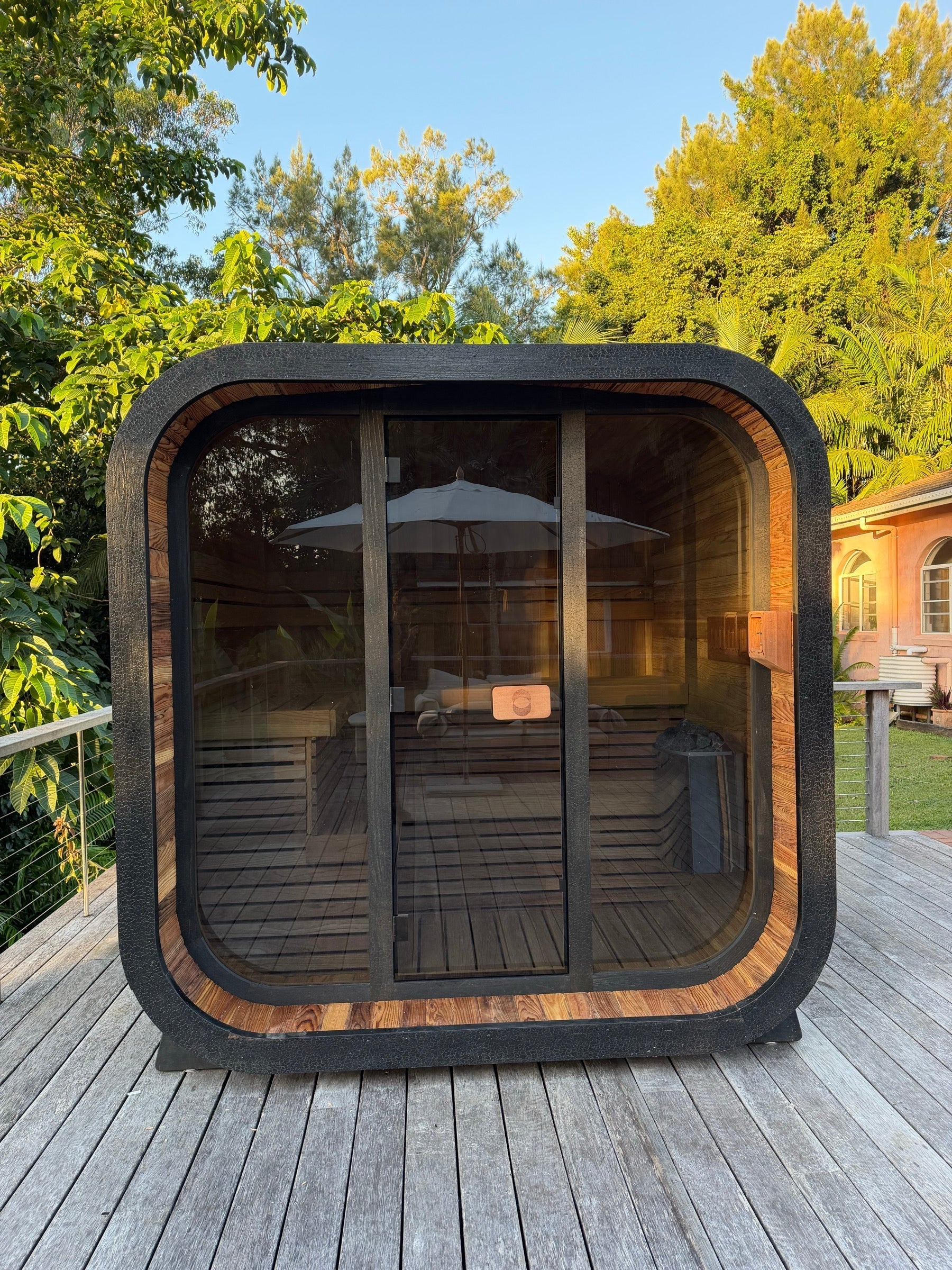
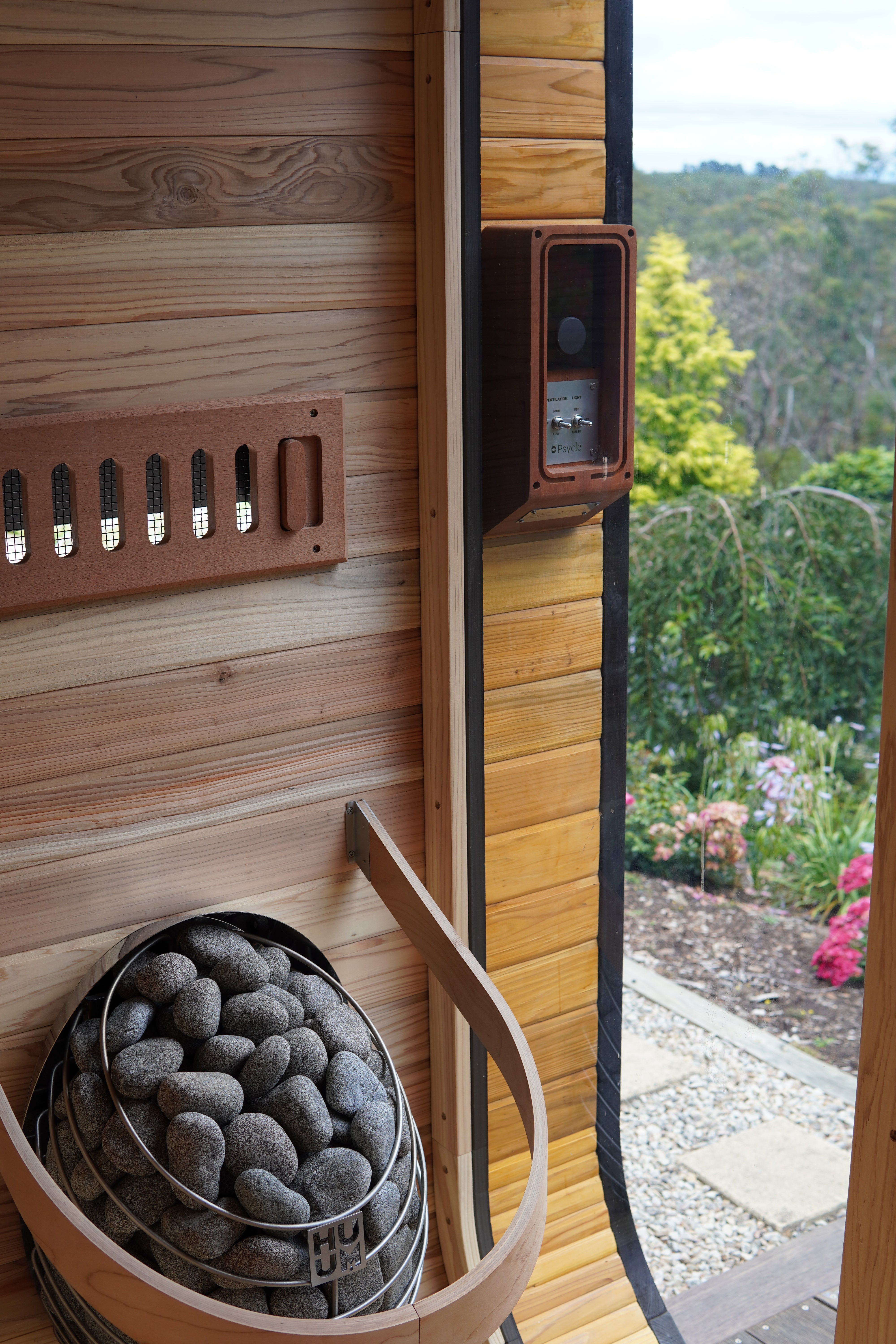
- The Genesis sauna with its 9kW HUUM heater and 60kg of Olivine diabase stone reaches and sustains authentic Finnish temperatures — delivering the thermal load the research is built on.
- Running a Genesis session costs approximately AU$0.50–$1.00 per 45-minute session — less than a single commercial sauna drop-in, every time.
By Psycle Wellness · Last updated: May 2026 · 16 min read
Regular sauna use — specifically traditional Finnish-style heat at 80–100°C, four to seven times per week — is associated with a 50% reduction in fatal cardiovascular events and a 61% lower risk of stroke. These are not preliminary findings. They come from a 20-year cohort study of 2,315 Finnish men, published in JAMA Internal Medicine. For Australians managing hereditary cardiac risk or simply taking their long-term health seriously, this is among the most actionable data in preventive medicine.
Why Cardiovascular Disease Makes Sauna Science Urgent for Australians
Cardiovascular disease is the single biggest killer in Australia. According to the Australian Institute of Health and Welfare (AIHW, 2024), CVD accounts for approximately 25% of all deaths in this country — more than any other disease category. That is one Australian dying of heart disease or stroke every 12 minutes.
Most Australians know they should exercise more, manage stress, and eat well. They know the prescription. The problem is not information — it is execution. Time-poor adults in their 40s and 50s are juggling careers, families, and training loads at once. The cardiovascular margin they are gambling with is not theoretical. It is playing out in GP waiting rooms and cardiac wards across the country right now.
What the Finnish research established is this: repeated, deliberate heat exposure — the kind that comes from sitting in a properly built sauna at genuine Finnish temperatures — produces measurable cardiovascular adaptations. The mechanism is real. The data spans two decades. For Australians with existing risk factors, managed hypertension, or a family history that keeps them up at night, it is worth understanding precisely how and why this works.
This article covers the full evidence base for sauna benefits in Australia, with a focus on cardiac and vascular outcomes specifically. If you have been looking for a non-pharmacological tool with genuine longitudinal data behind it, read carefully.
The Mechanism: How Heat Stress Trains Your Cardiovascular System
Sauna heat does something most recovery tools cannot: it places a controlled, measurable stress on your cardiovascular system without loading your joints, taxing your muscles to failure, or requiring any athletic capacity. The mechanism is called thermal cardiovascular conditioning, and it operates through several interconnected pathways.
Heart Rate and Cardiac Output
When you enter a sauna at 90°C, your core temperature begins to rise within minutes. Your hypothalamus responds by triggering vasodilation — your blood vessels dilate to dissipate heat through the skin. To move blood to the periphery fast enough, your heart rate climbs. Research published in the Journal of Human Kinetics found that a 30-minute sauna session raises heart rate to 100–150 bpm — equivalent to moderate-intensity exercise — increasing caloric expenditure beyond resting metabolic rate, particularly when combined with strength training.
Your heart is doing real work: increasing cardiac output, improving stroke volume, and pumping harder against a dilated vascular bed. Repeated over weeks and months, this stimulus produces the same adaptive responses as aerobic conditioning — a lower resting heart rate, improved heart rate variability, and better cardiovascular efficiency.
Endothelial Function and Vascular Health
The endothelium is the thin cellular lining of your blood vessels. It regulates vascular tone, controls inflammation, and determines how efficiently blood flows through your arteries. Endothelial dysfunction — when that lining stops working properly — is one of the earliest and most consequential steps toward atherosclerosis and heart disease.
Repeated heat exposure improves endothelial function through increased production of nitric oxide — the signalling molecule that keeps blood vessels supple, reduces arterial stiffness, and lowers peripheral resistance. This is not a minor effect. Improved endothelial function is measurable via flow-mediated dilation (FMD), and regular sauna users show significantly better FMD scores than sedentary controls. For a closer look at how these vascular changes translate to blood pressure outcomes, read our guide to sauna and blood pressure in Australia.
LDL Oxidation and Inflammatory Markers
Oxidised LDL — not simply high LDL, but LDL that has been chemically altered by oxidative stress — is a primary driver of arterial plaque formation. Regular sauna use has been associated with reductions in C-reactive protein (CRP), interleukin-6, and other inflammatory markers that accelerate LDL oxidation. The heat also triggers upregulation of heat shock proteins (HSPs), which protect cells from protein damage and reduce systemic inflammation over time.
These are not cosmetic improvements. They address root-cause mechanisms in cardiovascular disease pathology — the kind that do not always appear in standard lipid panels but determine long-term arterial health.

The Evidence: What 20 Years of Finnish Research Actually Shows
The most important dataset in sauna cardiovascular research comes from the Kuopio Ischaemic Heart Disease (KIHD) Risk Factor Study — a long-running Finnish cohort of 2,315 middle-aged men followed for up to 20 years at the University of Eastern Finland. The lead researcher, Professor Jari Laukkanen, has published multiple landmark findings from this dataset, each adding a layer to what we now understand about heat and the heart.
The 50% Reduction in Fatal Cardiovascular Events
Laukkanen et al., publishing in JAMA Internal Medicine (2015), found that sauna use 4–7 times per week reduced the risk of fatal cardiovascular disease by 50% compared to once-weekly bathing. The dose-response relationship was linear: 2–3 sessions per week produced a 27% reduction. Four to seven sessions per week produced a 50% reduction. More sessions, more protection.
This is not a correlation across different lifestyle types where sauna users happened to also exercise more, eat better, and drink less. The KIHD study controlled for a substantial range of confounders — physical activity, smoking, body mass index, and socioeconomic status. The association between sauna frequency and cardiovascular protection held independently.
“The findings suggest that sauna bathing might be an important part of the lifestyle that reduces CVD risk,” noted Laukkanen in commentary accompanying the study — a measured statement from a researcher whose 20-year dataset was producing findings that clinicians and cardiologists took seriously enough to publish in one of medicine's most rigorous journals.
A 61% Lower Risk of Stroke
Laukkanen et al. in Neurology (2018) found that sauna bathing 4–7 times per week was associated with a 61% lower risk of stroke compared to once-weekly use. A dose-response relationship held here too: even 2–3 sessions per week produced a statistically significant reduction in stroke risk.
Stroke remains one of the leading causes of disability and death in Australia, with the Stroke Foundation estimating approximately 56,000 strokes occur in this country every year. A 61% reduction in stroke risk is one of the most significant non-pharmacological risk-reduction findings in the preventive health literature.
For Australians with managed hypertension, a family history of stroke, or existing vascular risk factors, this data point alone warrants a serious conversation with a GP about integrating regular sauna use into a broader cardiovascular risk-reduction strategy. Our article on sauna and longevity in Australia covers the full lifespan implications of this research in detail.
Sauna as a Predictor of All-Cause Mortality
Beyond cardiovascular-specific outcomes, the KIHD data showed that frequent sauna use was associated with reductions in all-cause mortality — not just cardiac and stroke deaths, but death from any cause. This breadth of effect points to systemic biological adaptations driven by repeated heat stress, rather than a narrow mechanism affecting only one organ system.
The Mayo Clinic Proceedings published a review of the KIHD findings in 2018 that described sauna bathing as a “lifestyle factor associated with several beneficial cardiovascular and other health effects,” citing the consistency of the dose-response relationship across multiple outcome measures as particularly compelling. Reading the full science behind traditional sauna benefits puts these cardiac findings in their broader physiological context.
Zero-Toxin Finnish-Grade Heat, Built for Australian Homes
Japanese Cedar exterior. Zero-glue construction. HUUM Drop 9kW heater. 60kg of Olivine diabase stone. This is the thermal intensity the research is built on — engineered for Australian conditions.
SEE THE GENESIS →Temperature Matters: Why Infrared Cannot Replicate the Cardiovascular Response
Every major cardiovascular benefit documented in the peer-reviewed literature is attributable to traditional Finnish-style sauna bathing — convective dry heat at 80–100°C with steam generated by pouring water over hot stones. This distinction matters enormously when you are evaluating products.
Infrared saunas operate at 50–70°C. At those temperatures, the hemodynamic response — the degree of vasodilation, the cardiac output increase, the heart rate elevation, the thermal stress that drives endothelial adaptation — is substantially reduced. The KIHD study, the Neurology stroke paper, the Mayo Clinic review: all of this research was conducted on Finnish sauna users sitting at 80–100°C. There is no equivalent 20-year longitudinal dataset for infrared exposure at lower temperatures producing the same cardiovascular outcomes.
This is not a brand bias. It is a basic principle of exercise physiology: the stimulus must be sufficient to drive adaptation. Below-threshold heat produces a below-threshold response. For a detailed breakdown of how these two modalities compare across the full spectrum of health markers, read our article on traditional sauna versus infrared.
Traditional Sauna vs Infrared vs Hot Tub: Cardiovascular Markers Compared
| Marker | Traditional Finnish Sauna (80–100°C) | Infrared Sauna (50–70°C) | Hot Tub / Spa (38–42°C) |
|---|---|---|---|
| Heart rate elevation | 100–150 bpm (aerobic exercise equivalent) | Moderate (70–110 bpm typical) | Mild (60–90 bpm) |
| Endothelial function improvement | Documented via FMD in peer-reviewed research | Limited peer-reviewed evidence | Some evidence, mechanism less clear |
| Fatal CVD risk reduction | Up to 50% (Laukkanen, JAMA, 2015) | No equivalent longitudinal data | No equivalent longitudinal data |
| Stroke risk reduction | 61% lower with 4–7 weekly sessions (Laukkanen, Neurology, 2018) | No equivalent data | No equivalent data |
| Operating temperature | 80–100°C | 50–70°C | 38–42°C |
| Steam / humidity control | Yes — löyly from stones | No | Wet environment only |
| LDL oxidation / inflammation markers | Reduced CRP, IL-6, heat shock protein upregulation | Emerging evidence, limited depth | Minimal research |
| Longitudinal dataset quality | 20-year KIHD cohort, 2,315 subjects | No equivalent | No equivalent |
The table above is not an argument against infrared saunas as a category. Some people benefit from them. But if your primary goal is cardiovascular protection — reducing fatal CVD risk, lowering stroke risk, improving endothelial function — the evidence sits firmly and exclusively with traditional Finnish heat at 80–100°C. That is what the research studied. That is the stimulus required. Our guide on infrared saunas in Australia covers where infrared does and does not deliver.
The Engineering Behind the Heat: Why the Genesis Reaches and Holds Finnish Temperatures
Not every home sauna can deliver the thermal load the cardiovascular research requires. Most cheap flat-pack units struggle to maintain 80°C consistently — especially in larger cabins or in colder Australian climates. The reason is almost always heater capacity and stone mass.
The Genesis uses a 9kW HUUM DROP heater loaded with 60kg of Olivine diabase volcanic stone. That stone mass is the key. It is the thermal battery of the sauna — more stone means more stored heat, more steam capacity when you pour löyly, and a more stable temperature throughout the session. A heater with 10kg of stone drops temperature the moment you open the door. A heater with 60kg barely flinches. Learn more about löyly in sauna and why stone mass determines session quality.
The cabin itself is built from Japanese Cedar at 38mm wall thickness. Cedar is a natural insulator — the timber holds heat and humidity without warping, cracking, or absorbing moisture the way cheap kiln-dried pine does. The zero-glue mechanical joint construction means there is no adhesive to off-gas at 90°C. No formaldehyde. No chemical steam. Just clean, hot air and the natural scent of cedar.
Active mechanical ventilation at 88–120 m³/hr keeps air circulating without dropping the temperature — ensuring the heat stays clean and consistent, not stale and suffocating. Every engineering decision in the Genesis points toward the same outcome: a sauna that reaches and holds the temperature at which the cardiovascular research was conducted. Our sauna ventilation guide covers the importance of airflow in detail.
The question to ask any sauna manufacturer is simple: what temperature can this unit sustain, continuously, for a 20-minute session in a full cabin? If the answer is vague, the engineering is vague. The Genesis answers with 80–100°C and holds it.
What Australian Owners Say
Over 200 Genesis saunas have been installed across Australia. The pattern in what owners report is consistent: the first thing that surprises them is how different authentic Finnish heat feels from what they experienced in commercial gyms or hotel spas. The second is how quickly they build it into a daily ritual.
“I've run this protocol daily for 90 days. My recovery markers don't lie — resting heart rate is down, sleep is better, and I'm managing my training load better than I have in years. The Genesis just works, every session.” — Owner, coastal Queensland
“My GP and I had a serious conversation about my family history two years ago. Diet, training, medication. Then I started regular sauna use and added a cold plunge. The combination changed my relationship with recovery entirely. My last cardiac workup was the best in a decade.” — Owner, Sydney
These are not performance claims. They are the lived experience of high performers who treated their cardiovascular health as a system to be managed — and added heat therapy as a deliberate, evidence-based tool. Our guide to home saunas in Australia covers what to look for before you buy, including the engineering signals that separate real Finnish quality from flat-pack imitations.
The Sauna That Earns Its Place in Your Health Stack
Over 200 Australian homes. 3-year cabin warranty. Zero-glue Japanese Cedar. The Genesis is built to deliver Finnish-grade heat every session, for decades.
EXPLORE THE GENESIS →Sauna Cardiovascular Health in Australia: The Running Cost Argument
Commercial saunas in Australia charge AU$25–$60 per session. At four sessions per week — the minimum frequency for the cardiovascular benefits the research documents — that is AU$5,200–$12,480 per year. Before booking fees, travel time, towel hire, and the friction of fitting a scheduled class into a packed week.
A Genesis session costs approximately AU$0.50–$1.00 per 45-minute session, based on the 9kW HUUM heater running at Australian electricity rates of AU$0.30–$0.35/kWh. Four sessions per week costs roughly AU$100–$200 per year in electricity. Compare that to a gym recovery membership at AU$1,200–$2,400 per year, or weekly physio at AU$100–$160 per session. The Genesis pays for itself in operating cost savings within the first two to three years of use — before accounting for the value of consistency, privacy, and the zero-friction access that actually makes four sessions per week achievable.
The Australian climate works in favour of home sauna ownership too. In Queensland, the Northern Territory, and coastal New South Wales, the warmer ambient temperature means pre-heat time drops significantly. The Genesis reaches operating temperature in 30–45 minutes. In warmer months, that window tightens further. Our complete guide to home sauna costs in Australia breaks down the full financial picture including installation, running costs, and total cost of ownership over a decade.

Practical Application: How to Structure Your Sauna Protocol for Cardiovascular Benefit
The KIHD data gives you the frequency target. The exercise physiology literature gives you the session parameters. Here is how to combine them into a protocol that produces measurable cardiovascular adaptations over time.
Pre-session hydration
Drink 500ml of water 30 minutes before entering the sauna. You will lose 500ml–1 litre of sweat per session at 90°C. Hydration determines how long you can sustain the session without cardiovascular strain.
Target temperature: 80–100°C
This is the range documented in the cardiovascular research. A sauna that cannot reach and hold 80°C continuously is not producing the hemodynamic response the benefits require. Check the guide to optimal sauna temperature for session-by-session guidance.
Session duration: 15–20 minutes
The KIHD study sessions averaged 14–20 minutes. Start at 10–12 minutes if you are new to sauna and build to 15–20 minutes over two to four weeks. Extending beyond 20 minutes does not linearly increase benefit and raises dehydration risk. Our guide to sauna session duration covers progression in detail.
Frequency: 4–7 sessions per week
This is the threshold for maximum cardiovascular benefit according to the KIHD data. Three sessions per week produces a 27% reduction in fatal CVD risk — a meaningful effect. Four to seven sessions per week doubles it to 50%. Read how often you should use a sauna for a frequency guide matched to your specific goals.
Cold contrast (optional but powerful)
Alternating heat and cold drives additional vascular adaptation — the rapid vasoconstriction-vasodilation cycling that cold exposure triggers on top of the vasodilation driven by heat. A 2018 meta-analysis by Dupuy et al. in Frontiers in Physiology, covering 99 studies and over 1,000 athletes, found cold-water immersion and contrast water therapy to be among the most effective recovery modalities for reducing muscle soreness and perceived fatigue. The cardiovascular training effect is compounded. Our guide to contrast therapy in Australia covers the protocol in full.
Post-session cooldown and rehydration
Cool down for 5–10 minutes at room temperature before re-entering or finishing. Replace fluids lost during the session — minimum 500ml water or electrolyte drink post-session. Heart rate should return toward resting within 10 minutes of exiting. If it does not, shorten your next session.
Contrast Therapy: Pairing Heat with Cold for Amplified Cardiovascular Adaptation
The combination of heat and deliberate cold exposure produces vascular adaptations that neither modality achieves alone. Heat drives vasodilation. Cold drives vasoconstriction. Cycling between them is, in effect, a workout for your blood vessels — training them to dilate and contract rapidly, improving vascular elasticity and endothelial responsiveness over time.
The Origin cold plunge, paired with the Genesis as the Contrast Kit, delivers water temperatures of 5–15°C — the range shown to produce acute sympathetic nervous system activation and the norepinephrine spike associated with cold-shock adaptation. The protocol is straightforward: 15–20 minutes in the Genesis at 80–100°C, followed by 2–4 minutes in the Origin. Repeat one to three cycles. The vascular cycling that follows — vasodilation to vasoconstriction and back — is one of the most potent cardiovascular conditioning stimuli available without pharmaceutical or surgical intervention.
Psycle's core line captures the relationship precisely: Heat recovers you. Cold hardens you. Together, they transform you. Read our complete guide to the best sauna and cold plunge combinations in Australia for protocol options, safety considerations, and product comparisons. Our guide to cold plunge benefits in Australia covers the independent research on cold immersion in detail.
Sauna Safety for Managed Hypertension and Post-Cardiac-Event Recovery
If you have cardiovascular disease, a history of cardiac events, or managed hypertension, the evidence is not a blanket clearance — it is a conversation to have with your GP or cardiologist before starting a regular sauna protocol. The research supports sauna use as a cardiovascular health tool for most people. It does not override individual clinical assessment.
Here is what the evidence actually says about specific populations:
Managed hypertension: Regular sauna use has been associated with reductions in both systolic and diastolic blood pressure in multiple studies. A 2018 study in the American Journal of Hypertension found significant blood pressure reductions following regular Finnish sauna bathing. The acute heat response does temporarily raise heart rate and alter blood pressure dynamics, which is why anyone on antihypertensive medication should discuss sauna integration with their prescribing physician. Our dedicated article on sauna and blood pressure in Australia covers this in detail.
Post-cardiac-event recovery: Some cardiac rehabilitation programmes in Finland and Scandinavia include supervised sauna use as part of structured recovery. The evidence base for sauna in post-MI recovery is growing but not yet at the same evidential level as the primary prevention data. If you have had a cardiac event, supervised, graded reintroduction — beginning at lower temperatures and shorter durations with clinical monitoring — is the appropriate path.
Contraindications to be aware of: Active infection, acute inflammatory cardiac conditions, unstable angina, and severe aortic stenosis are contraindications to sauna use. Alcohol and sauna use in combination is associated with significantly elevated cardiovascular risk. The KIHD data showed that a significant proportion of sauna-related adverse events occurred in sessions combined with alcohol consumption.
The sauna is a powerful cardiovascular tool. Like all powerful tools, it requires appropriate use. Our complete guide to sauna health risks in Australia covers contraindications, precautions, and safety protocols for at-risk populations in full.
If you have a diagnosed cardiovascular condition: take this article to your next GP appointment. The research citations are peer-reviewed and the conversation is worth having.
Beyond the Heart: Sauna and Broader Longevity Markers
The cardiovascular findings from the KIHD study sit within a larger picture of systemic health adaptation driven by regular heat exposure. Sauna use at the frequencies the research supports is also associated with reduced risk of neurodegenerative disease, improved insulin sensitivity, enhanced growth hormone secretion, and lower rates of respiratory illness.
These benefits share common upstream mechanisms with the cardiovascular adaptations. Reduced systemic inflammation, improved vascular function, better autonomic nervous system regulation, and improved sleep quality all contribute to a biological environment in which multiple disease processes are slowed. Our guide to sauna and longevity in Australia covers the full lifespan research in detail.
For athletes and high performers, the recovery dimension of regular sauna use compounds over time. Using the sauna after training accelerates muscle recovery, reduces delayed onset muscle soreness, and creates the conditions for higher training frequency — which itself drives cardiovascular adaptation. Sauna use for sleep quality is also well-documented: the post-sauna drop in core body temperature signals sleep onset and extends slow-wave sleep — the stage most critical for cardiac and hormonal recovery. Read the science in our guide to sauna and sleep in Australia.
What emerges from the research is not a single-benefit product. It is a physiological conditioning tool that, used consistently at the right frequency and temperature, produces compounding adaptations across multiple systems — with the cardiovascular system showing some of the most dramatic and well-evidenced effects. For the complete overview, read our evidence-based guide to sauna benefits in Australia.
Frequently Asked Questions: Sauna Cardiovascular Health Australia
Is sauna good for your heart?
Yes. Regular traditional sauna use is associated with significant reductions in fatal cardiovascular disease risk. A 20-year Finnish cohort study by Laukkanen et al., published in JAMA Internal Medicine (2015), found a 50% reduction in fatal CVD events among men using sauna 4–7 times per week compared to once-weekly users. The mechanism involves improved endothelial function, reduced arterial stiffness, lower resting heart rate, and decreased systemic inflammation — all well-established cardiovascular protective factors.
How often should you use a sauna for cardiovascular benefits?
The research supports 4–7 sessions per week for maximum cardiovascular benefit. Two to three sessions per week produces a 27% reduction in fatal CVD risk. Four to seven sessions per week produces a 50% reduction. The dose-response relationship is linear — more frequent exposure produces greater cardiovascular adaptation. Read our sauna frequency guide for practical recommendations by goal and experience level.
What temperature should a sauna be for heart health benefits?
The cardiovascular benefits documented in peer-reviewed research are attributed to traditional Finnish sauna heat at 80–100°C. This temperature range produces the hemodynamic response — elevated heart rate, vasodilation, increased cardiac output — that drives cardiovascular adaptation. Infrared saunas operating at 50–70°C produce a lower hemodynamic stimulus and lack equivalent longitudinal cardiovascular data. Our guide to optimal sauna temperature covers this in detail.
Can sauna use reduce stroke risk?
Yes. Laukkanen et al. in Neurology (2018) found that sauna use 4–7 times per week was associated with a 61% lower risk of stroke compared to once-weekly use. Even 2–3 sessions per week produced a statistically significant stroke risk reduction. The mechanism is linked to improved vascular function, reduced arterial stiffness, and lower blood pressure associated with regular heat exposure.
Is it safe to use a sauna if you have high blood pressure?
For most people with managed hypertension, regular sauna use is associated with long-term blood pressure reductions. The acute cardiovascular response to heat — including temporary changes in heart rate and blood pressure dynamics — means anyone on antihypertensive medication should discuss sauna use with their GP before starting. Begin with shorter sessions at moderate temperatures and increase gradually. Never combine sauna use with alcohol. Read our full guide to sauna and blood pressure for population-specific guidance.
Does a sauna mimic the effects of exercise on the heart?
In measurable cardiovascular terms, yes. Research published in the Journal of Human Kinetics found that a 30-minute sauna session at 80–100°C raises heart rate to 100–150 bpm — equivalent to moderate-intensity aerobic exercise. Cardiac output increases, peripheral vascular resistance decreases, and the same pattern of endothelial adaptation seen in regular aerobic exercise training is observed in regular sauna users. This makes sauna particularly valuable for people who cannot exercise at high intensities due to injury, joint pain, or rehabilitation constraints.
How does contrast therapy (sauna and cold plunge) affect cardiovascular health?
Contrast therapy — alternating between sauna heat and cold water immersion — amplifies the vascular training effect. Heat drives vasodilation; cold drives vasoconstriction. Cycling between the two trains vascular elasticity and autonomic nervous system regulation, producing adaptations that neither modality achieves alone. A 2018 meta-analysis by Dupuy et al. in Frontiers in Physiology, covering 99 studies and over 1,000 athletes, confirmed contrast water therapy as among the most effective recovery modalities. The cardiovascular compounding effect is well-supported. Read the full guide to sauna and cold plunge in Australia.
What is the best home sauna for cardiovascular health in Australia?
A traditional Finnish-style sauna that reaches and sustains 80–100°C with high stone mass and zero-toxin construction. The Genesis from Psycle Wellness uses a 9kW HUUM DROP heater with 60kg of Olivine diabase stone, Japanese Cedar 38mm walls, and zero-glue construction — engineered to deliver the thermal load that drives the cardiovascular adaptations documented in the research. It is the only sauna in the Australian market built to this specification at this price point. Australia-wide delivery. 3-year cabin warranty. 120-day build. View the complete guide to the best home saunas in Australia for a full comparison.
Ready to Make Four Sessions a Week Effortless?
Free Australia-wide delivery. 3-year cabin warranty. $1,000 refundable deposit. 120-day build — order now for your summer delivery window.
SHOP THE GENESIS →