Sauna Before or After Workout: Complete Guide | Psycle
Sauna Before or After Workout: The Complete Performance Guide

Key Takeaways
- Pre-workout sauna (10–15 min at 80–100°C) raises core temperature, activates neuromuscular pathways, and increases tissue elasticity — useful for priming before heavy sessions.
- Post-workout sauna is where the real performance gains live: heat shock protein activation, growth hormone release of 200–300%, and accelerated muscle repair begin within minutes of entering a 90°C cabin.
- Contrast therapy — sauna followed immediately by cold plunge — is the most evidence-backed recovery protocol available, reducing DOMS and perceived fatigue across 99 studies and over 1,000 athletes.
- In Australian summer conditions, hydration management is non-negotiable: add 500–750ml of fluid intake per sauna session on top of your post-training rehydration.
- A Finnish-style traditional sauna (wet heat, löyly, 80–100°C) produces substantially different physiological responses than infrared — the research on HSPs and growth hormone is based on traditional heat.
- The Genesis runs at approximately AU$0.50–$1.00 per 45-minute session — less per session than a single commercial sauna drop-in, and a fraction of weekly physio costs.
- Your goal determines your timing: use the decision framework in this guide to dial in the right protocol for strength, endurance, recovery, or mental reset.
By Psycle Wellness · Last updated: May 2026 · 12 min read
Whether to use a sauna before or after a workout depends on your goal. Pre-workout heat primes the neuromuscular system and raises tissue temperature. Post-workout heat activates heat shock proteins, triggers a 200–300% rise in growth hormone, and accelerates muscle repair. For most training goals, post-workout wins — but both have a legitimate place in a serious protocol.
Most people treat the sauna as an afterthought — something you shuffle into at the gym after a session, wrapped in a damp towel, half-hydrated, with no real intent. That is not a recovery strategy. That is a habit with no structure behind it.
The question of whether to sauna before or after a workout is not a simple either/or. The answer depends on what you are training for, how hard you trained, how much time you have, and — if you are training in Australia — what the ambient temperature and humidity are doing to your baseline physiology before you even step into the cabin. This guide covers the complete picture. For a deeper look at sauna benefits in Australia, including the full evidence base for heat therapy, that hub covers the broader field.
Why Most People Get the Timing Wrong — and Pay for It
Here is what happens when you sauna before a hard workout without understanding the physiology. Your core temperature rises. Your cardiovascular system diverts blood to the skin to manage heat dissipation. Plasma volume drops. And then you ask your body to perform at maximum output — and it cannot, because it is already managing a thermal load it did not need yet.
Dehydration of as little as 2% of body weight measurably reduces aerobic performance. Add a pre-workout sauna session without adequate rehydration and you are not warming up — you are pre-fatiguing. You are making the session harder, not better.
On the other side: the people who skip post-workout heat entirely are leaving the most significant recovery stimulus on the table. Heat shock proteins — the cellular repair machinery that rebuilds damaged muscle fibres — are activated by thermal stress. So is growth hormone release. Neither of those happen in an air-conditioned change room. They happen in 80–100°C heat, with adequate time and adequate stone mass holding the temperature steady.
The problem is not sauna use around training. The problem is using it without a framework. That is what this guide builds.
The Physiology of Pre-Workout Sauna: What It Actually Does
A pre-workout sauna session, done correctly — short, well-hydrated, at controlled temperature — has legitimate priming effects. Heat increases tissue extensibility, reduces joint viscosity, and activates the neuromuscular system in a way passive warm-up cannot fully replicate. Think of it as a deeper, faster warm-up that also loosens fascia and increases range of motion before you load the tissues.
The key word is short. Ten to fifteen minutes in a traditional Finnish sauna at 80–100°C is enough to raise core temperature by 1–1.5°C, which produces the priming effect without meaningfully compromising plasma volume. Beyond that window, the cardiovascular cost starts to outweigh the warm-up benefit — particularly for high-intensity or strength sessions where you need maximum blood volume in the muscles, not the skin.
Pre-workout sauna has a stronger case for lower-intensity or flexibility-focused training: yoga, mobility work, active recovery sessions, or low-intensity cardio where the elevated heart rate from heat is not a problem. It is a weaker case for maximal strength work, high-intensity intervals, or any session where peak power output matters.
If you want to understand how heat behaves differently in Finnish wet-heat conditions versus lower-temperature infrared, our comparison of traditional versus infrared sauna covers the physiological differences in detail. The short version: the research on neuromuscular priming and heat shock protein activation is based on traditional heat above 80°C — not infrared at 50–60°C.
The Physiology of Post-Workout Sauna: Where the Real Gains Are
Post-workout is where the sauna earns its place in a serious training protocol. Three mechanisms drive the benefit — and all three are substantially more powerful after exercise than before it.
Heat Shock Proteins and Muscle Repair
Heat shock proteins (HSPs) are intracellular chaperone proteins that activate in response to thermal stress. Their job is to identify damaged or misfolded proteins — which are abundant after hard training — and either repair them or flag them for disposal. HSP70 and HSP90, the variants most relevant to muscle recovery, upregulate significantly when core temperature rises above approximately 39°C. A 20-minute session in an 80–100°C traditional sauna achieves that easily.
The post-workout window matters here. After training, the muscle environment is already primed for repair — satellite cells are activated, protein synthesis signalling is elevated, and the HSP response to heat is amplified against that background. Using the sauna 15–30 minutes after a session — once heart rate has settled below 100bpm — compounds the repair signal rather than disrupting the training stimulus.
Growth Hormone Release
Research from the University of New Mexico found that sauna use can increase growth hormone levels by 200–300%, with two 20-minute sessions separated by a 30-minute cool-down period producing the most pronounced effect. Growth hormone drives tissue repair, fat metabolism, and muscle hypertrophy — and the magnitude of the sauna-induced release rivals what you would see from a high-intensity strength session.
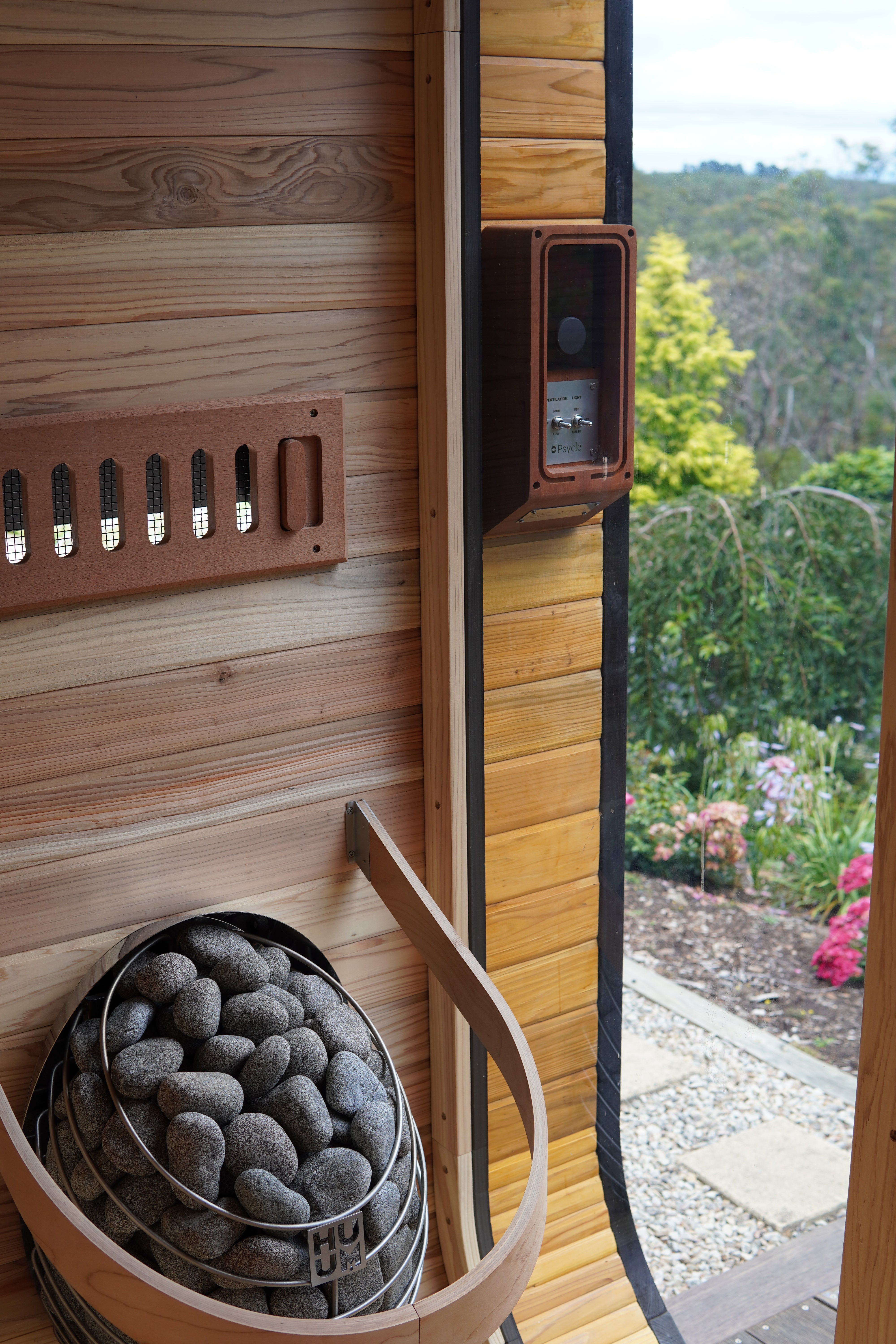
This effect is heat-dependent and dose-dependent. You need real temperature — 80°C minimum — sustained for a meaningful duration. A 10-minute session at 60°C does not produce the same hormonal response. This is why the heater and stone mass in your sauna are not luxury details: they are the mechanism. The HUUM DROP 9kW heater in the Genesis carries 60kg of Olivine diabase stone. That stone mass is what holds the cabin at temperature when you pour löyly and breathe real wet heat — not dry air from a single element with no thermal reserve.

Cardiovascular Load and Active Recovery
A 20-minute session in a traditional sauna at 80–100°C produces a cardiovascular response equivalent to moderate-intensity exercise — heart rate elevation to 120–150bpm, increased cardiac output, and vasodilation throughout the peripheral vasculature. After training, this is not additional load on a fresh system — it is a continuation of the cardiovascular work-down, accelerating metabolite clearance from the muscles and supporting lymphatic drainage.
A landmark 20-year cohort study of 2,315 Finnish men by Laukkanen et al., published in JAMA Internal Medicine (2015), found that sauna use 4–7 times per week reduced the risk of fatal cardiovascular disease by 50% compared to once-weekly bathing. The cardiovascular adaptations from regular heat exposure — improved endothelial function, reduced arterial stiffness, lower resting blood pressure — compound with the adaptations from aerobic training. The two reinforce each other. Our full breakdown of sauna and cardiovascular health in Australia covers this research in depth.
Zero-Toxin Heat, Built for Training Recovery
The Contrast Kit pairs the Genesis sauna with the Origin cold plunge — the complete heat-cold protocol in one bundle, engineered for serious recovery.
SEE THE CONTRAST KIT →Why Adding Cold After the Sauna Changes Everything
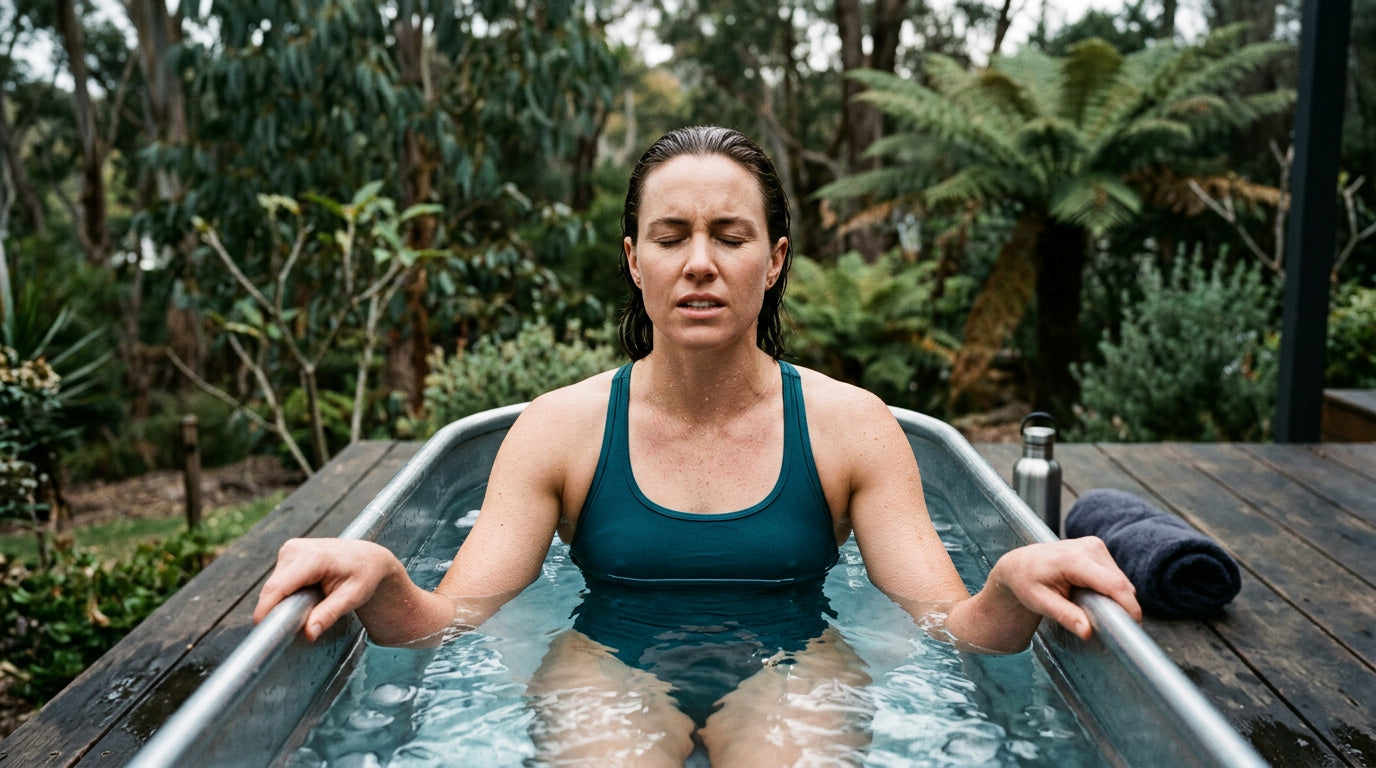
Heat alone is a powerful recovery stimulus. Heat followed immediately by cold immersion is something else entirely. The contrast protocol — 15–20 minutes in the sauna at 80–100°C, then 3–5 minutes in a cold plunge at 10–15°C — creates a vascular pump effect that no single modality can replicate. Blood vessels dilate in the heat, then contract hard in the cold. That cycling accelerates metabolite clearance, reduces inflammatory markers, and drives a neurological state shift that high performers consistently describe as the clearest their head gets all week.
A 2018 meta-analysis by Dupuy et al. in Frontiers in Physiology, covering 99 studies and over 1,000 athletes, found cold-water immersion and contrast water therapy to be among the most effective recovery modalities for reducing muscle soreness and perceived fatigue. That is the most thorough review of recovery modalities ever published, and contrast therapy sits at the top of it.
The cold also adds a neurological dimension that heat alone does not deliver. Research published in the European Journal of Physiology found that cold water immersion produces a sustained 250% increase in dopamine levels — an effect that outlasts the cold exposure itself by several hours. After a hard training session, that neurochemical reset is the difference between an afternoon of productive focus and an afternoon of fatigue-driven distraction.
Our detailed guide on the sauna and cold plunge routine breaks down the full contrast protocol — round counts, timing, temperature targets, and how to adapt the sequence based on training load. If you are specifically focused on the cold side of that equation, the guide to cold plunge recovery in Australia covers the standalone benefits and protocol options.
What Australian Athletes and High Performers Are Saying
The Psycle Genesis has been installed in homes across Australia — from coastal Queensland to inner-city Sydney, from Byron Bay backyards to Perth suburban decks. The people running it are not spa tourists. They are people who train six days a week and needed a recovery setup that matched that output.
“I have run this protocol daily for 90 days. Post-training sauna at 90°C, then straight into the Origin. My recovery markers do not lie — I am back in the gym harder, sooner, and with less joint pain than I had on physio alone.” — Genesis + Origin owner, Brisbane.
“I surf every morning and lift four times a week. The Genesis sits on my deck in natural cedar. I go straight from the cold water into the sauna — reverse contrast — and then back to cold in the Origin before coffee. Nothing has changed my training life more than having this at home.” — Genesis owner, Byron Bay.
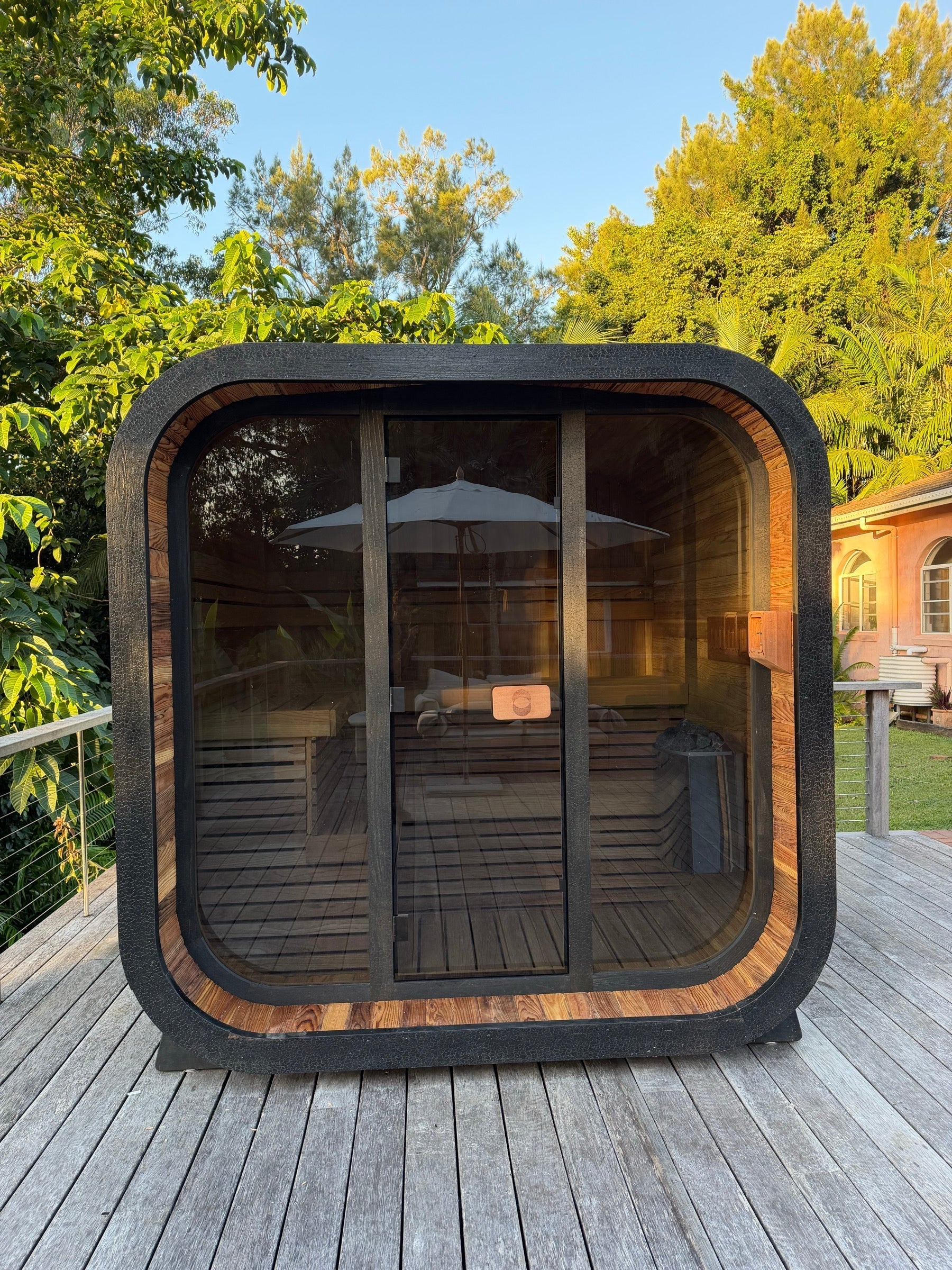
The consistency data is what matters. Commercial gym saunas are unpredictable — temperature varies, the stones are under-loaded, the timber is cheap MDF that off-gasses at 90°C. When your recovery protocol depends on showing up every day, reliable infrastructure matters. The Genesis uses zero-glue mechanical joinery throughout — no formaldehyde off-gassing at temperature. The cabin is Japanese Cedar, 38mm walls. The HUUM DROP heater holds 60kg of volcanic stone. It gets hot, it stays hot, and it does not poison the air you are breathing while it works.

The Protocol That Serious Aussie Athletes Are Running
Genesis + Origin. Japanese Cedar cabin. Zero-glue construction. HUUM DROP 9kW heater. Origin cold plunge. Australia-wide delivery, 3-year cabin warranty, 120-day build.
EXPLORE THE CONTRAST KIT →Sauna Training in the Australian Context: Heat, Humidity, and Hydration
Using a sauna for training recovery in Australia is not the same as doing it in Finland. The ambient conditions are different, and they change the calculus on hydration, session timing, and temperature management in ways that most international content does not account for.
In summer in Queensland, New South Wales, or Western Australia, you may already be arriving at your post-training sauna session with an elevated core temperature, a sweat deficit from training in 32°C heat, and a plasma volume that is already marginally reduced. In those conditions, adding a 20-minute sauna session without deliberate rehydration is not recovery — it is compounding a stress your body is already managing.
The practical rule: add 500–750ml of fluid per sauna session on top of your post-training rehydration. Electrolytes — sodium, magnesium, potassium — matter as much as total fluid volume, particularly in humid coastal conditions where sweat rate is higher. This is the difference between a session that leaves you sharp and one that leaves you flat for the rest of the day.
The outdoor sauna format suits the Australian lifestyle in a way it does not most other markets. Post-surf sauna is a legitimate and increasingly common protocol: cold ocean exposure naturally mimics the cold side of a contrast sequence, and stepping from 20°C water into an 80–90°C cabin activates the same vascular response as a formal cold plunge followed by sauna. Our guide to outdoor sauna in Australia covers siting, weatherproofing, and seasonal use considerations in detail. The Genesis with the optional Colorbond roof kit is fully rated for year-round outdoor placement — IP67-rated lighting, non-VOC oil finish on the cedar, weathered to last in coastal and subtropical conditions.
On running cost: the Genesis with a HUUM DROP 9kW heater costs approximately AU$0.50–$1.00 per 45-minute session at current Australian electricity rates of AU$0.30–$0.35 per kWh. Compare that to a commercial sauna drop-in at AU$25–$45 per session, a gym recovery membership at AU$1,200–$2,400 per year, or weekly physio at AU$100–$160 per session. The infrastructure pays for itself fast when it is part of a daily training routine. For a full cost breakdown, our guide to home sauna cost in Australia covers purchase, running, and maintenance costs across all formats.
Sauna Before or After Workout: The Goal-Based Decision Framework
The right timing is not universal — it is goal-specific. Use this framework to decide based on what you are training for.
| Training Goal | Optimal Timing | Duration | Protocol Notes |
|---|---|---|---|
| Maximal strength / power | Post-workout | 15–20 min | Wait 15–30 min post-session. Two rounds separated by cool-down for GH release. |
| Hypertrophy / muscle gain | Post-workout | 20 min ×2 | Two 20-min rounds, 30-min cool-down between, maximises GH pulse. |
| Endurance / aerobic base | Post-workout | 20–30 min | Cardiovascular load compounds aerobic adaptation. Hydrate before entering. |
| DOMS reduction / active recovery | Post-workout + cold plunge | 15–20 min sauna, 3–5 min cold | Contrast protocol. Most evidence-backed recovery modality (Dupuy et al., 2018). |
| Mobility / flexibility training | Pre-workout | 10–15 min | Raises tissue temperature, improves extensibility. Rehydrate before training. |
| Low-intensity cardio / recovery session | Pre or post | 10–20 min | Either timing works. Pre adds a warm-up effect; post extends cardiovascular work-down. |
| Mental reset / cognitive recovery | Post-workout + cold plunge | 15 min sauna, 3–5 min cold | 250% dopamine increase post-cold (European Journal of Physiology) drives focus for hours. |
| Post-surf or outdoor activity (AU) | Sauna post cold ocean | 15–20 min | Ocean acts as the cold phase. Sauna completes the contrast cycle naturally. |
The one variable the table cannot account for is how long you should actually stay in the sauna for your specific experience level and heat tolerance. Our guide to how long to stay in a sauna covers duration by goal, experience level, and session structure — including the two-round protocol that produces the maximum growth hormone response.
The Finnish Sauna Difference: Why Wet Heat Changes the Equation
Traditional Finnish sauna — löyly, wet heat, 80–100°C — produces a different physiological response than the infrared units stocked in most Australian gym recovery areas. This distinction matters when you are evaluating the research on HSPs, growth hormone, and cardiovascular adaptation.
Infrared saunas operate at 50–60°C. At that temperature, the thermal stimulus is insufficient to produce the HSP70 upregulation documented in the Finnish sauna literature. It is also insufficient to produce the growth hormone release documented at 80–100°C. The studies showing 200–300% GH elevation, the Laukkanen cardiovascular data, the Finnish longevity research — all of it is based on traditional Finnish-style heat. Citing that research to justify an infrared purchase is a mismatch between the evidence and the product.
Löyly is not just a ritual — it is a mechanism. Pouring water onto superheated volcanic stone creates a flash of steam that momentarily raises the perceived temperature and humidity simultaneously. The thermal impulse hits the skin faster, drives a deeper sweat response, and produces the cardiovascular load that underpins the health data. For that to work, the stones need mass. The HUUM DROP 9kW heater in the Genesis carries 60kg of Olivine diabase. That is not an arbitrary number — it is the thermal reservoir that maintains temperature stability when löyly is applied repeatedly across a session.
Our detailed breakdown of löyly in sauna covers the technique, the physiology, and how stone volume affects heat quality. If you are comparing traditional and infrared options, our guide to infrared sauna in Australia sets out the science on both sides — without the marketing spin that obscures which evidence applies to which product.
The Genesis is built to Finnish specification. 38mm Japanese Cedar walls. Zero-glue mechanical joinery. Non-VOC oil finish. Active mechanical ventilation at 88–120 m³/hr — because in a proper wet-heat environment, air quality and steam circulation matter as much as temperature. You breathe cleanly in 90°C heat. In a poorly built sauna at 90°C, the air you are breathing contains formaldehyde off-gassing from glued MDF. The zero-toxin spec is the entire point. For more on what the right sauna ventilation does for session quality and safety, see our guide to sauna ventilation in Australia.
Building the Protocol Into a Week: Frequency and Sequencing
A single sauna session after a single workout is a stimulus. A structured weekly protocol is adaptation. The Laukkanen cardiovascular data did not find benefit at once per week — the mortality reduction was concentrated in the group using the sauna 4–7 times per week. Frequency is the variable that converts acute stimulus into chronic adaptation.
For a five-days-per-week training schedule, the practical protocol is: post-workout sauna after every resistance session (15–20 minutes, two rounds if time allows), contrast protocol after your hardest session of the week, and a standalone sauna session on at least one rest day for cardiovascular and neurological maintenance. That gives you 5–6 sessions per week across the training cycle — inside the range where the long-term adaptation data is strongest.
The question of how often to use the sauna relative to your training load — including whether daily use is appropriate and how to structure rest days — is covered in our guide to how often you should use a sauna. The short answer: more is generally better for adapted users, with the caveat that hydration, sleep, and training load determine the upper limit of benefit.
What makes that frequency realistic is having the infrastructure at home. The mental friction of driving to a commercial sauna after a session — parking, locker rooms, temperature uncertainty, other people — is the reason most people do not do it consistently. The people running a post-workout protocol six days a week are almost always doing it in their own cabin. That is the compounding effect of home infrastructure. For the broader picture on building a weekly sauna and cold plunge routine in Australia, that guide covers frequency, sequencing, and seasonal adjustments.
If you are training twice daily, the morning session should not include a post-workout sauna if the afternoon session is high-intensity — the residual cardiovascular load and fluid deficit will compromise the second session's output. The sauna belongs at the end of the training day, not in the middle of it. For sauna's interaction with other performance modifiers — including fasting protocols — our guide to sauna while fasting addresses the edge cases that matter to serious athletes.
If your interest extends beyond recovery to longer-term performance and health markers, the evidence on sauna and longevity in Australia and the specific data on sauna benefits for men — including testosterone and hormonal adaptation — are directly relevant to how you structure long-term use.
Sauna Before or After Workout: Frequently Asked Questions
Is it better to sauna before or after a workout?
For most training goals, post-workout is the better choice. Post-workout sauna activates heat shock proteins, drives a 200–300% increase in growth hormone, and accelerates muscle repair against the already-primed recovery environment left by training. Pre-workout sauna has a narrower use case — short sessions (10–15 minutes) before lower-intensity or mobility-focused work, where raising tissue temperature adds a priming benefit without compromising performance. For high-intensity, strength, or power sessions, pre-workout sauna risks pre-fatiguing the cardiovascular system and reducing plasma volume before you need peak output.
How long after a workout should you sauna?
Wait 15–30 minutes after training before entering the sauna — enough time for heart rate to fall below 100bpm and for acute fluid losses to be partially replaced. Entering immediately after intense training places additional cardiovascular load on a system that is already managing recovery demand. Rehydrate with 500–750ml of water or electrolyte drink before entering, then aim for 15–20 minutes per round in the cabin. Our guide to sauna after workout timing covers the full post-training protocol including round structure and cool-down management.
Can sauna replace a cool-down after training?
A sauna session is not a direct substitute for a structured cool-down, but it extends and amplifies the physiological work-down when used correctly. An active cool-down — 5–10 minutes of low-intensity movement — should precede the sauna to allow heart rate to begin declining. The sauna then continues the cardiovascular work-down, accelerates metabolite clearance, and adds the HSP and hormonal benefit that passive cool-down does not deliver. Think of the sauna as the second phase of your cool-down, not a replacement for the first.
Does sauna before a workout help with warm-up?
Yes, but only in specific contexts. A 10–15 minute session at 80–100°C raises core temperature by 1–1.5°C, increases tissue extensibility, and activates the neuromuscular system — effects that are relevant for mobility work, yoga, low-intensity cardio, or sessions where range of motion is the primary variable. For strength, power, or high-intensity sessions, the cardiovascular cost of pre-workout heat (reduced plasma volume, elevated heart rate baseline) outweighs the warm-up benefit. In those cases, a dynamic movement warm-up is the correct priming tool — sauna belongs at the end.
Should you use a cold plunge before or after the sauna in a post-workout protocol?
After the sauna — always, in a post-workout contrast protocol. The sequence is: training, brief cool-down, sauna (15–20 minutes at 80–100°C), then cold plunge (3–5 minutes at 10–15°C). This order maximises the vascular pump effect: dilated vessels from heat contract sharply in the cold, driving circulation, metabolite clearance, and the dopamine response documented in the European Journal of Physiology research. Reversing the sequence — cold then sauna — is used in some surf-specific and outdoor contexts but does not produce the same post-training recovery response. For the complete protocol breakdown, see our guide on the contrast therapy protocol in Australia.
How hot should the sauna be for post-workout recovery?
80–100°C is the target range for post-workout recovery in a traditional Finnish sauna. Below 80°C, the thermal stimulus is insufficient to trigger the HSP upregulation and growth hormone release documented in the peer-reviewed literature. Above 100°C, the risk of heat stress increases, particularly in post-training conditions where core temperature and dehydration are already elevated. The HUUM DROP 9kW heater in the Genesis operates comfortably in this range, with 60kg of Olivine diabase stone maintaining temperature stability across a full session including multiple rounds of löyly. Our guide to how hot a sauna should be covers temperature by goal and experience level.
Does sauna use affect muscle growth?
Yes — post-workout sauna use supports hypertrophy through two mechanisms: growth hormone release (200–300% elevation with two 20-minute rounds) and heat shock protein activation, which repairs damaged muscle fibres more efficiently and may stimulate satellite cell activity. The caveat: cold plunge immediately after a strength session may blunt acute anabolic signalling if done within 30 minutes of training. For hypertrophy goals, consider a short delay (30–60 minutes post-training) before the contrast protocol, or reserve the cold plunge for rest-day recovery sessions where blunting anabolic signalling is not a concern. Our guide to sauna and testosterone covers the hormonal mechanisms in more detail.
Build This Into Your Routine — Permanently
The Contrast Kit includes the Genesis sauna and Origin cold plunge. Free Australia-wide delivery. 3-year cabin warranty. 120-day build — order now for end-of-year installation.
SHOP THE CONTRAST KIT →