
Infrared Sauna Australia: Real Science vs Traditional Heat
Infrared Sauna Australia: What the Science Actually Says Before You Buy

Key Takeaways
- Infrared saunas operate at 45-60°C using radiant panels; traditional Finnish saunas run at 80-100°C using convective heat and steam (löyly) - the temperature gap fundamentally changes what happens to your physiology.
- The strongest clinical evidence for cardiovascular protection, stroke risk reduction, and dementia prevention comes exclusively from studies on traditional Finnish sauna bathing at 80-100°C - not infrared.
- Most infrared cabins sold in Australia use 10-15mm hemlock or spruce panels, MDF trim, and carbon or ceramic emitters rated for 5-8 years. The Psycle Genesis uses 38mm Japanese Cedar walls, zero-glue construction, and a HUUM DROP 9kW heater with 60kg of Olivine diabase stones.
- Running a traditional 9kW sauna costs approximately AU$0.50-$1.00 per 45-minute session at current Australian electricity tariffs - comparable to a 1-2kW infrared cabin once you factor in longer warm-up times and less efficient session outcomes.
- The 120-day build time and $1,000 refundable deposit mean the Genesis decision is not rushed - it's the right architecture for buyers who have done the research.
- Infrared is a legitimate entry point for heat therapy. But for Australians investing $4,000-$15,000 in a home sauna, the evidence base, build quality, and 10-year value case points clearly toward traditional Finnish construction.
- A landmark 20-year Finnish cohort study found that sauna use 4-7 times per week reduced fatal cardiovascular disease risk by 50% - evidence built entirely on traditional high-heat bathing.
By Psycle Wellness · Last updated: May 2026 · 16 min read
Infrared sauna searches in Australia have tripled in the past five years, driven by a flood of cheap panel cabins priced between $800 and $4,000. If you are trying to decide between infrared and traditional Finnish sauna before spending serious money, this guide lays out exactly what each technology does, what the clinical evidence actually supports, and what build quality looks like at each price point.
What Is an Infrared Sauna and How Does It Actually Work?
An infrared sauna is a heat therapy cabin that uses radiant electromagnetic panels - carbon, ceramic, or near-infrared emitters - to warm the body directly rather than heating the surrounding air. Cabinet temperatures typically sit between 45°C and 60°C, far below the 80-100°C of a traditional Finnish sauna. The marketing claim is that infrared wavelengths penetrate deeper into tissue, producing therapeutic effects at lower ambient temperatures.
There are three main infrared types sold in the Australian market. Far infrared (FIR) panels operate at wavelengths of 5-15 micrometres, producing warmth absorbed primarily by the skin's surface layers. Near infrared (NIR) uses shorter wavelengths (0.7-1.4 micrometres), marketed for collagen production and wound healing. Full-spectrum units combine FIR, mid-infrared, and NIR emitters in a single cabinet. The emitter type matters - carbon panels heat more evenly but at lower intensity; ceramic emitters run hotter but with less surface area coverage.
Most infrared cabins sold in Australia are built with 10-15mm hemlock or spruce panels, MDF trim pieces, and emitter arrays rated for 5-8 years of regular use. Entry-level units draw 1-2kW. Premium models can reach 3-4kW. None require a dedicated electrical circuit - most run from a standard 10A or 15A household socket. That plug-in convenience is part of the appeal. It is also part of the limitation.
For a broader look at all the home sauna options available to Australian buyers, our home sauna Australia buyer's guide covers the full category from barrel saunas to modular Finnish units.
What Is a Traditional Finnish Sauna? Heat, Steam, and the Löyly Effect
A traditional Finnish sauna heats the air inside the cabin to 80-100°C using a wood, gas, or electric heater loaded with volcanic stones. When you pour water over those stones, you create löyly - a burst of steam that temporarily spikes the perceived temperature and dramatically increases sweating intensity. This combination of convective heat and humidity cycling is the mechanism behind virtually every piece of clinical research on sauna health outcomes.
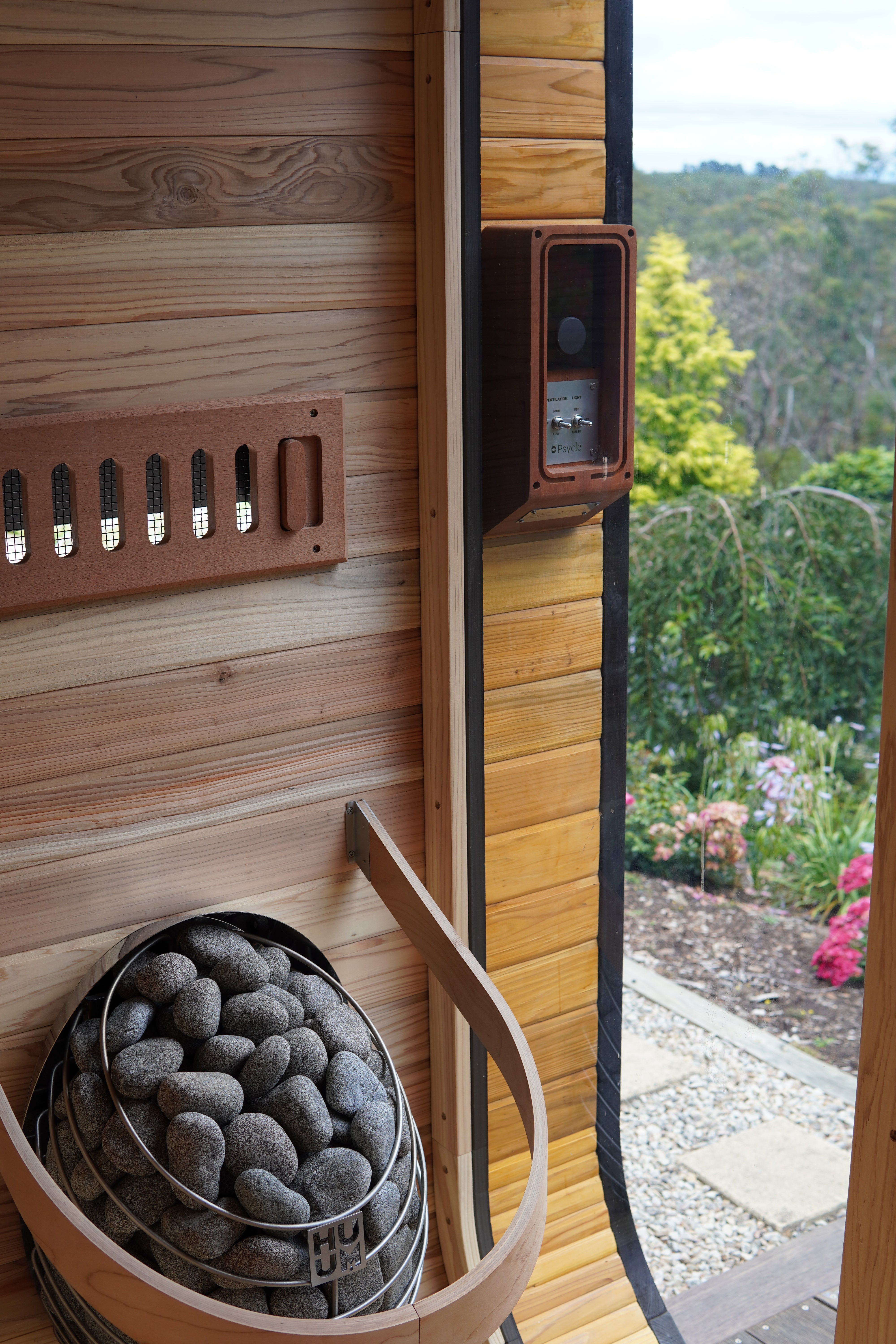
The stones are not decorative. They are thermal mass. A HUUM DROP heater loaded with 60kg of Olivine diabase stones holds heat across the full session, so the temperature does not crater when you open the door or pour löyly. A heater with only 15-20kg of stones responds like a kettle - it spikes and drops. Consistent high heat across a 15-20 minute session is what drives heat shock protein production, cardiovascular adaptation, and deep vasodilation. The physics matter.
Löyly is central to traditional sauna culture and to the therapeutic mechanism. Our complete guide to löyly explains why steam cycling amplifies every session outcome.
Traditional saunas require a dedicated electrical circuit - typically 32-50A - and proper ventilation to maintain air quality through long sessions. The infrastructure investment is higher than an infrared cabin. The therapeutic return, measured in decades of published research, is in a different category entirely.

Zero-Toxin Traditional Sauna, Built for Australian Conditions
38mm Japanese Cedar walls. HUUM DROP 9kW heater. 60kg Olivine diabase stones. Zero-glue construction. Australia-wide delivery in 120 days.
SEE THE GENESIS →Infrared vs Traditional Sauna: What the Clinical Evidence Actually Says
This is where the marketing diverges sharply from the research. The clinical literature on traditional Finnish sauna bathing is extensive, longitudinal, and consistent. The literature on infrared is thinner, shorter in duration, and largely based on lower-heat protocols that make direct comparison difficult.
A landmark 20-year cohort study of 2,315 Finnish men by Laukkanen et al., published in JAMA Internal Medicine (2015), found that sauna use 4-7 times per week reduced the risk of fatal cardiovascular disease by 50% compared to once-weekly bathing. This is the most cited piece of sauna health evidence in existence - and it was conducted entirely on traditional Finnish saunas operating at 80-100°C. No infrared equivalent exists at this scale or duration.
Research by Laukkanen et al. in Neurology (2018) found that sauna bathing 4-7 times per week was associated with a 61% lower risk of stroke compared to once-weekly use. Again, this evidence base is built on high-heat Finnish sauna protocol - not infrared panels operating at 50°C.
A 2020 study by Kunutsor et al. in Age and Ageing found that men who used a sauna 4-7 times per week had a 65% lower risk of developing Alzheimer's disease and a 66% lower risk of dementia overall compared to once-weekly users. The mechanism proposed is repeated cardiovascular stress adaptation and heat shock protein upregulation - both of which require sustained high-heat exposure.
Our science-backed guide to traditional sauna benefits in Australia covers the full evidence base for heat therapy, including cardiovascular, neurological, and metabolic outcomes.
What Infrared Research Does and Does Not Show
Infrared sauna research is not absent - it is early stage and narrower in scope. Studies on far infrared have shown improvements in congestive heart failure symptoms, some reduction in chronic pain markers, and improvements in skin barrier function. These are real and meaningful outcomes for the populations studied.
What infrared research has not yet produced: the 20-year longitudinal cardiovascular data, the stroke and dementia risk reduction findings, or the dose-response evidence that shows frequency mattering at the level documented for traditional bathing. The honest framing is that infrared has promising short-term symptom management data. Traditional sauna has population-level longevity evidence. They are not the same thing.
For a direct head-to-head on the full evidence base, our traditional vs infrared sauna science guide covers every mechanism in detail.
Temperature and Sweat: Why 80°C vs 50°C Is Not a Small Difference
The temperature gap between infrared and traditional sauna is not a matter of personal preference - it is a physiological difference that changes what your body does during and after a session. At 50-60°C, core body temperature rises slowly and peripheral sweating is moderate. At 80-100°C, core temperature elevation is faster and more pronounced, cardiac output increases significantly, and sweat rate can reach 0.5-1.0 litres per session. That thermal load is the stimulus behind heat shock protein (HSP) upregulation, growth hormone release, and the cardiovascular conditioning effects documented in the research.
Heat shock proteins are molecular chaperones produced in response to cellular stress. They repair damaged proteins, reduce inflammation, and support cardiovascular cell maintenance. The threshold stimulus for meaningful HSP production appears to require sustained core temperature elevation - something more consistently achieved at 80-100°C than at the lower infrared operating range.
Sweat in a traditional sauna is also qualitatively different. At higher temperatures and with löyly cycling, sweat rate and volume are substantially higher. Our guide to sauna detoxification and sweat examines what sweating at high temperatures actually removes and what the evidence supports.
Understanding how long each session should run matters as much as temperature. Our guide on how long to stay in a sauna covers duration recommendations by goal and experience level.
Build Quality and Longevity: Why Most Infrared Cabins Are a 5-Year Asset
Most infrared cabins sold in the Australian market are constructed from 10-15mm hemlock or spruce panels - kiln-dried softwoods chosen for their low cost, not their thermal or structural properties. At those thicknesses, panels flex with humidity and temperature cycling. MDF trim pieces absorb moisture and degrade. Emitter arrays - whether carbon or ceramic - have rated lifespans of 5-8 years under regular use. The typical infrared cabin at the $2,000-$5,000 price point is not a 15-year asset. It is a 5-year asset that will show its age in year three.
The joinery matters too. Cheap infrared cabins use glued tongue-and-groove panels because it is faster and cheaper to assemble. Glued joints in high-heat environments off-gas VOCs - particularly formaldehyde from the adhesive - that concentrate inside a sealed cabin running at 50-60°C. If you are sitting in a sealed timber box heating adhesive to cabin temperature, you are breathing the result. That is not a fringe concern. It is basic chemistry.
The Psycle Genesis uses zero-glue mechanical joinery throughout. Every panel connection is mechanical - no adhesives, no VOC off-gassing at temperature. The timber is 38mm Japanese Cedar, a species selected for its dimensional stability, natural antimicrobial properties, and aromatic oil content that actually improves with heat. The non-VOC oil finish protects the surface without sealing in chemicals.
The full breakdown of home sauna options by build quality and price is in our best home sauna Australia buyer's guide - including what separates entry-level flat-pack units from engineered cabins built for Australian conditions.

The Genesis: Engineering Standard, Not Marketing Language
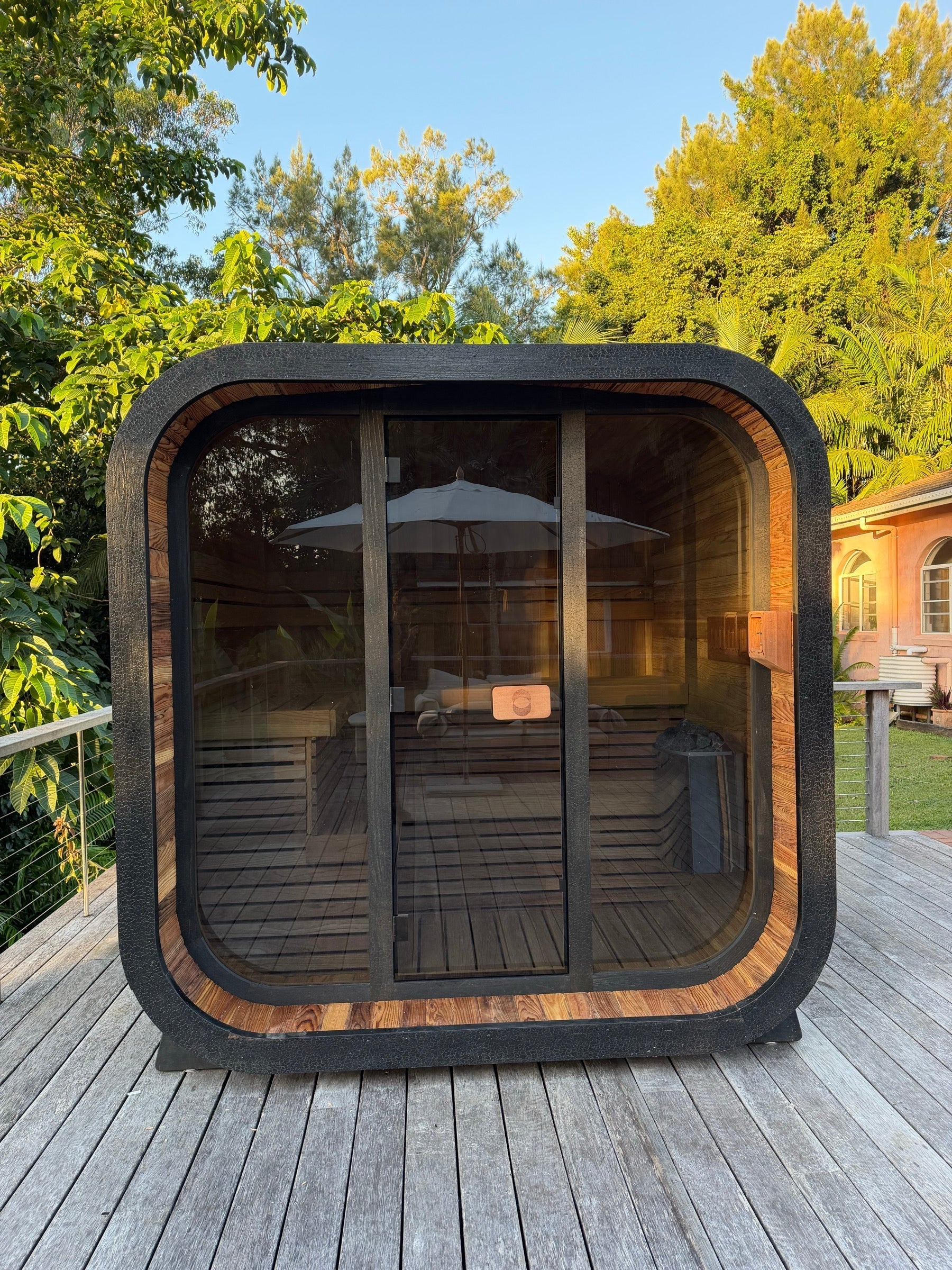
The Psycle Genesis is a 3-5 person traditional Finnish sauna built to a specification that does not exist at the infrared cabin price point. Thirty-eight millimetre Japanese Cedar walls. Zero-glue mechanical joints. HUUM DROP 9kW heater with 60kg of Olivine diabase stones. The stone volume alone - 60kg versus the 15-20kg you find in entry-level traditional units - means the thermal mass holds temperature across the full session regardless of how many times you open the door or pour löyly.
The 8mm 4+4mm laminated safety glass panel is not a skylight - it is a structural wall. Dual-layer laminated glass retains integrity if it fractures; a single-pane tempered panel does not. The IP67-rated amber and red LED lighting operates at 585-590nm and 630-635nm respectively - wavelengths that do not suppress melatonin. You can use the Genesis at 9pm and sleep by 10pm. Active mechanical ventilation at 88 m³/hr low and 120 m³/hr high keeps the air inside clean across long multi-user sessions.
The Genesis comes in two finishes: Natural Cedar or Charcoal Shou Sugi Ban. The Charcoal finish uses the Japanese technique of surface charring to harden the timber and create the deep architectural aesthetic that reads as a design feature rather than a backyard appliance. Both finishes carry a 3-year cabin warranty - the longest in the Australian market - and a 3-year heater warranty.
If space is your primary constraint, the Genesis Mini delivers identical zero-toxin specification in a 1-3 person footprint with a 6kW HUUM DROP or Harvia Vega heater and a 32A dedicated circuit requirement. For buyers comparing compact options, our 2 person sauna Australia guide covers the compact category in full.
The Sauna That Does Not Compromise on Materials
IP67 lighting. Zero-glue joints. 60kg stone thermal mass. 3-year cabin warranty. Built and shipped across Australia.
EXPLORE THE GENESIS →What Australian Buyers Say: Real Recovery, Real Standards
The buyers who choose the Genesis are not chasing novelty. They have typically already owned a cheaper unit - infrared or basic traditional - and found it wanting. The complaints are consistent: panels warping after 18 months of Brisbane humidity, emitter arrays failing in year three, heaters that never reached advertised temperature, cabins that looked like a shed rather than a considered design decision.
“I had a 2kW infrared cabin for two years. It was fine for the first year, then one of the panels started losing output. The timber around the door frame started separating. When I compared what I had spent in repairs and energy inefficiency versus buying properly the first time, the Genesis was the obvious answer,” said one Sydney buyer, now running a daily contrast protocol with the Genesis and Origin cold plunge.
Recovery markers - resting heart rate, HRV, perceived soreness after heavy training - are the metrics that Genesis owners report back on. Not a general sense of relaxation. Measurable data from wearables that tracks across a 90-day daily protocol. These are the people who treat recovery as a training variable, not a luxury afterthought.
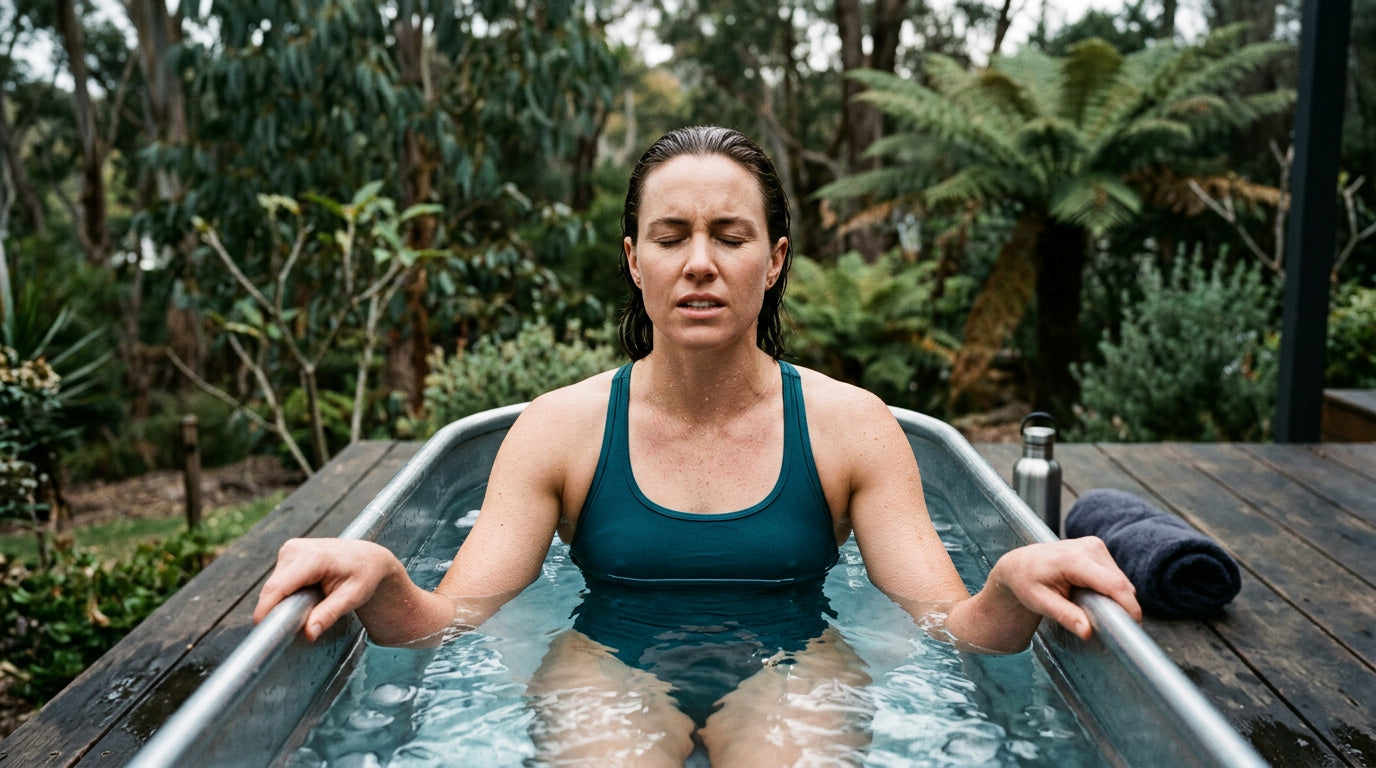
For buyers considering adding cold plunge to the protocol, our sauna and cold plunge Australia guide covers the full contrast therapy model and what the research says about combined heat and cold exposure.
Running Costs in Australia: Infrared vs Traditional, Honestly Compared
Infrared sauna running costs are typically quoted as an advantage over traditional. A 1-2kW infrared cabin running for 45 minutes costs approximately AU$0.10-$0.15 at current Australian electricity tariffs of $0.30-0.35/kWh. A 9kW traditional sauna running the same duration costs approximately AU$0.50-$1.00. On paper, infrared is cheaper per session.
The full picture is more complicated. Most infrared cabins require 20-30 minutes of warm-up before the session is effective. The 45-minute session is often 30 minutes of meaningful heat exposure, not 45. Traditional saunas with high stone volume - like the Genesis with 60kg of Olivine diabase - maintain temperature from the moment you enter and hold it through the session without cycling. You are paying for fewer minutes of effective heat in an infrared cabin than the total run time suggests.
Compare either cost against the alternatives. A weekly sports massage in Australia runs $100-$160 per session - $5,200-$8,320 per year. A premium gym membership with recovery facilities runs $1,200-$2,400 annually. A commercial sauna drop-in at a premium facility runs $35-$60 per visit. The KIHD cohort study by Laukkanen et al. (2015, JAMA Internal Medicine), following 2,315 men over 20 years in Finland, found that men who used the sauna 4-7 times per week had a 40% lower risk of all-cause mortality compared to once-weekly users. Four to seven sessions per week in a commercial facility is not financially realistic for most Australians. A home sauna is.
The full cost breakdown - including electrical installation, running costs over 10 years, and comparative value against commercial alternatives - is in our home sauna cost Australia guide.
Space, Installation, and Australian Outdoor Conditions
Infrared cabins are indoor-only products. Their thin panel construction, standard electrical connections, and emitter arrays are not rated for outdoor exposure. If your setup is a spare room, a converted garage, or an internal laundry space with a 10A socket, an infrared cabin is a functional option. If your setup is an outdoor deck, a backyard pavilion, or an exposed coastal garden - which describes a large proportion of the Australian properties where people want a sauna - infrared is not the product.
The Genesis is designed for Australian outdoor conditions. The 38mm Japanese Cedar walls handle temperature cycling between cold winter nights and summer heat without dimensional instability. The IP67-rated electrical components - lighting, ventilation controls - are rated for complete dust and water immersion. For fully exposed outdoor placement, the optional Colorbond roof kit provides overhead weather protection without requiring a permanent structure. A 50A dedicated circuit is required, which means an electrician visit - but that is a one-time infrastructure investment that serves the cabin for its full lifespan.
Australian summer heat is relevant to the infrared comparison in one specific way: on a 38°C Queensland afternoon, the 10-15°C gap between ambient temperature and a 50-60°C infrared cabin narrows significantly. The physiological stimulus from a 50°C infrared cabin on a hot day is not the same as a 50°C cabin on a 15°C winter morning. A traditional sauna running at 90°C maintains a consistent and substantial temperature differential from ambient regardless of season.
Our outdoor sauna Australia guide covers placement, site preparation, and the specific considerations for building a sauna setup on Australian properties across different climate zones.
Installation requirements - electrical, ventilation, and structural - are covered in detail in our home sauna installation Australia guide, including what to expect from the 120-day Genesis build and delivery process.
Infrared vs Traditional Sauna: Direct Comparison
| Factor | Infrared Sauna | Traditional Finnish Sauna | Psycle Genesis |
|---|---|---|---|
| Operating temperature | 45-60°C | 80-100°C | 80-100°C (HUUM DROP 9kW) |
| Heat mechanism | Radiant infrared panels | Convective air + löyly steam | Convective + löyly, 60kg stone mass |
| Clinical evidence depth | Short-term, symptom-focused | 20-year longitudinal cohort studies | Full traditional Finnish evidence base |
| Cardiovascular evidence | Limited, early stage | 50% reduction in fatal CV events (Laukkanen 2015) | Full traditional evidence applies |
| Timber construction | 10-15mm hemlock or spruce | Varies: 20-38mm cedar or spruce | 38mm Japanese Cedar, zero-glue |
| Off-gassing risk | High (glued panels, MDF trim) | Moderate (depends on construction) | Zero (mechanical joints, non-VOC oil) |
| Running cost per 45-min session | AU$0.10-$0.15 | AU$0.40-$1.20 (varies by heater) | AU$0.50-$1.00 (9kW at $0.30-0.35/kWh) |
| Electrical requirement | Standard 10-15A socket | 32-50A dedicated circuit | 50A dedicated circuit |
| Outdoor installation | Not suitable | Possible with correct spec | Yes - IP67 components, Colorbond roof kit |
| Expected lifespan | 5-8 years (emitter-limited) | 15-25 years (quality-dependent) | 25+ years (38mm cedar, 5yr warranty) |
| Warranty (AU market) | 1-3 years typical | 2-5 years typical | 5 years cabin, 3 years heater |
Top Infrared Saunas in Australia: What the Mid-Market Looks Like
To be direct: there are functional infrared cabins in the Australian market. If your budget is under $3,000, your space is indoors only, and your primary goal is mild heat relaxation rather than therapeutic cardiovascular conditioning, infrared is a viable entry point. These are the three mid-market options most commonly considered by Australian buyers.
Clearlight Sanctuary 2 (approx. AU$5,000-$6,500). One of the better-built infrared units in the Australian market. True full-spectrum (NIR, MIR, FIR) emitters. Low-EMF certification. Western Red Cedar construction at 15-18mm. Two-person capacity. Solid warranty for the category. The limitation is structural: at that panel thickness, you will see movement in high-humidity outdoor environments. Indoor installation recommended. Emitter longevity is typically 7-10 years with regular use.
Sunlighten mPulse (approx. AU$7,000-$9,000). Premium infrared with patented SoloCarbon full-spectrum panels. App-controlled presets for specific health goals. The research partnership with clinical institutions adds credibility. This is the strongest infrared option for buyers committed to the category. Still operates at 45-60°C, still uses thin timber construction, and still lacks the longitudinal evidence base behind traditional bathing.
Ceda Health Infrared Sauna (approx. AU$1,800-$3,500). The volume seller in the Australian mid-market. Adequate for entry-level use. Hemlock panels, carbon emitters, 1-2 person capacity. Expected lifespan under regular use is 4-6 years before emitter degradation becomes noticeable. The price is the argument. The construction is not.
Buyers who start researching these options seriously - comparing warranties, materials, and clinical evidence - consistently migrate upward. The gap between a $5,000 infrared cabin and a traditional Finnish sauna built to a real engineering standard is not as large as it first appears, and the 10-year value case is not close.
Who Should Buy Infrared vs Who Should Buy Traditional
Infrared is the right choice if: your space is indoor only and non-negotiable, your budget ceiling is under $3,500, your primary goal is mild relaxation and skin warmth rather than cardiovascular conditioning, or you have a medical condition that makes high heat (80-100°C) contraindicated by your doctor.
Traditional Finnish sauna is the right choice if: you want the full evidence base behind your investment, you have access to a dedicated circuit (or are willing to install one), you have outdoor or substantial indoor space, you intend to use it 3-7 times per week as a performance and recovery tool, or you are buying once and want an asset that holds its value and function for 20+ years.
The KIHD study's finding of 40% lower all-cause mortality with 4-7 weekly sessions is not a number that should be treated as a nice-to-have. For a high performer who is already dialling in sleep, nutrition, and training, the sauna frequency finding is the same category of evidence as the exercise mortality data. It warrants the same seriousness of investment.
For buyers weighing the health outcomes in full, our sauna benefits Australia evidence guide covers every documented therapeutic mechanism from cardiovascular to skin health and sleep quality.
If you are evaluating contrast therapy - adding cold plunge to the protocol - the combination delivers outcomes neither heat nor cold achieves alone. Our contrast therapy Australia guide covers the full science and protocol.
Sleep is one of the most consistent outcomes reported by Genesis owners. Our sauna for sleep Australia guide explains the thermoregulatory mechanism behind post-sauna sleep quality improvement.
For athletes and people training regularly, the specific post-training recovery protocol matters. Our sauna after workout guide covers timing, duration, and what the research says about heat and muscle recovery.
If you are also considering a cold plunge as part of your setup, our cold plunge tub Australia buyer's guide covers the full category and what separates genuine ice bath engineering from glorified stock tanks.
Frequently Asked Questions: Infrared Sauna Australia
Is infrared sauna better than traditional sauna?
For mild relaxation and skin warmth, infrared is a functional option. For cardiovascular conditioning, stroke and dementia risk reduction, and the full range of heat therapy outcomes documented in clinical research, the evidence base sits firmly with traditional Finnish sauna operating at 80-100°C. The most cited longitudinal studies - including Laukkanen et al. in JAMA Internal Medicine (2015) and Neurology (2018) - were conducted exclusively on traditional high-heat sauna bathing. No infrared study matches their scale or duration.
What is the difference between far infrared and near infrared saunas?
Far infrared (FIR) operates at 5-15 micrometre wavelengths and produces warmth absorbed at the skin surface - the dominant technology in most infrared cabins sold in Australia. Near infrared (NIR) uses shorter wavelengths (0.7-1.4 micrometres) marketed for tissue penetration, collagen stimulation, and wound healing. Full-spectrum units combine both. FIR is better studied for general heat relaxation; NIR evidence is earlier stage and more condition-specific. Neither type replicates the convective high-heat and löyly mechanism of traditional Finnish sauna.
How much does it cost to run an infrared sauna in Australia?
A 1-2kW infrared cabin running for 45 minutes costs approximately AU$0.10-$0.15 at standard Australian electricity tariffs of $0.30-0.35/kWh. That figure excludes warm-up time, which adds 20-30 minutes to the total draw. A 9kW traditional sauna running 45 minutes costs AU$0.50-$1.00 at the same tariffs, but delivers consistent high-heat exposure from the moment the session begins. Over 10 years of 5x weekly use, the running cost difference between infrared and traditional is typically $500-$1,500 total - marginal against the capital cost difference and the value gap in therapeutic outcomes.
Can I use an infrared sauna outdoors in Australia?
Most infrared cabins are not rated for outdoor use. Thin panel construction (10-15mm), standard electrical connections, and carbon or ceramic emitters are not designed to handle Australian sun, rain, and temperature cycling. If outdoor installation is your requirement, a traditional sauna built with adequate wall thickness, IP-rated electrical components, and weather-appropriate timber is the correct specification. The Psycle Genesis uses 38mm Japanese Cedar walls, IP67-rated lighting, and is available with an optional Colorbond roof kit for fully exposed outdoor placement.
Are infrared saunas safe? What are the health risks?
Infrared saunas are broadly safe for healthy adults. The main risks are dehydration, low blood pressure after prolonged use, and EMF exposure from emitter arrays - though low-EMF certification is available on premium units. The less-discussed risk is VOC off-gassing from glued panel construction heated to cabin temperature. Cabins built with MDF trim and adhesive joinery release formaldehyde at heat - a consideration most marketing materials do not address. Our sauna health risks Australia guide covers the full safety picture for both infrared and traditional sauna.
What electrical circuit does a home sauna need in Australia?
Infrared cabins typically run from a standard 10A or 15A household socket - no dedicated circuit required. Traditional saunas require a dedicated circuit: the Genesis needs a 50A circuit (single or three phase); the Genesis Mini needs a 32A circuit. This requires a licensed electrician for installation. The electrical infrastructure is a one-time cost that serves the cabin for its full lifespan. Our home sauna installation Australia guide covers the full electrical, ventilation, and structural requirements.
How often should you use a sauna to get health benefits?
The clinical evidence points consistently toward 4-7 sessions per week as the frequency associated with the strongest outcomes - including 50% reduction in fatal cardiovascular events and 65% lower Alzheimer's risk. Even 2-3 sessions per week shows meaningful benefit over once-weekly use in the KIHD cohort data. Home installation makes this frequency realistic where commercial sauna access does not. Our sauna frequency guide covers the dose-response evidence in full.
Ready to Build This Into Your Routine?
Australia-wide delivery. 3-year cabin warranty. $1,000 refundable deposit. 120-day build - order now for summer delivery.
SHOP THE GENESIS →