
How Long to Stay in a Sauna: By Goal & Experience
How Long to Stay in a Sauna: By Goal, Experience Level & the Science

The optimal sauna session duration is 15–20 minutes at 80–100°C for most adults seeking cardiovascular, recovery, or metabolic benefits. Beginners should start at 5–10 minutes and build gradually. A 2018 study by Laukkanen et al. in Mayo Clinic Proceedings found that Finnish men who used a sauna 4–7 times per week for sessions of 19 minutes had a 50% lower risk of fatal cardiovascular events compared to once-weekly users. Duration is not guesswork — it is a dialled-in variable.
Most articles on this topic give you a vague range and call it a day. This one does not. Below is a goal-by-goal breakdown of how long to stay in a sauna, what the research actually supports, and the one thing most home sauna buyers get wrong before they even sit down.
Zero-Toxin Sauna Therapy, Built for Australians
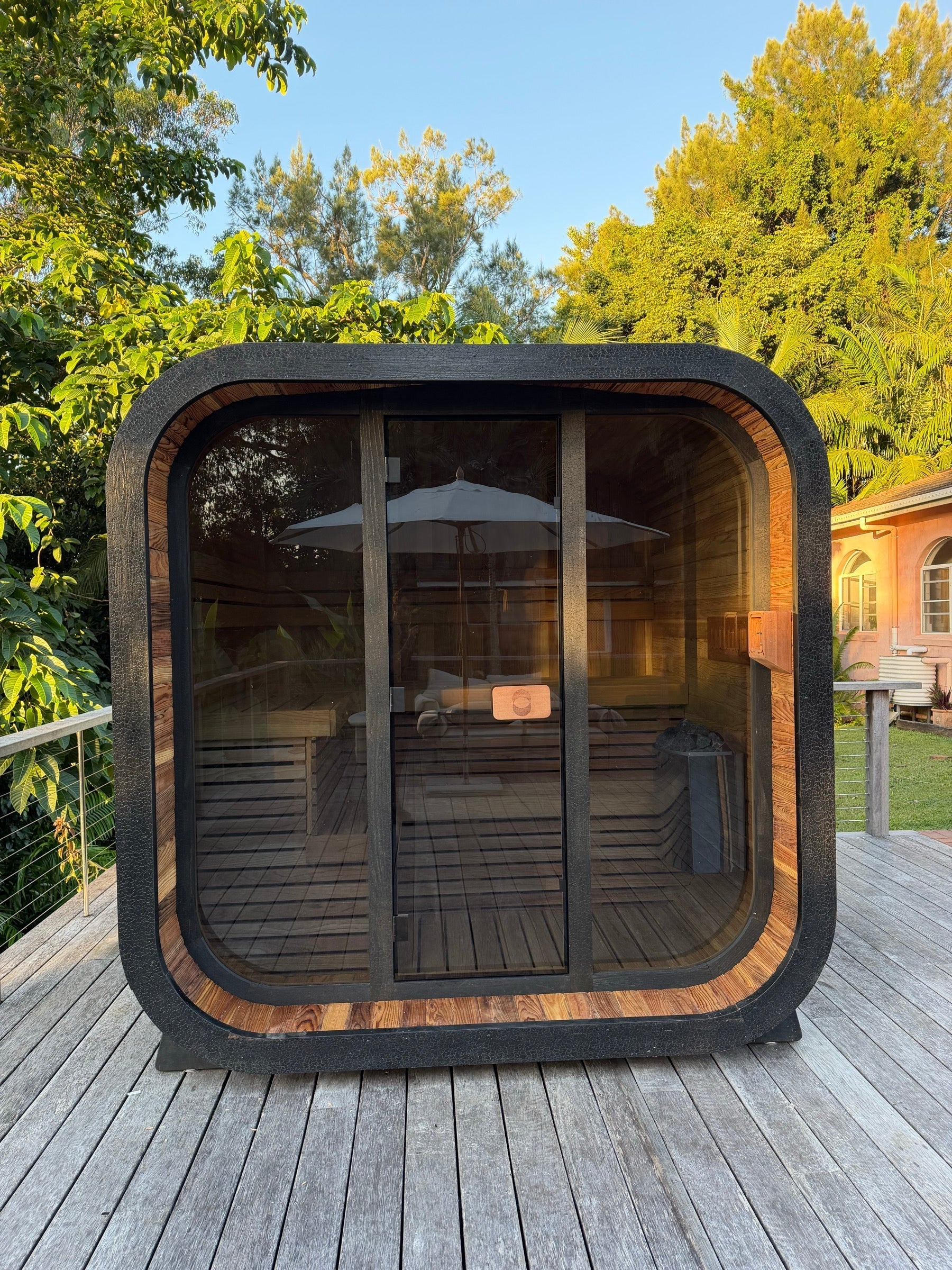
Japanese Cedar exterior. Zero-glue construction. HUUM Drop heater. Built to last decades — not just look good in a showroom.
SEE THE GENESIS →What Happens Inside the Body During a Sauna Session?
Understanding duration starts with understanding physiology. When you enter a traditional Finnish sauna at 80–100°C, your core body temperature begins rising within minutes. Heart rate increases — mimicking the cardiovascular load of moderate exercise. Blood is redirected to the skin surface to aid cooling. Sweat begins within 5–10 minutes depending on acclimatisation.
The physiological cascade — heat shock protein expression, growth hormone release, nitric oxide production, and norepinephrine elevation — takes time to activate. This is why session length matters. Too short and you miss the threshold. Too long and you tip into dehydration and heat stress without additional benefit.
A 2019 review by Patrick and Johnson in FASEB Journal confirmed that robust neuroendocrine responses — including a 2–5x increase in growth hormone — require sustained heat exposure above 80°C for at least 15–20 minutes. That window is where most of the research clusters.
How Long Should Beginners Stay in a Sauna?
Start at 5–10 minutes. Not because that is the optimal dose — it is not — but because heat acclimatisation is a physiological process that cannot be bypassed. Your body needs time to improve thermoregulation, plasma volume expansion, and cardiovascular response to heat.
Push too hard in the first week and you risk dizziness, nausea, or fainting. None of those outcomes build a sustainable protocol. Build the habit first. Build the duration second.
A practical beginner ramp looks like this:
Week 1–2: 5–8 minutes per session
One session per day, or every second day. Focus on breathing and settling into the heat. Exit immediately if you feel light-headed.
Week 3–4: 10–15 minutes per session
Add löyly if using a traditional Finnish sauna. Begin noting how your body responds to the full heat load before any cooling intervention.
Month 2+: 15–20 minutes per session
This is the clinical threshold. Most research demonstrating cardiovascular and metabolic benefits uses sessions in this range. This is your baseline target.
For a deeper look at how session frequency interacts with duration, our guide on how often you should use a sauna covers the weekly protocols backed by the Finnish research data.
How Long to Sauna After a Workout?
Wait 10 minutes after training, then do 15–20 minutes in the sauna. The 10-minute gap lets your cardiovascular system step back from peak exertion before you introduce the additional heat load. Going straight from training into a 90°C sauna stacks two major cardiovascular demands simultaneously — not recommended, particularly in Australian summer conditions.
Post-training sauna sessions accelerate muscle glycogen resynthesis, reduce delayed onset muscle soreness (DOMS), and elevate growth hormone levels beyond what exercise alone produces. A 2015 study by Scoon et al. in the Journal of Science and Medicine in Sport found that three weeks of post-exercise sauna bathing improved run time to exhaustion by 32% in distance runners.
Duration depends on training intensity. After a light session, 15 minutes is enough. After a heavy strength or conditioning session, 20 minutes at moderate heat (80–85°C) is the upper limit before diminishing returns on recovery. Our detailed breakdown of how long to sit in a sauna after a workout goes deeper on intensity-specific protocols.
How Long to Stay in a Sauna for Muscle Soreness and Inflammation?
15–20 minutes. Heat therapy reduces inflammatory markers by increasing circulation and promoting vasodilation. The heat acts on muscle spindles — reducing tension — and on the autonomic nervous system, lowering the sympathetic activation that sustains inflammatory states.
This is not a passive effect. It requires sustained heat exposure to drive the circulatory response that flushes metabolic waste from fatigued tissue. A 10-minute session barely scratches it. Twenty minutes at proper Finnish sauna temperatures — not the 50–60°C of a budget infrared box — delivers a genuine therapeutic stimulus.
How Long to Sauna for Heart Health?
15–20 minutes per session, 4–7 times per week. This is not an opinion — it is the protocol that produced the strongest cardiovascular outcomes in the 25-year Kuopio Ischaemic Heart Disease Risk Factor Study (Laukkanen et al., JAMA Internal Medicine, 2015). Men in the highest-frequency group saw a 63% lower risk of sudden cardiac death and a 50% reduction in fatal cardiovascular disease.
The mechanism is understood: sauna bathing at 80–100°C produces a sustained increase in heart rate (to 100–150 bpm), reduces arterial stiffness, lowers resting blood pressure over time, and improves endothelial function. It is a cardiovascular training stimulus with near-zero joint load.
For individuals with existing cardiac conditions, pre-existing hypertension, or on medications that affect thermoregulation — consult your GP before building a sauna protocol. The research supports its use in most adults, but not as self-directed treatment for diagnosed conditions.
Our evidence-based overview of sauna benefits for Australians covers the full cardiac, metabolic, and cognitive research in one place.
The Sauna That Does Not Compromise
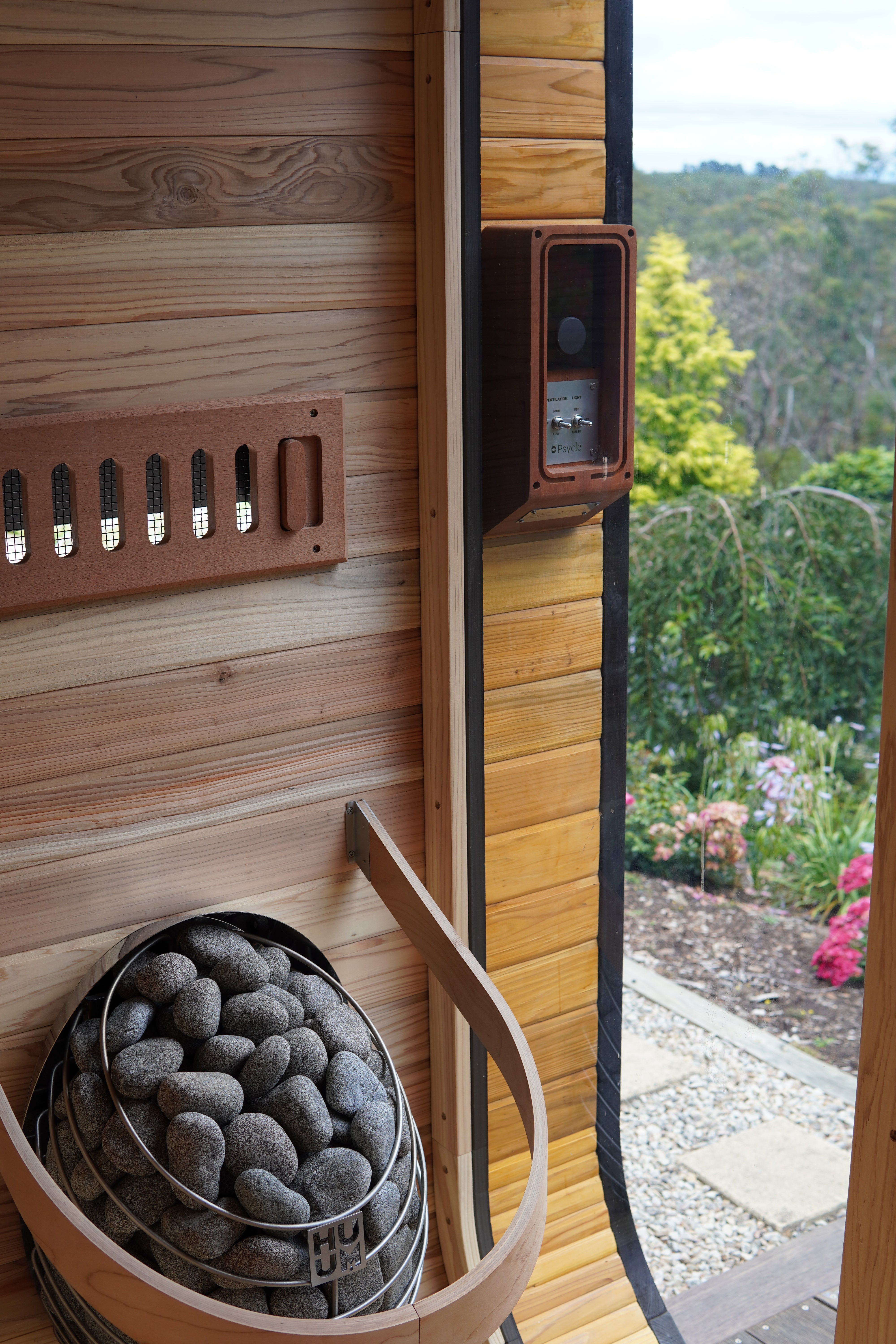
Active mechanical ventilation. Blue light blocking lighting. HUUM Drop 9kW heater with 60kg stone volume. IPX4 rated for year-round outdoor installation. Every detail engineered.
EXPLORE THE GENESIS →How Long to Sauna for Mental Health and Stress?
10–20 minutes is the effective window. Sauna bathing triggers a significant increase in norepinephrine — a study by Leppäluoto et al. in the Annals of Clinical Research (1986) documented a 310% increase after a single Finnish sauna session. Norepinephrine is a primary driver of focus, mood elevation, and stress resilience.
Beta-endorphin levels also rise during sauna use, contributing to the post-session calm that experienced users describe. This is not relaxation in the passive sense. It is a measurable neuroendocrine shift.
For mental health specifically, consistency matters more than duration. A 15-minute session five days per week will produce more durable mood and stress regulation than a 30-minute session once a week. Build the ritual. The duration becomes secondary to regularity.
How Long to Sauna When You Have a Cold or Flu?
10–15 minutes, reduced intensity, with extra hydration. When you are ill, your body is already under systemic stress. Layering significant heat load on top of an active immune response is not the place to push duration. Shorter sessions — enough to stimulate circulation and raise core temperature slightly — are the appropriate approach.
There is evidence that sauna use can stimulate white blood cell production and reduce the duration of upper respiratory infections when used early in illness. A 1990 study published in Annals of Medicine by Ernst et al. found sauna users had significantly fewer common cold episodes than controls. But that protective effect comes from regular use as prevention — not from sitting in a 95°C room while already febrile.
If you have a fever above 38°C, skip the session entirely. Heat stress plus fever is not therapeutic. It is a burden on an already compromised system. For a detailed read on this, our guide on whether sauna is good for cold and flu covers Andrew Huberman's take and the supporting literature.
How Long to Sauna for Skin Benefits?
10–20 minutes. The skin benefits of sauna use — improved circulation to the dermal layer, pore-clearing sweat, and collagen stimulation from heat shock protein expression — activate relatively early in a session. Ten minutes at high heat is enough to initiate meaningful dermal blood flow. Twenty minutes delivers more sustained stimulation without tipping into the dehydration that undermines skin health.
What ruins skin in the sauna is not duration — it is the rebound dehydration from insufficient fluid intake before and after sessions. Hydrate before. Hydrate after. The session itself is not the variable to obsess over for skin outcomes. Our deep-dive on saunas and skin health covers the dermatological research directly.
How Long to Sauna for Detoxification?
This one requires a direct answer, not a reassuring one: sweat is not the primary detoxification pathway. The liver and kidneys handle the majority of toxin elimination. Sweat does contain trace heavy metals — lead, cadmium, arsenic — and some research supports sauna use as a complementary detoxification pathway, but the clinical significance depends on baseline toxin load and session regularity, not single-session duration.
If detoxification is your goal, 20–30 minutes of sustained sweating in regular sessions is the range cited in most clinical protocols. But the more important variable is the construction of your sauna. If you are sweating in a box built with MDF panels and formaldehyde-based glue, you are breathing off-gassed chemicals at 90°C. That is not detoxification — that is the opposite of it. Our piece on sauna detoxification and sweat toxins addresses the evidence directly.
Zero-glue construction is not a marketing phrase. It is the difference between what you are trying to achieve and what you are actually doing.
Duration by Goal: The Reference Guide
| Goal | Recommended Duration | Temperature | Notes |
|---|---|---|---|
| Beginner acclimatisation | 5–10 min | 70–80°C | Build tolerance first. Exit if dizzy. |
| Post-workout recovery | 15–20 min | 80–90°C | Wait 10 min after training before entering. |
| Muscle soreness / inflammation | 15–20 min | 80–100°C | Sustained heat required for circulatory response. |
| Cardiovascular health | 15–20 min | 80–100°C | 4–7x per week for maximum cardiac benefit. |
| Mental health / stress | 10–20 min | 80–100°C | Consistency matters more than single-session duration. |
| Skin health | 10–20 min | 80–100°C | Hydration before and after is non-negotiable. |
| Detoxification support | 20–30 min | 80–100°C | Only effective in a zero-toxin sauna — glued MDF off-gasses at heat. |
| Cold and flu (mild) | 10–15 min | 70–80°C | Skip entirely if fever is above 38°C. |
Why the Sauna You Use Changes Everything
There is a variable missing from most duration guides: the construction of the sauna itself. Duration recommendations are based on research conducted in traditional Finnish saunas built from natural timber — no glues, no synthetic panels, no chemical finishes.
Most home saunas sold in Australia are built with glued MDF or particle board interiors. Heat that to 90°C and those panels begin off-gassing formaldehyde. The longer your session, the more you are exposed to it. That is not a minor issue — formaldehyde is a known carcinogen classified by the International Agency for Research on Cancer (IARC) at Group 1.
The Genesis is built with zero-glue mechanical joints, Japanese Cedar exterior, and Nordic Spruce benches. No adhesives. No synthetic panels. No off-gassing at any temperature. Active mechanical ventilation keeps the air clean throughout the session. When the research says 20 minutes in a Finnish sauna is beneficial, the Genesis is the infrastructure that delivers that result. A flat-pack box with MDF walls is not.
Understanding the full construction standard — including why ventilation is not optional — starts with our guide to sauna ventilation and why it makes or breaks your session.
The Maximum: How Long Is Too Long in a Sauna?
Beyond 30 minutes in a single session, you are in diminishing return territory for most goals — and approaching real risk for some people. Core body temperature above 40°C becomes dangerous. Severe dehydration impairs thermoregulation. Prolonged heat exposure can trigger vasovagal syncope — fainting — particularly in those who are dehydrated or unacclimatised.
The research does not validate ultra-long sessions. No study demonstrates that 45 or 60 minutes produces outcomes that 20 minutes cannot. What the research does support is frequency over duration — more sessions per week at 15–20 minutes will outperform occasional long sessions every time.
If you are sweating out of a session at 20 minutes and feeling the need for more, the answer is to add a second session later in the day with a full cool-down interval — not to extend the single session beyond your body's current acclimatisation level.
Frequently Asked Questions
How long should a beginner stay in a sauna for the first time?
5–10 minutes is the right starting point. This gives your body time to begin adapting to heat stress without overloading your thermoregulatory system. Exit immediately if you feel dizzy, nauseous, or light-headed. Build duration gradually over 4–6 weeks before targeting the 15–20 minute range where most clinical benefits are documented.
Is 20 minutes in a sauna enough to get health benefits?
Yes. A 2018 study by Laukkanen et al. in Mayo Clinic Proceedings used average sessions of 19 minutes and demonstrated a 50% reduction in fatal cardiovascular disease for frequent users. Most peer-reviewed research on sauna health benefits — cardiovascular, metabolic, neuroendocrine — clusters around 15–20 minute sessions at 80–100°C. This is the evidence-based target for most adults.
Can you stay in a sauna for too long?
Yes. Beyond 30 minutes, the risk-to-benefit ratio shifts. Core temperature can approach dangerous levels, dehydration compounds, and the physiological stimulus that drives adaptation has already peaked. The research supports frequency — 4–7 sessions per week — not extended single sessions. If you want more, add sessions throughout the week, not minutes to your current session.
How long should you sit in a sauna after a workout?
Wait 10 minutes post-training, then sit for 15–20 minutes. The waiting period allows your cardiovascular system to step back from peak exertion before the additional heat load. A 2015 study by Scoon et al. in the Journal of Science and Medicine in Sport found post-exercise sauna bathing improved endurance performance by 32% over three weeks — making this one of the most well-supported post-training recovery protocols available.
Does sauna session duration affect testosterone?
Yes, but the relationship is non-linear. Short sessions (less than 10 minutes) produce minimal hormonal response. Sessions of 15–20 minutes at 80–100°C are associated with transient elevations in luteinising hormone and downstream testosterone production. Critically, chronic overheating of the testes suppresses testosterone — which is why temperature, duration, and cooling protocol all matter. Our guide on sauna benefits for testosterone covers the mechanism in full.
Ready to Build This Into Your Routine?
Free Australia-wide delivery. 3-year cabin warranty. 120-day build — order now and lock in your production slot.
SHOP THE GENESIS →