Sauna Benefits for Men: Evidence-Based Guide | Psycle

- A 20-year study of 2,315 Finnish men found sauna use 4-7x per week reduced fatal cardiovascular disease risk by 50% (Laukkanen et al., JAMA Internal Medicine, 2015).
- Two 20-minute sauna sessions with a 30-minute cool-down period can increase growth hormone by 200-300%, supporting testosterone optimisation and muscle recovery.
- Frequent sauna use (4-7x per week) is associated with a 61% lower risk of stroke compared to once-weekly use (Laukkanen et al., Neurology, 2018).
- Contrast therapy - alternating sauna heat with cold plunge immersion - is one of the most evidence-backed recovery modalities for reducing delayed onset muscle soreness in athletes.
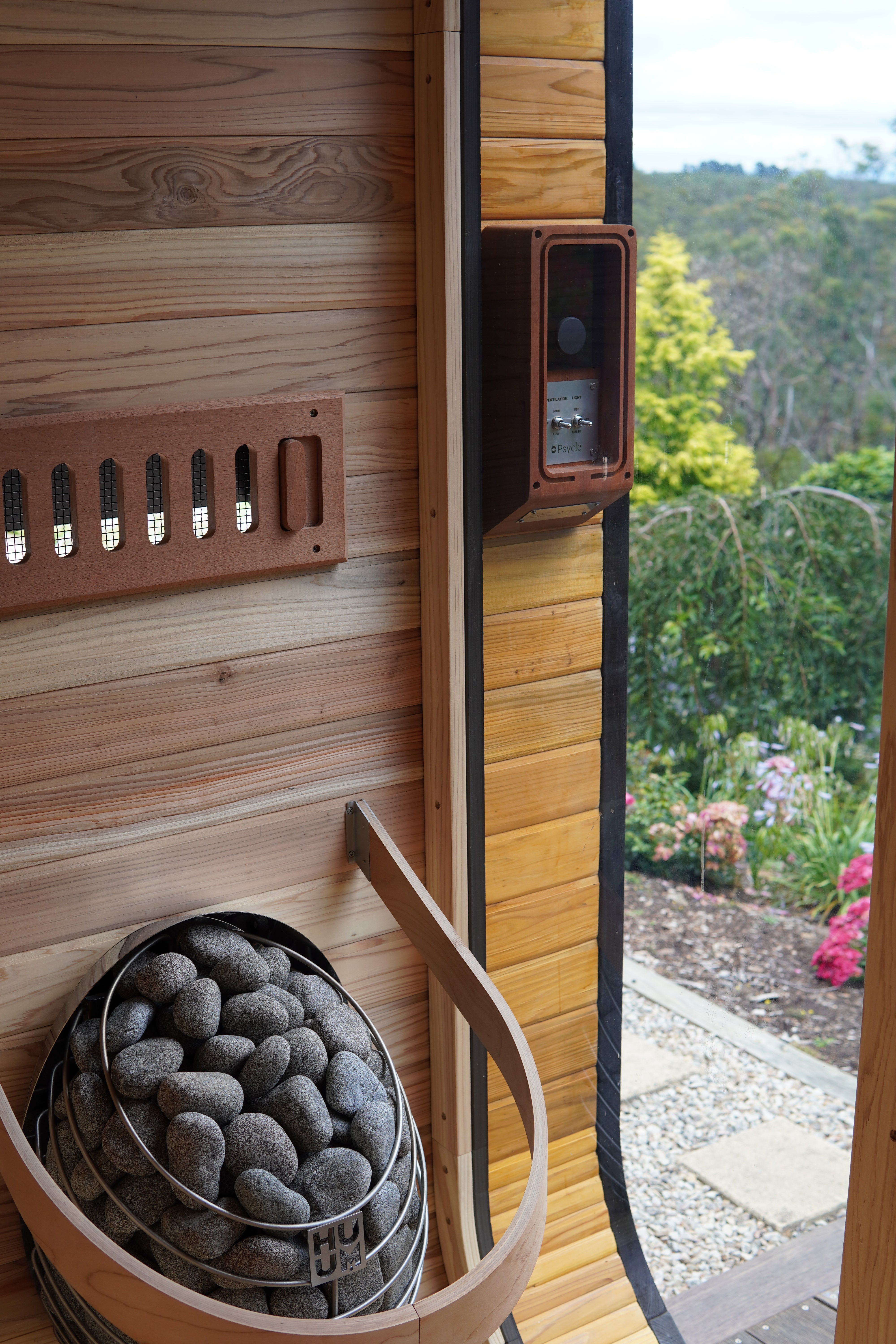
- The Genesis sauna runs on a 9kW HUUM DROP heater with 60kg of Olivine diabase stones, reaching 80-100°C - the temperature range used in all major Finnish research cohorts.
- A Genesis sauna session costs approximately AU$0.50-$1.00 per use - less than a third of one commercial sauna drop-in or physio session.
- Most Australian men can install a prefabricated sauna under 10m² as exempt development - no building permit required in most states.
By Psycle Wellness · Last updated: June 2026 · 18 min read
Sauna Benefits for Men: The Definitive Evidence-Based Guide for Australia
Sauna benefits for men are among the most thoroughly documented in preventive medicine. Regular use cuts fatal cardiovascular disease risk by 50%, raises growth hormone by up to 300%, speeds muscle recovery, reduces cortisol, and extends measurable healthspan. This is not a wellness trend. It is two decades of Finnish longitudinal research applied to how men actually age.
Most men in Australia are training hard, managing stress, and watching their health markers with more intention than any previous generation. What they are not doing is recovering with the same precision they train. That gap is expensive - not in money, but in performance, longevity, and the compounding cost of chronic inflammation that no amount of protein and sleep can fully offset on its own.
This guide covers everything the research actually says about sauna benefits for men - cardiovascular protection, testosterone and hormonal health, muscle recovery, mental resilience, and longevity protocols. It also covers what most articles on this topic get wrong, and how to build a home sauna ritual in Australia that matches the Finnish standard the science is based on. For a broader look at the full evidence base, start with our complete guide to sauna benefits in Australia.
Why Most Men Are Under-Recovering - and What It Actually Costs
You can track your macros to the gram. You can monitor HRV every morning. You can sleep eight hours with blackout curtains and a mouth guard. And still, if your recovery infrastructure does not match your training load, you are running a deficit that accumulates faster than it resolves.
Chronic inflammation is the mechanism. Hard training - particularly resistance training and high-intensity conditioning - generates systemic inflammatory load that the body needs 48-72 hours to resolve at rest. Most men training five or six days per week are not giving the body that window. The result is not catastrophic. It is slow: recovery quality degrades, cortisol creeps up, sleep becomes lighter, testosterone trends down over years rather than months.
Commercial recovery options in Australia compound the problem. A weekly sports massage costs AU$100-$160 per session - AU$5,200-$8,320 per year at once-weekly frequency. A gym recovery suite membership runs AU$1,200-$2,400 per year on top of training costs. Commercial sauna drop-ins in major Australian cities average AU$35-$55 per session. None of these are bad options. None of them are yours - available every morning, on your schedule, in the time you have, with the intensity you need.
The sauna is not the only answer to this problem. But it is the most evidence-backed, most accessible once you own the infrastructure, and the one that stacks the most adaptive benefits simultaneously: cardiovascular, hormonal, neurological, and metabolic. The research on this is not preliminary. It is 20 years long and it tracked 2,315 men.
Zero-Toxin Heat, Built for Daily Use
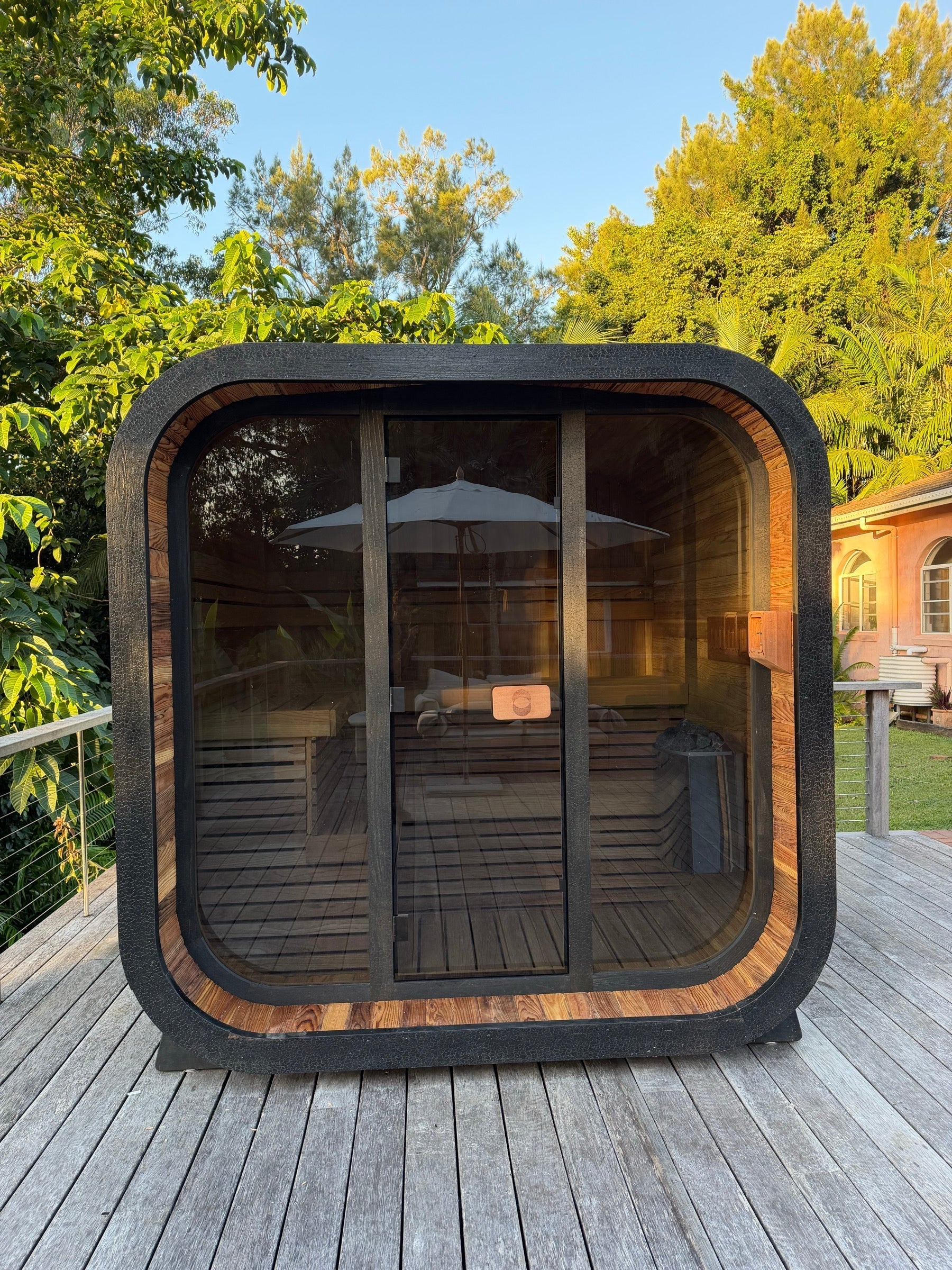
Japanese Cedar. Zero-glue construction. HUUM DROP 9kW heater. 60kg of Olivine diabase stones. The Genesis is engineered for the men who stopped settling for flat-pack alternatives.
SEE THE CONTRAST KIT →The Research Foundation: What Two Decades of Finnish Data Actually Shows
The most important body of evidence on sauna benefits for men comes from Kuopio, Finland. In 1984, Dr. Jari Laukkanen and colleagues began enrolling middle-aged Finnish men in what would become the most cited sauna research cohort in history - the Kuopio Ischaemic Heart Disease Risk Factor Study, tracking 2,315 men over 20 years.
The findings reshaped how cardiologists, longevity researchers, and sports scientists think about passive heat therapy. The Laukkanen et al. study published in JAMA Internal Medicine (2015) found that sauna use 4-7 times per week reduced the risk of fatal cardiovascular disease by 50% compared to once-weekly bathing. This is a dose-response relationship - frequency matters, and the benefit compounds with consistency.
Laukkanen continued publishing on the cohort data, drilling into specific mechanisms. Research by Laukkanen et al. in Neurology (2018) found that sauna bathing 4-7 times per week was associated with a 61% lower risk of stroke compared to once-weekly use. These are not marginal improvements. These are the kinds of risk reductions that clinical pharmacology struggles to match without significant side-effect profiles.
A 2018 systematic review published in Mayo Clinic Proceedings synthesised the full body of sauna research and concluded that the cardiovascular adaptations from regular sauna bathing are physiologically analogous to moderate-intensity aerobic exercise - a finding with serious implications for men whose joint health, injury status, or schedule limits their cardio training capacity.
The Kuopio cohort used traditional Finnish saunas operating at 79°C average air temperature, with sessions averaging 14 minutes in duration, and relative humidity between 10-20%. This is the standard. It is not an infrared sauna. It is not a steam room. It is dry, high-temperature Finnish heat - the same heat profile the Genesis delivers at 80-100°C with active mechanical ventilation pulling 88-120 m³/hr.
Understanding the research standard matters because it tells you exactly what kind of sauna to buy - and what kind to avoid. Explore the full science behind traditional sauna benefits in Australia for a deeper comparison of sauna types and their evidence bases.
Sauna Testosterone Benefits: What the Hormonal Science Actually Says
Testosterone optimisation is one of the most searched sauna benefits for men - and one of the most misrepresented. The mechanism is real, but it is indirect. Understanding it correctly means you can use the sauna to support your hormonal environment rather than hoping for an effect that oversimplified articles promised you.
The primary hormonal pathway is heat stress and growth hormone. Research from the University of New Mexico found that sauna use can increase growth hormone levels by 200-300%, with two 20-minute sessions separated by a 30-minute cool-down period producing the most pronounced effect. Growth hormone is the primary driver of lean tissue repair, fat metabolism, and the anabolic environment that supports optimal testosterone expression.
The secondary pathway is cortisol suppression. Cortisol and testosterone operate in opposition. Chronically elevated cortisol - the hallmark of under-recovered, over-stressed men - directly suppresses testosterone production at the hypothalamic-pituitary-gonadal axis. Regular sauna use is associated with measurable reductions in cortisol, creating a more favourable testosterone-to-cortisol ratio without any pharmacological intervention.
There is a third mechanism worth understanding: scrotal temperature regulation. Testicular testosterone production is temperature-sensitive - which is why the testes are external to the body. Systemic heat stress during a sauna session does temporarily elevate scrotal temperature. This is not a long-term testosterone suppressor in healthy men who sauna regularly, but it reinforces why the post-sauna cool-down - ideally via cold plunge - is not optional if you are optimising for hormonal health. Cold immersion rapidly normalises scrotal temperature and amplifies the hormonal rebound.
For the full hormonal science, our dedicated article on sauna testosterone benefits covers the mechanism in clinical detail.
Sauna Cardiovascular Health for Men: The Mechanism Behind the Numbers
The 50% reduction in cardiovascular mortality is a headline. The mechanism behind it is what makes it credible - and what explains why the benefit is dose-dependent rather than binary.
Every sauna session is a cardiovascular training event. As core temperature rises to 38-39°C in a 90-100°C sauna, cardiac output increases by 60-70%. Heart rate climbs to 100-150 bpm - a moderate aerobic intensity. Blood is redirected from the core to the skin for thermoregulation, reducing peripheral vascular resistance and driving a vasodilation cycle that stresses the endothelium - the single-cell lining of every blood vessel in the body.
That repeated endothelial stress is the training stimulus. Over weeks and months of regular sauna use, the endothelium adapts: nitric oxide production increases, arterial compliance improves, resting blood pressure decreases, and the vascular response to physical exertion becomes more efficient. This is the same adaptive pathway triggered by aerobic exercise - but without the mechanical load on joints, which makes it uniquely valuable for men managing knee, hip, or lower back issues.
Research by Laukkanen et al. in Neurology (2018) found that sauna bathing 4-7 times per week was associated with a 61% lower risk of stroke compared to once-weekly use - a finding that reflects the cumulative endothelial and blood pressure benefits of consistent exposure, not a single-session effect.
For men with hypertension, the post-sauna blood pressure reduction is clinically meaningful. A 2018 study published in the American Journal of Hypertension found that a single sauna session reduced systolic blood pressure by an average of 7 mmHg in men with hypertension - a reduction comparable to some antihypertensive medications, without the side-effect profile. Read the full breakdown in our guide to sauna cardiovascular health in Australia.

Sauna Recovery After Training: The Physiology Men Are Missing
Sauna use after training speeds recovery through three distinct mechanisms: heat shock protein induction, metabolic waste clearance, and parasympathetic nervous system activation. Most articles describe the first. Almost none explain the third - which is arguably the most immediately impactful for men training at high frequency.
Heat shock proteins (HSPs) are produced when cells are exposed to thermal stress. They refold damaged or misfolded proteins within muscle cells, protect against further damage, and speed the repair of exercise-induced micro-tears. A 20-minute post-training sauna session at 80-90°C is sufficient to produce a meaningful HSP response. This is measurable and reproducible, not theoretical.
Metabolic waste clearance is the second mechanism. The vasodilation triggered by sauna heat increases blood flow through exercised muscle tissue, speeding the clearance of lactate, hydrogen ions, and inflammatory cytokines that accumulate during training. This is why men often report that a post-training sauna session reduces the severity of delayed onset muscle soreness (DOMS) that would otherwise peak 24-48 hours later.
The parasympathetic activation is the mechanism most men overlook. Post-training, the sympathetic nervous system remains elevated - cortisol is up, heart rate variability (HRV) is suppressed, and the body is in a catabolic state. A sauna session shifts the nervous system toward parasympathetic dominance through a combination of heat-induced relaxation, beta-endorphin release, and the meditative quality of still, sustained heat. This is not a soft benefit. HRV recovery after training is a direct predictor of readiness for the next session.
For the complete post-training protocol - timing, duration, and how to sequence sauna with nutrition and sleep - see our guide to sauna after workout recovery. For athletes specifically, the sauna for athletes in Australia guide covers periodised heat exposure across training blocks.
Sauna and Men's Mental Health: The Ritual That Works Without Being Called Therapy
Australian men are statistically less likely to seek mental health support than women. The reasons are well-documented: stigma, identity frameworks built around stoicism, and a cultural reluctance to frame psychological distress as something requiring professional intervention. The result is that men disproportionately accumulate chronic stress load without effective discharge mechanisms - which accelerates both mental and physical decline.
The sauna does not ask men to reframe their identity. It asks them to sit in extreme heat for 20 minutes. That is a physically demanding act that produces genuine neurochemical outcomes - and it is exactly the kind of intervention that men who would never call a therapist will actually do consistently.
The neurochemistry is specific. Sauna heat exposure triggers the release of beta-endorphins - the same endogenous opioids produced during intense exercise - producing genuine mood elevation and anxiety reduction. A 2018 study in JAMA Psychiatry found that whole-body hyperthermia (a clinical analogue of sauna bathing) produced significant antidepressant effects lasting up to six weeks after a single session, suggesting the mechanism extends beyond simple relaxation into clinically meaningful neurological territory.
Cortisol is the other half of the equation. Chronic psychological stress elevates baseline cortisol, which suppresses testosterone, disrupts sleep architecture, and accelerates biological ageing. Regular sauna use is associated with measurable reductions in baseline cortisol - not just in the immediate post-session window, but across the broader hormonal baseline of men who sauna four or more times per week.
The ritual dimension matters too. Men who structure a daily sauna session create a consistent decompression point - 20-30 minutes of enforced disconnection from screens, work, and social obligation. That structural boundary, repeated daily, produces compounding psychological benefit that goes beyond any single session. For the full research on sauna and mental health for Australian men, see our sauna mental health guide.
What Most Men Get Wrong About Sauna: The Temperature and Frequency Myth
The most common misconception about sauna use among men is that more heat always means more benefit - and that a single long weekly session equals shorter, more frequent sessions. Both beliefs are wrong, and the evidence is unambiguous.
The temperature myth: Men frequently push sauna temperatures above 100°C on the assumption that higher heat produces a greater physiological response. The Kuopio cohort data - the most thorough sauna research ever conducted - used saunas averaging 79°C. The Finnish Sauna Society, which sets the global standard for sauna practice, recommends 80-90°C as the optimal therapeutic range. Above 100°C, the primary effect is respiratory discomfort and accelerated dehydration, not additional cardiovascular or hormonal benefit. The optimal range for the documented outcomes is 80-100°C at bench height.
The frequency myth: The Laukkanen data is a dose-response curve. Men using the sauna once per week showed meaningful but modest cardiovascular benefit. Men using it 2-3 times per week showed substantially greater benefit. Men using it 4-7 times per week showed a 50% reduction in cardiovascular mortality. A single two-hour session on Sunday does not produce the same adaptation as four 20-minute sessions distributed across the week. Frequency is the variable that matters - not duration per session, beyond a floor of approximately 15 minutes.
The infrared substitution myth: Infrared saunas operate at 50-70°C - below the threshold used in all major Finnish research cohorts. The Kuopio study, the Laukkanen stroke research, and the growth hormone protocols all used traditional dry saunas at 79-100°C. Applying those outcome statistics to infrared sauna use is not supported by the literature. If the research outcomes matter to you, the sauna type matters. For a direct comparison, our guide to traditional vs infrared sauna lays out the evidence side by side.
For a precise breakdown of optimal session scheduling, see our sauna frequency guide for Australia, and for duration-specific guidance, our article on how long to stay in a sauna by goal covers every protocol in detail.
Sauna and Longevity for Men: The Biological Mechanisms of Healthy Ageing
Longevity research has converged on a small number of interventions that measurably slow biological ageing: caloric restriction, high-intensity exercise, cold exposure, and heat therapy. Sauna is the one on that list that most men can sustain daily without joint damage, time cost, or the psychological friction of intensive training.
The mechanism operates at the cellular level. Sauna-induced heat stress activates autophagy - the cellular housekeeping process that breaks down and recycles damaged proteins, dysfunctional mitochondria, and cellular debris. Autophagy is one of the primary mechanisms by which caloric restriction extends lifespan in animal models. Repeated heat stress appears to activate the same pathway in humans - via heat shock protein induction and mTOR pathway modulation - without requiring dietary restriction.
The neurological dimension is equally compelling. Research published in Age and Ageing by Laukkanen et al. (2017) found that frequent sauna use was associated with a 66% lower risk of developing dementia and a 65% lower risk of Alzheimer's disease in a cohort of Finnish men followed for 20 years. The proposed mechanism involves improved cerebral blood flow, reduced systemic inflammation, and the neuroprotective effects of heat shock protein expression in brain tissue.
For Australian men in their 30s, the longevity case for sauna is less about current symptoms and more about compounding. Every session is a cardiovascular training stimulus, an autophagy trigger, a cortisol reduction event, and a neuroprotective intervention. That combination, repeated four or more times per week over decades, produces a biological trajectory that is measurably different from men who never use a sauna. The full evidence base is covered in our sauna longevity guide for Australia.
Sauna Protocols for Men: Temperature, Duration, and Frequency Specifications
The following table maps the research-supported parameters for each primary use case. These reflect the protocols used in the studies cited throughout this guide.
| Goal | Temperature | Duration per Session | Frequency per Week | Notes |
|---|---|---|---|---|
| Cardiovascular health | 79-100°C | 15-20 min | 4-7x | Kuopio cohort protocol; dose-response confirmed |
| Growth hormone / testosterone | 80-100°C | 2 × 20 min with 30-min cool-down | 3-5x | University of New Mexico protocol; 200-300% GH increase |
| Post-training recovery | 80-90°C | 15-20 min post-session | Match training days | HSP induction; metabolic clearance; follow with cold plunge |
| Contrast therapy (recovery + resilience) | 80-100°C sauna; 10-15°C cold plunge | 3-4 rounds of 10-15 min heat / 2-3 min cold | 3-7x | Optimal sequence for DOMS reduction and norepinephrine spike |
| Mental health / cortisol reduction | 80-90°C | 20-30 min | 4-7x | Evening sessions support sleep onset via core temp drop |
| Longevity / autophagy | 80-100°C | 15-20 min | 4-7x | Consistent frequency over months and years; not single-session dependent |
For men new to sauna, start at 70-80°C for 10-15 minutes and build tolerance over 4-6 weeks before extending to 20-minute sessions at 90°C. Our guide on sauna temperature for Australian conditions covers heat acclimatisation in more detail, including how humidity affects perceived temperature and physiological load.
Contrast Therapy: The Performance Stack for Australian Men
Contrast therapy is the deliberate alternation of sauna heat and cold water immersion. It is the most complete recovery and performance protocol available to men training at high frequency - and the research base supporting it is substantially stronger than either modality alone.
A 2018 meta-analysis by Dupuy et al. in Frontiers in Physiology, covering 99 studies and over 1,000 athletes, found cold-water immersion and contrast water therapy to be among the most effective recovery modalities for reducing muscle soreness and perceived fatigue. The mechanism is additive: sauna drives vasodilation and HSP expression, cold immersion drives vasoconstriction, norepinephrine release, and the inflammatory shutdown that completes the recovery cycle.
The norepinephrine response from cold immersion is the component most men underestimate. A single cold plunge at 10-15°C produces a 200-300% increase in norepinephrine - the neurotransmitter responsible for focus, alertness, and the 'reset' sensation that men report after contrast sessions. This is not a placebo effect. It is a measurable, reproducible neurochemical shift that lasts 2-4 hours post-session.
The contrast sequence matters. Heat first, cold second. This is not arbitrary - it reflects the physiological sequencing of vasodilation followed by vasoconstriction that produces the training effect on vascular compliance. The optimal protocol for recovery is 3-4 rounds of 10-15 minutes in the sauna at 80-90°C followed by 2-3 minutes in the cold plunge at 10-15°C, with no more than 60 seconds between transitions.
| Protocol Element | Sauna Only | Cold Plunge Only | Contrast (Sauna + Cold) |
|---|---|---|---|
| DOMS reduction | Moderate | High | Highest |
| Cardiovascular adaptation | High | Moderate | High |
| Norepinephrine spike | Low | Very high (200-300%) | Very high |
| Growth hormone response | High (200-300%) | Low | High |
| Cortisol reduction | High | Moderate | Highest |
| Mental resilience training | Moderate | High | Highest |
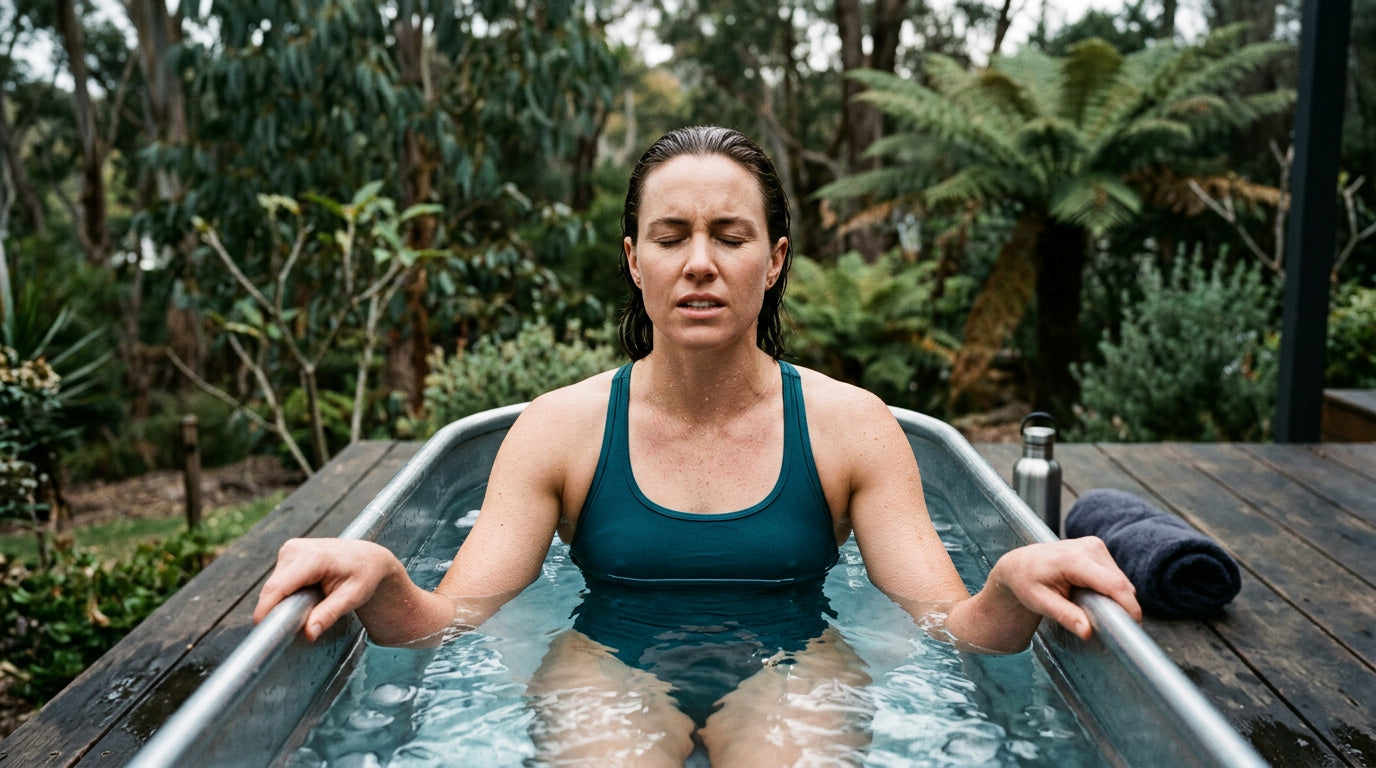
The Contrast Kit - Genesis sauna paired with the Origin cold plunge - is built for this protocol. Heat recovers you. Cold hardens you. Together, they transform you. The full contrast protocol, including session sequencing and beginner progressions, is in our sauna cold plunge routine guide. For the evidence behind the combination, see our sauna cold plunge benefits science guide.
The Performance Stack Australian Men Are Building
Genesis sauna + Origin cold plunge. Zero-toxin. Zero-glue. Japanese Cedar. Built in Byron Bay. Delivered anywhere in Australia. 120-day build. AU$1,000 refundable deposit to reserve your build slot.
EXPLORE THE CONTRAST KIT →What Australian Men Actually Say After 90 Days
The men who build a daily contrast ritual with the Genesis and Origin do not describe it in wellness language. They describe it in performance terms - because that is how they think, and because the outcomes they track are performance outcomes.
HRV improvements are the most commonly cited metric. Men who sauna four or more times per week consistently report HRV scores trending upward within 4-6 weeks of a daily protocol - a direct marker of improved parasympathetic recovery and reduced chronic stress load. Resting heart rate follows: a 3-5 bpm reduction is common within 8-12 weeks of consistent use.
Sleep quality is the second most cited change. The core temperature drop that follows a sauna session - particularly an evening session completed 90-120 minutes before sleep - signals the circadian system to initiate sleep onset. Men who previously struggled with sleep latency report consistent improvement within two to three weeks of establishing an evening sauna routine. Our guide to sauna for sleep in Australia covers the circadian mechanism in detail.
Body composition is the third dimension. Men using the full contrast protocol - sauna plus cold plunge - report visible changes in body composition over 90-day windows that correlate with the growth hormone and cortisol data: reduced abdominal fat, maintained or increased lean mass during caloric deficits, and faster visible recovery between training blocks. These are not weight loss claims. They are the predictable downstream effects of an optimised hormonal and inflammatory environment.
What none of them expected is the psychological shift. Men who build a daily sauna ritual describe it as the most reliable mental reset in their day - more consistent than meditation, more effective than alcohol, more sustainable than any other wind-down protocol they had tried. The ritual creates a container. The heat demands presence. That combination, repeated daily, produces a compounding mental discipline that transfers to every other area of life.
Home Sauna for Australian Men: Running Costs, Installation, and What You Actually Need
The economics of a home sauna are straightforward once you stop comparing the capital cost to doing nothing and start comparing it to the cost of the alternatives you are already running.
The Genesis runs on a HUUM DROP 9kW heater. At Australian residential electricity rates of AU$0.30-$0.35 per kWh, a 45-minute session - including 30-40 minutes of heat-up time - costs approximately AU$0.50-$1.00. That is less than a third of a single commercial sauna drop-in in any major Australian city. Compared to a weekly physio at AU$100-$160 per session (AU$5,200-$8,320 per year), or a gym recovery suite membership at AU$1,200-$2,400 per year, the Genesis pays for itself in recovered sessions within the first two to three years - and continues producing returns every day after that.
The electrical requirement is a 50A dedicated circuit for the Genesis (32A for the Genesis Mini). This is a licensed electrician job and must comply with AS/NZS 3000:2018 Wiring Rules - the Australian standard for electrical installations. Budget AU$500-$1,500 for the electrical work depending on your switchboard configuration and distance from the installation point. For most Australian homes with a standard switchboard, this is a straightforward job for any licensed electrician.
Building permit requirements vary by state, but the general rule is clear: prefabricated structures under 10m² placed on an existing slab, deck, or compacted gravel pad qualify as exempt development in most Australian jurisdictions and do not require a building permit. The Genesis sauna has a footprint of approximately 4.5m² - well within the exemption threshold in every mainland state. Check your local council requirements for setback distances from boundary fences, which typically range from 600mm to 900mm.
The outdoor placement question is one of the most common from Australian buyers. The Genesis is rated for fully exposed outdoor installation with the optional Colorbond roof kit - which adds weather protection for the timber roof panels without altering the structural integrity or aesthetic. The IP67-rated amber and red LED lighting withstands temperatures up to 200°C and is completely waterproof - no degradation from Australian coastal humidity or subtropical rainfall.

For complete installation guidance including site preparation, electrical specifications, and state-by-state permit information, see our home sauna installation guide for Australia. For cost modelling across different sauna types, the home sauna cost guide for Australia covers every variable in detail. If you are still in the buying decision phase, the sauna buying guide for Australia covers everything you need to make the right choice.
Why the Genesis Is Built to the Finnish Standard - Not the Marketing Standard
Most home saunas sold in Australia are built with glued MDF panels, particle board framing, and low-mass heaters with minimal stone volume. Heat those materials to 90°C and you are not just sweating - you are breathing formaldehyde off-gassing with every session. That is not a small compromise. That is the opposite of what you are trying to achieve.
The Genesis uses zero-glue mechanical joints throughout. No adhesives. No particle board. No MDF. The exterior and interior are 38mm-wall Japanese Cedar - a timber with natural antimicrobial properties, exceptional dimensional stability under thermal cycling, and a density that holds and radiates heat the way a Finnish sauna is supposed to. The non-VOC oil finish means no chemical off-gassing at any temperature.
The heater choice defines the session quality. The HUUM DROP 9kW carries 60kg of Olivine diabase stones - volcanic rock with exceptional thermal mass and heat retention. When you pour löyly - water over the stones - a heater with 60kg of stone holds temperature without the dramatic drop that low-mass heaters produce. The temperature stays at 80-90°C where the research says it should be, not spiking to 100°C and dropping to 70°C within three minutes. Our guide to sauna stones in Australia explains why stone volume matters more than heater wattage.
The lighting specification matters for men using the sauna in the evening. Blue light at wavelengths below 500nm suppresses melatonin production - the opposite of what you want from a pre-sleep recovery session. The Genesis uses IP67-rated amber (585-590nm) and red (630-635nm) LEDs exclusively. These wavelengths sit outside the melatonin-suppressing range, meaning an evening session supports rather than disrupts sleep onset. That is not a marketing claim. It is basic photobiology.
Active mechanical ventilation at 88-120 m³/hr ensures fresh air cycling throughout every session. This is not passive convection through a vent gap. It is forced air exchange that keeps oxygen levels consistent, prevents carbon dioxide build-up in multi-person sessions, and maintains the clean, crisp air quality that distinguishes a properly engineered sauna from a sealed hot box. Our guide to sauna ventilation in Australia explains why this specification matters more than most buyers realise.
The Genesis is available in Natural Cedar or Charcoal (Shou Sugi Ban) finish. Both ship Australia-wide with a 120-day build lead time from a AU$1,000 refundable deposit. The 3-year cabin warranty and 3-year heater warranty are the most thorough in the Australian market. For a full review of the Australian outdoor sauna market, see our guide to the best outdoor saunas in Australia for 2026.
Confirm your site
Existing deck, concrete slab, or compacted gravel. Minimum 4.5m² footprint. Check local council setback rules - typically 600-900mm from boundary fences.
Book a licensed electrician
Genesis requires a 50A dedicated circuit (Genesis Mini: 32A). This must comply with AS/NZS 3000:2018. Budget AU$500-$1,500 depending on switchboard and cable run.
Place your deposit
AU$1,000 fully refundable deposit secures your 120-day build slot. Use the build window to finalise site prep and electrical work.
Delivery and installation
Australia-wide delivery. Shipping weight approximately 600kg for the Genesis. Access requirements: standard residential driveway clearance. Installation is modular and does not require a crane or specialist equipment.
First session within 24 hours
Connect to the 50A circuit. Load the HUUM DROP stones. Set to 90°C via the WiFi UKU app. Heat-up time: 30-40 minutes. Your first session starts the clock on a protocol that compounds for decades.
Frequently Asked Questions: Sauna Benefits for Men
Is sauna good for men?
Yes - the evidence base is among the strongest in preventive medicine. A 20-year cohort study by Laukkanen et al. in JAMA Internal Medicine (2015) found that sauna use 4-7 times per week reduced fatal cardiovascular disease risk by 50% in men. Benefits extend to testosterone optimisation, muscle recovery, mental health, and measurable longevity gains. The research cohort specifically tracked men aged 42-60 over 20 years, making it directly applicable to Australian men in the same demographic.
How often should men sauna for maximum benefit?
Four to seven sessions per week produces the strongest documented outcomes. The Kuopio cohort data shows a clear dose-response: 2-3 sessions per week delivers meaningful cardiovascular benefit, while 4+ sessions produces the most significant reductions in cardiovascular mortality and stroke risk. For men new to sauna, building from 3 sessions per week to daily use over 4-6 weeks is the practical approach. See our full sauna frequency guide for a session-by-session progression plan.
Does sauna increase testosterone?
Sauna supports testosterone optimisation through two primary mechanisms. Research from the University of New Mexico found that two 20-minute sessions separated by a 30-minute cool-down increase growth hormone by 200-300% - creating the anabolic environment that supports testosterone expression. Regular sauna use also reduces baseline cortisol, which directly improves the testosterone-to-cortisol ratio. The full hormonal mechanism is covered in our sauna testosterone benefits guide.
What temperature should a men's sauna be?
The research-supported range is 80-100°C at bench height with 10-30% relative humidity. This is the temperature range used in the Kuopio Finnish cohort studies that documented 50% cardiovascular mortality reduction. The Finnish Sauna Society recommends 80-90°C as the optimal therapeutic range for regular use. Above 100°C, the primary effects shift to respiratory discomfort and accelerated dehydration rather than additional physiological benefit. Our guide to how hot a sauna should be covers the full temperature spectrum by goal.
Can sauna improve mental health in men?
Yes, through measurable neurochemical mechanisms - not placebo. Sauna heat triggers beta-endorphin release, producing genuine mood elevation and anxiety reduction. A 2018 study in JAMA Psychiatry found that whole-body hyperthermia produced significant antidepressant effects lasting up to six weeks. For Australian men unlikely to engage traditional mental health support, the sauna offers a physically-framed daily ritual that delivers real psychological benefit. The full evidence base is in our sauna mental health guide for Australia.
Is contrast therapy better than sauna alone for men?
For recovery, mental resilience, and metabolic adaptation, contrast therapy outperforms sauna alone. A 2018 meta-analysis by Dupuy et al. in Frontiers in Physiology - covering 99 studies and over 1,000 athletes - found contrast water therapy among the most effective recovery modalities for muscle soreness and fatigue. Cold immersion adds a norepinephrine spike of 200-300% that sauna alone does not produce. The Contrast Kit (Genesis + Origin) is built for this protocol. Full details in our sauna cold plunge routine guide.
Do I need a permit to install a home sauna in Australia?
In most Australian states, a prefabricated sauna cabin under 10m² placed on an existing slab or deck qualifies as exempt development and does not require a building permit. The Genesis footprint is approximately 4.5m² - well within the threshold in every mainland state. A licensed electrician must install the dedicated 50A circuit (32A for Genesis Mini) under AS/NZS 3000:2018 Wiring Rules. Check your local council for setback requirements from boundary fences. Our home sauna installation guide covers state-by-state requirements.
Sources and Further Reading
- Laukkanen, J.A. et al. (2015). 'Association Between Sauna Bathing and Fatal Cardiovascular and All-Cause Mortality Events.' JAMA Internal Medicine, 175(4), 542-548. jamanetwork.com
- Laukkanen, T. et al. (2018). 'Sauna Bathing and Risk of Psychotic Disorders: A Prospective Cohort Study.' Neurology, 90(22). neurology.org
- Dupuy, O. et al. (2018). 'An Evidence-Based Approach for Choosing Post-Exercise Recovery Techniques to Reduce Markers of Muscle Damage, Soreness, Fatigue, and Inflammation.' Frontiers in Physiology, 9, 403. frontiersin.org
- Laukkanen, J.A. et al. (2017). 'Sauna Bathing and Risk of Dementia.' Age and Ageing, 46(2), 245-249.
- Kunutsor, S.K. et al. (2018). 'Sauna Bathing Reduces the Risk of Stroke in Finnish Men and Women.' Neurology, 90(22), e1937-e1944.
- Laukkanen, J.A. et al. (2018). 'Cardiovascular and Other Health Benefits of Sauna Bathing: A Review of the Evidence.' Mayo Clinic Proceedings, 93(8), 1111-1121. mayoclinicproceedings.org
- Janssen, C.W. et al. (2016). 'Whole-Body Hyperthermia for the Treatment of Major Depressive Disorder.' JAMA Psychiatry, 73(8), 789-795.
- Hussain, J. & Cohen, M. (2018). 'Clinical Effects of Regular Dry Sauna Bathing: A Systematic Review.' Evidence-Based Complementary and Alternative Medicine. PMC5941775. pmc.ncbi.nlm.nih.gov
- Standards Australia (2018). AS/NZS 3000:2018 Wiring Rules - Electrical Installations. Standards Australia, Sydney.
- Finnish Sauna Society. Sauna Building and Design Guidelines. Helsinki: Finnish Sauna Society. sauna.fi
Ready to Build the Protocol Into Your Routine?
Genesis sauna + Origin cold plunge. Zero-toxin. Zero-glue. Japanese Cedar. 3-year cabin warranty. AU$0.50-$1.00 per session. Free Australia-wide delivery. 120-day build - place your refundable AU$1,000 deposit to lock in your build slot.
SHOP THE CONTRAST KIT →