
How Often Should You Sauna? Frequency Guide
How Often Should You Sauna? The Frequency Guide Backed by Research
You should sauna a minimum of 57 minutes per week, spread across multiple sessions of 15–20 minutes each. Research by Dr. Susanna Soeberg identifies this as the Minimum Effective Dose — the threshold at which heat therapy begins delivering measurable cardiovascular, hormonal, and cellular benefits. Beyond that baseline, sauna frequency of 4–7 sessions per week is associated with significantly lower all-cause mortality.
Most Australians who buy a home sauna have no idea where to start. They sit in it three times, feel good, and wing the rest. That's not a protocol — that's guesswork. The research is specific. The dose matters. Here's exactly what it says.
Zero-Toxin Sauna Therapy, Built for Australians
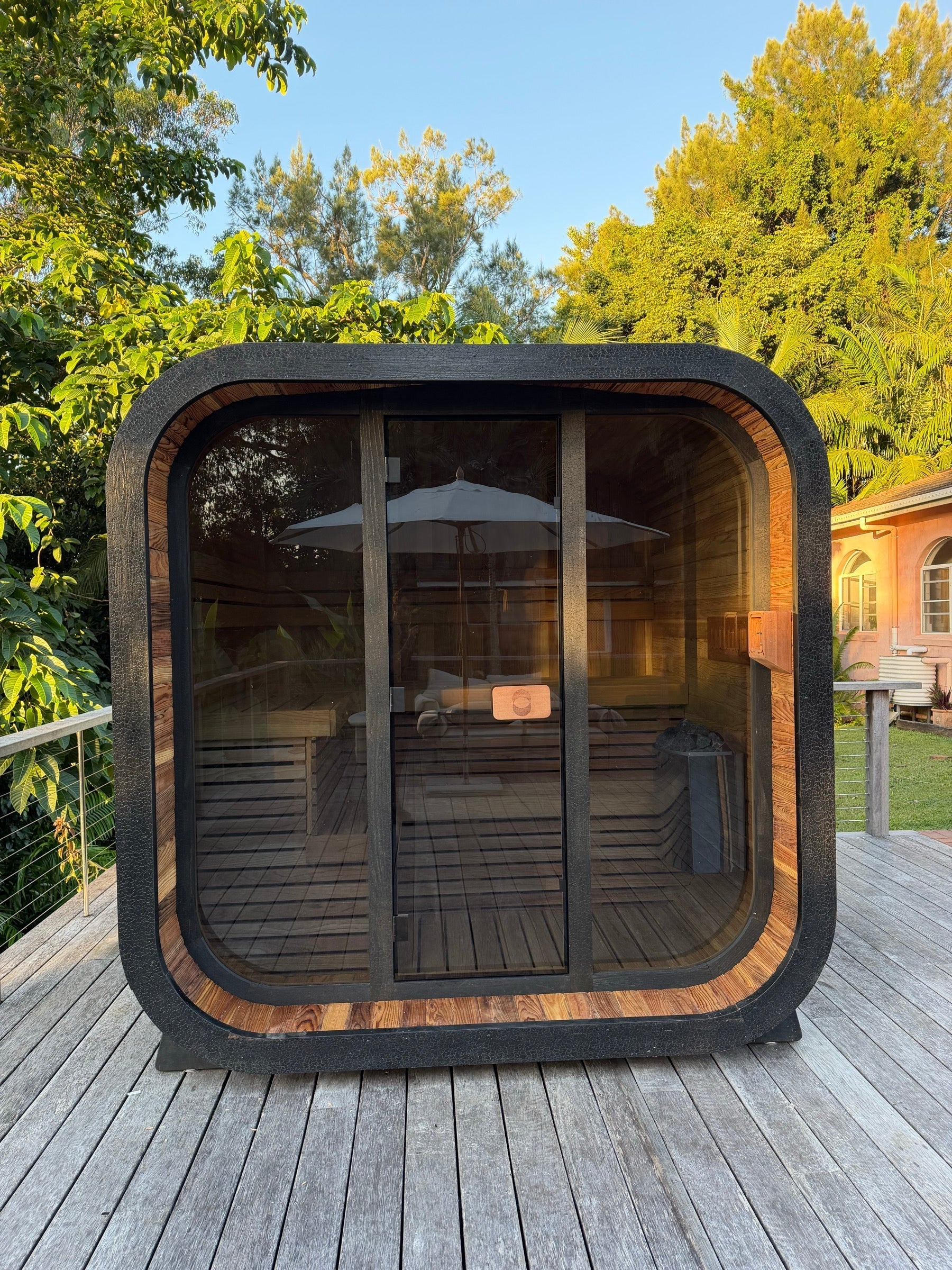
Japanese Cedar exterior. Zero-glue construction. HUUM Drop heater. Built to last decades — not seasons.
SEE THE GENESIS →What Is the Minimum Effective Dose for Sauna Use?
The Minimum Effective Dose (MED) for sauna is approximately 57 minutes per week, based on Dr. Susanna Soeberg's research into heat and cold exposure protocols. That works out to roughly three sessions of 15–20 minutes — not one long punishing session on a Sunday.
Shorter, more frequent sessions outperform long infrequent ones. The body adapts to heat stress cumulatively. A single 60-minute session is not the same as four 15-minute sessions — the physiological signalling is different, and the research outcomes reflect that.
If you're just starting out, three sessions per week at 15 minutes each hits the MED. That's your baseline. Everything above it is building toward the upper end of the dose-response curve. For how long each individual session should run, our guide to how long to stay in a sauna by goal and experience level covers the breakdown in detail.
How Many Times a Week Should You Sauna?
A landmark study published in the European Journal of Preventive Cardiology (2018) tracked over 2,300 Finnish men across 20 years. It found that men who used the sauna 4–7 times per week had a 50% lower risk of fatal cardiovascular events compared to those who went once a week. All-cause mortality followed the same pattern — more frequent users lived longer.
The research is not subtle. Frequency drives outcomes more than session duration beyond a certain threshold. One long weekly session is not equivalent to four shorter sessions. The cumulative hormetic stress — repeated heat adaptation, Heat Shock Protein activation, and cardiovascular conditioning — builds differently.
Here is a practical breakdown by goal:
| Goal | Sessions per Week | Duration per Session |
|---|---|---|
| Baseline health maintenance | 3× | 15–20 min |
| Post-training recovery | 4–5× | 15–20 min |
| Cardiovascular conditioning | 4–7× | 20 min |
| Hormonal optimisation | 4–7× | 20 min |
| Longevity and all-cause mortality reduction | 4–7× | 20 min |
For a full breakdown of sauna's evidence base across cardiovascular health, cognitive function, and recovery — including the clinical data on cortisol and growth hormone — read our complete evidence-based guide to sauna benefits for Australians.
What Happens in Your Body During Repeated Sauna Sessions?
Every time you step into a sauna at 80–100°C, your core temperature rises. Your cardiovascular system responds as if you are exercising at moderate intensity — heart rate increases, blood vessels dilate, and cardiac output climbs. Repeat that stimulus frequently enough, and your body adapts.
Three mechanisms drive the frequency-dependent benefits:
Heat Shock Protein Activation
Heat stress triggers Heat Shock Proteins (HSPs) — cellular repair proteins that identify and fix damaged or misfolded proteins. A 2018 study published in Nature confirmed that HSP activation is associated with enhanced cellular resilience and anti-ageing effects at the molecular level. Frequent sauna sessions drive repeated HSP upregulation — a cumulative adaptation.
Cardiovascular Conditioning
Repeated heat exposure trains blood vessel dilation and arterial compliance. The more frequently the stimulus occurs, the more robust the vascular adaptation. This is the same principle as progressive overload in resistance training — you are conditioning your cardiovascular system with heat.
Immune System Priming
Elevated core temperature mimics a low-grade fever — a state in which immune function is heightened. Regular sauna use repeatedly activates this response, building a more responsive baseline immune system over time. Occasional sessions do not produce the same sustained effect.
Does Sauna Frequency Affect Testosterone?
Yes — but the relationship is specific to session timing and frequency. Acute heat stress triggers a short-term reduction in testosterone followed by a rebound. With consistent frequency, some studies suggest net-positive hormonal adaptation over time, particularly when sessions are paired with resistance training.
The mechanism involves heat's effect on luteinising hormone signalling and the hypothalamic-pituitary-gonadal axis. This is an emerging area of research. For the current evidence on sauna and testosterone, read our detailed breakdown of sauna benefits for testosterone and the science behind heat and hormones.
What Is the Point of Diminishing Returns in a Single Session?
Research suggests benefits plateau after approximately 20–30 minutes in a single session. Beyond that threshold, additional time produces minimal incremental gain — and introduces unnecessary physiological stress, particularly for those training at high volume.
This is why frequency beats duration. Four 20-minute sessions produce better outcomes than one 80-minute session. The body responds to repeated acute stimuli more effectively than prolonged single exposures.
If you are new to sauna, start at 10–15 minutes and build. If you are conditioned, 20 minutes at 80–100°C is the sweet spot for most protocols.
The Sauna That Doesn't Compromise
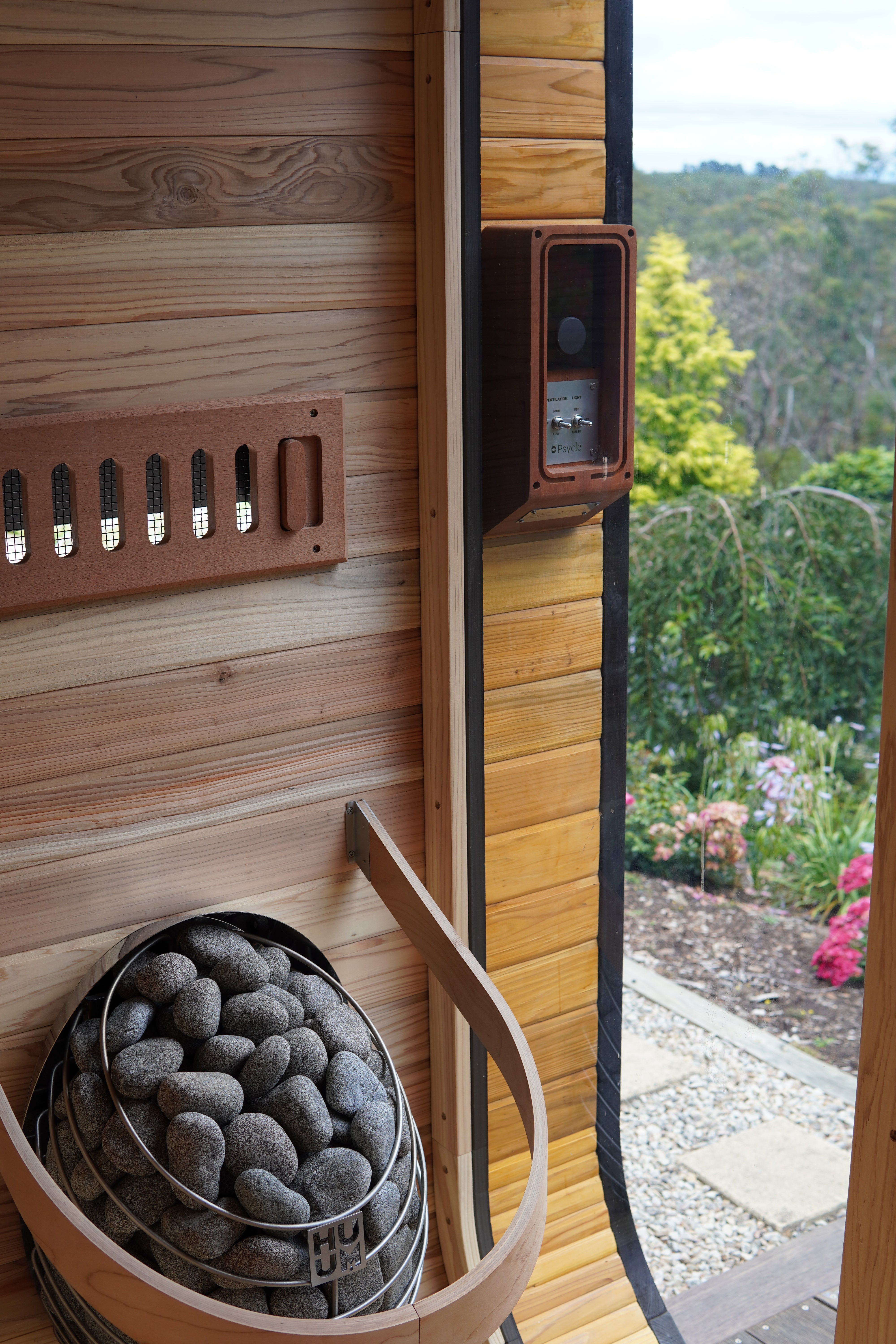
Active mechanical ventilation. Blue light blocking lighting. IPX4 rated. HUUM Drop 9kW heater with 60kg volcanic stone. Every detail engineered for daily use.
EXPLORE THE GENESIS →What Role Does Sauna Temperature Play in Frequency?
Temperature and frequency are linked. At 80–100°C — the range used in Finnish traditional sauna research — physiological responses are robust and measurable. At lower temperatures, the stimulus is weaker, meaning you would need longer sessions or higher frequency to generate equivalent adaptation.
Most home saunas on the Australian market are marketed as reaching 90°C but are built with low-density heaters and inadequate stone volume. They heat the air — not the room. When you pour löyly, the temperature drops. That is not a minor inconvenience. It means the cardiovascular and HSP responses the research documents are simply not occurring.
The Genesis runs a HUUM Drop 9kW heater loaded with 60kg of volcanic stone. The stone holds thermal mass. When you pour löyly, you get a real heat wave — not a lukewarm mist. That is what the research protocols require. Our guide to how hot a sauna should be and why temperature is non-negotiable explains the physics in full.
Does Sauna Frequency Affect Detoxification?
Sweating is one of the body's legitimate mechanisms for eliminating certain compounds — heavy metals, BPA, and some lipophilic toxins are excreted through sweat in measurable quantities. Frequency matters here because sweat volume and composition are partially adapted to regular heat exposure.
There is also an irony worth naming: most cheap home saunas are built with MDF panels, particle board, and phenol-formaldehyde glues. Heat those to 90°C and the off-gassing is measurable. You are not detoxifying — you are adding to the toxic load while trying to reduce it. The Genesis uses zero-glue construction throughout. No adhesives. No particle board. No off-gassing. For the evidence on what sauna sweat actually removes, read our breakdown of sauna detoxification and whether sweating removes toxins.
Can You Sauna Every Day?
Yes — and the research supports it. The 2018 European Journal of Preventive Cardiology study used 4–7 sessions per week as its highest frequency cohort, and that group showed the strongest mortality and cardiovascular outcomes. Finns have used daily sauna for centuries without adverse health effects in healthy individuals.
Daily sauna is appropriate for most healthy adults at 15–20 minutes per session. The caveats are straightforward: adequate hydration before and after each session, no sauna if acutely unwell or significantly sleep-deprived, and medical consultation if you have cardiovascular conditions, are pregnant, or are on medications that affect heat tolerance.
If you are training hard daily, consider timing your sauna session post-workout rather than pre-training. For specific guidance on session timing relative to exercise, our article on how long to sit in a sauna after a workout covers the evidence on post-training protocols.
The Optimal Sauna Frequency Protocol
Based on current research, here is the recommended protocol:
| Experience Level | Frequency | Duration | Temperature |
|---|---|---|---|
| New to sauna (0–4 weeks) | 2–3×/week | 10–15 min | 70–80°C |
| Building a baseline (1–3 months) | 3–4×/week | 15–20 min | 80–90°C |
| Conditioned sauna user | 4–7×/week | 20 min | 85–100°C |
| Contrast therapy protocol | 4–5×/week | 15–20 min sauna + cold | 85–100°C / 10–15°C |
Achieving the research outcomes requires the right infrastructure. That means a sauna that actually reaches and holds 80–100°C, with adequate thermal mass and real löyly capability. For Australians building a daily protocol, the Genesis is engineered for exactly that use pattern — daily sessions, year-round, in Australian conditions.
Why a Home Sauna Makes Frequency Achievable
Here is the practical problem with relying on a commercial sauna for a 4–7 session weekly protocol: booking, travel time, cost per session, and hygiene. At $30–$60 per commercial sauna visit, seven sessions a week costs $210–$420. Per month, that is $840–$1,680. Per year, up to $20,160.
The Genesis is a one-time infrastructure investment. The per-session cost over a 10-year lifespan is less than the cost of a single commercial drop-in. More importantly, the barrier to a session disappears. The sauna is in your backyard. There is no booking. There is no travel. The ritual happens because it is frictionless.
Frequency is the variable that drives outcomes. And frequency requires access. For a full breakdown of what a home sauna costs versus commercial alternatives, our complete home sauna cost guide for Australia covers every number in detail.
If you are comparing models or working out whether a Genesis or Genesis Mini suits your space and household, our home sauna buyer's guide for Australians covers everything you need to evaluate before buying.
Frequently Asked Questions
How often should you use a sauna for health benefits?
Research recommends a minimum of 57 minutes per week spread across multiple sessions — approximately three sessions of 15–20 minutes each. For maximum cardiovascular and longevity benefits, 4–7 sessions per week delivers the strongest outcomes, according to a 20-year Finnish study published in the European Journal of Preventive Cardiology (2018).
Is it OK to sauna every day?
Yes, for most healthy adults. Daily sauna use at 15–20 minutes per session is supported by the research. The highest-frequency cohort in the Finnish longevity study — those using the sauna 4–7 times per week — showed the lowest rates of cardiovascular mortality and all-cause death. Adequate hydration and medical consultation for pre-existing conditions are standard precautions.
How long should a sauna session be?
Most research protocols use 15–20 minute sessions. Benefits begin to plateau around the 30-minute mark in a single session — beyond this, additional time does not produce significantly greater gains. Frequency across multiple shorter sessions is more effective than one extended session per week.
Can you sauna too much?
In healthy individuals, daily sauna use at 15–20 minutes is well-tolerated and supported by research. Sauna becomes counterproductive if sessions are excessively long (over 30 minutes), if hydration is inadequate, or if used during acute illness or extreme fatigue. There is no research evidence suggesting harm from daily use at appropriate durations in healthy adults.
Does sauna frequency affect results?
Yes — and the relationship is dose-dependent. Moving from 1 session per week to 4–7 sessions per week is associated with a 50% reduction in fatal cardiovascular events in long-term Finnish research. Frequency matters more than session length beyond a certain point. The MED of 57 minutes weekly is the floor — the ceiling for benefit appears to be daily use.
Ready to Build This Into Your Daily Routine?
Free Australia-wide delivery. 3-year cabin warranty. 120-day build — order now to lock in your delivery window. $1,000 fully refundable deposit.
SHOP THE GENESIS →