
Sauna Cold Plunge Routine: Complete Protocol Guide | Psycle
Sauna Cold Plunge Routine: The Complete Protocol Guide

Key Takeaways
- The optimal sequence is sauna first, cold plunge second — heat loads the physiological stress, cold locks in the adaptation.
- Evidence-based timing: 15–20 minutes in the sauna at 80–100°C, followed by 2–3 minutes in cold water at 10–15°C.
- Beginners should run 1–2 rounds per session; advanced users can progress to 3–4 rounds with 5–10 minute rest intervals between.
- Cold water immersion produces a sustained 250% increase in dopamine levels, according to research published in the European Journal of Physiology.
- Morning contrast sessions support cortisol rhythm and alertness; evening sessions require ending on heat, not cold, to avoid disrupting sleep.
- Running a Genesis sauna costs approximately AU$0.50–$1.00 per 45-minute session — less than a single commercial sauna drop-in.
- The Psycle Contrast Kit (Genesis or Genesis Mini + Origin) is the only home setup in Australia engineered to execute this protocol without compromise.
By Psycle Wellness · Last updated: May 2026 · 12 min read
A sauna cold plunge routine combines 15–20 minutes of heat at 80–100°C with 2–3 minutes of cold immersion at 10–15°C, repeated for 1–4 rounds depending on experience. Sauna comes first. Cold plunge comes second. The sequence, timing, and rest intervals are not arbitrary. They are the protocol.
Why Most People Get the Protocol Wrong
Most people who try contrast therapy at home improvise. They alternate between a warm shower and a cold shower. They sit in a 60°C infrared box for 20 minutes and call it a sauna. They take a 30-second cold blast and tick the box.
None of that is a protocol. None of it produces the adaptation. And none of it is what the research actually studied.
The physiological mechanisms behind contrast therapy are dose-dependent. Heat shock protein activation, cardiovascular conditioning, the dopaminergic response to cold: temperature matters, duration matters, sequence matters. Get those wrong and you are not doing contrast therapy. You are doing something that feels like contrast therapy and produces a fraction of the result.
This guide covers the actual protocol. Not a simplified version. Not a beginner's approximation. The evidence-based framework that researchers, Finnish longevity scientists, and practitioners like Rhonda Patrick and Andrew Huberman reference when they discuss the benefits of hot-cold contrast. If you want to understand the broader science of why this works, our complete guide to contrast therapy in Australia covers the full physiological picture.
The Evidence-Based Foundation: What the Science Actually Says
Contrast therapy is not a wellness trend. It has decades of Finnish research, peer-reviewed meta-analyses, and measurable physiological outcomes behind it.
A landmark 20-year cohort study of 2,315 Finnish men by Laukkanen et al., published in JAMA Internal Medicine (2015), found that sauna use 4–7 times per week reduced the risk of fatal cardiovascular disease by 50% compared to once-weekly bathing. That is not a marginal improvement. That is a structural change in long-term health trajectory.
Research published in the European Journal of Physiology found that cold water immersion produces a sustained 250% increase in dopamine levels, a neurological effect that outlasts the cold exposure itself by several hours. This is not an adrenaline spike. It is a sustained neurochemical shift that explains why practitioners who build a consistent cold plunge routine report improvements in focus, drive, and mood that persist well into the day.
A 2018 meta-analysis by Dupuy et al. in Frontiers in Physiology, covering 99 studies and over 1,000 athletes, found cold-water immersion and contrast water therapy to be among the most effective recovery modalities for reducing muscle soreness and perceived fatigue. If you train seriously, this is the science behind why you recover faster when you combine both modalities. For more on the recovery side of the equation, read our deep-dive on cold plunge recovery for Australian athletes.
The Optimal Sauna Cold Plunge Sequence: Sauna First, Cold Second
The sequence is non-negotiable. Sauna first, cold plunge second. Every time.
Heat drives the first physiological response: core temperature rises, cardiovascular output increases, heat shock proteins are activated, and the body begins the deep sweating process that mobilises metabolic waste. You are loading the system under deliberate stress. That stress is the stimulus.
Cold immersion then delivers the contrast: rapid vasoconstriction, sympathetic nervous system activation, and the dopaminergic and noradrenergic response that Huberman's work has helped bring into mainstream awareness. You are not just cooling down. You are triggering a distinct and powerful neurochemical cascade that does not occur without the thermal contrast.
Reversing the sequence blunts both effects. Cold first raises the sympathetic baseline before the heat session, making it harder to reach the meditative, parasympathetic state that deep sauna bathing produces. Starting cold also limits how deep you go in the heat, because your body's thermoregulatory response is already primed. Do not reverse the sequence.
To understand the full sauna side of this combination, our guide to sauna and cold plunge in Australia covers the science in detail.
Built to Run This Protocol. Every Day.
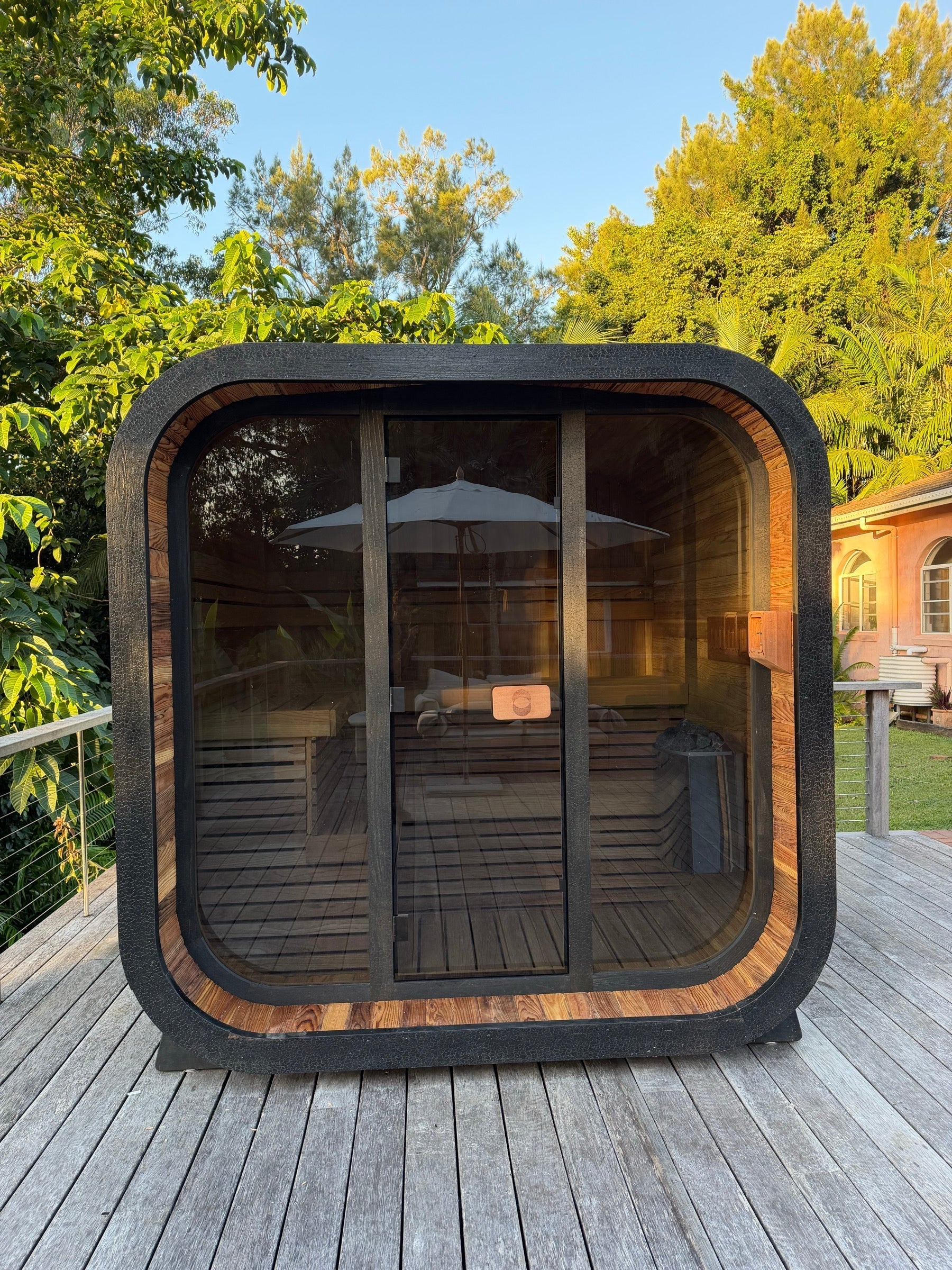
The Psycle Contrast Kit pairs the Genesis sauna (Japanese Cedar, HUUM Drop 9kW, zero-glue construction) with the Origin cold plunge — engineered for daily home use, backed by a 3-year cabin warranty.
SEE THE CONTRAST KIT →How to Do a Sauna Cold Plunge Routine: Timing and Rounds
The protocol has five variables: sauna temperature, sauna duration, cold temperature, cold duration, and rest intervals. Each has an evidence-based target range. Here is how to dial in each one.
Sauna Temperature
Traditional Finnish saunas operate at 80–100°C. This is not a preference. It is the temperature range studied in the Finnish longevity research and the threshold at which heat shock protein activation becomes clinically meaningful. If your sauna does not reach 80°C, you are not running a sauna protocol. You are having a warm sit.
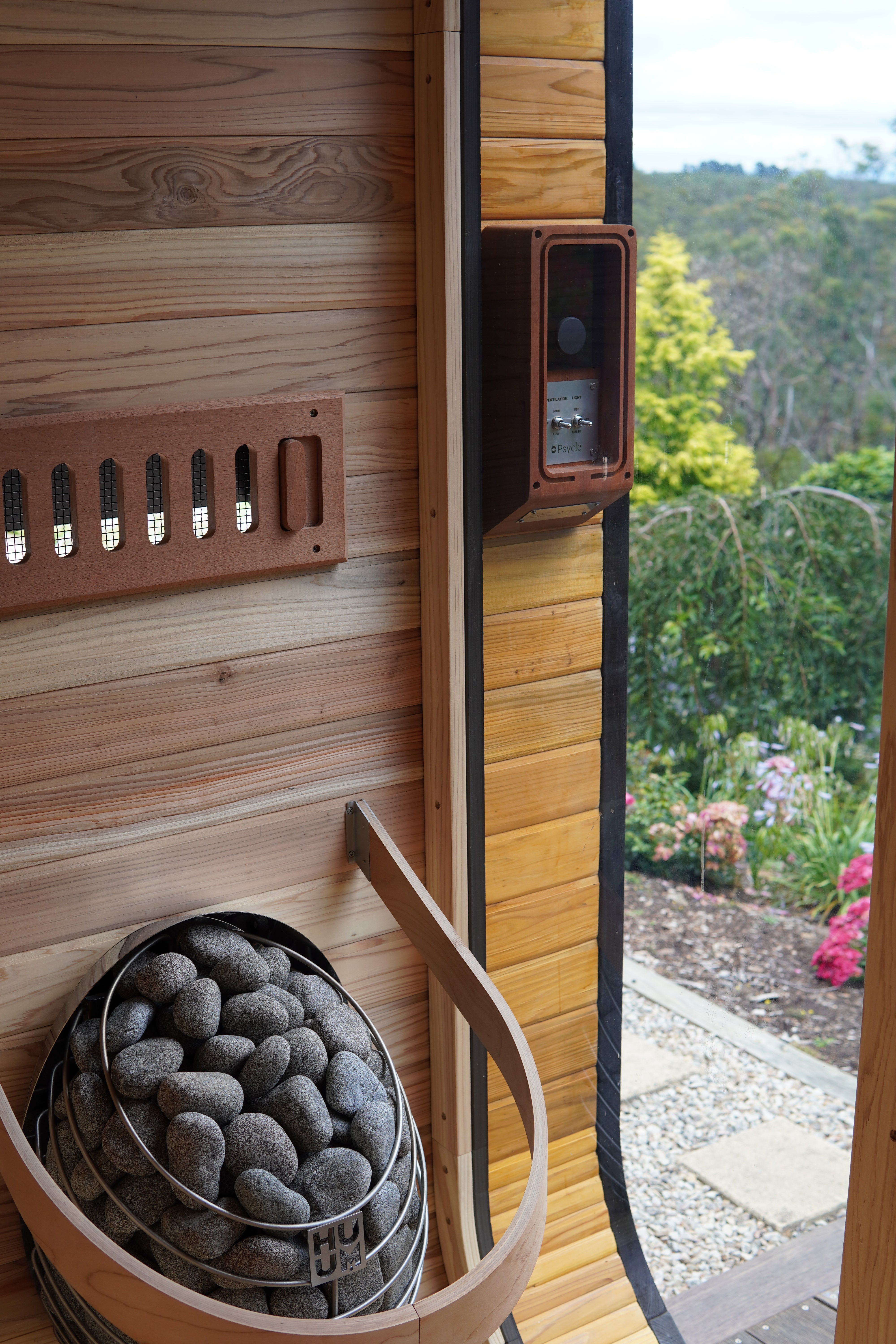
The Genesis runs a HUUM Drop 9kW heater loaded with 60kg of Olivine diabase stone. That stone mass is why temperature stays stable when you pour löyly. It does not spike and drop. It holds. For more on how sauna temperature affects outcomes, see our guide to how hot a sauna should be.
Sauna Duration
15–20 minutes per round is the sweet spot. Below 10 minutes, you have not achieved sufficient core temperature elevation for the protocol to deliver its full effect. Above 25 minutes, you are adding heat load without proportional benefit and increasing dehydration risk, particularly relevant in Australia's climate.
Experienced users who have built significant heat tolerance can extend individual rounds to 20–25 minutes. But duration is not a measure of how hard you are working. Deep heat and proper löyly technique matter far more than sitting longer. Our guide to how long to stay in a sauna by goal and experience covers this in full.
Cold Plunge Temperature
10–15°C is the research-supported range. Below 10°C you accelerate the vasoconstriction response and the sympathetic activation, but you also make it significantly harder to stay in for the full 2–3 minutes. At 15°C the protocol is still fully effective and far more sustainable for daily practice.
Andrew Huberman recommends 11–15°C as the effective range for neurochemical adaptation. Rhonda Patrick notes that colder is not always better, since the goal is consistent practice, not a single extreme session. Our complete guide to ice bath temperature in Australia covers the calibration in full detail.
Cold Plunge Duration
2–3 minutes per round is the evidence-based target. At this duration, the acute cold stress response is fully triggered, including the sympathetic activation, the noradrenaline surge, and the subsequent dopamine increase documented in the European Journal of Physiology research. Going longer adds incremental cold stress without proportional neurochemical benefit for most users.
For absolute beginners, 30–60 seconds is a perfectly valid starting point. The objective is to habituate to the discomfort and build the ability to stay calm under cold stress, not to white-knuckle a 5-minute immersion on day one.
Rest Intervals Between Rounds
5–10 minutes of passive rest between rounds allows heart rate to return toward baseline and prepares the body for the next heat load. Do not rush the transition. The rest interval is part of the protocol, not dead time.
In Finnish tradition, this rest period is taken outdoors if weather allows, sitting or lying quietly, hydrating, and letting the body regulate. In Australian conditions, particularly in Queensland and New South Wales where ambient temperatures are warm, outdoor rest between rounds is entirely practical year-round.

Beginner vs Advanced Sauna Cold Plunge Protocols
The protocol scales with adaptation. Where you start depends on your existing heat tolerance, cold exposure experience, and cardiovascular baseline. Here is how to progress correctly.
| Variable | Beginner (Weeks 1–4) | Intermediate (Weeks 5–12) | Advanced (12+ Weeks) |
|---|---|---|---|
| Sauna temp | 70–80°C | 80–90°C | 90–100°C |
| Sauna duration | 10–12 min | 15 min | 15–20 min |
| Cold temp | 15–18°C | 12–15°C | 10–12°C |
| Cold duration | 30–60 sec | 1.5–2 min | 2–3 min |
| Rounds per session | 1–2 | 2–3 | 3–4 |
| Rest between rounds | 8–10 min | 6–8 min | 5–7 min |
| Session frequency | 2–3x per week | 3–5x per week | 5–7x per week |
The table does not capture one thing: the mental shift between beginner and advanced is larger than the physical shift. The difference between 30 seconds and 3 minutes in cold water at 10°C is mostly psychological. The body adapts faster than the mind does.
Build frequency before you build intensity. Getting in the cold plunge four times a week at 15°C for 90 seconds will produce more adaptation than one extreme session per week. Consistency is the variable that compounds. For more on sauna frequency, our guide on how often you should sauna applies directly here.
Step-by-Step Sauna Cold Plunge Protocol
Here is the complete protocol in sequence. Follow this structure regardless of your experience level, and adjust the variables using the table above.
Hydrate before you start
Drink 500ml of water 30 minutes before your first sauna round. You will lose significant fluid through sweating and you want to start the session already hydrated, not playing catch-up.
Enter the sauna and allow 5 minutes to acclimate
Sit at the mid or upper bench level. Your first round should feel challenging but controlled. Do not rush the sweat response — allow your body to ramp up to temperature rather than forcing it.
Pour löyly at the 10-minute mark
A ladle of water on the stones lifts perceived heat intensity without changing actual air temperature significantly. Finnish tradition uses this to push the body further in the final minutes of a round. One or two small pours is sufficient.
Exit and move directly to the cold plunge
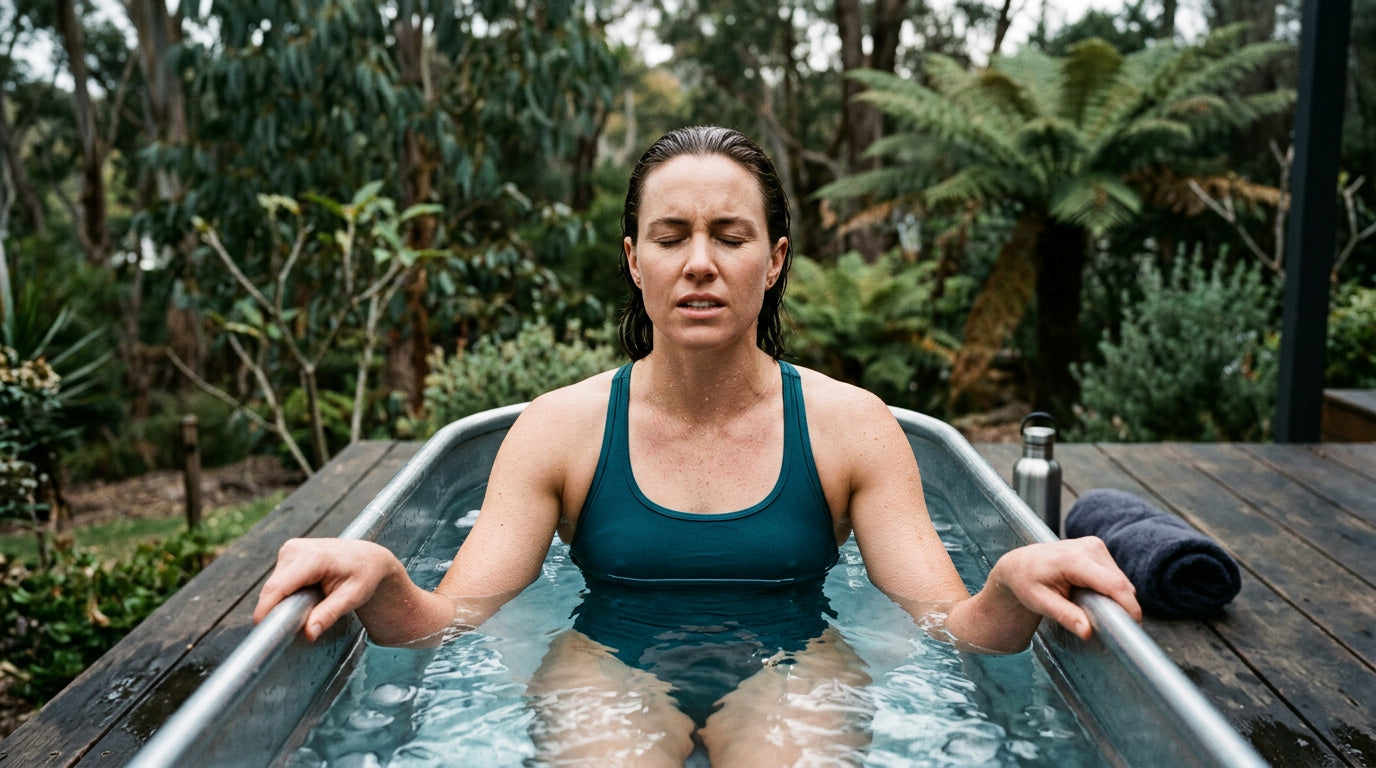
Do not linger. The physiological value of the contrast is partly in the speed of the thermal transition. Rinse under a cool shower if needed, then submerge fully to shoulder level in the cold plunge. Keep your face above water.
Control your breath in the cold
The first 30 seconds produce a strong gasping reflex. This is the cold shock response — normal, expected, and manageable. Slow, controlled nasal breathing is the technique. The discomfort plateaus around 45–60 seconds. Hold your position.
Exit the cold plunge and rest
Do not towel off aggressively. Sit quietly, hydrate, and let your body rewarm naturally for 5–10 minutes. This passive rewarming phase is when a significant portion of the neurochemical response consolidates.
Repeat for additional rounds
Return to the sauna for your second round. Subsequent rounds typically feel more accessible than the first — you are already warm and adapted to both environments. Maintain the same timing ratios across all rounds.
End on heat or cold depending on your goal
For recovery and muscle repair: end on cold. For sleep quality: end on heat. For morning performance priming: end on cold. The final modality shapes the physiological state you carry into the next several hours.

Morning vs Evening: When to Run Your Contrast Session
Timing is not a minor detail. The time of day you run your contrast session shapes its physiological effect and its impact on your sleep architecture.
Morning Contrast Sessions
Morning is the optimal time for contrast therapy when your goal is performance, alertness, and cortisol rhythm support. Cold exposure in the morning produces the largest noradrenaline and dopamine response relative to baseline. Andrew Huberman has described morning cold exposure as one of the most powerful tools for anchoring cortisol rhythm. The natural cortisol peak that occurs 30–45 minutes after waking is amplified by cold stress, creating a sharper, more sustained state of alertness.
Morning sauna use also supports cardiovascular priming. A 15-minute sauna round before the cold plunge raises heart rate to an aerobic training zone, creating a mild cardiovascular conditioning effect before your day begins. For athletes who train in the afternoon, a morning contrast session does not interfere with training adaptation and may improve readiness.
Evening Contrast Sessions
Evening contrast sessions can be powerful for recovery and sleep quality, but only if you end the session on heat. The mechanism: core body temperature drops after leaving the sauna, mimicking the natural temperature drop that triggers sleep onset. This is the same principle behind the research-backed recommendation to have a hot shower before bed.
If you end on cold in the evening, the sympathetic activation and dopamine surge will suppress sleep onset for 2–4 hours. Cold exposure at 9pm means you are unlikely to sleep well before midnight. For evening sessions, run sauna last, and allow 60–90 minutes between the session end and sleep. Our guide to sauna for sleep in Australia covers this in detail.
Post-Training Contrast Sessions
Post-workout contrast therapy is one of the most evidence-supported applications of the protocol. The Dupuy et al. meta-analysis found contrast water therapy to be among the most effective recovery interventions for reducing DOMS and perceived fatigue, outcomes that directly translate to training quality in subsequent sessions.
One important nuance: if your primary goal is muscle hypertrophy, cold immersion immediately after strength training may blunt the acute anabolic signalling that drives muscle protein synthesis. In this case, wait 4–6 hours after strength training before running the cold plunge component. Endurance athletes face no such trade-off. For a deeper look at post-training sauna use, see our guide to sauna after workout for recovery.
Hydration, Fasting, and the Contrast Routine
Two variables that people consistently underestimate: hydration status and whether they are in a fasted state. Both affect how the protocol feels and what it produces.
Hydration Before and During the Session
A single 15–20 minute sauna round at 90°C can produce 0.5–1.5 litres of sweat loss. Across a full contrast session of 2–3 rounds, total fluid loss can reach 1.5–2.5 litres. Running this protocol dehydrated will produce dizziness, impaired cardiovascular response, and significantly diminished recovery outcomes.
The protocol: 500ml water 30 minutes before starting. 200–300ml between each round during the rest interval. Another 500ml immediately after the final round. Electrolytes matter too — sodium, potassium, and magnesium are lost through sweat. A good electrolyte supplement or salted water supports recovery far better than plain water alone.
Sauna and Fasting: Does It Interact?
Running a contrast session in a fasted state is safe for most healthy adults and is a practice used intentionally by many high performers to amplify the heat shock protein response and growth hormone release that sauna produces. Research suggests that heat stress on an empty stomach may improve the hormonal response compared to a fed state.
Fasted contrast sessions require extra attention to hydration and session length. If you are fasted, cap your total session at 2 rounds until you understand how your body responds. Light-headedness during cold plunge immersion in a fasted state is a real risk. If you feel dizzy at any point, exit the cold and eat something. Our full guide to sauna while fasting covers the interaction in detail.
What Australians Who Run This Protocol Say
The people who buy a Genesis and Origin are not dabbling. They have already tried the gym recovery suite, the commercial sauna, the cold shower. They know what a real sauna feels like, and they are done settling for an approximation.
“I've run this protocol daily for 90 days. My recovery markers don't lie — HRV up, resting heart rate down, and I'm training harder than I was at 35. The Genesis holds temperature the way nothing else I've used does. The stone mass is the difference.” — Psycle customer, Byron Bay NSW.
“We installed the Contrast Kit on our deck in Queensland. I do two rounds every morning before work. The Origin holds temperature better than I expected given the ambient heat up here. It's been running consistently for six months without a single issue.” — Psycle customer, Sunshine Coast QLD.
Australia now has over 200 Psycle installations across every state. These are not wellness enthusiasts running the protocol occasionally. These are people who have built it into their daily infrastructure, the same way they built their training schedule, their diet, and their sleep protocol. For a broader look at the benefits experienced by Australian cold plunge users, read our guide to cold plunge benefits in Australia.
The Protocol Needs the Right Infrastructure
Zero-glue Japanese Cedar. HUUM Drop 9kW with 60kg of volcanic stone. 316 marine-grade stainless steel cold plunge. This is what a proper contrast setup looks like. Over 200 Australian installations.
EXPLORE THE CONTRAST KIT →Running This Protocol in Australia: Costs, Climate, and Practicalities
The most common objection to building a home contrast setup is cost. Here are the actual numbers.
The Real Cost of Running a Genesis Sauna
The Genesis runs a 9kW heater. At Australian residential electricity rates of AU$0.30–0.35 per kWh, a 45-minute session costs approximately AU$0.50–$1.00, including the preheat time. That is less than a single espresso. Over a full year of daily sessions, you are looking at AU$180–$365 in running costs.
Compare that to a commercial sauna or gym recovery suite at AU$20–$40 per visit, adding up to AU$1,200–$2,400 per year for 3–4 sessions per week. Or a weekly physio session at AU$100–$160, totalling AU$5,200–$8,320 annually. The Genesis pays for itself in reduced recovery spend in 2–4 years, then continues producing results for the following 10–15 years. For a full breakdown, see our guide to home sauna cost in Australia.
Australian Climate and the Contrast Routine
Australia's climate is one of the strongest arguments for running a home contrast setup rather than relying on commercial facilities. In Queensland, New South Wales, and Western Australia, ambient temperatures of 28–38°C from October through April mean that a cold plunge is not just a recovery tool. It is a temperature management system.
The outdoor deck lifestyle that characterises Australian residential design makes a Genesis + Origin setup a natural fit. The Genesis is IP67-rated and available with an optional Colorbond roof kit for fully exposed outdoor placement. The charcoal Shou Sugi Ban finish holds its appearance in direct sun and coastal salt air. This is not indoor-only equipment. It was designed to live outside, year-round, in Australian conditions. See how it looks installed in a real outdoor setting in our complete guide to outdoor saunas in Australia.
The Contrast Kit: What You Get
The Psycle Contrast Kit bundles the Genesis (or Genesis Mini) with the Origin cold plunge. The Genesis is built from Japanese Cedar with 38mm walls, zero-glue mechanical construction, non-VOC oil finish throughout, and a choice of HUUM Drop or Harvia Vega heater. Blue-light-free amber LED lighting at 585–590nm means your circadian rhythm is not disrupted during evening sessions. Active mechanical ventilation at 88–120 m³/hr keeps the air clean and fresh across every round.
The Origin is a premium stainless steel cold plunge built for daily use and outdoor installation. Together, they are the only home contrast setup in Australia engineered to deliver the full protocol without compromise. Pre-order deposit is AU$1,000 refundable. Build lead time is approximately 120 days. Australia-wide delivery included. For a closer look at the two sauna options, compare the 4-person sauna options available in Australia and our overview of the best home saunas available in Australia.
If space is the constraint, the Genesis Mini (1–3 person, 32A circuit, ~350kg shipping weight) runs an identical zero-toxin specification with a 6kW HUUM Drop or Harvia Vega heater. The Contrast Kit Mini pairs the Genesis Mini with the Origin for exactly the same protocol in a smaller footprint. See how it compares in our 2-person sauna buyer's guide for Australia.
Protocol Variations: Comparing Your Options
Not all contrast therapy approaches are equal. Here is how the home Genesis + Origin protocol compares to the alternatives Australians are actually considering.
| Setup | Sauna Temp | Cold Temp | Protocol Fidelity | Daily Cost | Toxin Risk |
|---|---|---|---|---|---|
| Psycle Genesis + Origin | 80–100°C | 10–15°C | Full — all variables controlled | AU$0.50–$1.00 | Zero. No glue, no VOC. |
| Commercial gym recovery suite | 70–85°C (variable) | 12–18°C (variable) | Partial — shared, timed, capped rounds | AU$6–$15 | Unknown. Construction varies. |
| Budget home sauna + ice bath | 60–80°C (inconsistent) | 10–15°C | Partial — temp instability limits protocol | AU$0.40–$0.90 | High. MDF, glue, formaldehyde off-gassing. |
| Infrared sauna + cold shower | 50–65°C | 15–20°C (tap temp) | Minimal — below Finnish research temp thresholds | AU$0.20–$0.60 | Medium. EMF and VOC risks vary by brand. |
| Hot/cold shower cycle | N/A (water only, ~42°C max) | 15–22°C (tap temp) | Very low — insufficient thermal load | Minimal | None |
The infrared sauna vs traditional sauna distinction matters here. The Finnish longevity research, the Laukkanen cardiovascular data, the Kunutsor dementia findings, was conducted exclusively with traditional Finnish saunas operating at 80–100°C. Infrared saunas operate at 50–65°C. That temperature difference is the difference between triggering the heat shock protein response and not triggering it. Our detailed breakdown of traditional vs infrared sauna: the real science covers this head-on.
A 2020 study by Kunutsor et al. in Age and Ageing found that men who used a sauna 4–7 times per week had a 65% lower risk of developing Alzheimer's disease and a 66% lower risk of dementia overall compared to once-weekly users. That research was conducted with traditional Finnish saunas. If you want the outcomes the research describes, you need the conditions the research used. For more on the long-term health case, read our guide to sauna longevity in Australia.
Frequently Asked Questions: Sauna Cold Plunge Routine
What is the correct sequence for a sauna cold plunge routine?
Sauna first, cold plunge second, every time. Heat loads the physiological stress and elevates core temperature; cold immersion delivers the contrast that triggers the sympathetic response and dopaminergic cascade. Reversing the sequence blunts both effects and reduces the neurochemical and cardiovascular outcomes the protocol is designed to produce.
How long should you stay in a sauna before a cold plunge?
15–20 minutes at 80–100°C is the evidence-based target. Below 10 minutes, core temperature has not risen sufficiently for the heat shock protein response to fully activate. Beginners can start at 10–12 minutes and build to the full 15–20 minute target over 4–6 weeks. Our complete guide on how long to stay in a sauna breaks this down by goal and experience level.
How long should you stay in a cold plunge after a sauna?
2–3 minutes is the research-supported target for experienced users. Beginners should aim for 30–60 seconds initially. The key is sustaining the immersion past the first 45–60 seconds when the cold shock response peaks. The neurochemical and dopaminergic benefits of cold immersion are dose-dependent and require sufficient duration to fully activate.
How many rounds of sauna and cold plunge should you do?
1–2 rounds for beginners; 2–3 rounds for intermediate users; 3–4 rounds for advanced practitioners. Each round consists of one sauna session and one cold plunge with a rest interval between. More than 4 rounds per session provides diminishing physiological returns and increases fatigue and dehydration risk without proportional benefit.
Is it better to do contrast therapy in the morning or evening?
Morning sessions ending on cold maximise alertness, cortisol rhythm support, and dopamine response, making them ideal for performance and cognitive output. Evening sessions should always end on heat to support sleep onset. Cold exposure in the evening delays sleep by 2–4 hours due to the sympathetic activation and sustained dopamine release. Choose timing based on your primary goal.
Can you do a sauna cold plunge routine while fasting?
Yes, with modifications. Fasted contrast sessions are practised by many experienced users and may improve the hormonal response to heat stress. Hydration is critical, though: fasted users should drink at least 500ml before starting and monitor for dizziness, particularly during cold immersion. Cap fasted sessions at 2 rounds until you know your response. Full guidance in our sauna while fasting guide.
What temperature should a cold plunge be for contrast therapy?
10–15°C is the effective range for contrast therapy. Below 10°C increases intensity but does not proportionally increase benefit for most users, and makes consistent daily practice significantly harder to sustain. Andrew Huberman recommends 11–15°C as the practical target. Our guide to ice bath temperature in Australia covers calibration in full.
Does contrast therapy help with muscle recovery?
Yes, with strong research support. A 2018 meta-analysis by Dupuy et al. in Frontiers in Physiology, covering 99 studies and over 1,000 athletes, found cold-water immersion and contrast water therapy to be among the most effective recovery modalities for reducing delayed-onset muscle soreness and perceived fatigue. For athletes training 4–7 times per week, this is a meaningful competitive advantage. Read our full guide to cold plunge recovery for Australian athletes.
Ready to Build This Into Your Infrastructure?
AU$0.50–$1.00 per session. 3-year cabin warranty. Free Australia-wide delivery. 120-day build — order now and your Contrast Kit arrives this season. Pre-order deposit AU$1,000 fully refundable.
SHOP THE CONTRAST KIT →