
Ice Bath Temperature: The Complete Australian Guide
Ice Bath Temperature: The Complete Evidence-Based Guide

Key Takeaways
- The evidence-based ice bath temperature range is 10-15°C - cold enough to trigger the physiological response, not so cold it increases risk without added benefit.
- Søberg et al. (2021) identified 11 minutes per week as the threshold for significant norepinephrine and dopamine elevation - a number you can reach with 3-4 sessions of 3-4 minutes each.
- Duration scales with experience: beginners start at 2-3 minutes, intermediate users target 5 minutes, advanced users cap at 10 minutes. Longer is not always better.
- Never use an ice bath below 5°C without direct supervision - cold shock response, cardiac stress, and hypothermia risk rise sharply below this threshold.
- Temperature and goal interact: recovery protocols sit at 10-15°C post-training, mental health and dopamine protocols use 14-15°C for daily use, metabolic protocols can push to 10-12°C 3x per week.
- A precision-controlled cold plunge like the Origin removes temperature guesswork - you set the exact degree, the chiller holds it, every session is repeatable.
- Morning cold exposure produces distinct cortisol and norepinephrine spikes that sharpen alertness - the timing of your session changes the outcome as much as the temperature does.
By Psycle Wellness · Last updated: May 2026 · 12 min read
The optimal ice bath temperature is 10-15°C. This range activates the cold shock response, drives norepinephrine and dopamine release, accelerates muscle recovery, and delivers measurable metabolic and mental health benefits - without the elevated risk profile of temperatures below 5°C. Most sessions should last 2-10 minutes depending on experience level.
Why Most Cold Plunges Are Either Too Warm or Too Dangerous
Most people approach cold water immersion at one of two extremes. They fill a bathtub with lukewarm water and a bag of ice - which rarely gets below 16-18°C and barely triggers a physiological response - or they chase the coldest possible temperature assuming colder means better. Neither is backed by the evidence.
A bucket of supermarket ice in a bathtub starts at maybe 12°C and climbs to 16°C within minutes as your body heat transfers into the water. You are not getting a consistent dose. You are guessing. And the people going sub-5°C are not getting more benefit - they are getting more risk.
The research is specific on this. Temperature precision is not optional if you want repeatable outcomes. You need to know exactly what you are getting into, and you need that temperature to hold for the full duration of your session. That is an engineering problem as much as a physiology one. For a full picture of cold immersion in an Australian context, our complete guide to ice bathing in Australia covers everything from setup to safety.
How Cold Should an Ice Bath Be? The Evidence-Based Temperature Range
The evidence-based ice bath temperature for most protocols is 10-15°C. This is not an arbitrary range - it is the window where human physiology responds most efficiently to cold water immersion without the risk curve steepening sharply.
Below 10°C, the cold shock response intensifies significantly. Breathing rate spikes, peripheral vasoconstriction accelerates, and cardiac load increases. For trained individuals in supervised settings, 8-10°C can be used for short-duration protocols. But the research does not show meaningfully better outcomes than 10-12°C - the risk simply increases.
Above 15°C, the physiological stimulus weakens. You may feel uncomfortable, but the norepinephrine and dopamine release that defines cold exposure's mental health and performance benefits is blunted. A 2021 study by Søberg et al., published in Cell Reports Medicine, found that deliberate cold exposure of 11 minutes per week - across 2-4 sessions - produced strong increases in norepinephrine (up 300%) and dopamine (up 250%). That threshold is reachable at 10-15°C. It does not require single-digit temperatures.
Colder is not a proxy for better. The 10-15°C range is the dose. Below it, you are adding risk without proportional physiological return. To understand the full spectrum of what cold immersion at this range delivers, see our deep-dive on cold plunge benefits for Australians.
Ice Bath Temperature and Time: How Long Should You Stay In?
Duration is dose-dependent and experience-dependent. There is no single correct number - but there is a framework that prevents both under-dosing and the diminishing returns of staying in too long.
By Experience Level
Beginners (weeks 1-4): Start at 14-15°C for 2-3 minutes. The goal at this stage is not maximum stimulus - it is building the neural pattern of staying calm under cold stress. The discomfort is the training. Most beginners dramatically underestimate how hard 2 minutes at 15°C actually is when they first start.
Intermediate (weeks 5-12): Progress to 12-14°C for 4-5 minutes. By this point the cold shock response has moderated, breathing control is established, and the body is adapting to peripheral vasoconstriction more efficiently. Sessions can be used strategically - post-training for recovery, morning sessions for alertness.
Advanced (beyond 12 weeks): 10-12°C for up to 10 minutes. This is not a competition. The Søberg et al. data shows that 11 minutes per week is the threshold - not per session. Splitting that across 3-4 sessions outperforms a single long session from a neurochemical and safety standpoint.
Why Longer Is Not Always Better
Beyond 10-12 minutes at temperatures below 15°C, core body temperature begins to drop meaningfully. The physiological benefits plateau well before this point. Continuing past the threshold adds cold stress without proportional hormonal or recovery return - and at sub-10°C temperatures, extends the hypothermia risk window significantly.
The discipline in cold exposure is not in staying longer - it is in staying consistent. Three minutes every day at 14°C across a week is 21 minutes, nearly double the Søberg weekly threshold. That is where the adaptation compounds.
Cold Immersion, Dialled In to the Degree
The Origin ice bath is engineered for precision temperature control - set your exact target, and the chiller holds it for every session.
SEE THE ORIGIN →The Dose-Response Relationship: How Temperature and Duration Interact
Temperature and duration are not independent variables - they multiply each other. A shorter session at a lower temperature can produce an equivalent or greater physiological stimulus than a longer session at a higher temperature. Understanding this relationship lets you design sessions for specific outcomes rather than just getting in cold water.
The Søberg et al. 2021 study is the most cited framework here. Across a series of experiments measuring cold exposure protocols, the researchers found that 11 minutes per week - regardless of how it was split - was the minimum effective dose for significant norepinephrine and dopamine elevation. Norepinephrine rose by approximately 300%, dopamine by approximately 250%. These are not marginal changes. They drive the alertness, mood uplift, and stress resilience that cold exposure advocates report.
The neurochemical benefit is not linear with duration. The sharpest spike occurs in the first 2-4 minutes. Continuing beyond that produces diminishing neurochemical return while increasing physical cold stress. This is why 3-4 shorter sessions outperform one long session for mental health and dopamine-driven outcomes.
For recovery - where the mechanism is vasoconstriction reducing inflammatory markers and oedema - temperature matters more than duration. A 2018 meta-analysis by Dupuy et al. in Frontiers in Physiology, covering 99 studies and over 1,000 athletes, found cold-water immersion and contrast water therapy to be among the most effective recovery modalities for reducing muscle soreness and perceived fatigue. The effective cold-water immersion protocols in that analysis clustered around 10-15°C for 10-15 minutes post-exercise - not sub-5°C for extended periods.
Ice Bath Temperature by Goal: Recovery, Mental Health, and Metabolism
The temperature and duration you use should match your primary outcome. Using the same protocol for every goal leaves adaptation on the table.
| Goal | Temperature | Duration | Frequency | Mechanism |
|---|---|---|---|---|
| Muscle recovery | 10-15°C | 10-15 min | Post-training sessions | Vasoconstriction reduces inflammatory markers and DOMS |
| Mental health / dopamine | 14-15°C | 3-4 min | Daily or 4-5x/week | Norepinephrine + dopamine spike, Søberg 11 min/week threshold |
| Metabolic / brown fat | 10-12°C | 5-10 min | 3x/week | Brown adipose tissue activation, thermogenesis, insulin sensitivity |
| Stress resilience / mindset | 12-15°C | 2-5 min | Daily | Controlled stress exposure builds HPA axis resilience over time |
| Contrast therapy | 10-15°C cold / 80-100°C heat | 3-4 rounds alternating | 2-4x/week | Vascular pump, combined recovery and neurochemical effect |
The contrast therapy protocol - alternating heat and cold - is the most potent combination for athletes. Our guide to contrast therapy in Australia covers the exact protocols, round structures, and timing in detail. For how sauna and cold plunge work together as a combined system, the sauna and cold plunge Australia guide is the place to start.
Beginner Progression Protocol: How to Start at 15°C and Work Down
Most beginners fail at cold exposure because they start too cold, panic, and conclude it is not for them. The correct approach is temperature periodisation - starting at the warm end of the therapeutic range and building down over weeks as your cold shock response moderates.
Weeks 1-2: 15°C for 2 minutes
Set the plunge to exactly 15°C. Get in, breathe slowly through your nose, and stay for 2 full minutes. The goal is not to be comfortable - it is to stay calm. Repeat 3-4 times per week.
Weeks 3-4: 14°C for 3 minutes
Drop 1 degree and add 1 minute. By now your breathing response to cold entry will have moderated noticeably. You are building the neural pattern, not just the physical tolerance.
Weeks 5-6: 13°C for 4 minutes
You are now at a stimulus level where the research shows consistent neurochemical benefit. At 4 minutes per session, 3 sessions per week, you exceed the Søberg 11-minute weekly threshold. This is the inflection point.
Weeks 7-10: 12°C for 5 minutes
This is the intermediate maintenance zone for most people. Recovery, mental health, and metabolic protocols all sit comfortably here. Most users stay at this level for months before progressing further.
Beyond week 10: 10-11°C for up to 10 minutes
Only progress here when 12°C for 5 minutes feels genuinely manageable - not just endurable. Split longer exposures across multiple sessions. Never go below 10°C without someone present.

When to Take Your Ice Bath: Morning vs Post-Workout vs Evening
Timing your cold exposure changes the outcome. The same temperature and duration protocol produces meaningfully different physiological effects depending on when in the day you use it.
Morning Cold Exposure
Morning is the highest-return time for cold exposure if mental performance and mood are your primary goals. Cold water immersion in the morning amplifies the natural cortisol awakening response - the cortisol spike your body generates in the first 30-60 minutes after waking. Combining cold exposure with this window produces a sharper, longer-lasting alertness effect than either stimulus alone.
The norepinephrine spike from morning cold exposure also sets a neurochemical baseline that sustains focus for hours. For Australians in demanding professional or sporting environments - early training sessions, long working days, high-output creative work - a 3-5 minute morning plunge at 12-14°C can replace two coffees and a pre-workout.
Post-Training Cold Exposure
Post-training cold immersion targets inflammation and delayed onset muscle soreness. It is the application most supported by the Dupuy et al. recovery meta-analysis. The protocol is simple: within 30-60 minutes of finishing a strength or conditioning session, 10-15 minutes at 10-15°C. Vasoconstriction reduces oedema and inflammatory cytokines in the worked muscles.
One caveat: if strength hypertrophy is your primary goal, avoid ice baths immediately post-resistance training more than 2-3 times per week. A 2019 study in the Journal of Physiology by Roberts et al. found that repeated cold-water immersion after strength training blunted the mTOR signalling pathway responsible for muscle protein synthesis. Use it strategically - not as a default end to every session. For the full picture on post-training recovery, see our guide on using heat and cold after training.
Evening Cold Exposure
Evening cold plunges are the timing most people default to, but the least evidence-supported for maximising adaptation. Cold exposure elevates cortisol and norepinephrine - both of which can suppress melatonin onset and delay sleep if used within 2-3 hours of bed. If you plunge in the evening, do it at least 2 hours before sleep, and consider a slightly warmer temperature - 14-15°C rather than sub-12°C - to moderate the sympathetic nervous system response.
For detailed research on how both heat and cold affect sleep quality, our guide to sauna and sleep in Australia covers the thermal regulation mechanisms in full.
What Australians Using Daily Cold Exposure Actually Report
The pattern from Australians who have built cold immersion into a consistent daily practice is consistent: the first two weeks are primarily about breathing. Weeks three to six, the mood and energy shift becomes unmistakable. By three months, the protocol feels less like a challenge and more like maintenance.
"I have been using the Origin at 12°C every morning for four months. My HRV markers improved within six weeks and I have not had a meaningful training slump since. The temperature precision is the part I did not know I needed - until I tried to do this with a makeshift ice bath and realised I had no idea what temperature I was actually in."
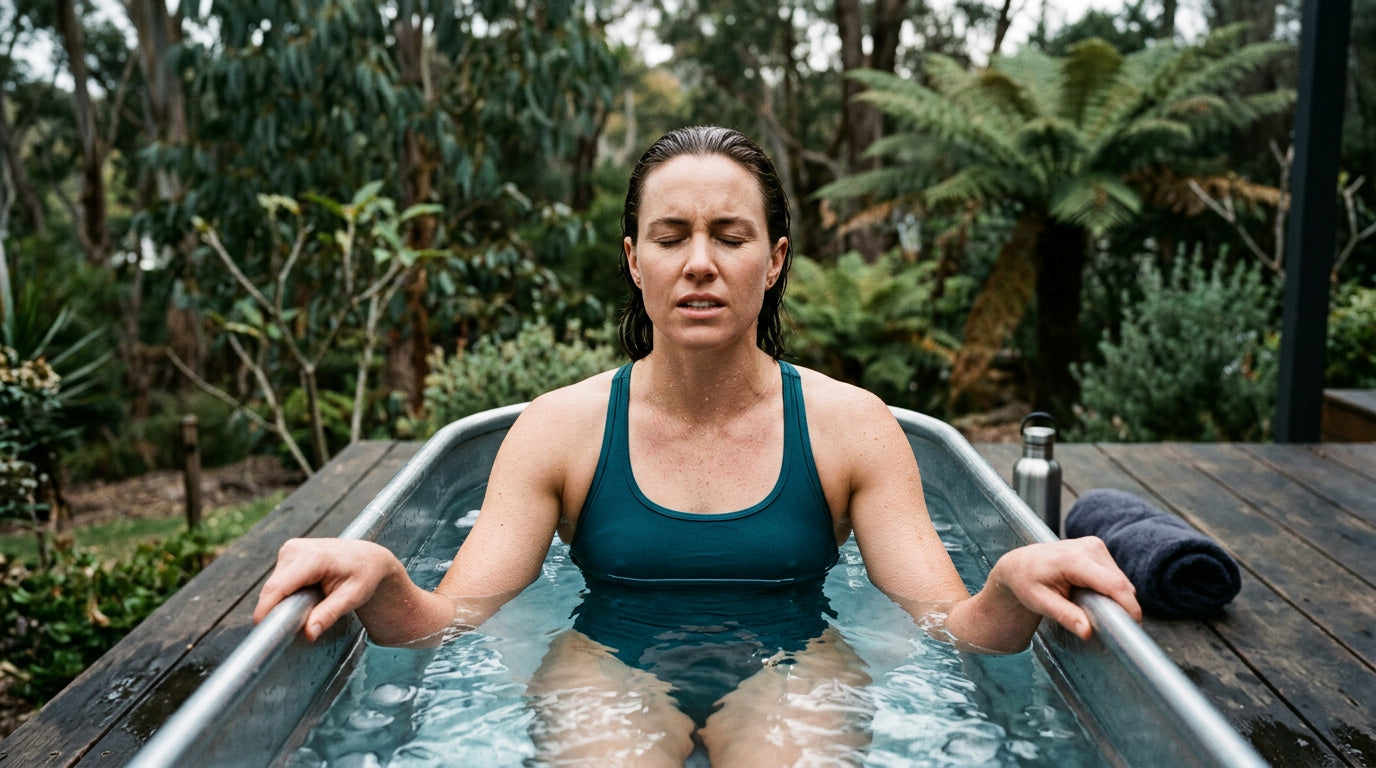
The ability to set an exact temperature and have the chiller hold it changes the reliability of the protocol. Not approximately cold - precisely cold. That is the difference between a wellness habit and a guessing game. To see the Origin installed and in use at Australian homes, view the Origin exterior hero image and Origin lifestyle in-use photos.
Precision Temperature. Every Session.
316 marine-grade stainless steel. Insulated roll cover. Chiller-controlled to the exact degree - no ice, no guesswork, no temperature drift mid-session.
EXPLORE THE ORIGIN →Cold Plunge Temperature in Australia: Climate, Logistics, and the Infrastructure Problem
Australians face a specific problem that European cold exposure practitioners do not: ambient temperature. In northern Queensland, Perth, and coastal NSW over summer, outdoor air temperatures regularly exceed 30-35°C. A cold plunge without active refrigeration does not stay cold. An ice-only solution in an Australian summer requires constant replenishment and still delivers inconsistent temperatures.
This is not a minor inconvenience - it is a fundamental infrastructure mismatch. The evidence-based protocols require 10-15°C held for the session duration. In a 35°C backyard, an uninsulated tub with a bag of ice reaches ambient temperature within 20-30 minutes of filling. You are not getting a therapeutic dose. You are getting cold-ish water that warms as you sit in it.
The Origin solves this with a purpose-built chiller unit that holds temperature precisely regardless of ambient conditions. The 316 marine-grade stainless steel construction handles the UV, salt air, and humidity of Australian outdoor environments year-round. It does not rust, pit, or degrade the way cheaper materials do. The insulated roll cover maintains temperature between sessions, so there is no warm-up period before you get in.
For a full overview of cold plunge options available to Australian buyers - including what to look for and what to avoid - see our complete guide to cold plunge tubs in Australia. For the science of what cold immersion specifically delivers in an Australian lifestyle context, the cold plunge benefits Australia guide covers every major mechanism with citations.

Safety: When Ice Bath Temperature Becomes a Risk
Cold water immersion at therapeutic doses and temperatures is safe for healthy adults. But there are specific scenarios where it is not - and the line between therapeutic dose and dangerous exposure is sharper than most people realise.
Never Go Below 5°C Without Direct Supervision
Below 5°C, the cold shock response can trigger cardiac arrhythmia in susceptible individuals, particularly in the first 30 seconds of immersion. Cold water swimming fatalities documented in the literature frequently involve water temperatures below 5°C and unsupervised exposure. The therapeutic benefit does not increase proportionally below this threshold. The risk does.
Hypothermia Warning Signs to Know
Hypothermia begins when core body temperature drops below 35°C. At therapeutic temperatures of 10-15°C and session durations of 2-10 minutes, this is not a practical concern for healthy adults. It becomes relevant when sessions extend beyond 15-20 minutes at sub-12°C, particularly in people with low body fat or compromised thermoregulation.
Warning signs: uncontrolled shivering that does not stop after exiting the water, slurred speech, confusion, loss of fine motor control, or a paradoxical feeling of warmth after extended cold exposure. If any of these occur, exit immediately and apply gradual external warming - not hot water, which can trigger afterdrop (a continued core temperature drop as cold peripheral blood returns to the core).
Contraindications
Cold water immersion is contraindicated for individuals with: uncontrolled hypertension, diagnosed cardiac arrhythmia, Raynaud's disease, open wounds or active skin infections, or pregnancy. If you are on cardiovascular medication, consult your GP before starting a cold exposure protocol. For a broader look at safety considerations for heat and cold therapy in Australia, our complete safety guide for heat therapy addresses the evidence on contraindications and risk management in detail.
How the Origin Achieves and Holds Target Ice Bath Temperatures
Most cold plunge solutions available in Australia are passive - they rely on ice packs, ice bags, or a basic chiller that cycles on and off without precision control. Temperature drift across a 10-minute session can be 2-3 degrees in warm ambient conditions. For protocols that depend on a specific therapeutic range, this is a fundamental design failure.
The Origin is built differently. The active chiller system holds temperature to the exact degree set - not approximately, not on average, but precisely and continuously throughout the session. In a 35°C Brisbane summer, the Origin delivers 12°C. In a 10°C Sydney winter morning, it delivers 12°C. The ambient environment does not determine your protocol. You do.
The 316 marine-grade stainless steel tub is specified for outdoor durability in Australian conditions - salt air, UV exposure, extreme temperature differentials between seasons. It does not rust, pit, or degrade the way cheaper materials do when exposed to years of chemical-free water and outdoor placement. The insulated roll cover means the target temperature is maintained between sessions, so there is no warm-up period - you get in at the temperature you set.
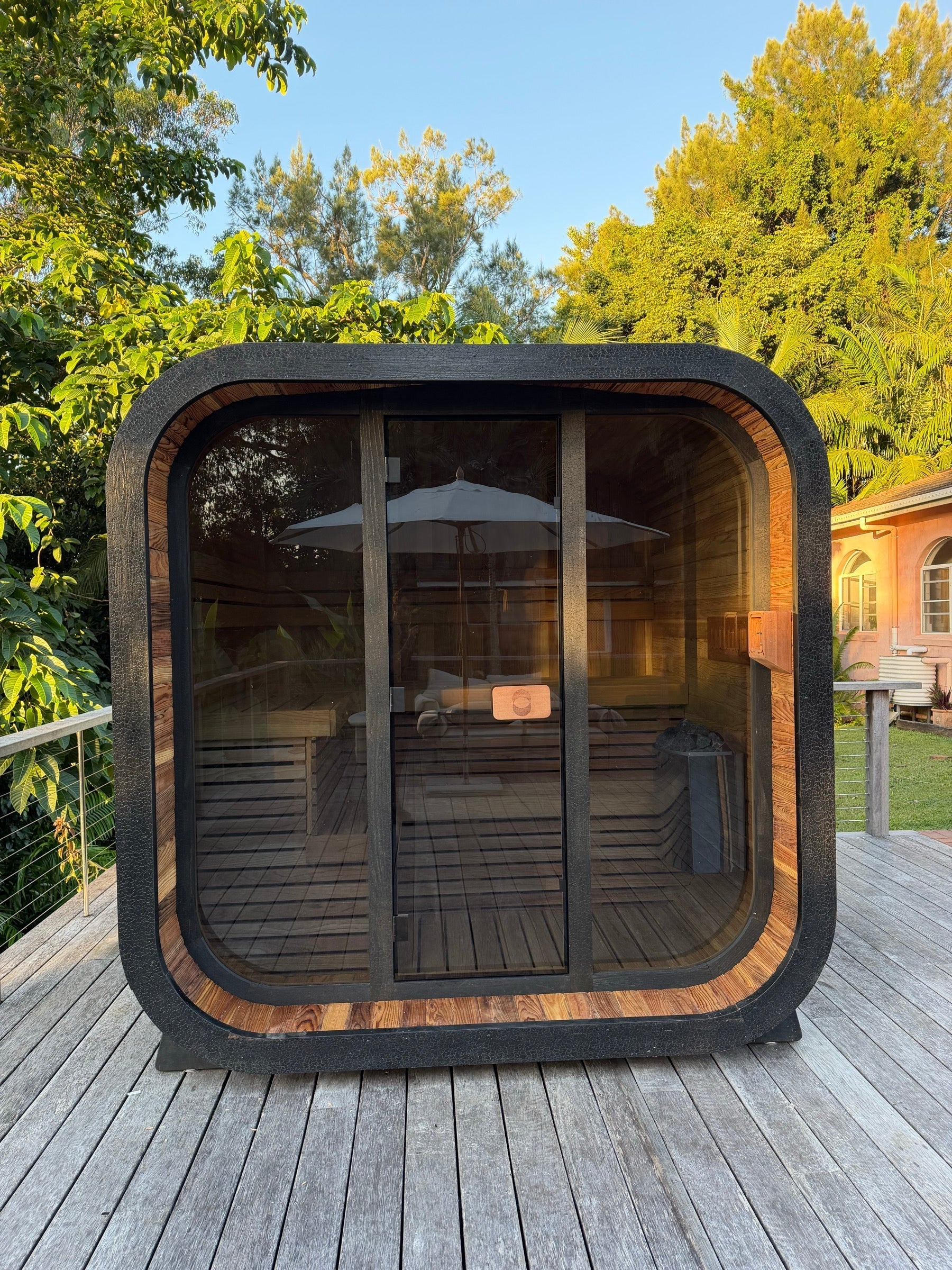
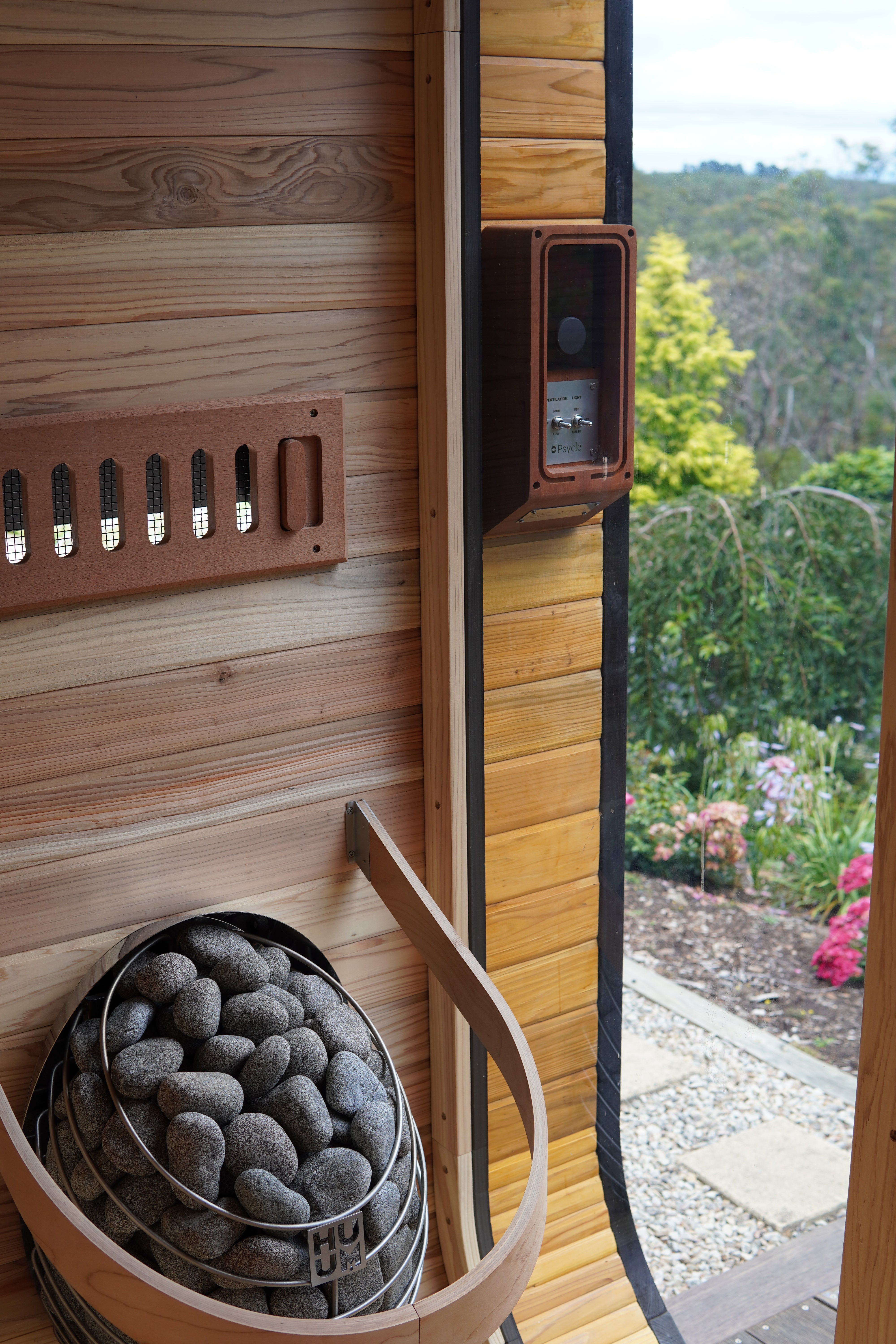
Paired with the Genesis sauna for a full contrast therapy setup, the Origin completes the circuit that makes heat and cold therapy a daily non-negotiable rather than a gym-dependent practice. For the complete science behind why contrast therapy outperforms either modality alone, see our guide to contrast therapy in Australia. To understand the sauna and cold plunge combination in full, the sauna and cold plunge Australia guide is the definitive resource. You can also explore the full best sauna cold plunge combo guide for 2026 to see how the two products work as a system.
For Australians building a home recovery setup from scratch, the practical questions of installation, cost, and daily running expenses are worth understanding upfront. Our home sauna installation guide covers the infrastructure requirements in detail, and the home sauna cost Australia guide breaks down what you actually spend over a 10-year ownership period. For those exploring what the Genesis sauna delivers as the heat side of contrast therapy, the traditional sauna benefits guide covers every mechanism with full citations.
Frequently Asked Questions About Ice Bath Temperature
How cold should an ice bath be for recovery?
For muscle recovery, 10-15°C is the evidence-based range. The 2018 Dupuy et al. meta-analysis in Frontiers in Physiology, covering 99 studies and over 1,000 athletes, identified cold-water immersion in this range as one of the most effective modalities for reducing delayed onset muscle soreness and perceived fatigue. Colder than 10°C does not produce proportionally better recovery outcomes and increases physiological risk.
What is the ideal ice bath temperature in Celsius?
The ideal ice bath water temperature is 10-15°C for most therapeutic purposes. Beginners should start at 14-15°C and progress down over weeks. For advanced users targeting metabolic or recovery protocols, 10-12°C is the working range. Never use temperatures below 5°C without direct supervision - the risk-to-benefit ratio inverts sharply below this threshold.
How long should you stay in an ice bath?
Duration scales with experience: 2-3 minutes for beginners, 4-5 minutes for intermediate users, up to 10 minutes for advanced. The Søberg et al. 2021 research in Cell Reports Medicine found 11 minutes per week total - across multiple sessions - is the minimum threshold for significant norepinephrine and dopamine elevation. Splitting that across 3-4 sessions is more effective than a single long session and considerably safer.
Is 15 degrees too warm for an ice bath?
No - 15°C is the upper end of the therapeutic range and the correct starting point for beginners. The physiological response - cold shock, vasoconstriction, norepinephrine release - activates at this temperature. It is not as intense as 10-12°C, which makes it appropriate for early-stage adaptation. Progress to lower temperatures incrementally over weeks, not days.
Should you ice bath in the morning or after a workout?
Morning cold exposure maximises the cortisol awakening response and produces sustained norepinephrine-driven alertness for hours - best for mental performance goals. Post-workout ice baths target inflammatory reduction and delayed onset muscle soreness - best for recovery goals. If you are prioritising hypertrophy, avoid cold immersion immediately after resistance training more than 2-3 times per week, as it can blunt mTOR-driven muscle protein synthesis.
How do I maintain ice bath temperature at home in Australia?
In Australian conditions - particularly in warmer states - maintaining a therapeutic temperature with ice alone is impractical. Ice melts rapidly in ambient temperatures above 25°C, and temperature drift across a session can be 3-5 degrees. A purpose-built cold plunge with an active chiller, such as the Origin, holds temperature precisely regardless of ambient conditions and maintains that temperature between sessions with an insulated cover. It is the only reliable solution for consistent protocol delivery in a warm climate.
Is cold water immersion safe for people with high blood pressure?
Cold water immersion causes an acute increase in blood pressure due to peripheral vasoconstriction and sympathetic nervous system activation. For individuals with well-controlled hypertension who are otherwise healthy, moderate cold exposure at 12-15°C for short durations may be tolerable - but only with GP clearance. Uncontrolled hypertension is a direct contraindication. Do not begin a cold exposure protocol without medical advice if you have any diagnosed cardiovascular condition.
Stop Guessing. Start Dosing.
The Origin holds exactly the temperature you set - 10, 12, 14°C, every session. Free Australia-wide delivery. Built for outdoor installation in Australian conditions.
SHOP THE ORIGIN →