
Sauna Buying Guide Australia: Complete 2026 Guide | Psycle
Sauna Buying Guide Australia

Key Takeaways
- Traditional Finnish saunas operate at 80–100°C and produce a fundamentally different physiological response to infrared units running at 50–70°C. The research showing a 50% reduction in fatal cardiovascular events is based exclusively on Finnish-style heat.
- Most Australian home saunas under $8,000 are built with glued MDF or particle board. Heat those panels to 90°C and the off-gassing is formaldehyde, not steam.
- The Psycle Genesis uses 38mm Japanese Cedar walls, zero-glue mechanical joints, and a HUUM DROP 9kW heater loaded with 60kg of Olivine diabase stone. Every spec has a health or engineering reason behind it.
- Running a Genesis costs approximately AU$0.50–$1.00 per 45-minute session at current Australian electricity rates, less than a single cup of coffee at most Sydney cafés.
- A 32A or 50A dedicated circuit is mandatory. Genesis Mini requires 32A, Genesis requires 50A, and most Australian states require a licensed electrician for this installation.
- Buying a sauna and cold plunge together as a Contrast Kit is the single highest-return recovery investment available. The physiological effects of heat and cold in sequence are greater than the sum of either alone.
- Psycle's 120-day build lead time and $1,000 refundable deposit give you time to plan your space, run your electrical, and be certain before a single piece of cedar is cut.
By Psycle Wellness · Last updated: May 2026 · 16 min read
Buying a home sauna in Australia means choosing between traditional Finnish heat and infrared panels, selecting the right size for your household, understanding electrical requirements, and knowing which materials are safe when heated to 90°C. This guide covers every decision point, type, size, heater quality, materials, placement, budget, installation, and warranty, so you buy once and buy right.
Why Most Australian Home Saunas Are a Health Compromise in Disguise
The Australian home sauna market has exploded. Walk into any large wellness retailer and you'll find units stacked floor to ceiling, price tags starting at $1,500, and marketing language borrowing liberally from Finnish tradition. The problem is the construction.
Most entry and mid-range home saunas sold in Australia are built with glued MDF panels, particle board benches, and cheap softwood framing. Heat that structure to 90°C, the temperature a real Finnish sauna operates at, and you're not just sweating. You're breathing formaldehyde off-gassing from the adhesive, particulate matter from compressed board, and whatever synthetic compounds are in the paint or coating applied to make it look premium.
That's not wellness. That's the opposite of it.
The second problem is heat quality. A landmark 20-year cohort study of 2,315 Finnish men by Laukkanen et al., published in JAMA Internal Medicine (2015), found that sauna use 4–7 times per week reduced the risk of fatal cardiovascular disease by 50% compared to once-weekly bathing. That research was conducted on traditional Finnish saunas operating at 80–100°C, not infrared panels, not steam rooms, not the 55°C far-infrared cabins sold at most Australian wellness chains. If you're investing in a home sauna for long-term health, the type of heat matters enormously.
The third problem is longevity. A $3,000 flat-pack sauna built with MDF and stapled tongue-and-groove panels will warp, swell, and delaminate within three to five years in Australia's humidity cycles, particularly in coastal Queensland, NSW, and WA. You'll replace it. The real cost isn't the purchase price. It's the purchase price twice.
This guide is for the buyer who has already decided they want something real. For a broader overview of the best options currently available, see our best home sauna Australia guide, which benchmarks the full market against engineering and health standards.
The Three Types of Home Sauna Available in Australia and Which One to Buy
There are three sauna types sold in the Australian market: traditional Finnish saunas, infrared saunas, and barrel saunas. Each operates differently, heats differently, and produces different physiological outcomes. Understanding the distinction before you spend a dollar is the most important decision in this entire guide.
Traditional Finnish Sauna: 80–100°C, Convective Heat, Löyly
A traditional Finnish sauna uses an electric or wood-fired heater loaded with volcanic stones to heat the air in an insulated cabin to between 80°C and 100°C. The sauna user controls humidity by pouring water over the stones, a practice called löyly, which generates a burst of steam that raises perceived heat dramatically without changing the air temperature. This is the format that underpins all peer-reviewed sauna health research.
Traditional Finnish saunas require a dedicated electrical circuit, typically 32A to 50A depending on heater output, and a properly ventilated, thermally insulated cabin. They take 30–45 minutes to reach operating temperature. They are not a quick-use appliance. They are a ritual, and the ritual is the point.
Infrared Sauna: 50–70°C, Radiant Heat, No Stones
Infrared saunas use radiant panels to heat the body directly rather than heating the air. They operate at 50–70°C, significantly lower than traditional Finnish saunas, and do not use stones or löyly. Heat-up time is faster, typically 10–15 minutes, and the electrical load is lower. For a detailed comparison of the science behind both formats, our guide to traditional sauna vs infrared covers the physiological differences in full.
Psycle does not manufacture infrared saunas. The Genesis and Genesis Mini are traditional Finnish saunas, designed to the standards the health research is built on. If you are specifically researching infrared options, our infrared sauna Australia guide covers that market separately.
Barrel Sauna: Traditional Heat, Exposed Cylindrical Form
Barrel saunas are a subset of traditional Finnish saunas, shaped as a horizontal cylinder with a wood-fired or electric heater inside. They are almost always installed outdoors and are popular for their visual character. Heat efficiency is high due to the curved interior reducing dead air volume. For a full breakdown of barrel sauna options in Australia, see our barrel sauna Australia guide.
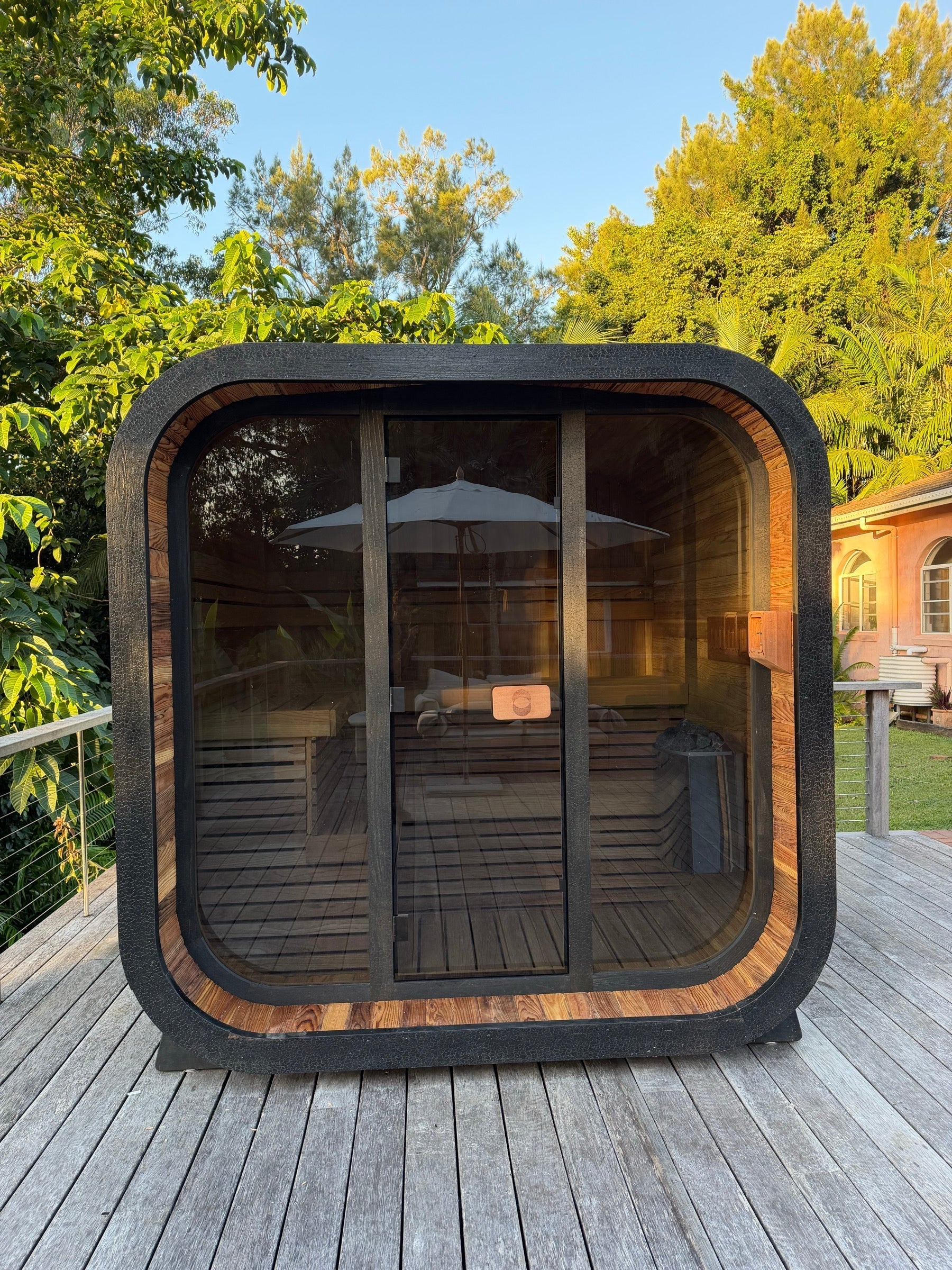
The Genesis is an architectural cabin-format sauna, not a barrel, built for permanent installation indoors or outdoors. It delivers the same traditional Finnish heat in a form designed to complement a premium Australian home.
| Sauna Type | Operating Temp | Heat Source | Löyly (Steam) | Research Base |
|---|---|---|---|---|
| Traditional Finnish | 80–100°C | Electric or wood-fired stones | Yes | Strong — Laukkanen et al. (2015) |
| Infrared | 50–70°C | Radiant panels | No | Limited — smaller, newer studies |
| Barrel Sauna | 75–100°C | Electric or wood-fired stones | Yes | Same physiological base as traditional Finnish |
How to Choose the Right Sauna Size for Your Australian Home
Sauna size is not a vanity decision. It directly affects heater output requirements, electrical circuit sizing, heat-up time, and how well the cabin holds temperature under load. Buy too small and the sauna feels claustrophobic with two people. Buy too large for a single heater and you spend 45 minutes waiting for a cabin that never gets fully hot.
The practical rule: size for how you will actually use it, not how you imagine you might. Most Australian households use their sauna as a 1–2 person daily ritual or a 3–4 person social session 2–3 times per week. Match the cabin to that number.
1–3 Person: Genesis Mini
The Genesis Mini measures 2267H × 1571W × 1950D mm, compact enough for an apartment balcony, terrace, or small backyard deck. It ships at approximately 350kg and requires a 32A dedicated circuit. The HUUM DROP 6kW heater in the Mini carries a 60kg stone load, the same mass as the full-sized Genesis heater, which means heat retention is genuinely strong for the cabin volume.
If you are a solo user or a couple, the Mini is not a compromise. It is the correct choice. For a detailed breakdown of 2-person sauna options across the Australian market, our 2 person sauna Australia guide and 3 person sauna Australia guide both cover sizing considerations in full.
3–5 Person: Genesis
The Genesis measures 2289H × 2288W × 1945D mm and accommodates 3–5 people comfortably. It requires a 50A dedicated circuit, single or three phase, and the HUUM DROP 9kW heater loaded with 60kg of Olivine diabase stone. The larger stone volume maintains temperature stability when you pour löyly repeatedly. Smaller heaters with lighter stone loads lose heat fast and take minutes to recover.
For households with two or more regular users, guests, or families, the Genesis is the obvious choice. It holds its value as a lifestyle asset in a way the Mini does not, because capacity grows with your household. Our 4 person sauna Australia guide covers what to expect at this size tier.
Zero-Toxin Finnish Heat, Built for Australian Homes
Japanese Cedar exterior. Zero-glue construction. HUUM DROP heater with 60kg stone load. The Genesis is the benchmark — not the aspiration.
SEE THE GENESIS →Why Heater Quality Is the Most Underrated Variable in Any Sauna Buying Decision
The heater is not just a component. It is the sauna. Every other element, timber, ventilation, glass, exists to hold and frame the heat the heater produces. Buy a cabin with a mediocre heater and you have expensive furniture that gets warm. Buy a cabin with a genuine Finnish heater engineered for stone mass, heat retention, and löyly performance, and you have a sauna.
Most Australian home saunas at the $3,000–$8,000 price point come with heaters carrying 10–20kg of stone. This sounds like a specification until you pour löyly. A 15kg stone load at 90°C absorbs your water, produces a brief burst of steam, and drops in temperature immediately. You are waiting 5–10 minutes between rounds for the stones to recover. In a Finnish sauna, that is not a session. That is a frustration.
HUUM DROP: The Heater Psycle Chose and Why
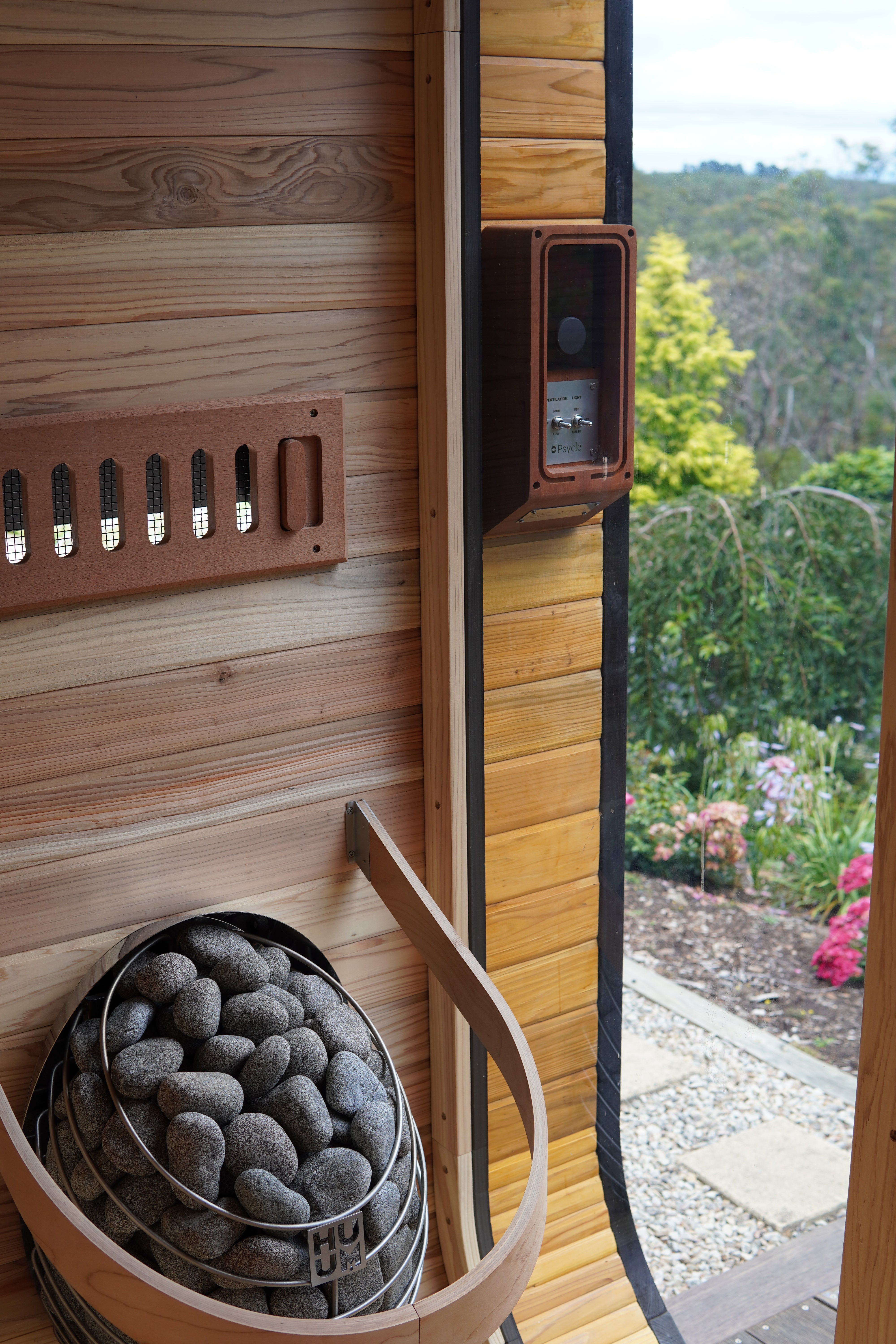
The Genesis ships with either the HUUM DROP 9kW (Genesis) or HUUM DROP 6kW (Genesis Mini), both loaded with 60kg of Olivine diabase stone. HUUM is an Estonian manufacturer with a reputation in European sauna culture for stone-mass engineering and minimal aesthetic. The DROP form factor, a hanging, stone-immersed heater, was designed specifically to maximise stone contact surface area for heat retention and löyly response.
60kg of Olivine diabase holds enough thermal mass to absorb repeated löyly pours without a meaningful temperature drop. You pour, you get steam, the cabin stays hot. That is what a Finnish sauna is supposed to feel like. For an in-depth look at stone selection and performance, our sauna rocks Australia guide covers stone type, mass, and heat retention in detail.
The HUUM UKU WiFi app lets you pre-heat the Genesis remotely. You start the heater on the drive home and by the time you shower and change, the cabin is at operating temperature. It is the kind of detail that sounds minor and becomes the reason you actually use the sauna every day instead of skipping when the prep feels like friction.

Harvia Vega: The Alternative for Buyers Who Prefer Mechanical Controls
Psycle also offers the Harvia Vega 9kW (Genesis) or 6kW (Genesis Mini) as a heater alternative. Harvia is a Finnish manufacturer with decades of heater engineering. The Vega uses mechanical controls rather than WiFi, no app, no connectivity dependency, no software updates. The stone load drops to 20kg with the Vega versus 60kg with the HUUM DROP, which is the primary trade-off.
For buyers who want the simplest, most reliable interface, the Harvia Vega is a legitimate choice. For buyers who want maximum löyly performance and remote pre-heating, the HUUM DROP is the correct answer.
Materials and Construction: What Separates a Zero-Toxin Sauna From Everything Else
Construction materials are the most important health variable in any home sauna purchase, and the most ignored by most buyers. When you heat a sauna cabin to 90°C, every material in that cabin off-gasses. The question is what it off-gasses.
Japanese Cedar, the timber used in every Psycle sauna, produces a mild aromatic compound called thujopsene at high temperatures. It is pleasant, non-harmful, and has been used in traditional Japanese bathhouses for centuries. Glued MDF, particle board, and cheap softwood with synthetic adhesives produce formaldehyde and volatile organic compounds at the same temperatures. The difference is not a marketing distinction. It is a chemistry distinction.
Zero-Glue Construction: Why It Matters at 90°C
The Genesis uses zero-glue mechanical joints throughout the cabin structure. No adhesive. No formaldehyde-based bonding agent. The 38mm Japanese Cedar wall panels are thick enough to hold their form without glue because they are engineered to do so, not because someone found a cheap construction shortcut. Zero-glue joints also allow for natural timber expansion and contraction in Australian humidity cycles, which reduces warping and cracking over a decade of use.
The non-VOC oil finish applied throughout the Genesis interior is the final step in the zero-toxin build. At 90°C, a conventional varnish or stain will off-gas the same compounds as a cheap timber panel. The Psycle oil finish does not.
Japanese Cedar vs European Spruce vs Hemlock: What Australian Buyers Need to Know
Most Australian home saunas in the $3,000–$10,000 range use Scandinavian spruce or North American hemlock as the primary timber. Both are adequate sauna timbers, used in Finnish saunas across Europe, but neither has the natural oil content, insect resistance, or dimensional stability of Japanese Cedar in high-humidity Australian conditions. In coastal environments, Cedar's natural oils provide meaningful protection against the timber degradation that shortens the life of cheaper sauna builds.
The Shou Sugi Ban charcoal finish available on the Genesis is not cosmetic. Charring the cedar surface creates a layer of carbonised wood that resists moisture penetration and UV damage. It is an ancient Japanese wood preservation technique applied to a modern sauna format, and it produces one of the most architecturally distinctive exteriors available in the Australian market.

Indoor vs Outdoor Placement: What Australian Homes Actually Need
Outdoor placement is the default choice for most Australian buyers, and for good reason. Most Australian homes lack the internal floor space for a structure measuring 2.2 metres in every direction, and the Australian lifestyle is built around outdoor living. A sauna on a deck or in a garden connects naturally to a pool, a cold plunge, or a garden shower. The ritual works.
The Genesis is rated for fully exposed outdoor placement with the optional Colorbond roof kit. IP67-rated lighting withstands moisture ingress. The 8mm safety laminated tempered glass, 4+4mm dual-layer, grey tint, handles Australian temperature cycling without cracking. For buyers in coastal Queensland, Northern NSW, or Western Australia's Kimberley coast, the combination of Japanese Cedar and Shou Sugi Ban finish provides genuine protection against salt air and UV degradation that cheaper pine or hemlock builds cannot match. For a deeper look at outdoor sauna considerations specific to the Australian climate, our outdoor sauna Australia guide covers placement, orientation, and weather protection in full.
Coastal Corrosion, Humidity, and Council Approvals
If you are within 1km of the coast, material selection is not a preference. It is a requirement. Salt air accelerates the corrosion of metal fixings and the surface degradation of untreated timber far faster than inland environments. Psycle uses marine-grade fixings throughout the Genesis exterior and applies a non-VOC oil finish that creates a genuine moisture barrier on the cedar panels.
Council approval requirements for an outdoor sauna vary by local government area. In most Australian states, a sauna cabin under 10m² on a residential allotment falls within complying development provisions and does not require a development application, but this is not universal. Councils in some heritage zones, flood overlays, and bushfire-prone land categories have additional requirements. Check your LGA planning portal before ordering. Our home sauna installation Australia guide covers council and electrical approval requirements state by state.
Humidity is the invisible variable most Australian buyers underestimate. In Brisbane, Darwin, and coastal NSW, ambient humidity during summer sits at 70–90%. A sauna cabin that is not properly ventilated will trap moisture between sessions, creating the conditions for mould and timber degradation within 12–18 months. The Genesis active ventilation system, 88 m³/hr low, 120 m³/hr high, is not a comfort feature. It is a structural protection mechanism. For the science behind sauna ventilation in Australian conditions, our sauna ventilation Australia guide explains what the numbers mean and why they matter.
Budget Tiers for Home Saunas in Australia: Entry, Mid-Range, and Premium
Home sauna prices in Australia range from approximately $1,500 to $30,000+ depending on type, construction quality, and heater specification. Understanding what each tier actually buys you, and what it costs you in health terms, is the frame that makes the decision clear.
For a detailed breakdown of costs including installation, electrical, and ongoing running costs, our home sauna cost Australia guide covers every line item you need to budget for before purchase.
| Tier | Price Range (AUD) | Typical Construction | Heater Stone Load | Expected Lifespan |
|---|---|---|---|---|
| Entry | $1,500–$5,000 | Glued MDF, hemlock veneer, flat-pack | 10–20kg | 3–5 years in AU climate |
| Mid-range | $5,000–$12,000 | Spruce or hemlock, some glue-free claims, variable quality | 20–40kg | 5–10 years, depending on site |
| Premium (Psycle Genesis) | Premium tier | 38mm Japanese Cedar, zero-glue, non-VOC oil finish | 60kg (HUUM DROP) | 20+ years with proper maintenance |
| Custom European install | $40,000–$120,000+ | Bespoke, site-built, architect-specified | Variable | Permanent |
The Genesis sits firmly in the premium tier. It is not priced to compete with flat-pack MDF cabins. It is priced against what a custom European sauna installation costs, and it delivers comparable engineering at a fraction of that number. Against an $80,000 custom sauna build, the Genesis price reads as exceptional value. Against a $3,000 flat-pack, it reads as premium. The frame you use matters.
What the Genesis Actually Costs Per Session
Running a Genesis 9kW heater for a 45-minute session at Australian electricity rates of AU$0.30–$0.35/kWh costs approximately AU$0.50–$1.00 per session. That is less than a cup of coffee. Compare that to a commercial sauna drop-in at $25–$50, a gym recovery membership at AU$1,200–$2,400 per year, or weekly sports physio at AU$100–$160 per session, and the economics of a home sauna become straightforward within the first 12 months of regular use.
Over a 10-year lifespan, the per-session cost of a Genesis is a fraction of any commercial recovery alternative, with the additional benefit of genuine heat quality, zero travel, and a ritual that compounds daily.
What Real Australians Say After Installing a Genesis
The people who buy a Genesis have already decided they are done settling. They have used commercial saunas, read the health literature, and concluded that a permanent, high-quality home installation is the only version that compounds over time. What changes after installation is not just recovery quality. It is frequency.
“I trained every day but never had the recovery to match it. The Genesis changed that. I run this protocol five times a week now. My HRV is up, my resting heart rate is down, and I actually look forward to the cool-down after — which is the Origin cold plunge. I don't think I could go back to gym recovery tools.”
Installations across coastal Queensland, NSW, and Victoria confirm a consistent pattern: the sauna gets used more than expected because the friction of leaving home is eliminated. A 7am session before work becomes a daily anchor. A post-training contrast protocol becomes a non-negotiable.
Australia-wide delivery, a 5-year cabin warranty, the longest in the Australian market for this construction standard, and a 120-day build lead time mean buyers have time to plan, prepare their electrical, and be certain before anything is locked in. The $1,000 refundable deposit is precisely that: refundable.
The Sauna That Does Not Compromise
Active mechanical ventilation at 120 m³/hr. IP67 amber lighting. Zero-glue Japanese Cedar. Every detail engineered for Australian conditions and a lifetime of use.
EXPLORE THE GENESIS →Australian Sauna Installation: Electrical Requirements, Permits, and Timeline
Home sauna installation in Australia has two non-negotiable requirements: a dedicated electrical circuit sized to the heater, and in most states, a licensed electrician to install it. Neither is optional. Understanding what each involves before you order prevents delays and cost surprises after your sauna arrives.
Electrical Circuit Requirements
The Genesis requires a 50A dedicated circuit, single or three phase. The Genesis Mini requires a 32A dedicated circuit. “Dedicated” means a circuit run directly from the switchboard to the sauna location with no other loads sharing the circuit. Most Australian residential switchboards built after 2010 have capacity for one or both of these additions without a panel upgrade, but older homes, particularly those with 60A or 80A mains, may require a capacity assessment before ordering.
Budget AU$800–$2,000 for the electrical run depending on the distance from your switchboard to the installation point, cable routing complexity, and whether a new breaker is required. A licensed electrician is required by law in all Australian states for any circuit installation at this amperage.
Council Approval and Building Permits
In most Australian LGAs, a prefabricated sauna cabin under 10m² falls within exempt or complying development provisions when installed on a residential property, meaning no DA is required. Exceptions apply in heritage conservation areas, flood-prone zones, bushfire-prone land (BAL classifications), and some apartment or strata-title properties where the owners corporation controls common and private outdoor space.
Verify with your LGA before ordering. The Psycle team can provide documentation of the Genesis specifications to support any approval application. For a state-by-state breakdown of what approvals are typically required, our home sauna installation Australia guide covers the full process in detail.
The 120-Day Build Timeline: How to Plan
The Genesis has a 120-day build lead time from confirmed order. That is not a delay. It is the production schedule for a precision-built, made-to-order sauna. During those 120 days, you have time to run your electrical, prepare your deck or slab, organise council approval if required, and plan the placement in detail. Rushing that process creates problems. The 120-day lead time prevents them.
Shipping weight is approximately 600kg. Australia-wide delivery is included. For placement on a deck, confirm that the deck structure is engineered to handle the load. A standard 90 × 45mm joist deck at 450mm centres will typically hold this weight without modification, but properties with older or non-standard deck construction should have this confirmed by a structural engineer before delivery.
Why Buying a Sauna and Cold Plunge Together Is the Highest-Return Recovery Investment Available
Contrast therapy, alternating between heat and cold immersion, produces physiological adaptations that neither heat nor cold achieves in isolation. Heat dilates blood vessels and drives heat shock proteins. Cold constricts them, reduces inflammation, and triggers a dopamine response that is both immediate and sustained. The alternating cycle creates a vascular pumping effect that accelerates recovery, reduces soreness, and builds cold-stress resilience over time.
A 2018 meta-analysis by Dupuy et al. in Frontiers in Physiology, covering 99 studies and over 1,000 athletes, found cold-water immersion and contrast water therapy to be among the most effective recovery modalities for reducing muscle soreness and perceived fatigue. This is not fringe sports science. It is the mainstream of elite athletic recovery.
Research published in the European Journal of Physiology found that cold water immersion produces a sustained 250% increase in dopamine levels, a neurological effect that outlasts the cold exposure itself by several hours. That is not a side benefit of contrast therapy. That is a primary reason to build it into a daily protocol.
For a complete contrast therapy protocol with session durations, temperature targets, and timing, our sauna cold plunge routine guide covers the full sequence. For a deeper look at the science behind combining heat and cold in the Australian context, our contrast therapy Australia guide is the most detailed resource available.
The Psycle Contrast Kit: Genesis + Origin
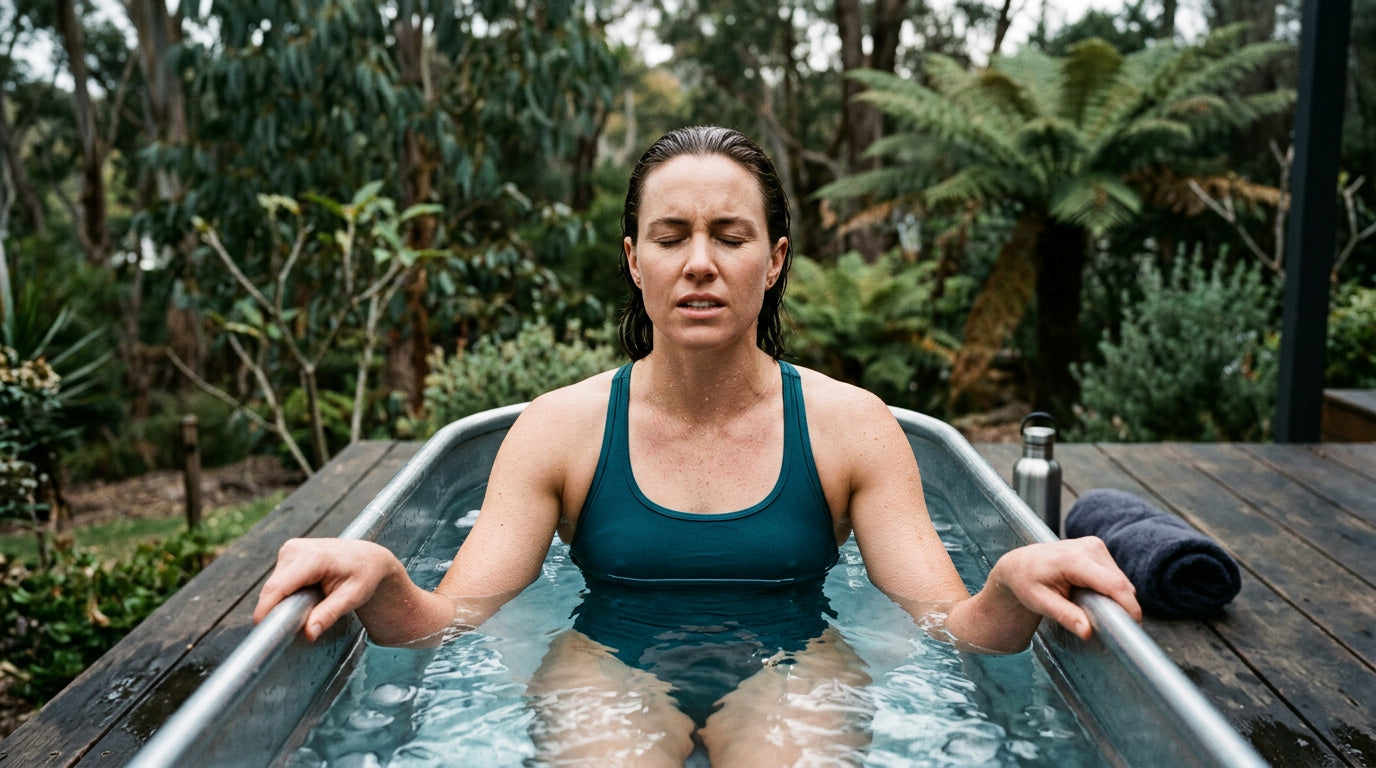
The Psycle Contrast Kit bundles the Genesis sauna with the Origin cold plunge into a single order. The logic is straightforward: 1 + 1 = 3. Heat recovers you. Cold hardens you. Together, they transform you. Installing both removes the friction of a half-protocol. You do not sit in the sauna and then face the logistics of cold immersion. The Origin is already there. The protocol is automatic.
The KIHD cohort study by Laukkanen et al. (2015, JAMA Internal Medicine), following 2,315 men over 20 years in Finland, found that men who used the sauna 4–7 times per week had a 40% lower risk of all-cause mortality compared to once-weekly users. Pair that cardiovascular and longevity evidence with the recovery and neurological benefits of cold immersion, and the Contrast Kit is not a luxury purchase. It is a precision health infrastructure decision. For more on the science supporting this combination, our sauna and cold plunge Australia guide covers the evidence base in full.
For Australians building an outdoor wellness setup, our outdoor sauna and cold plunge setup guide covers spatial planning, drainage requirements, and aesthetic considerations for both products side by side.
| Protocol | Session Duration | Temperature Target | Primary Benefit |
|---|---|---|---|
| Sauna only | 15–20 min | 80–100°C | Cardiovascular, heat shock protein response, relaxation |
| Cold plunge only | 2–5 min | 10–15°C | Dopamine, inflammation reduction, cold adaptation |
| Contrast (sauna + cold) | 3 rounds: 15 min heat / 3 min cold | 80–100°C / 10–15°C | Recovery, DOMS reduction, vascular pump, neurological reset |
Sauna Warranty and After-Sales Support: What to Look For in the Australian Market
Warranty terms are the most honest signal of a manufacturer's confidence in their own product. A brand selling a 1-year warranty on a $5,000 sauna is telling you something about the cabin's expected durability. Pay attention.
Psycle backs the Genesis with a 5-year cabin warranty and a 3-year heater warranty. The 5-year cabin warranty is among the longest in the Australian market for a prefabricated sauna at this construction standard. It covers structural integrity, timber performance, and glass assembly, the three failure modes that matter in Australian conditions.
When evaluating any sauna brand's warranty, ask three specific questions: Does the warranty cover timber warping and delamination, not just structural failure? Does it cover the heater as a separate component? And is after-sales support available in Australia, or does every claim route through an overseas distributor adding 6–12 weeks to any resolution? Psycle is Byron Bay-based. Support is local.
Genesis vs Genesis Mini: The Side-by-Side Comparison Every Australian Buyer Needs
| Specification | Genesis Mini | Genesis |
|---|---|---|
| Capacity | 1–3 persons | 3–5 persons |
| External dimensions | 2267H × 1571W × 1950D mm | 2289H × 2288W × 1945D mm |
| Timber | 38mm Japanese Cedar | 38mm Japanese Cedar |
| Heater options | HUUM DROP 6kW or Harvia Vega 6kW | HUUM DROP 9kW or Harvia Vega 9kW |
| Stone load (HUUM) | 60kg Olivine diabase | 60kg Olivine diabase |
| Circuit requirement | 32A dedicated | 50A dedicated |
| Lighting | Amber 585–590nm / Red 630–635nm, IP67 | Amber 585–590nm / Red 630–635nm, IP67 |
| Ventilation | 88–120 m³/hr active | 88–120 m³/hr active |
| Shipping weight | ~350kg | ~600kg |
| Warranty (cabin / heater) | 5 years / 3 years | 5 years / 3 years |
| Colorbond roof kit (outdoor) | Optional | Optional |
If you have the space, the Genesis is the choice. The 3–5 person capacity means it grows with your household, holds its value as a property asset, and runs the same zero-toxin specification as the Mini at the same stone-mass heater standard. The Mini is the correct choice for apartments, compact decks, and solo or couple use where footprint is genuinely constrained.
What is the same across both: every construction decision that matters to your health. Zero-glue. Japanese Cedar. Non-VOC finish. IP67 amber lighting. Active ventilation. 60kg HUUM stone load. Psycle does not build a lesser sauna in a smaller format.
How Sauna Use Translates to Real Health Outcomes: What the Research Actually Shows
The health case for regular sauna use is not wellness marketing. It is two decades of peer-reviewed cardiovascular, metabolic, and neurological research conducted on traditional Finnish saunas, the exact format the Genesis delivers.
The landmark 20-year cohort study by Laukkanen et al., published in JAMA Internal Medicine (2015), found that men bathing 4–7 times per week had a 50% lower risk of fatal cardiovascular disease. The KIHD study by the same authors found a 40% lower risk of all-cause mortality for the same frequency of use. These are not small effect sizes. They are the kind of numbers that change how you think about what a sauna is worth. For a deep look at the cardiovascular evidence, our sauna cardiovascular health Australia guide covers the full research base. For longevity-specific evidence, our sauna longevity Australia guide covers the KIHD findings and what they mean in practical terms.
Regular sauna use is also associated with reduced blood pressure, improved sleep quality, reduced joint pain in conditions including arthritis, and significant improvements in subjective wellbeing. For evidence on specific conditions, our guides on sauna and blood pressure Australia, sauna for sleep Australia, and sauna for arthritis Australia cover the research in full. For sex-specific evidence including hormonal and recovery outcomes, our sauna benefits for men guide and sauna benefits for women guide cover both in detail.
How often you should use a sauna and how long each session should be depends on your experience level, goals, and health status. Our sauna frequency guide and sauna session duration guide cover both variables with protocol recommendations by goal.
Frequently Asked Questions: Sauna Buying Guide Australia
What is the best type of sauna to buy in Australia?
A traditional Finnish sauna is the best type to buy if you want the health outcomes supported by peer-reviewed research, including the cardiovascular, longevity, and recovery benefits documented in two decades of Finnish cohort studies. Traditional Finnish saunas operate at 80–100°C and use volcanic stone heaters to produce convective heat and löyly steam. Infrared saunas operate at 50–70°C and are supported by a smaller, more recent evidence base. For buyers who want architectural quality, zero-toxin materials, and the heat experience the research documents, the Psycle Genesis is the benchmark in the Australian market.
How much does a home sauna cost in Australia?
Home sauna prices in Australia range from approximately $1,500 for entry-level flat-pack infrared units to $30,000+ for premium traditional Finnish saunas, with custom European installations reaching $40,000–$120,000. Entry-level saunas ($1,500–$5,000) are typically built with glued MDF and carry 10–20kg stone loads. Mid-range saunas ($5,000–$12,000) use better timber but vary widely in construction quality. Premium saunas like the Psycle Genesis use 38mm Japanese Cedar, zero-glue construction, and 60kg HUUM stone heaters, and carry a 5-year cabin warranty. Add AU$800–$2,000 for electrical installation on top of the sauna purchase price. For a full cost breakdown, our home sauna cost Australia guide covers every line item.
What electrical requirements does a home sauna need in Australia?
A home sauna in Australia requires a dedicated electrical circuit, meaning a circuit run directly from your switchboard with no other loads sharing it. The Psycle Genesis Mini requires 32A and the Genesis requires 50A, single or three phase. A licensed electrician must install the circuit in all Australian states. This is not a DIY task. Budget AU$800–$2,000 for the electrical run depending on distance from your switchboard and cable routing complexity. Older homes with 60A or 80A mains may require a capacity assessment before ordering. Our home sauna installation guide covers electrical requirements state by state.
Do I need council approval to install a home sauna in Australia?
In most Australian LGAs, a prefabricated sauna cabin under 10m² falls within exempt or complying development provisions on a residential allotment and does not require a development application. Exceptions apply in heritage conservation areas, flood-prone zones, bushfire-prone land (BAL classifications), and some strata-title properties. Always check with your local government area before ordering. The Psycle team can provide Genesis specifications documentation to support any approval application. Our home sauna installation Australia guide covers council and permit requirements state by state.
What is the difference between the Psycle Genesis and Genesis Mini?
The Genesis accommodates 3–5 people and requires a 50A dedicated circuit; the Genesis Mini accommodates 1–3 people and requires a 32A circuit. Both use identical zero-toxin construction, 38mm Japanese Cedar walls, zero-glue mechanical joints, non-VOC oil finish, IP67 amber lighting, and active ventilation at 88–120 m³/hr. Both are available with the HUUM DROP heater carrying 60kg of Olivine diabase stone or the Harvia Vega with 20kg stone load. The Mini ships at approximately 350kg; the Genesis at approximately 600kg. If you have the space, the Genesis is the stronger long-term investment. It grows with your household and holds its value as a property asset.
Can I install a sauna outdoors in Australia?
Yes. The Psycle Genesis is rated for fully exposed outdoor installation with the optional Colorbond roof kit. IP67-rated lighting, 8mm safety laminated tempered glass (4+4mm dual-layer), and Japanese Cedar with non-VOC oil finish or Shou Sugi Ban charcoal cladding all provide genuine weather protection for Australian conditions including coastal salt air, high humidity, and UV exposure. In coastal environments within 1km of the ocean, the Shou Sugi Ban finish is the stronger choice for long-term surface protection. Our outdoor sauna Australia guide covers placement, orientation, drainage, and weather protection for Australian outdoor installations.
What is contrast therapy and should I buy a sauna and cold plunge together?
Contrast therapy is the practice of alternating between heat (sauna) and cold immersion (cold plunge or ice bath) in a structured protocol, typically 3 rounds of 15 minutes in heat followed by 3 minutes in cold. A 2018 meta-analysis by Dupuy et al. in Frontiers in Physiology covering 99 studies and over 1,000 athletes found contrast water therapy to be among the most effective recovery modalities for reducing muscle soreness and perceived fatigue. Research in the European Journal of Physiology found cold water immersion produces a 250% increase in sustained dopamine levels. The Psycle Contrast Kit bundles the Genesis sauna with the Origin cold plunge. Buying both together removes the friction from the protocol and produces physiological outcomes greater than either modality alone. For a full evidence-based guide to contrast therapy in Australia, see our contrast therapy Australia guide.
Ready to Build This Into Your Routine?
Free Australia-wide delivery. 5-year cabin warranty. $1,000 refundable deposit. 120-day build — order now and have your Genesis ready before summer.
SHOP THE CONTRAST KIT →