
Sauna for Arthritis Australia: Evidence-Based Guide
Sauna for Arthritis Australia: Evidence-Based Guide

Key Takeaways
- More than 3.6 million Australians live with arthritis - the leading cause of chronic pain and disability in the country, according to the Australian Bureau of Statistics (2022).
- Finnish sauna heat at 80-100°C reduces synovial fluid viscosity, temporarily improving joint mobility and reducing stiffness in both osteoarthritis and rheumatoid arthritis.
- A landmark 20-year Finnish cohort study found sauna use 4-7 times per week reduced the risk of fatal cardiovascular disease by 50% - directly relevant because cardiovascular risk is elevated in people with chronic inflammatory conditions.
- Zero-glue, zero-toxin construction matters for arthritis sufferers: cheaper saunas off-gas formaldehyde from MDF panels at high heat - a direct respiratory irritant for people with inflammatory conditions.
- A home Genesis sauna costs approximately AU$0.50-$1.00 per 45-minute session to run - less than a single physio visit and a fraction of a commercial sauna membership.
- Contrast therapy - alternating Finnish sauna heat with cold plunge immersion - may offer compounded anti-inflammatory benefits beyond heat alone, supported by meta-analysis data covering over 1,000 athletes.
- People on immunosuppressants, experiencing active flare-ups, or with uncontrolled hypertension should consult their rheumatologist or GP before beginning any sauna protocol.
By Psycle Wellness · Last updated: May 2026 · 14 min read
Sauna for arthritis Australia: regular Finnish sauna use at 80-100°C reduces synovial fluid viscosity, eases joint stiffness, and suppresses inflammatory markers including C-reactive protein and interleukin-6. For Australians living with osteoarthritis or rheumatoid arthritis, heat therapy is one of the most studied non-pharmaceutical tools available - with peer-reviewed evidence stretching back decades and a clear mechanistic basis in joint biology.
The mechanism is not mysterious. Heat reduces the thickness of synovial fluid - the lubricant inside your joints - allowing them to move with less friction and less pain. It activates thermoreceptors that partially override pain signalling. And repeated exposure drives down the systemic inflammatory markers that fuel rheumatoid arthritis between medical treatments. This is physiology, not speculation.
Zero-Toxin Sauna Therapy, Built for Australians
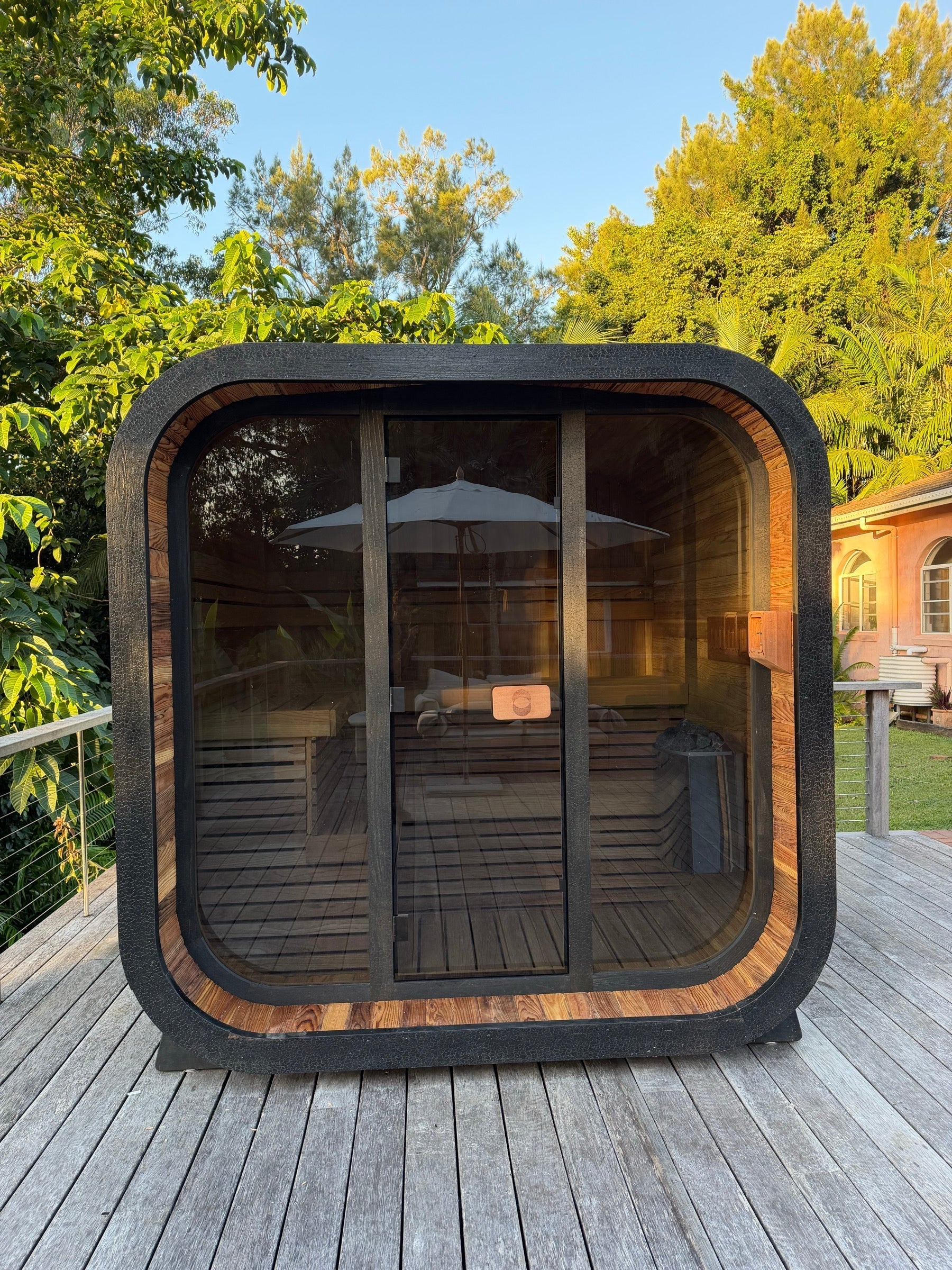
Japanese Cedar exterior. Zero-glue construction. HUUM DROP heater. Built to last decades - not off-gas in them.
SEE THE GENESIS →3.6 Million Australians Are Living With Joint Pain - and Most Are Managing It Wrong
Arthritis is not a minor inconvenience. According to the Australian Bureau of Statistics (2022), more than 3.6 million Australians - roughly 15% of the population - live with some form of arthritis. It is the leading cause of chronic pain and disability in this country.
Most of them cycle through the same short-term options. Anti-inflammatories with gastrointestinal side effects. Physio appointments at AU$100-$160 per session. Gym memberships used inconsistently. Heat packs that lose temperature in minutes.
None of that addresses underlying physiology. Heat from a wet towel does not penetrate deep enough to meaningfully reduce synovial fluid viscosity. A 20-minute physio appointment does not produce the sustained core temperature elevation that Finnish sauna research consistently links to reduced joint inflammation and improved mobility.
If you are managing arthritis and you have not seriously investigated Finnish sauna therapy, you are missing one of the most well-documented complementary tools in the peer-reviewed literature. For a broader view of what the research confirms about heat therapy and Australian health, our Sauna Benefits Australia: Evidence-Based Heat Therapy Guide covers the full picture.
What Heat Actually Does to Arthritic Joints: The Science
Heat therapy for arthritis works through several distinct physiological mechanisms. Understanding them is the difference between using a sauna intelligently and just sitting in a hot room hoping something changes.
Synovial Fluid Viscosity Reduction
Synovial fluid is the lubricant inside your joints. In arthritic joints, this fluid becomes thicker and less effective - contributing directly to the grinding, stiffness, and reduced range of motion that characterises both osteoarthritis and rheumatoid arthritis. Heat reduces the viscosity of synovial fluid, temporarily restoring its lubricating function and allowing joints to move with less friction and pain.
This is not a speculative mechanism. It is basic fluid thermodynamics applied to joint biology. Finnish sauna temperatures of 80-100°C produce sufficient deep-tissue warming to achieve this effect in ways that superficial heat - a hot pack, a warm shower - cannot replicate.
Inflammatory Marker Suppression
Repeated sauna exposure reduces circulating inflammatory markers including C-reactive protein (CRP) and interleukin-6 (IL-6) - two of the primary drivers of joint inflammation in rheumatoid arthritis. A 2018 study by Masuda et al. published in Internal Medicine found that repeated thermal therapy significantly reduced CRP and inflammatory cytokines in patients with chronic pain conditions, with improvements sustained over a four-week protocol.
For rheumatoid arthritis sufferers in particular - whose condition is driven by systemic inflammation rather than mechanical wear - this is clinically meaningful. It does not replace disease-modifying antirheumatic drugs (DMARDs), but it reduces the inflammatory load the body carries between medical treatments.
Muscle Relaxation and Pain Gate Modulation
Heat triggers direct muscle relaxation in the tissue surrounding arthritic joints. Reduced muscle tension around an inflamed joint directly reduces the compressive load on that joint - providing relief that NSAIDs alone cannot deliver. Heat also activates thermoreceptors that modulate the pain gate, partially overriding the pain signals the joint is generating.
This is why people often report that the relief from a genuine Finnish sauna session outlasts the session itself by hours. Not placebo. Neurophysiology.
The cardiovascular connection matters for arthritis sufferers specifically. A 20-year cohort study of 2,315 Finnish men by Laukkanen et al., published in JAMA Internal Medicine (2015), found that sauna use 4-7 times per week reduced the risk of fatal cardiovascular disease by 50% compared to once-weekly use. People living with chronic inflammatory conditions like rheumatoid arthritis carry elevated cardiovascular risk. The cardiovascular-protective effect of regular sauna use is therefore not incidental - it is directly relevant. Our dedicated guide to Sauna Cardiovascular Health Australia: The Science explores this evidence in full.

Why Finnish Sauna Outperforms Infrared for Arthritis Relief
Most of the Australian sauna market for arthritis is dominated by infrared brands making therapeutic claims about lower temperatures and deeper tissue penetration. The science does not support the comparison they are drawing.
Infrared saunas operate at 45-65°C - well below Finnish sauna temperatures. The claimed advantage is deeper tissue penetration at lower heat. But the primary mechanisms that reduce arthritis symptoms - synovial fluid viscosity reduction, inflammatory cytokine suppression, core temperature elevation, pain gate modulation - all depend on reaching a meaningful rise in core body temperature. Infrared at 50°C does not reliably produce that effect in a 20-minute session.
The peer-reviewed arthritis research - including the Finnish long-term studies cited throughout this guide - was conducted on traditional Finnish saunas. The 80-100°C wet-heat environment, the practice of löyly (pouring water over volcanic stones to generate steam), the acute cardiovascular response: these are the variables the science has actually measured. If you want the research outcomes, you need the conditions the research studied. For the full evidence comparison, see our guide to Traditional vs Infrared Sauna: Real Science.
| Factor | Finnish Sauna (Traditional) | Infrared Sauna |
|---|---|---|
| Temperature range | 80-100°C | 45-65°C |
| Core temperature elevation | Significant - reliably achieved in 15-20 min | Moderate - session length dependent |
| Synovial fluid effect | Documented viscosity reduction | Limited peer-reviewed evidence |
| Inflammatory marker reduction | CRP and IL-6 suppression confirmed (Masuda et al., 2018) | Some evidence, smaller studies |
| Löyly (steam) capability | Yes - core to the therapeutic experience | No |
| Long-term outcome research | 20+ year cohort studies (Laukkanen et al.) | No equivalent longitudinal data |
| Construction materials (Psycle) | 38mm Japanese Cedar, zero-glue, non-VOC finish | Varies - many use MDF panels |
Why Cheap Saunas Are Actively Harmful for People With Arthritis
Most home saunas sold in Australia are built with glued MDF panels and particle board. Heat that to 90°C and the adhesives and resins in those panels begin off-gassing formaldehyde. You are not breathing clean hot air. You are breathing chemical steam at therapeutic temperatures.
For a generally healthy person, that is a bad trade-off. For someone with an inflammatory condition - rheumatoid arthritis, ankylosing spondylitis, psoriatic arthritis - breathing formaldehyde during what should be an anti-inflammatory session is a direct contradiction. The sauna is supposed to reduce your inflammatory load, not add to it.
This is why construction materials are not an aesthetic choice. They are a health decision. The Genesis uses 38mm Japanese Cedar walls with zero-glue mechanical joints and a non-VOC oil finish throughout. There is no formaldehyde source in the structure. At 90°C, you breathe clean air and cedar vapour - nothing else.
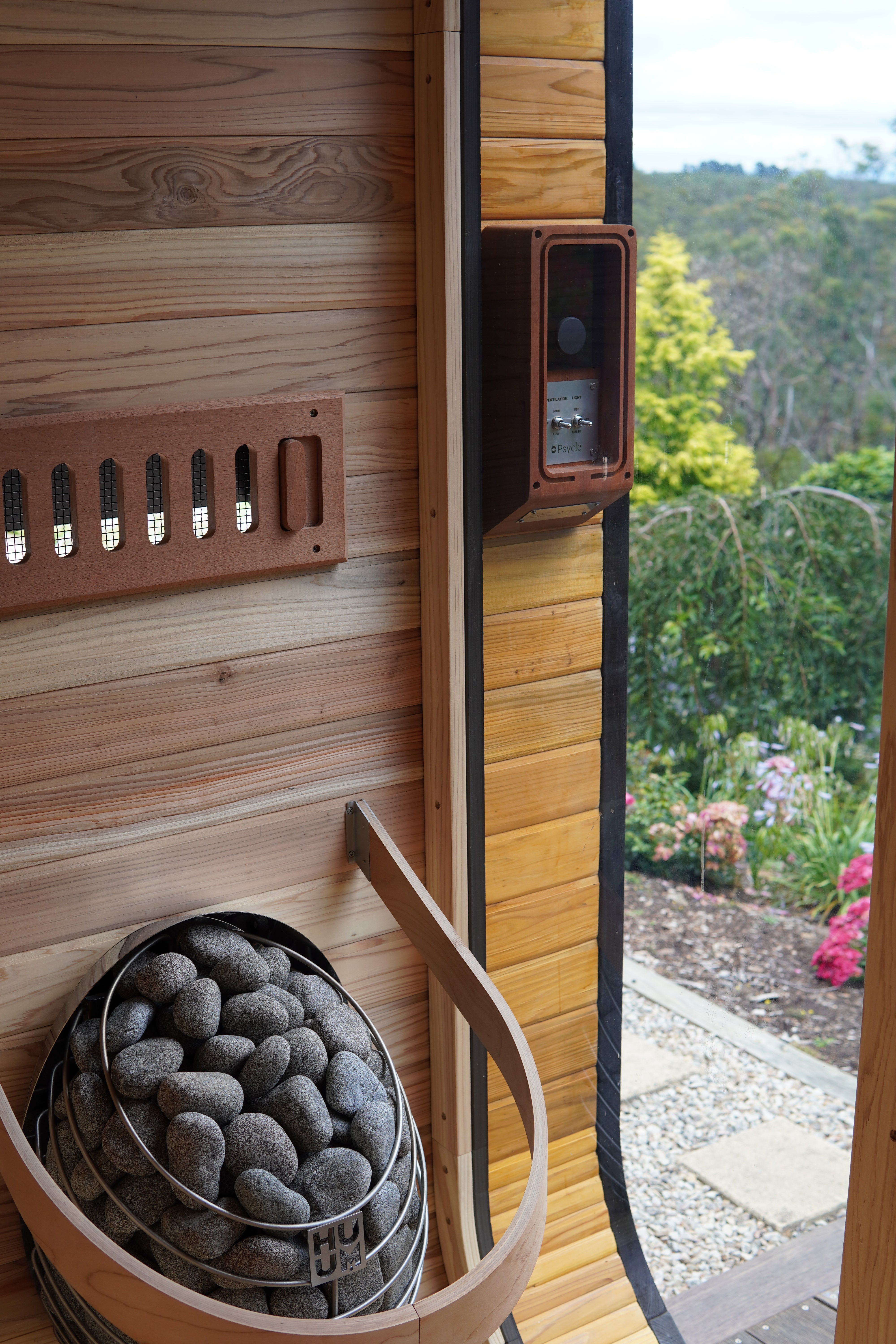
The lighting is engineered on the same principle. The Genesis uses amber 585-590nm and red 630-635nm LEDs - blue-light-free, IP67 rated, withstanding 200°C. Blue light at therapeutic temperatures disrupts melatonin and cortisol cycles. Arthritis sufferers already deal with disrupted sleep from chronic pain. The sauna should not compound that.
The Sauna Protocol for Arthritis: What the Evidence Actually Supports
There is no single universally prescribed protocol for sauna use in arthritis management. But the peer-reviewed evidence points to clear parameters that produce measurable outcomes. The following protocol is based on the research, not marketing.
Preheat to 80-90°C
Allow the sauna to reach full temperature before entering. The HUUM DROP 9kW heater with 60kg of Olivine diabase stone holds temperature consistently - no drop when you open the door or pour löyly.
Session duration: 15-20 minutes
Beginners start at 10-12 minutes. The goal is sustained core temperature elevation - not endurance. Exit if you feel dizzy, nauseous, or overly fatigued.
Löyly every 5-8 minutes
Pour 200-300ml of water over the stones to generate steam. This raises the apparent temperature and drives the acute sweating and vasodilation response. This is the mechanism - not decorative tradition.
Cool down: 10-15 minutes
Step outside or take a cool shower. For arthritis sufferers not using contrast therapy, a gradual cool-down is preferable to immediate cold exposure - allow your joints to move through the full comfortable range while they are warm and mobile.
Hydrate with 500ml-1L of water
A 20-minute Finnish sauna session can produce 0.5-1kg of sweat. Dehydration compounds joint pain and reduces synovial fluid volume. Rehydrate before and after - not during.
Frequency: 3-7 sessions per week
The Laukkanen et al. data shows a clear dose-response relationship. Three sessions per week produces measurable outcomes. Four to seven sessions per week delivers the greatest cardiovascular and inflammatory benefits. Build up gradually over the first 4 weeks.
Is Contrast Therapy Beneficial for Arthritis?
Contrast therapy - alternating hot and cold immersion - is increasingly used by high-performing Australians for recovery and inflammation management. The question for arthritis sufferers is whether cold exposure compounds or counteracts the heat benefit.
The evidence suggests it may compound it. A 2022 meta-analysis by Bieuzen et al. covering data from over 1,000 athletes found that contrast water therapy significantly reduced markers of muscle damage and inflammation compared to passive recovery. The mechanism - alternating vasodilation and vasoconstriction creating a pumping effect on circulatory and lymphatic flow - is relevant to the inflammatory burden that characterises arthritis.
That said, cold immersion during an active arthritis flare-up or in joints with significant structural damage requires clinical guidance. Cold can temporarily increase joint stiffness. If you are in remission and have medical clearance, contrast therapy may be one of the most powerful anti-inflammatory protocols available outside pharmaceutical intervention. Our guide to Contrast Therapy Australia: The Complete Science Guide covers protocol, timing, and safety in detail.
The Sauna That Does Not Compromise
Active mechanical ventilation. Blue-light-free amber and red lighting. IP67 rated. Zero-glue Japanese Cedar. Every detail engineered for people who take recovery seriously.
EXPLORE THE GENESIS →What to Look for in a Home Sauna for Arthritis Management
If you are purchasing a home sauna specifically to support arthritis management, the specification decisions matter more than they do for a generally healthy buyer. Here is what to demand.
Temperature Capability: Non-Negotiable
The sauna must reach and sustain 80-100°C. Many cheaper units are rated to 80°C but struggle to maintain that temperature with a full stone load once the door opens and closes. The Genesis runs a HUUM DROP 9kW heater with 60kg of Olivine diabase stones. That stone mass is a thermal battery. It does not drop temperature when you pour löyly. It holds the session at the temperature the research actually studied.
Zero-Toxin Construction: a Health Decision, Not a Luxury
For someone with an inflammatory condition, breathing formaldehyde from MDF adhesives at 90°C is not an acceptable trade-off. The Genesis uses zero-glue mechanical joints, 38mm Japanese Cedar walls, and a non-VOC oil finish throughout. No adhesive. No particleboard. No off-gassing. That is the specification standard arthritis sufferers should be demanding.
Ventilation: Clean Air at Therapeutic Temperatures
Stale, oxygen-depleted air compounds fatigue and reduces the quality of a sauna session. The Genesis runs active mechanical ventilation at 88-120 m³/hr - pulling fresh air in and exhausting spent air out throughout the session. For detailed information on why ventilation matters, see our Sauna Ventilation: Why It Makes or Breaks Your Session guide.
Size and Accessibility
For arthritis sufferers, ease of entry and comfortable bench positioning matters. The Genesis seats 3-5 people in an external footprint of 2288W x 1945D mm. If space is the constraint, the Genesis Mini seats 1-3 people in a smaller footprint - identical zero-toxin specification, HUUM DROP 6kW heater, same stone capacity ratio. Both use 8mm laminated safety glass (4+4mm dual-layer, grey tint) for a clean sightline and structural integrity.
| Specification | Genesis (3-5 person) | Genesis Mini (1-3 person) |
|---|---|---|
| Timber | 38mm Japanese Cedar | 38mm Japanese Cedar |
| Heater options | HUUM DROP 9kW / Harvia Vega 9kW | HUUM DROP 6kW / Harvia Vega 6kW |
| Stone volume | 60kg Olivine diabase (HUUM) | 60kg Olivine diabase (HUUM) |
| Construction | Zero-glue, non-VOC oil finish | Zero-glue, non-VOC oil finish |
| Lighting | Amber 585-590nm / Red 630-635nm, IP67 | Amber 585-590nm / Red 630-635nm, IP67 |
| Ventilation | 88-120 m³/hr active mechanical | 88-120 m³/hr active mechanical |
| External dimensions | 2289H x 2288W x 1945D mm | 2267H x 1571W x 1950D mm |
| Electrical requirement | 50A dedicated circuit | 32A dedicated circuit |
| Warranty | 5-year cabin / 3-year heater | 5-year cabin / 3-year heater |
Safety Considerations: Who Should Exercise Caution
Finnish sauna therapy is well-tolerated by most people with arthritis - but not all. The following groups should obtain medical clearance before starting a sauna protocol.
Active inflammatory flare-up: During an acute flare, additional heat may exacerbate inflammation rather than reduce it. Wait for the flare to settle before resuming sessions.
Immunosuppressant medications: Common DMARDs and biologics used in rheumatoid arthritis management affect how the body responds to thermal stress. Discuss sauna use directly with your rheumatologist before starting.
Uncontrolled hypertension: The acute cardiovascular response to high-heat sauna includes a meaningful rise in heart rate and vasodilation. People with uncontrolled blood pressure should obtain medical clearance. Our guide to Sauna and Blood Pressure Australia: Science Guide covers the evidence in detail.
Severe joint damage or recent surgery: If you have had recent joint replacement surgery or have severe structural damage, the heat protocol should be introduced gradually and with clinical supervision.
For a complete review of contraindications and safety parameters, our Sauna Health Risks Australia: The Complete Safety Guide is required reading before starting any protocol.
The Real Cost of a Home Sauna vs Ongoing Treatment
The question most people ask is whether a home sauna is worth the investment. The honest answer requires running the numbers properly.
A commercial sauna session in Australia runs AU$30-$60 per visit. Three sessions per week over 12 months is AU$4,680-$9,360 - with no asset, no control over the environment, and no guarantee the equipment is built to the standard that produces the research outcomes. A physio appointment for arthritis management is AU$100-$160 per session. Monthly, that is AU$400-$640 - for symptomatic management, not a structural intervention.
The Genesis runs at approximately AU$0.50-$1.00 per 45-minute session in electricity costs. Over a 10-year lifespan, the per-session cost of ownership becomes trivial compared to the cumulative cost of commercial sauna access, physio visits, and anti-inflammatory prescriptions.
This is not a cheap sauna. It is not positioned as one. Custom European sauna installations run AU$40,000-$120,000. The Genesis delivers that engineering standard - zero-glue Japanese Cedar, HUUM DROP heater, 120-day precision build - at a fraction of that cost. For a full breakdown of what home sauna ownership costs in Australia, see our Home Sauna Cost Australia: The 2026 Complete Buyer Guide.
Every person who has decided they are done settling for short-term symptom management knows what it costs to keep cycling through treatments that do not address the underlying physiology. A Genesis changes that equation.
Frequently Asked Questions: Sauna for Arthritis Australia
Is sauna good for arthritis?
Yes - the evidence supports Finnish sauna use as a beneficial complementary therapy for both osteoarthritis and rheumatoid arthritis. Heat at 80-100°C reduces synovial fluid viscosity, suppresses inflammatory markers including CRP and IL-6, relaxes surrounding musculature, and modulates pain signalling via thermoreceptor activation. A 2018 study by Masuda et al. in Internal Medicine confirmed sustained CRP and cytokine reduction after a four-week thermal therapy protocol. Sauna does not replace medical treatment but may meaningfully reduce symptom burden between treatments.
Can you use a sauna during an arthritis flare-up?
During an active inflammatory flare, additional heat exposure may worsen inflammation rather than reduce it. Most rheumatologists recommend allowing an acute flare to settle before resuming sauna sessions. If you are on immunosuppressant medication - DMARDs, biologics, or corticosteroids - obtain clearance from your rheumatologist before beginning any sauna protocol. For stable, well-managed arthritis in remission, regular sauna use is generally well-tolerated.
How often should you sauna for arthritis?
The peer-reviewed evidence shows a clear dose-response relationship. Three sessions per week produces measurable anti-inflammatory and cardiovascular outcomes. Four to seven sessions per week delivers the greatest benefits - including the 50% reduction in cardiovascular mortality reported in the Laukkanen et al. (2015) cohort study. Begin with two to three sessions per week for the first month and build from there based on tolerance and symptom response.
Is infrared or traditional sauna better for arthritis?
The peer-reviewed arthritis research is conducted on traditional Finnish saunas operating at 80-100°C. The mechanisms that reduce arthritis symptoms - synovial fluid viscosity reduction, core temperature elevation, inflammatory cytokine suppression - require reaching meaningful core body temperature. Infrared saunas at 45-65°C do not reliably produce that effect in a standard session. The long-term outcome data (including 20-year Finnish cohort studies) exists for traditional saunas only. If you want the research outcomes, use the environment the research studied.
What is the best home sauna for arthritis in Australia?
The best home sauna for arthritis in Australia is one that reaches and holds 80-100°C, uses zero-glue zero-toxin construction (no formaldehyde off-gassing at therapeutic temperatures), and has sufficient stone mass to maintain temperature through a full session. The Psycle Genesis meets all three criteria: 38mm Japanese Cedar walls, zero-glue mechanical joints, HUUM DROP 9kW heater with 60kg of Olivine diabase stones, and non-VOC oil finish throughout. It is built in Byron Bay and ships Australia-wide, with a 3-year cabin warranty and a $1,000 refundable deposit.
Ready to Build This Into Your Routine?
Free Australia-wide delivery. 3-year cabin warranty. $1,000 refundable deposit. 120-day build - order now for your delivery window.
SHOP THE GENESIS →