
Home Sauna Cost Australia: The 2026 Complete Buyer Guide

Home Sauna Cost Australia: Complete 2026 Buyer's Guide
Key Takeaways
- Home saunas in Australia cost between $3,000 and $15,000+ in 2026, with a fourth tier of custom European builds reaching $40,000 to $120,000+
- Entry-level flat-pack saunas priced at $3,000 to $6,000 are built with glued MDF panels that off-gas formaldehyde at 90°C - a Group 1 human carcinogen per the IARC
- A 2018 Laukkanen et al. study in Mayo Clinic Proceedings found men using a sauna 4-7 times per week at 80-100°C had a 50% lower risk of fatal cardiovascular events compared to once-weekly users
- A quality 9kW HUUM Drop heater loaded with 60kg of volcanic stone sustains temperature during löyly, whereas budget elements typically max out around 60°C and cannot reach therapeutic thresholds
- Installing a 9kW heater requires a dedicated 50A single-phase circuit, with electrical switchboard upgrades adding $500 to $2,000 to the total project cost - a figure many entry-level quotes omit
- Most MDF flat-pack saunas degrade within 3 to 5 years under repeated heat and humidity cycling, turning a cheap purchase into a full replacement cost on top of years of formaldehyde exposure
- Engineered traditional saunas using zero-glue mechanical joinery in Japanese Cedar or Nordic Spruce can be disassembled and relocated, making them a long-term asset rather than a disposable product
A home sauna in Australia costs between $3,000 and $15,000+ depending on size, construction method, heater quality, and materials. That price range obscures something critical: two saunas at opposite ends of it are not the same product. One is engineered solid timber with a Finnish heater and zero-toxin joinery. The other is glued MDF and a cheap heating element. The number on the invoice does not tell you which one you are buying.
This guide breaks down exactly what drives the cost, what the price difference means for your health, and what to look for before you spend a dollar. If you are researching a traditional Finnish-style sauna for your home, read every section. The decision you make here lasts twenty years — or it does not.
Zero-Toxin Sauna Therapy, Built for Australians
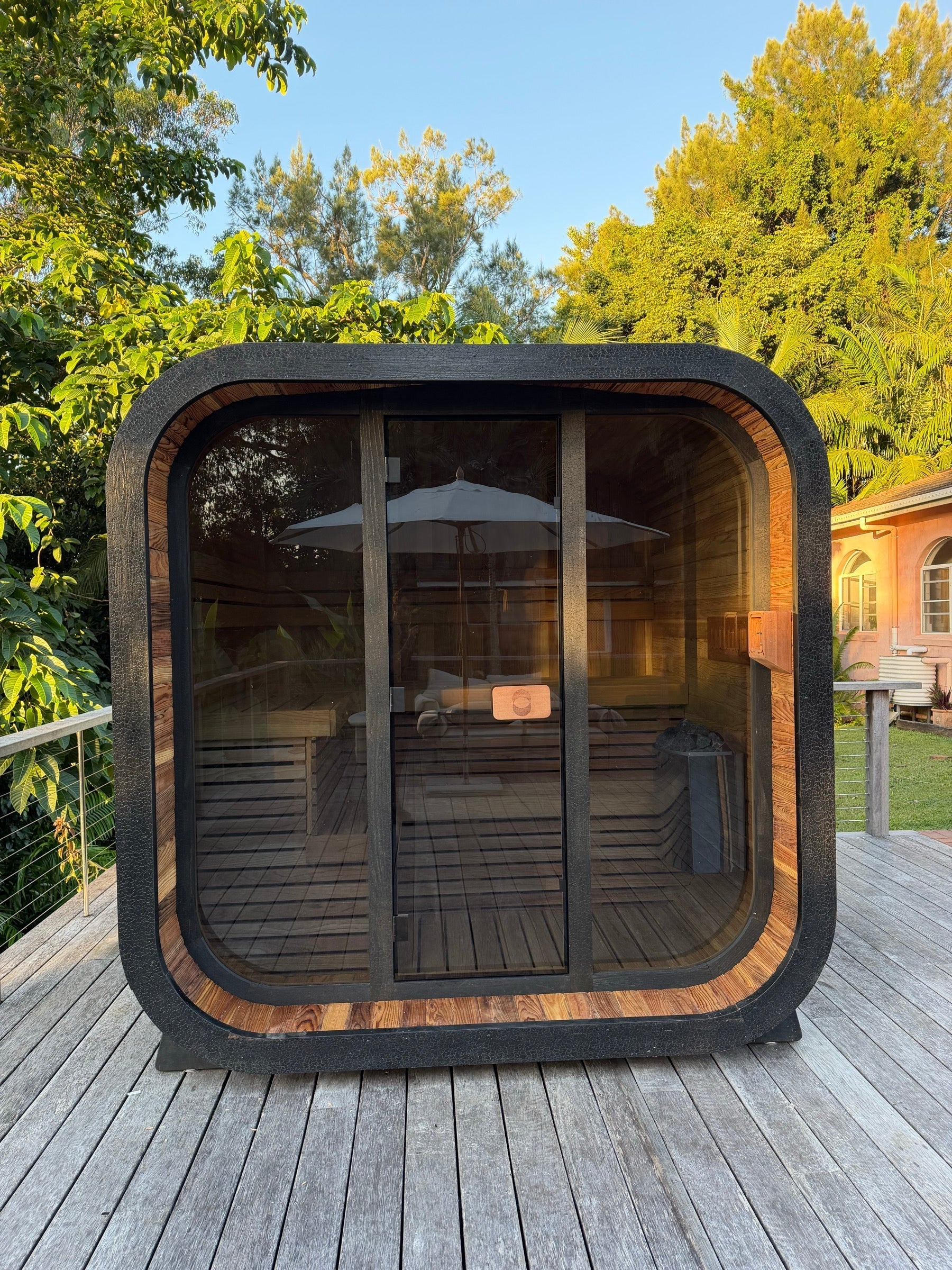
Japanese Cedar exterior. Zero-glue construction. HUUM Drop heater. Built to last decades, not seasons.
SEE THE GENESIS →What Does a Home Sauna Actually Cost in Australia?
The honest answer: cost depends entirely on what you are willing to accept. Here is what the Australian market looks like in 2026, split by construction tier.
| Tier | Price Range (AUD) | Construction Reality |
|---|---|---|
| Entry-level flat-pack | $3,000 – $6,000 | MDF panels, glued joints, low-grade element |
| Mid-range prefab | $6,000 – $10,000 | Better timber, basic heater, variable build quality |
| Engineered traditional | $10,000 – $15,000 | Solid timber, Finnish heater, zero-toxin materials |
| Custom European build | $40,000 – $120,000+ | Architect-designed, bespoke installation |
The $3,000–$6,000 tier dominates search results. It also dominates the second-hand market — because buyers discover the build quality and want out. That is not a coincidence. For a complete checklist on what to inspect before purchasing, our Home Sauna Australia buyer's guide covers every question worth asking.
Why Cheap Saunas Cost More in the Long Run
Most home saunas sold in Australia under $6,000 are built with glued MDF panels and particle board. Heat that to 90°C — the temperature a proper Finnish sauna operates at — and the glue off-gasses formaldehyde directly into the air you are breathing. Every single session.
That is not a small compromise. Formaldehyde is classified as a Group 1 human carcinogen by the International Agency for Research on Cancer. You bought a sauna to improve your health. If the cabinet is off-gassing at temperature, you are achieving the opposite.
Beyond the toxicity problem: MDF degrades under sustained heat and humidity. Joints soften. Panels warp. Within three to five years, the structure is compromised. The "affordable" sauna becomes a replacement cost — and by the time you replace it, you have spent more than you would have on an engineered unit, and breathed formaldehyde for three years in the process.
What Drives the Cost of a Quality Home Sauna?
Understanding what you are paying for is the only way to evaluate a price. Here is what separates an engineered sauna from a flat-pack unit.
Timber Species and Construction Method
Japanese Cedar and Nordic Spruce are not interchangeable with pine or MDF. Cedar is naturally antimicrobial, thermally stable under repeated heat cycling, and ages architecturally. It does not warp. It does not harbour bacteria. It smells like a real sauna because it is one.
Zero-glue mechanical joinery means the structure is held together without adhesives. No adhesives means no off-gassing at temperature. It also means the sauna can be disassembled, relocated, or reconfigured — an asset, not a product. For a deeper look at why construction method determines session quality, our guide to sauna ventilation and why it makes or breaks every session covers the full picture.
The Heater: Where Most Budgets Get Cut
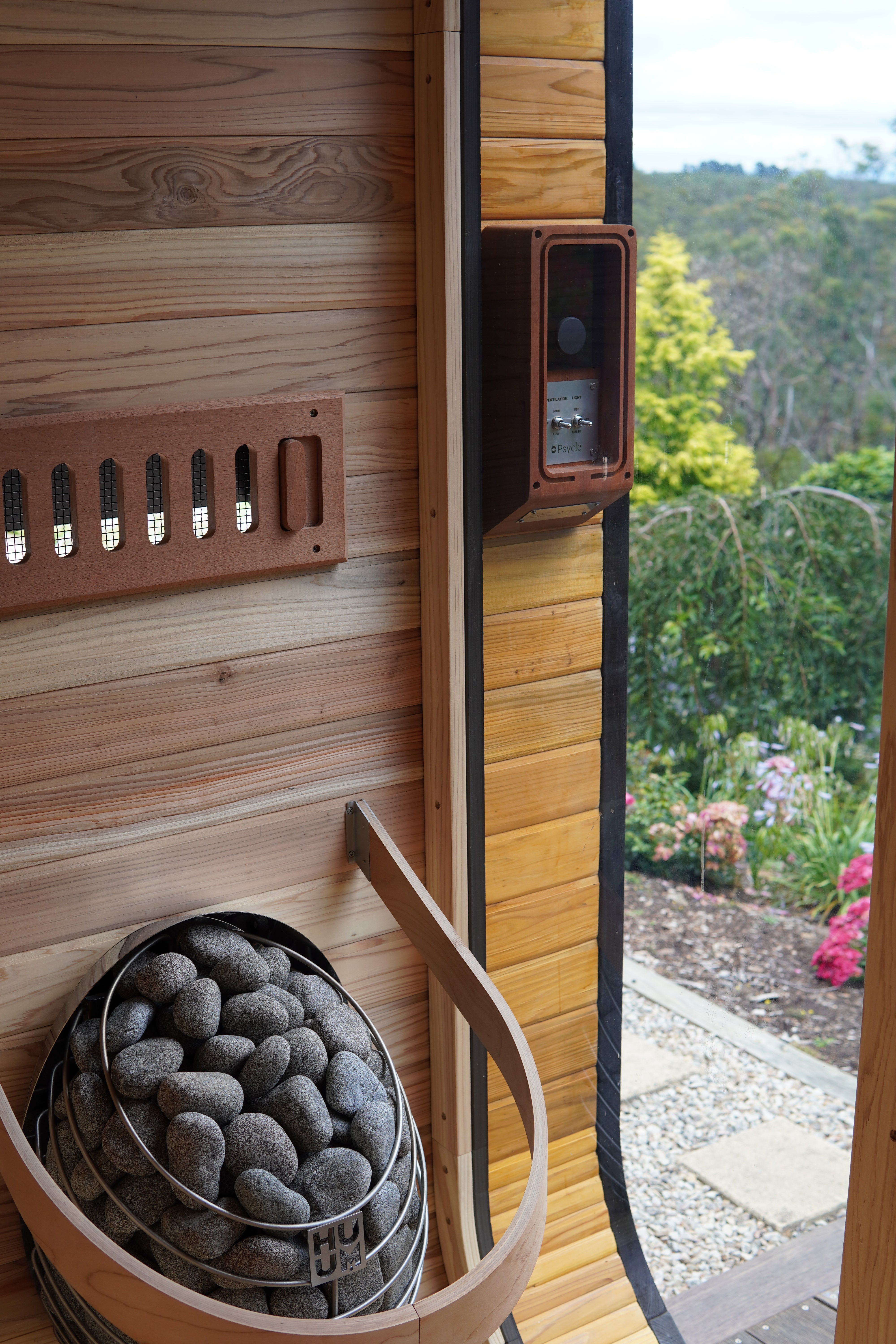
The heater is the engine. A cheap element heats air. A quality heater — the HUUM Drop 9kW with 60kg of volcanic stone — stores thermal mass. That stone volume holds temperature throughout the session. When you pour water for löyly, the temperature does not collapse. The steam is clean, the heat is sustained, and the experience is genuinely Finnish.
A cheap element runs at 60°C and calls it a sauna. It is not. A 2018 study by Laukkanen et al., published in Mayo Clinic Proceedings, found that men using a sauna 4–7 times per week at 80–100°C had a 50% lower risk of fatal cardiovascular events compared to once-weekly users. That protocol requires a heater that reaches and sustains those temperatures — a budget element physically cannot. For full context on why temperature is the non-negotiable variable, see our breakdown of how hot a sauna should actually be.
Ventilation System
Active mechanical ventilation pulls fresh air in and exhausted air out. It is not standard on entry-level saunas. Without it, the air in an enclosed timber box becomes stale, CO2 levels rise, and the session feels suffocating rather than restorative.
Proper ventilation is an engineering decision, not an optional add-on. It is also the difference between a sauna that delivers on what the research documents and one that merely gets hot.
Electrical Requirements
A 9kW heater requires a dedicated 50A single-phase circuit. A 6kW heater requires 32A. If your installation quote does not address electrical upgrade costs, ask the question directly. Depending on your switchboard, that upgrade can add $500–$2,000 to the total project cost.
Budget models often specify undersized heaters precisely to avoid this conversation — and to hit a price point that looks competitive. The trade-off is a heater that cannot reach therapeutic temperatures.
Sauna Cost by Size: What to Expect in Australia
| Configuration | Capacity | AUD Price Range |
|---|---|---|
| Compact engineered | 2–3 person | $9,000 – $12,000 |
| Full-size engineered | 3–5 person | $12,000 – $15,000 |
| Custom European | 4–8 person | $40,000 – $120,000+ |
Size matters less than you think at the engineering tier. The cost difference between a compact 2–3 person and a full-size 3–5 person engineered sauna is relatively modest. If you have the space, the larger configuration grows with your household, accommodates guests, and holds its value as a lifestyle asset.
The only decision to make at the quality tier is compact or full-size. Not whether to compromise on materials.
The Sauna That Does Not Compromise
Active mechanical ventilation. Blue light blocking lighting. IPX4 rated. HUUM Drop heater. Zero-glue Japanese Cedar. Every detail engineered for Australians who take their health seriously.
EXPLORE THE GENESIS →How Much Does a Home Sauna Cost to Run in Australia?
Running costs are real and worth calculating before you commit. Traditional Finnish saunas with quality heaters cost more to operate than infrared units — because they run at higher temperatures and deliver what the research actually requires.
| Heater Type | Running Cost Per Hour | Session Temperature |
|---|---|---|
| Traditional Finnish (9kW) | $1.80 – $4.50 | 80–100°C |
| Traditional Finnish (6kW) | $1.20 – $3.00 | 75–95°C |
| Infrared (low wattage) | $0.50 – $1.50 | 45–65°C |
At five sessions per week, a 9kW traditional sauna running for 90 minutes costs roughly $25–$35 per week in electricity — under $5 per session. Commercial sauna drop-ins run $35–$60 per visit. Sports massage runs $90–$150 per session. The maths resolves quickly.
Over a ten-year lifespan, a quality engineered sauna costs less per session than virtually any commercial recovery alternative. This is not a luxury purchase. It is infrastructure with measurable return. How you use that time matters — our guide on how often you should sauna covers the frequency protocols that produce the strongest health outcomes.
Traditional Sauna vs Infrared: What the Price Difference Actually Means
Infrared saunas are cheaper to buy and cheaper to run. Both of those things are accurate. What is also accurate: infrared operates at 45–65°C, not the 80–100°C required to replicate the Finnish research outcomes that have defined sauna therapy over the past two decades.
The Laukkanen cohort study, the Kuopio Ischaemic Heart Disease Risk Factor Study, the University of Eastern Finland protocols — all were conducted in traditional Finnish saunas at 80°C or above. The cardiovascular, neurological, and hormonal benefits documented in peer-reviewed literature are tied to that temperature range and the physiological stress response it triggers.
Infrared is a different product with a different mechanism. It is not inferior — it is simply not the same thing. For a full breakdown without the marketing noise, our comparison of traditional vs infrared sauna covers the science directly. If you are investing in a home sauna for outcomes the research supports, buy the thing the research was conducted in.
The Real Cost of Getting It Wrong
If you train every day, why are you recovering in something built to the same standard as flat-pack furniture?
The Australians who buy a $4,000 MDF sauna (a glorified hot box) and replace it three years later have spent $7,000–$9,000 by the time they arrive at a quality unit. The ones who buy correctly the first time have spent less in total — and have not spent three years breathing formaldehyde off-gassing at 90°C.
The cost of settling is not abstract. It is a structural failure, a toxicity problem, and a wasted opportunity every time you step inside. Our guide on sauna benefits for Australians documents what the research actually delivers from heat therapy — and the conditions required to deliver it. None of those conditions involve a $200 portable tent or a glued-panel flat-pack.
The health benefits tied to regular sauna use — improved cardiovascular function, enhanced recovery, hormonal regulation, skin health — require consistent use at the right temperatures in a clean environment. Our article on whether saunas are good for your skin covers one of the more underrated benefits of consistent, properly structured heat exposure.
What a Psycle Genesis Costs — and What You Get
The Genesis is Psycle's flagship 3–5 person home sauna. Here is the specification, stated plainly:
- Exterior: Japanese Cedar — naturally antimicrobial, thermally stable, zero chemical treatment
- Benches: Nordic Spruce — low thermal conductivity, stays comfortable at 90°C
- Heater: HUUM Drop 9kW — 60kg volcanic stone volume, sustained thermal mass, authentic löyly
- Joinery: Zero-glue mechanical construction — no formaldehyde off-gassing at any temperature
- Ventilation: Active mechanical system — fresh air in, exhausted air out, every session
- Lighting: Blue light blocking — melatonin suppression is not a side effect you want in a recovery tool
- Rating: outdoor installation, Australian weather, no compromises
- Electrical: 50A single-phase circuit required
- Warranty: 5 years on the cabin, 3 years on the heater — the longest in the Australian market
- Delivery: Australia-wide, installation included with the Contrast Kit
- Lead time: ~120-day build (we keep manufacturing batched small to keep standards high)
The Genesis Mini carries identical zero-toxin specifications with a HUUM Drop 6kW heater and a smaller footprint. Correct for apartments, tight outdoor spaces, or two regular users. Requires a 32A circuit. If you have the space, the Genesis is the obvious choice — the 3–5 person capacity grows with your household and holds its value as a lifestyle asset.
The $1,000 deposit is fully refundable. The 120-day build time means you are not rushed into a decision. We would rather you take six months to decide than regret a purchase made in twenty minutes.
Custom European sauna installations cost $40,000–$120,000+. Commercial-grade US infrared units run $15,000–$30,000+. The Genesis delivers engineering at that standard. The price reflects that. It is not cheap. It is not meant to be.
Ready to Build This Into Your Routine?
Free Australia-wide delivery. 3-year cabin warranty. $1,000 refundable deposit. 120-day build — order now for mid-year delivery.
SHOP THE GENESIS →Frequently Asked Questions
How much does a home sauna cost in Australia in 2026?
A home sauna in Australia costs between $3,000 and $15,000+ depending on construction quality, size, and heater specification. Entry-level flat-pack units with MDF panels start around $3,000–$6,000. Engineered traditional saunas with Finnish heaters and solid timber construction range from $10,000–$15,000. Custom European installations begin at $40,000. The price gap reflects a genuine difference in materials, construction method, and health safety — not marketing.
Is a traditional sauna worth the cost compared to an infrared sauna?
For health outcomes documented in peer-reviewed research, yes. The major long-term studies on sauna and cardiovascular health, cognitive function, and hormonal response were conducted in traditional Finnish saunas operating at 80–100°C. Infrared saunas operate at 45–65°C and use a different mechanism. Both have value — but if you are replicating the research protocol, a traditional sauna is the only correct choice.
What are the ongoing running costs of a home sauna in Australia?
A quality 9kW traditional sauna running for 90 minutes costs approximately $2.70–$6.75 per session at current Australian electricity rates. At five sessions per week that is roughly $25–$35 per week — less than a single commercial sauna drop-in at $35–$60. Over a ten-year lifespan, a quality home sauna costs a fraction of commercial alternatives on a per-session basis.
What electrical requirements does a home sauna need in Australia?
A 9kW sauna heater requires a dedicated 50A single-phase circuit. A 6kW heater requires 32A. If your switchboard does not have capacity, an electrical upgrade is required before installation — typically $500–$2,000 depending on your setup. Always confirm electrical requirements with your installer before purchasing. Budget saunas with undersized heaters often avoid this conversation by specifying heaters too small to reach therapeutic temperatures.
How do I know if a cheap sauna uses toxic materials?
Ask one question: is this zero-glue construction? If the answer is no — or if the salesperson does not know — the panels are almost certainly bonded with formaldehyde-based adhesives. At sauna temperatures, those adhesives off-gas into the air you are breathing. Zero-glue mechanical joinery eliminates the risk entirely. Also ask for the timber species by name. "Engineered wood" or "composite panels" means MDF. Japanese Cedar or Nordic Spruce means solid timber.
How long should I stay in a sauna per session?
Research protocols from the Laukkanen cohort studies used sessions of 15–20 minutes at 80–100°C, with rest intervals between rounds. The total heat exposure time matters more than any single continuous session. For a full protocol guide matched to recovery and health goals, our article on how long to sit in a sauna after a workout covers optimal session structure for training recovery specifically.