Sauna Benefits Hair and Scalp Australia: Science | Psycle
Sauna Benefits Hair and Scalp Australia

Key Takeaways
- Heat at 80–100°C drives measurable increases in scalp blood flow, delivering oxygen and nutrients directly to hair follicle cells.
- Löyly steam in a Finnish-style sauna temporarily raises the humidity envelope around the hair shaft, reducing moisture loss without chemical treatment.
- Sweat produced during a 15–20 minute sauna session flushes sebum and environmental debris from follicular openings — a mechanical cleansing effect that no shampoo replicates.
- Alternating heat and cold (contrast therapy with a cold plunge) creates a vasoconstriction–vasodilation cycle at the scalp that may amplify circulatory benefits beyond heat alone.
- Australian UV exposure accelerates hair shaft oxidation; the sauna's humidity effect offers a protective hydration buffer when used 3–4 times per week.
- The Genesis Mini — zero-glue Japanese Cedar, HUUM DROP 6kW heater — runs approximately AU$0.50–$1.00 per 45-minute session, making a consistent scalp-health protocol economically viable at home.
- Regular sauna use does not cause hair loss in healthy adults — but session hygiene, hydration, and post-rinse routine matter.
By Psycle Wellness · Last updated: June 2026 · 9 min read
Regular sauna use benefits hair and scalp health in Australia by increasing scalp circulation, clearing blocked follicles through sweat, and delivering a steam-driven hydration effect to the hair shaft. At 80–100°C, a Finnish-style sauna produces physiological changes at the scalp that no topical product fully replicates — and the evidence behind each mechanism is specific and peer-reviewed.
Most conversations about sauna health benefits focus on cardiovascular outcomes, muscle recovery, and stress reduction. The scalp and hair follicle barely rate a mention. That's a gap — because for anyone dealing with thinning, dryness, or a scalp that feels perpetually irritated, the sauna may be one of the most underutilised tools available. Our complete guide to sauna benefits in Australia covers the full spectrum of evidence. This article goes deep on one specific system: your hair and scalp.
What Most Australians Are Missing About Scalp Health
The Australian scalp is working against multiple stressors simultaneously. UV radiation at this latitude oxidises the hair shaft and degrades the lipid layer that protects the cuticle. Hard water in many Australian cities — particularly Perth, Adelaide, and Melbourne — deposits calcium and magnesium onto the scalp, raising local pH and making the follicular environment less hospitable. Add in the heat stress of summer, chlorinated pool water, and the styling products that accumulate in follicular openings, and you have a scalp under chronic load.
The typical response is more product: more conditioner, more serum, more scalp treatment. Most of it sits on the surface. None of it addresses circulation — and circulation is what feeds the follicle.
The hair follicle is one of the most metabolically active structures in the human body. It requires a constant supply of oxygen, amino acids, and micronutrients to sustain the rapid cell division of the hair growth phase (anagen). Restrict that supply — through chronic stress, poor vascular tone, or a scalp microenvironment clogged with sebum and debris — and follicle performance degrades. Not immediately. Gradually. Over months and years, the growth phase shortens and the resting phase lengthens. Hair thins.
This is where heat therapy becomes relevant — and where most competitor content stops at vague phrases like "improved circulation" without explaining the mechanism, the magnitude, or what it means for someone sitting in a sauna in Queensland in July.
How Heat at 80–100°C Affects the Scalp: The Circulation Mechanism
Finnish-style sauna heat directly stimulates vasodilation in the cutaneous blood vessels of the scalp. At temperatures between 80 and 100°C — the operational range of a traditional Finnish sauna — the body's thermoregulatory response redirects blood toward the skin surface to facilitate heat dissipation. The scalp, with its dense vascular network, is one of the primary sites of this response.
Dermatological literature confirms that this is not a trivial effect. Cutaneous blood flow during sauna exposure can increase three to five times above resting baseline, as documented in research published in Experimental Physiology by Laukkanen and colleagues. For the follicle, this means a surge in nutrient and oxygen delivery at precisely the site where the papilla cells are dividing — the engine room of hair growth.
It is worth being specific about what "increased circulation" actually delivers to the follicle: glucose for cellular energy, amino acids for keratin synthesis, and iron and zinc — two minerals with established links to hair loss when deficient. A well-vascularised scalp is simply a better environment for hair to grow in. The sauna creates that environment, repeatedly, over weeks and months of consistent use.
For the research on how sauna frequency affects cumulative physiological outcomes, our guide to sauna session frequency provides the evidence behind the 3–4 sessions per week threshold that most studies use. That same frequency is what appears to produce meaningful scalp-level changes — not a single session, but a sustained protocol.

Zero-Toxin Sauna Therapy, Built for Australian Conditions
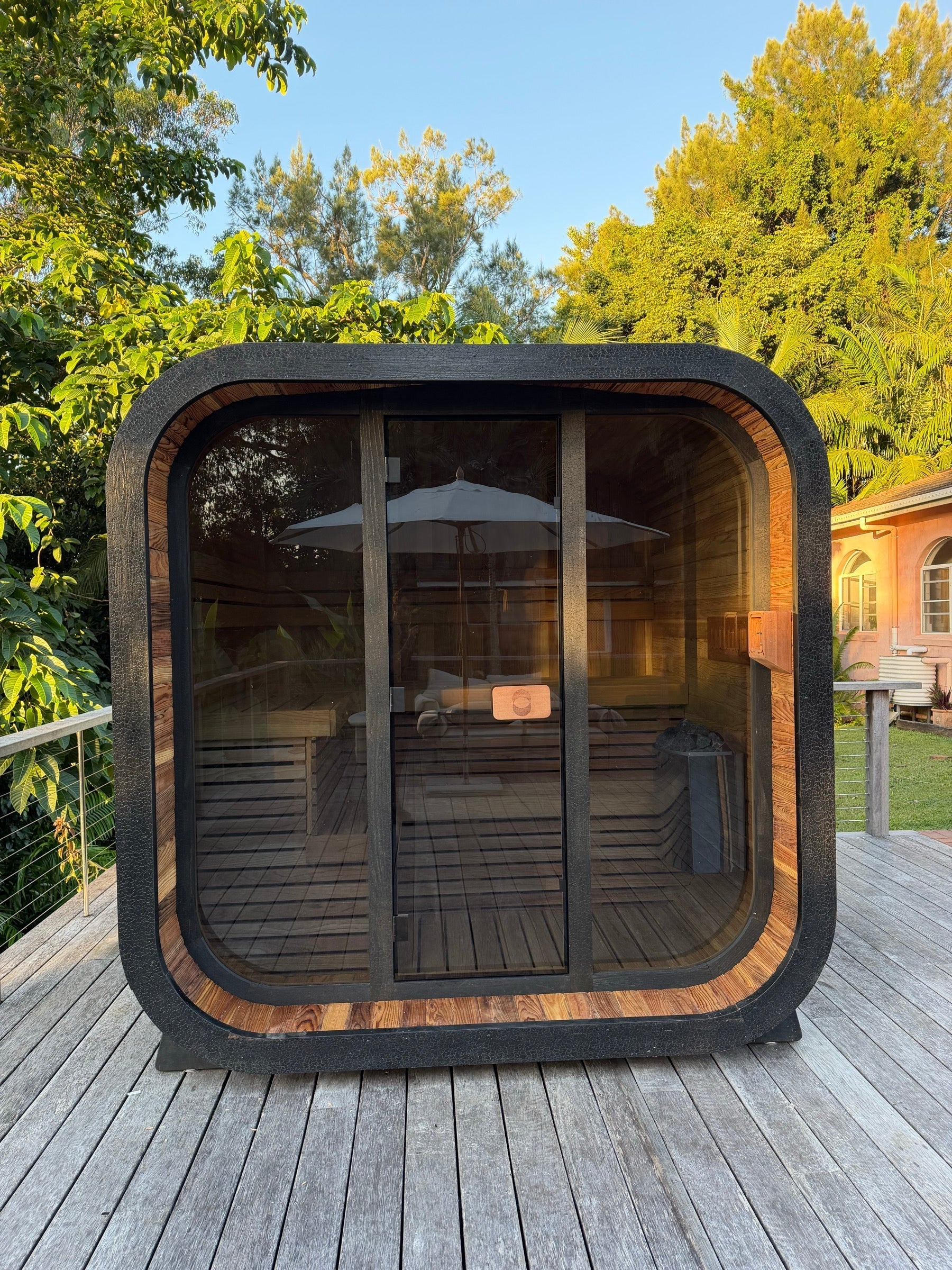
Japanese Cedar exterior. Zero-glue construction. HUUM DROP 6kW with 60kg Olivine diabase stones. The Genesis Mini delivers 80–100°C Finnish-style heat without formaldehyde off-gassing — because the air you breathe during a session matters as much as the heat itself.
SEE THE GENESIS MINI →Löyly, Steam, and the Hydration of the Hair Shaft
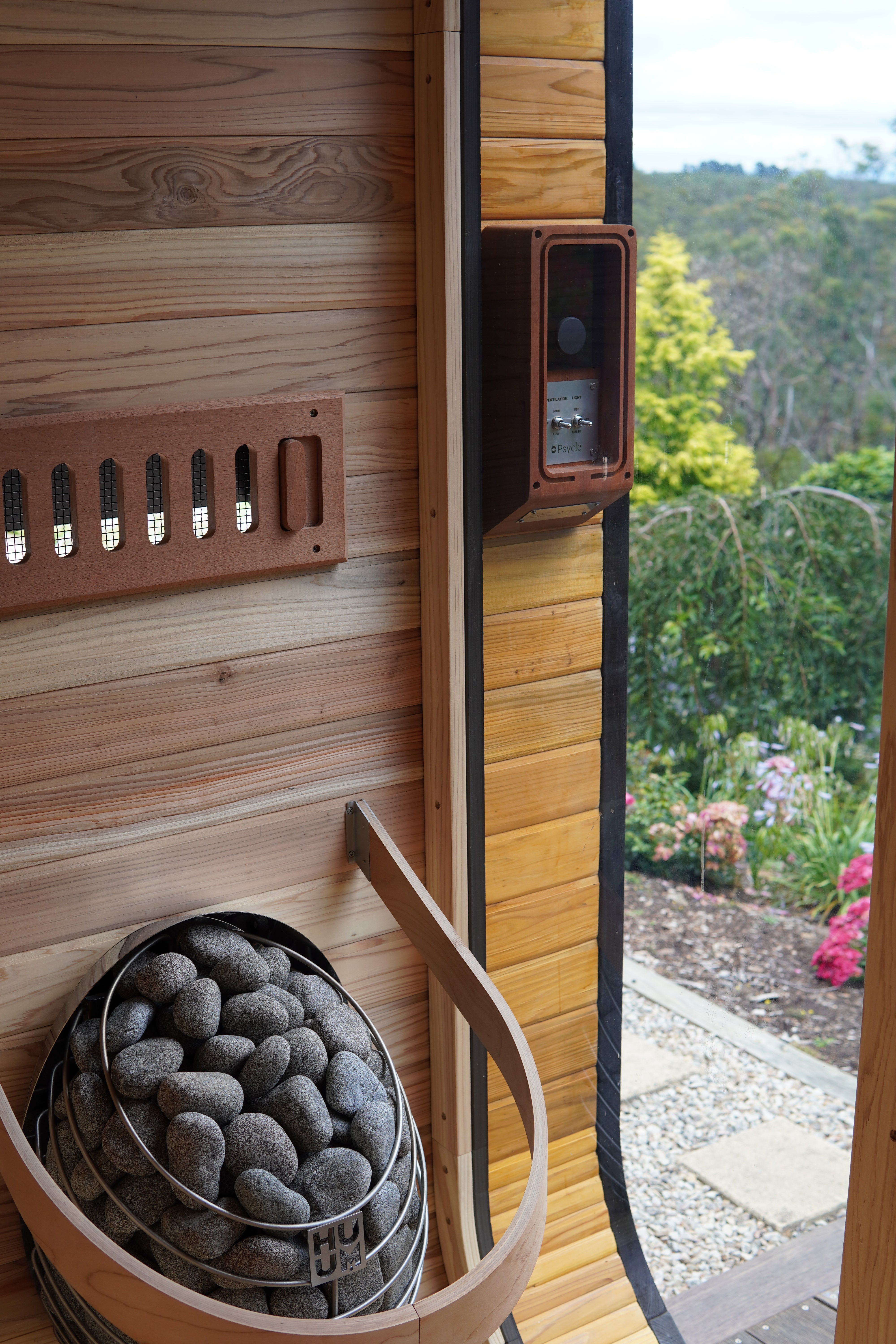
Löyly — the steam produced when water meets hot sauna stones — is not just a comfort feature. It changes the microenvironment of the sauna cabin in ways that matter directly to the hair shaft. When you pour water over a HUUM DROP heater loaded with 60kg of Olivine diabase stones, you create a burst of steam that temporarily raises relative humidity inside the cabin from around 10–20% (dry heat) to 30–50% or higher, depending on the volume of water used.
Hair is hygroscopic — it absorbs and releases moisture in response to the humidity of its surrounding environment. In a dry heat environment with no löyly, the hair shaft will lose moisture as the hot, dry air draws water from the cuticle. In a löyly-rich environment, the reverse occurs: the hair shaft temporarily absorbs moisture from the humid air, softening the cuticle and reducing static and brittleness.
For Australian hair dealing with UV-induced cuticle damage and chronic dryness — particularly for those spending time outdoors, in surf, or in chlorinated pools — this humidity effect is meaningful. It does not repair structural damage, but it does provide a temporary buffer that reduces the mechanical stress of brushing and styling on a dehydrated shaft. To understand more about the moisture dynamics inside a Finnish sauna cabin, our guide to sauna humidity in Australia covers the science of steam and relative humidity in detail.
The stone volume matters here. A heater with 60kg of Olivine diabase stone — as found in both the Genesis and Genesis Mini — holds thermal mass across a full session. The temperature does not crash the moment you pour löyly. You get sustained, consistent steam without repeatedly firing the heater. That consistency is what makes the humidity effect reliable, not a brief spike and then dry heat again.
Understanding löyly as a practice — how to pour, when to pour, and what it changes physiologically — is central to getting the most from a Finnish-style session. Our complete guide to löyly covers technique in detail.
Sweat, Sebum, and Clearing Blocked Follicles
Sweat produced during a sauna session clears the follicular canal in a way that topical cleansers cannot replicate — from the inside out. As core body temperature rises during sauna exposure, eccrine sweat glands activate and the scalp begins to sweat significantly. This is not superficial perspiration. The sweat travels up through the follicular opening, physically moving accumulated sebum, oxidised lipids, product residue, and environmental particulates out of the canal.
A blocked or partially occluded follicle is a compromised follicle. Excess sebum in the canal creates an environment that favours Malassezia proliferation — the yeast species associated with seborrhoeic dermatitis and dandruff — while also physically restricting the space available for the emerging hair shaft. Regular mechanical flushing through sweat reduces this burden and keeps the follicular opening clear.
This is why the post-sauna rinse routine matters. The sebum and debris that sweat has mobilised sits on the scalp surface after a session. A cool-to-lukewarm rinse removes it before it redeposits. A hot rinse is counterproductive — it stimulates further sebum production. The protocol is simple: exit the sauna, cool down, rinse with cool water, and avoid sulphate-heavy shampoos immediately post-session, which strip the natural oils the scalp has just balanced.
The full evidence base for how sauna heat opens the skin surface and clears dermal congestion is covered in our guide to sauna benefits for skin — the scalp is skin, and every principle applies.
The Cold Plunge Effect: Vasoconstriction, Vasodilation, and the Scalp
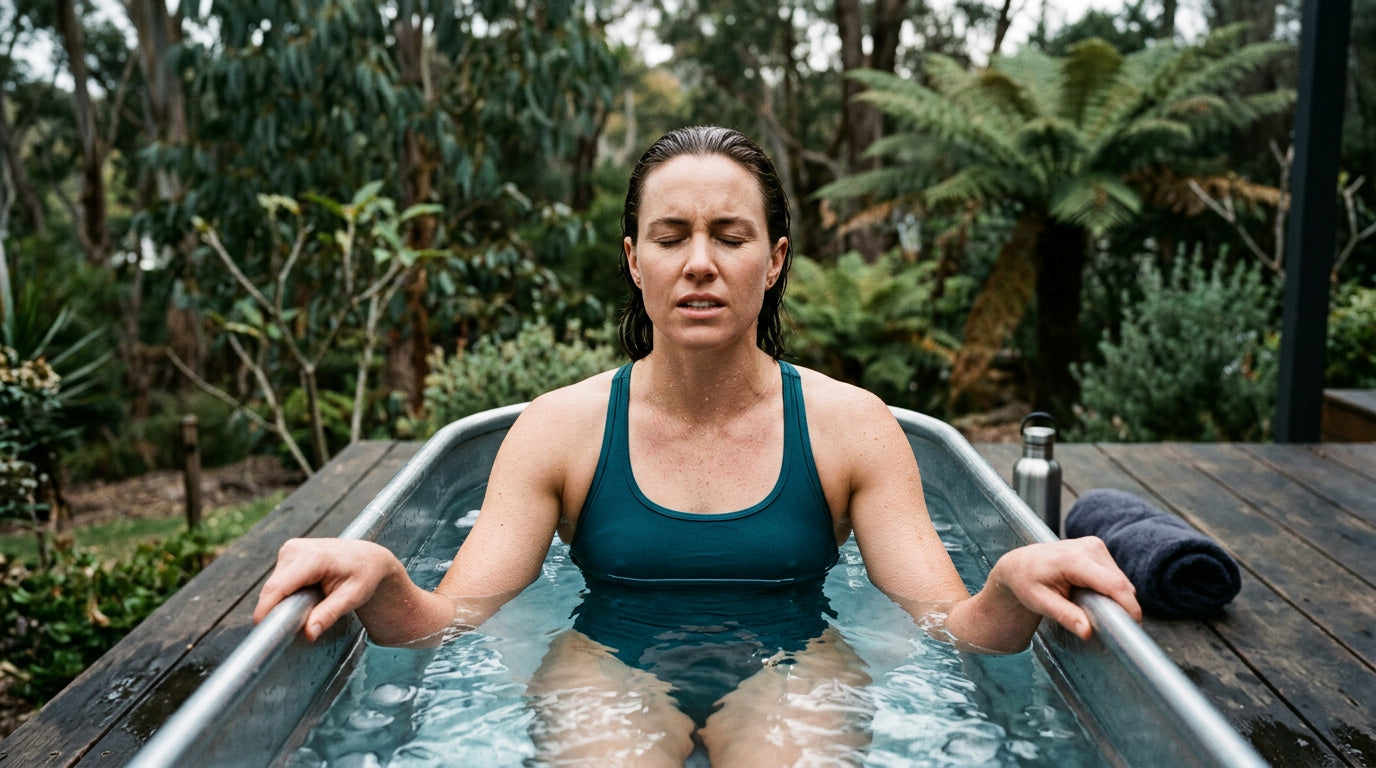
Contrast therapy — alternating between sauna heat and cold immersion — produces a vasoconstriction–vasodilation cycle that may amplify the circulatory benefits of heat alone. When you move from 90°C into a cold plunge at 10–15°C, cutaneous blood vessels including those supplying the scalp constrict sharply. When you return to heat, they dilate again. This pumping action — repeated across multiple rounds — creates a mechanical flushing effect in the dermal capillary network that resting heat alone does not produce.
Research published in the European Journal of Physiology found that cold water immersion produces a sustained 250% increase in dopamine levels — a neurological effect that outlasts the cold exposure itself by several hours. While that statistic is most relevant to mood and motivation, it reflects the depth of the physiological response that cold immersion triggers. The vascular system is not a passive participant — it responds aggressively, and the scalp vasculature responds with it.
For anyone dealing with scalp conditions linked to chronic inflammation — seborrhoeic dermatitis, psoriasis, folliculitis — the anti-inflammatory effect of cold exposure adds another mechanism. Cold immersion acutely suppresses pro-inflammatory cytokines and reduces local inflammation. Applied to the scalp via full cold plunge (submerging to the neck), this may provide meaningful relief for inflammation-driven scalp conditions, though this remains an area requiring more targeted clinical research.
The practical protocol: two or three rounds of 15–20 minutes in the sauna followed by 2–3 minutes in the cold plunge. The scalp benefits from both directions of the thermal cycle. Our guide to sauna and cold plunge benefits covers the full contrast therapy evidence base, and our contrast therapy protocol guide details the session structure in full.

What the Finnish Tradition Actually Says About Hair and Sauna
The Finnish relationship with the sauna spans more than two thousand years, and within that tradition, the sauna was considered a space of physical maintenance — not just heat exposure. Finns historically washed their hair in the sauna, used birch branches (vihta or viht) to stimulate scalp circulation through gentle mechanical percussion, and applied natural oils to the scalp post-session while the pores were open and blood flow was elevated.
The birch branch practice is not folklore. The mechanical stimulation of the scalp during a sauna session — whether through a vihta, a scalp massage tool, or manual massage — combines with elevated blood flow to produce a synergistic circulatory stimulus. Massaging a cold scalp moves blood through capillaries that are already at baseline. Massaging a scalp that has been in 90°C heat for 15 minutes moves blood through vessels that are already dilated and actively perfused. The effect is categorically different.
The Finnish tradition also addressed hair protection: long hair was typically wrapped or braided to prevent direct heat exposure to the ends of the shaft, which are the oldest and most structurally fragile sections. The scalp and root zone benefit from heat exposure; the distal shaft does not need it and can be protected without compromising the scalp-level effects.
A landmark 20-year cohort study of 2,315 Finnish men by Laukkanen et al., published in JAMA Internal Medicine (2015), found that sauna use 4–7 times per week reduced the risk of fatal cardiovascular disease by 50% compared to once-weekly bathing. The Finns who participated in that study were not occasional sauna users — they built the sauna into their daily life. The scalp benefits described in this article operate on the same principle: frequency and consistency, not a single impressive session.
Australian Climate Considerations: UV Damage, Humidity, and the Case for Home Access
Australian UV exposure is among the highest on Earth. The UV Index regularly reaches 11–13+ across northern Australia in summer and remains elevated year-round in Queensland, the NT, and WA. This UV load degrades the structural integrity of the hair shaft in ways that accumulate over time: the disulphide bonds in the cortex weaken, the cuticle lifts, and the hair becomes increasingly porous and brittle.
Sauna heat does not reverse UV damage — nothing does, short of growing new hair. But the humidity effect of regular löyly sessions provides a consistent hydration input to a hair shaft that Australian conditions are chronically dehydrating. Think of it as maintaining the water content of the shaft at a higher baseline, which reduces the mechanical fragility that leads to breakage.
The case for home access — rather than relying on a gym sauna or commercial facility — is straightforward. The scalp benefits described here require frequency. Three to four sessions per week is the evidence-based threshold. Achieving that frequency through a commercial facility means driving to the gym, navigating shared spaces with varying hygiene standards, and operating on the facility's schedule. A Genesis Mini in the backyard removes every one of those friction points.
Running cost: the Genesis Mini's HUUM DROP 6kW heater draws approximately 6kWh per session. At the Australian average electricity rate of AU$0.30–$0.35/kWh, a 45-minute session costs approximately AU$0.50–$1.00. Against a gym membership at AU$1,200–$2,400 per year, or a weekly visit to a commercial sauna at AU$30–$50 per session, the economics of home ownership become self-evident within the first year. Our complete guide to home sauna costs in Australia breaks down the full capital and operating cost analysis.
For outdoor installation — a deck, a garden, or a poolside setup — the Genesis Mini's IP67-rated lighting and available Colorbond roof kit handle the Australian climate without compromise. Salt air, afternoon storms, and summer humidity are not concerns for a cabin built to this standard. Our guide to outdoor saunas in Australia covers installation specifics for different climates and environments across the country.
Protecting Your Hair During a Sauna Session: Wrap vs No Wrap
The question of whether to wrap your hair during a sauna session depends on what you are trying to achieve, the length and condition of your hair, and the session temperature. This is not a one-size-fits-all answer — and most content on this topic oversimplifies it.
| Approach | Best For | Mechanism | Caution |
|---|---|---|---|
| No wrap (hair down) | Short hair, low porosity, strong shaft | Maximum steam contact with shaft; full scalp heat exposure | Long or colour-treated hair may experience moisture loss at ends |
| Wool sauna hat | All hair types; standard protocol | Protects ends and crown from direct radiant heat while scalp still benefits from ambient temperature | Ensure the hat is natural fibre — synthetics trap heat aggressively and can cause scalp overheating |
| Damp towel wrap | Dry, UV-damaged, or colour-treated hair | Creates a moisture reservoir around the shaft; steam + pre-wetted hair = deep conditioning effect | Re-dampen the towel between rounds to maintain effect |
| Oil pre-treatment + wrap | High porosity, chemically processed hair | Oil seals the cuticle pre-session; heat drives penetration of the oil into the cortex | Use light oils (argan, jojoba) — heavy oils may block follicles if applied to the scalp directly |
The Genesis Mini includes three Australian wool sauna hats as standard accessories — natural fibre, the correct choice for the scalp's heat management during a session. This is not an afterthought. The Finns have worn wool sauna hats for the same reason for centuries: protect the head from overheating without losing the scalp-level circulatory benefit.
Post-session: exit the sauna and allow your core temperature to drop before rinsing. A cool-to-lukewarm rinse removes the sweat and mobilised sebum from the scalp surface. Avoid sulphate shampoos immediately post-session — the scalp has just done its own mechanical cleanse. If you use conditioner, apply it to the mid-lengths and ends, not the scalp, immediately after rinsing.
For guidance on what to wear and bring to a sauna session more broadly, our complete guide to sauna dress code and preparation covers everything from towels to footwear to accessories.
The Evidence Behind Sauna, Stress, and Hair Loss
Telogen effluvium — the diffuse hair shedding triggered by physiological or psychological stress — is one of the most common forms of hair loss in adults. It occurs when a large proportion of follicles simultaneously enter the resting (telogen) phase, typically 2–3 months after the triggering stressor. Chronic elevated cortisol is the primary hormonal driver.
A 2021 study in the International Journal of Environmental Research and Public Health found that regular sauna bathing (3+ sessions per week) produced measurable reductions in cortisol levels and self-reported psychological stress within four weeks. If chronic cortisol elevation is driving telogen effluvium, then any intervention that consistently reduces cortisol is directly relevant to hair retention — and regular sauna use is a documented, repeatable method for achieving that reduction.
This does not mean sauna is a treatment for hair loss. But for someone whose hair thinning is stress-driven, a protocol that meaningfully reduces systemic stress markers three or four times per week is addressing the root cause — not masking it with topical treatments that sit above the problem.
The broader evidence base on sauna benefits for men — including testosterone, stress hormones, and recovery — is covered in our guide to sauna benefits for men. For women, who experience hair thinning through different hormonal pathways, our guide to sauna benefits for women addresses the gender-specific evidence in detail.
What Australian Psycle Customers Report
Across Psycle installations throughout Australia — from coastal Queensland decks to inner-city Sydney apartments to rural Victoria properties — the pattern is consistent. People who commit to a 3–4 session per week protocol report visible changes in scalp condition within 6–8 weeks. Not dramatic, not instant — cumulative and real.
"I started using the Genesis Mini for recovery after training. About two months in I noticed my scalp was less oily between washes, and the chronic flakiness I'd had for years had significantly reduced. I'd put that down to the frequency more than anything else — doing it every two or three days changed the baseline." — Genesis Mini owner, Brisbane.
The specificity of that outcome — less oiliness, reduced flaking, change in wash frequency — is consistent with the sebum-clearing and anti-inflammatory mechanisms described in the research. These are not vague wellness improvements. They are measurable changes in the scalp microenvironment produced by a consistent heat protocol.
The Sauna That Does Not Compromise the Air You Breathe
Zero-glue Japanese Cedar. Non-VOC oil finish. No MDF. No particle board. No formaldehyde. The Genesis Mini runs at 80–100°C without off-gassing — so your scalp health protocol is not simultaneously creating a toxin exposure problem. Australia-wide delivery. 3-year cabin warranty. 120-day build.
EXPLORE THE GENESIS MINI →Why the Genesis Mini Is the Right Platform for This Protocol
The scalp benefits described in this article require frequency, consistency, and an environment that does not introduce new stressors while you are trying to address existing ones. Most home saunas built with glued MDF panels and particle board off-gas formaldehyde when heated to 90°C. You are breathing that formaldehyde through every session. That is not a wellness protocol. That is a toxin exposure that happens to involve heat.
The Genesis Mini uses zero-glue mechanical joints throughout the 38mm Japanese Cedar cabin. The finish is non-VOC oil. There is no adhesive, no MDF, no particle board, and no off-gassing at any operating temperature. The air inside the Genesis Mini at 90°C is clean cedar-scented air and löyly steam. That is the correct environment for a health protocol focused on the scalp.
The HUUM DROP 6kW heater carries 60kg of Olivine diabase stone — the same stone volume as a commercial sauna installation. That thermal mass means consistent temperature maintenance across the full session, and meaningful löyly steam with every pour. The UKU WiFi app lets you preheat the cabin on your schedule so the sauna is ready when you are. A 32A dedicated circuit is required for installation — a licensed electrician handles this as a standard domestic upgrade.
For those who want the detail on how to evaluate and purchase a home sauna in Australia — electrical requirements, installation, warranty terms, and what to ask before buying — our complete sauna buying guide for Australia covers everything. And if you are considering a pairing with a cold plunge for the full contrast therapy effect, our outdoor sauna and cold plunge setup guide covers configuration, drainage, and installation across different Australian property types.
For those interested in how the Genesis Mini sits within the broader two-person and small-format sauna category in Australia, our guide to 2-person saunas in Australia provides a full market comparison.
Frequently Asked Questions: Sauna Benefits Hair and Scalp Australia
Does sauna cause hair loss?
No — regular sauna use does not cause hair loss in healthy adults. The heat experienced inside a Finnish-style sauna at 80–100°C is ambient radiant and convective heat, not the direct thermal trauma that damages the hair shaft from styling tools. The scalp temperature inside a sauna rises moderately but does not reach the temperatures that cause follicular damage. What sauna heat does do is increase scalp blood flow, clear follicular congestion through sweat, and — with consistent use — reduce cortisol levels, the primary hormonal driver of stress-induced shedding (telogen effluvium). The concern about sauna and hair loss typically conflates high heat with damaging heat; the mechanism is entirely different.
Does sauna help with hair growth in Australia?
Sauna use supports the scalp conditions associated with healthy hair growth, but it is not a clinical hair growth treatment. The primary mechanisms are improved follicular blood supply, reduced scalp inflammation, and lower systemic cortisol — all of which contribute to a better environment for hair to grow in. Whether that translates to measurable hair growth depends on the underlying cause of any thinning. For stress-driven or circulation-related thinning, consistent sauna use (3–4 sessions per week) is a legitimate supportive protocol. For androgenetic alopecia (genetic hair loss), sauna addresses none of the causal mechanisms and should be used alongside, not instead of, evidence-based clinical treatment.
Is it better to sauna with wet or dry hair?
Neither is universally better — the right choice depends on your hair type and what you are trying to achieve. Dry hair exposed to löyly steam will temporarily absorb moisture from the humid environment, which benefits dry or UV-damaged hair. Wet hair wrapped in a damp towel creates a moisture-sealed environment that functions like a warm deep conditioning treatment during the session. Long, colour-treated, or highly porous hair benefits from the damp-towel approach. Short hair or low-porosity hair does well with no wrap. In all cases, a wool sauna hat protects the crown and ends from direct radiant heat without eliminating the scalp-level circulation effect.
How often should you sauna for scalp health benefits?
Three to four sessions per week is the frequency threshold supported by the research on physiological adaptation to regular sauna use. At this frequency, cumulative improvements in scalp circulation, cortisol reduction, and follicular environment are observable within 4–8 weeks. Single sessions produce acute effects — increased blood flow, sweat-driven cleansing — but the structural improvements in the scalp microenvironment require consistent repetition. Our guide to sauna session frequency covers the evidence behind different frequency protocols and how to structure sessions by goal.
Does the cold plunge benefit the scalp?
Yes — cold immersion following sauna heat creates a vasoconstriction–vasodilation cycle at the scalp that amplifies the circulatory benefits of heat alone. Cold water immersion also acutely reduces inflammation, which is relevant for scalp conditions driven by chronic inflammatory processes such as seborrhoeic dermatitis and folliculitis. Submerging to neck level in a cold plunge (10–15°C) for 2–3 minutes after each sauna round is the practical protocol. For those who cannot or prefer not to submerge to the neck, a cold shower targeting the scalp produces a partial version of the same effect. Our guide to cold plunge benefits in Australia covers the full evidence base for cold immersion.
Can sauna help with dandruff or seborrhoeic dermatitis?
Sauna use may support reduction of dandruff and mild seborrhoeic dermatitis through two mechanisms: the mechanical flushing of excess sebum from the follicular canal (reducing the substrate on which Malassezia yeast proliferates) and the anti-inflammatory effect of regular heat exposure and contrast therapy. This is not a substitute for medicated treatment in moderate-to-severe cases. But for mild dandruff driven by excess sebum and scalp inflammation, a consistent sauna protocol addresses both drivers directly. Post-session care matters: a cool rinse after every session to remove mobilised sebum is essential.
Is a Finnish-style sauna better than infrared for hair and scalp?
For scalp benefits, a Finnish-style traditional sauna operating at 80–100°C with löyly is the superior choice. Infrared saunas operate at 50–70°C — temperatures that produce a meaningful sweat response but do not create the same degree of cutaneous vasodilation as traditional Finnish heat. More significantly, infrared saunas do not produce löyly steam — the humidity effect that temporarily hydrates the hair shaft is entirely absent. If steam-driven moisture and high-temperature scalp circulation are the target mechanisms, a traditional Finnish sauna is the correct platform. For a full comparison of the two sauna types, our traditional vs infrared sauna guide covers the evidence in detail.
Ready to Build This Into Your Routine?
The Genesis Mini: 1–3 person, zero-glue Japanese Cedar, HUUM DROP 6kW, 60kg Olivine diabase stones. AU$0.50–$1.00 per session. Free Australia-wide delivery. $1,000 refundable deposit. 3-year cabin warranty. 120-day build — order now for your summer protocol.
SHOP THE GENESIS MINI →