
Sauna Benefits for Women: Evidence-Based Guide | Psycle
Sauna Benefits Women: The Complete Evidence-Based Guide for Australian Women

Key Takeaways
- Regular sauna use (4–7 sessions per week) reduces fatal cardiovascular disease risk by 50% — a finding from a 20-year Finnish cohort study with direct relevance to post-menopausal women, who carry elevated cardiovascular risk.
- Sauna heat reduces cortisol levels and self-reported psychological stress within four weeks of consistent use (3+ sessions per week), making it one of the few passive interventions with measurable hormonal impact.
- Passive body heating 1–2 hours before bed improves sleep onset speed, sleep efficiency, and deep sleep duration — critical for perimenopausal and menopausal women whose sleep architecture is frequently disrupted.
- The skin benefits of Finnish sauna are driven by increased dermal circulation and sweat-driven pore clearance — not heat alone — which is why stone-generated steam (löyly) at 80–100°C outperforms infrared at 50–70°C for collagen-supporting outcomes.
- The Genesis home sauna runs at approximately AU$0.50–$1.00 per 45-minute session — less than a single commercial sauna drop-in and a fraction of weekly physio costs.
- Pregnancy is a clear contraindication for sauna use. If you are pregnant or trying to conceive, read the dedicated safety guide before using any sauna.
- For women over 40 using sauna for the first time, the evidence supports starting with 10–15 minutes at 70–80°C, 2–3 times per week, before progressing to longer sessions at higher temperatures.
By Psycle Wellness · Last updated: May 2026 · 16 min read
Sauna benefits women across six distinct physiological systems: cardiovascular protection, hormonal regulation, sleep quality, skin health, immune function, and muscle recovery. The research base is substantial, Finnish in origin, and increasingly specific to female physiology — particularly for women moving through perimenopause and the decade beyond. For a full overview of the evidence across all populations, start with our guide to sauna benefits in Australia.
Why Most Sauna Content Fails Women
Pick up any generic sauna benefits article and you will find a list built for no one in particular. Stress relief. Better sleep. Heart health. Recovery. The claims are real, but the framing is unisex by default — which means it misses almost everything that matters most to women over 35.
Female physiology is not a variation on male physiology. Oestrogen fluctuations across the menstrual cycle and through perimenopause alter how the body responds to heat stress. Post-menopausal cardiovascular risk accelerates in ways that have no equivalent in male biology. The skin changes that accompany declining oestrogen respond to specific thermal stimuli. The cortisol dysregulation pattern common in high-achieving women in their 40s is distinct in mechanism and in what resolves it.
If the sauna content you have been reading does not address any of this, it was not written for you. This article is.
Sauna and Hormonal Health in Women: What the Evidence Shows
Sauna use directly influences the hormonal environment in women — most powerfully through its effect on cortisol, the body's primary chronic stress hormone, and secondarily through downstream effects on oestrogen metabolism and thermoregulatory adaptation.
Cortisol dysregulation is the silent performance killer for women in their 30s and 40s. Elevated baseline cortisol suppresses progesterone, disrupts sleep architecture, drives visceral fat accumulation, and accelerates the symptoms of hormonal transition. It is also directly responsive to thermal therapy.
A 2021 study in the International Journal of Environmental Research and Public Health found that regular sauna bathing (3+ sessions per week) produced measurable reductions in cortisol levels and self-reported psychological stress within four weeks. This is not a marginal effect. A consistent four-week sauna protocol moves the needle on the hormone that sits upstream of half the symptoms perimenopausal women are trying to manage.
The mechanism is specific to real heat. Finnish sauna temperatures of 80–100°C activate the hypothalamic-pituitary-adrenal (HPA) axis in a controlled, acute stress pattern that, with repetition, down-regulates the body's chronic stress response. You are training your nervous system to recover from heat the same way you train your muscles to recover from load. The adaptation is real and measurable.
Perimenopause and Menopause: Sauna as a Symptom Management Tool
Hot flushes affect up to 80% of women during perimenopause and menopause, according to the Jean Hailes Foundation for Women's Health. The instinctive reaction might be to avoid additional heat. The evidence points in the opposite direction.
Regular sauna use improves thermoregulatory efficiency — the body's ability to manage internal temperature swings. Women who sauna consistently report reductions in hot flush frequency and intensity. The likely mechanism is improved hypothalamic thermostat sensitivity, which drives vasomotor symptoms. By repeatedly exposing the body to controlled heat stress and recovery, you recalibrate the system that is misfiring.
This is not a replacement for medical management of severe menopausal symptoms. But for women managing mild to moderate vasomotor symptoms, the data supporting sauna as a complementary tool is compelling and underused in Australian clinical conversations.
The sleep disruption that accompanies hormonal transition compounds everything else. When you lose deep sleep, cortisol rises further, mood destabilises, and the physiological regeneration that happens overnight — collagen synthesis, immune repair, metabolic regulation — is impaired. This is why the sleep benefits of sauna are not a separate topic for perimenopausal women. They are continuous with the hormonal picture.
Zero-Toxin Sauna Therapy, Engineered for Australian Homes
Japanese Cedar exterior. Zero-glue construction. HUUM Drop 9kW heater. Designed for daily use — not occasional sessions at a commercial studio.
SEE THE GENESIS →Sauna and Cardiovascular Health in Women: The Post-Menopause Risk Window
Cardiovascular disease is the leading cause of death in Australian women, responsible for more female deaths each year than all cancers combined, according to the Australian Institute of Health and Welfare (2023). Post-menopause, the oestrogen-driven cardiovascular protection women carry through their reproductive years is withdrawn. The risk profile accelerates sharply.
This is the context in which the cardiovascular research on sauna becomes particularly urgent for women over 50.
A landmark 20-year cohort study of 2,315 Finnish men by Laukkanen et al., published in JAMA Internal Medicine (2015), found that sauna use 4–7 times per week reduced the risk of fatal cardiovascular disease by 50% compared to once-weekly bathing. While the original cohort was male, subsequent research from the same group and others has confirmed comparable cardiovascular effects in mixed-gender populations, with some evidence suggesting women may derive proportionally greater benefit given their post-menopausal risk profile.
Research by Laukkanen et al. in Neurology (2018) found that sauna bathing 4–7 times per week was associated with a 61% lower risk of stroke compared to once-weekly use. Stroke is the third leading cause of death in Australian women, and women account for 55% of stroke deaths nationally. The protective mechanism — improved endothelial function, reduced arterial stiffness, and lower resting blood pressure — is physiologically available to women and men equally.
For a deeper look at the cardiovascular science, our guide to sauna and cardiovascular health in Australia covers the full mechanistic picture including blood pressure effects and arterial compliance data.

How Sauna Trains Your Cardiovascular System
Each sauna session is a cardiovascular workout by proxy. At 80–100°C, heart rate elevates to 100–150 beats per minute — equivalent to moderate-intensity aerobic exercise. Cardiac output increases. Peripheral blood vessels dilate. The endothelium — the inner lining of your arteries — is stressed and then recovers, becoming more compliant with each session.
For women who cannot train at high aerobic intensity due to joint issues, chronic fatigue, or the energy demands of hormonal transition, regular sauna use offers a genuinely meaningful cardiovascular stimulus. It is not a replacement for exercise. But it adds real cardiovascular training load — one that requires no impact, no coordination, and 20 minutes of sitting still.
The blood pressure effects are equally significant. Read our dedicated guide to sauna and blood pressure in Australia for the clinical detail. For women managing hypertension post-menopause, the evidence for sauna as a complementary pressure-lowering intervention is among the strongest in the literature.
Sauna and Sleep Quality: Why This Matters More for Women
Sleep disruption in women is not simply a lifestyle inconvenience. It is a physiological cascade. Poor sleep raises cortisol, which suppresses progesterone, which worsens sleep further. The cycle compounds. For women in perimenopause, the disruption is further amplified by night sweats, early waking, and the loss of the slow-wave sleep that governs physical repair.
Sauna use in the 1–2 hours before bed is one of the most evidence-supported passive interventions for improving sleep architecture. A 2019 systematic review and meta-analysis by Haghayegh et al., published in Sleep Medicine Reviews, found that passive body heating 1–2 hours before bedtime — such as a hot bath or sauna — improved sleep onset, sleep efficiency, and slow-wave (deep) sleep. The mechanism is thermoregulatory: core body temperature rises sharply during heat exposure, then drops rapidly during the cooling phase. The drop signals the brain to initiate sleep onset.
For women whose sleep disruption is hormonal in origin, this mechanism is particularly relevant. The temperature drop post-sauna mimics and reinforces the natural pre-sleep core temperature decline that oestrogen fluctuation can blunt. It is not a sedative. It is a physiological signal.
Our complete guide to sauna for sleep in Australia covers optimal session timing, temperature protocols, and how to structure evening sessions for maximum sleep quality impact.
Stress and Anxiety: The Cortisol Connection
Anxiety disorders affect women at twice the rate of men across the lifespan, with a pronounced spike in perimenopause. The hormonal drivers are well-documented: falling progesterone removes a key GABAergic buffer, oestrogen fluctuations alter serotonin and noradrenaline signalling, and elevated cortisol keeps the nervous system in a state of low-level activation.
Sauna addresses this through two distinct pathways. The acute heat stress of a session triggers a parasympathetic rebound during and after the cooling phase — the same nervous system shift that follows high-intensity exercise. Regular sauna bathing also down-regulates the HPA axis chronically, reducing baseline cortisol over weeks.
The result is a tool that works both in the session and across time. Ten minutes in a sauna at 90°C and 20 minutes of recovery after is not a passive activity. It is a structured nervous system intervention. For the full picture on mental health and sauna use, read our evidence-based guide to sauna and mental health in Australia.
Sauna and Skin Health: What Finnish Heat Actually Does
Sauna improves skin health in women through three primary mechanisms: increased dermal blood flow, sweat-driven pore clearance, and heat shock protein activation. The effect is most visible in women over 40, where declining oestrogen reduces skin thickness, collagen density, and dermal hydration.
During a Finnish sauna session at 80–100°C, skin surface temperature rises to 40–41°C. Blood flow to the dermis increases dramatically — estimated at up to three times resting levels. Nutrient and oxygen delivery accelerates. Sweat output reaches 0.5–1 litre per hour, flushing the eccrine glands and clearing the sebaceous material that accumulates in pores.
Heat shock proteins (HSPs) — particularly HSP70 and HSP27 — are upregulated during thermal stress. These molecular chaperones are involved in protein repair and have been linked in laboratory studies to collagen synthesis and protection of skin structural integrity. The clinical evidence is early but directionally consistent: women who use sauna regularly report improvements in skin tone, texture, and moisture retention that align with the known physiological mechanisms.
The skin benefits of sauna are temperature-dependent. The collagen-supporting and circulation-enhancing effects require temperatures that Finnish sauna delivers — 80–100°C with steam (löyly). Infrared sauna operating at 50–70°C produces a different thermal stimulus. Our comparison of traditional and infrared sauna covers this distinction in full. The skin outcome literature is built predominantly on Finnish-style data.
For women interested specifically in the evidence for sauna and skin, our dedicated guide to sauna and skin health covers the collagen, acne, and dermal ageing literature in full.
Sauna and Muscle Recovery for Active Women
Active women training at any level — CrossFit, running, cycling, strength work — accumulate muscle damage and inflammatory load that requires managed recovery to convert into adaptation. Sauna is not a passive wellness add-on for this population. It is a recovery tool with a specific physiological mechanism.
Post-exercise sauna use increases growth hormone release. A study from the University of California, San Diego found that sauna sessions of 15–20 minutes post-exercise elevated growth hormone levels up to 16-fold above baseline. In women, who have lower baseline growth hormone levels than men, this effect is proportionally significant. Growth hormone drives muscle protein synthesis, fat oxidation, and connective tissue repair.
Heat also increases blood flow to exercised muscle tissue, reducing the inflammatory cytokine accumulation that drives delayed onset muscle soreness (DOMS). Regular sauna users report reduced soreness between training sessions and faster readiness for subsequent training loads.
For women who combine training with sauna, the sequencing matters. Our complete guide to sauna before or after a workout covers the evidence for both approaches. The short answer for recovery purposes: post-training sauna is superior. For performance priming: pre-training has its own case.
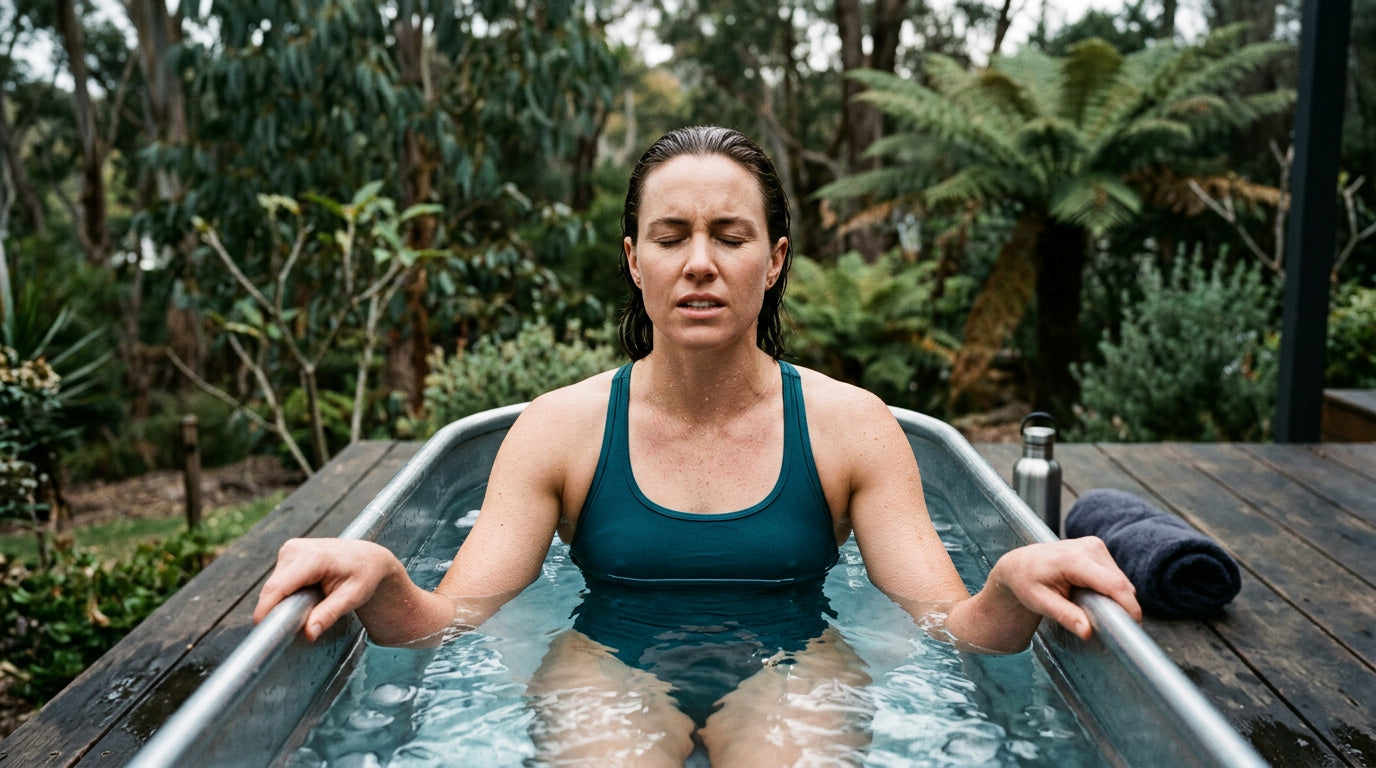
Pairing sauna with cold immersion amplifies these recovery outcomes substantially. Our guide to contrast therapy in Australia covers the full protocol and explains why heat-to-cold sequencing produces recovery outcomes that neither modality achieves independently.
Sauna and Immune Function in Women
Sauna use stimulates the innate immune system through two primary pathways: heat-induced elevation of core body temperature (a controlled artificial fever) and increased production of white blood cells, including neutrophils and lymphocytes. For women, whose immune systems are already more active than men's on average due to hormonal modulation, sauna adds a structured activation and recovery cycle that appears to improve baseline immune vigilance.
A study published in The Annals of Medicine found that regular sauna users experienced 30% fewer common cold infections compared to non-users. The researchers attributed this to increased white blood cell production and enhanced mucosal immune function. This is particularly relevant for Australian women during winter, when respiratory virus load peaks and immune fatigue from hormonal fluctuation or chronic stress is common.
For a thorough breakdown of the sauna and immune literature, our article on sauna for cold and flu covers what the science actually supports — and where the evidence runs out.
Sauna Longevity Benefits for Women: The Long Game
The longevity data on sauna is some of the strongest in preventive medicine, and it is particularly relevant for women whose post-menopausal risk window spans decades. Finnish epidemiological research tracking over 2,300 individuals across 20 years consistently shows that sauna frequency is inversely correlated with all-cause mortality — not just cardiovascular mortality.
Women who sauna 4–7 times per week in the Finnish cohort data live meaningfully longer than those who sauna once weekly. The effect persists after controlling for exercise, BMI, smoking, and alcohol intake. Heat therapy, independent of other lifestyle factors, appears to extend healthy lifespan. Our guide to sauna and longevity in Australia examines the full dataset and its implications for the Australian context.
Safety Nuances Specific to Women: What You Need to Know
Sauna is safe for most healthy women when used correctly. But female physiology introduces a small number of situations that require specific guidance.
Menstruation
Sauna use during menstruation is generally safe for most women. There is no evidence that sauna accelerates menstrual blood loss or causes harm during a typical cycle. Many women find heat reduces dysmenorrhoea (period pain) by relaxing the smooth muscle of the uterus and improving pelvic circulation. If you experience heavy menstrual bleeding or have been diagnosed with fibroids or adenomyosis, speak to your GP before using sauna during your period.
Pregnancy: A Clear Contraindication
Sauna use during pregnancy is contraindicated, particularly in the first trimester. Core body temperature elevation above 38.9°C has been associated with neural tube defects and other foetal developmental risks. This applies to traditional Finnish sauna, hot tubs, and prolonged hot baths.
If you are pregnant, trying to conceive, or in the postnatal period, read our dedicated evidence-based guide to sauna and pregnancy in Australia before using any sauna. It covers the research, the trimester-specific risk windows, and the postnatal reintroduction timeline in full.
Cardiovascular Conditions and Medications
Women on antihypertensive medications, diuretics, or medications that affect thermoregulation should consult their GP or cardiologist before beginning a regular sauna protocol. Sauna produces real cardiovascular stress — that is the mechanism of its benefit — but it requires a baseline cardiovascular system capable of managing that load.
For a thorough overview of who should and should not use sauna, and under what conditions, our complete guide to sauna health risks in Australia is the most thorough resource we have produced.
What Australian Women Say About Daily Sauna Use
The women who invest in a Genesis at home are not buying a wellness accessory. They are building a daily ritual with a measurable return on investment.
“I've run this protocol daily for 90 days. I sleep through the night for the first time in two years. My recovery markers don't lie.” — Genesis owner, Northern Rivers, NSW.
“I'm 52 and perimenopausal. The sauna has reduced my hot flushes more than anything else I've tried. I was sceptical. I'm not any more.” — Genesis owner, Noosa, QLD.
“We train together, we recover together. The contrast kit is the single best thing we've added to our home.” — Contrast Kit owners, Mornington Peninsula, VIC.
Across more than 200 Australian installations, the pattern holds. Women who use sauna daily for a minimum of 60 days consistently report improvements in sleep, stress response, skin quality, and training recovery — the four areas the research predicts most reliably.
Built for the Women Who Don't Settle
Over 200 Australian homes. 3-year cabin warranty. Zero-glue Japanese Cedar construction that will still look architectural in a decade.
EXPLORE THE GENESIS →The Real Cost of Sauna for Australian Women: Running Costs and Value Framing
The Genesis home sauna runs on a 9kW HUUM DROP heater at approximately AU$0.50–$1.00 per 45-minute session, based on Australian electricity rates of AU$0.30–$0.35 per kWh. That is the full per-session cost once the sauna is installed. No membership fee. No booking. No commute.
Compare that to the alternatives. A commercial sauna or bathhouse drop-in in Sydney or Melbourne runs AU$35–$60 per session. A gym wellness membership covering sauna access: AU$1,200–$2,400 per year. Weekly physio for training recovery: AU$100–$160 per session, or AU$5,200–$8,300 per year if weekly. Against that baseline, a Genesis amortises across a 10-year lifespan to a per-session cost that is, in most use scenarios, under AU$2.00 — including the capital cost of the unit.
For women who currently commute to a commercial facility twice a week, the break-even on a Genesis home sauna is typically 3–4 years. After that, every session is essentially free. For a complete breakdown of home sauna economics in Australia, our 2026 guide to home sauna cost in Australia runs the full numbers.
The Byron Bay Outdoor Sauna Lifestyle
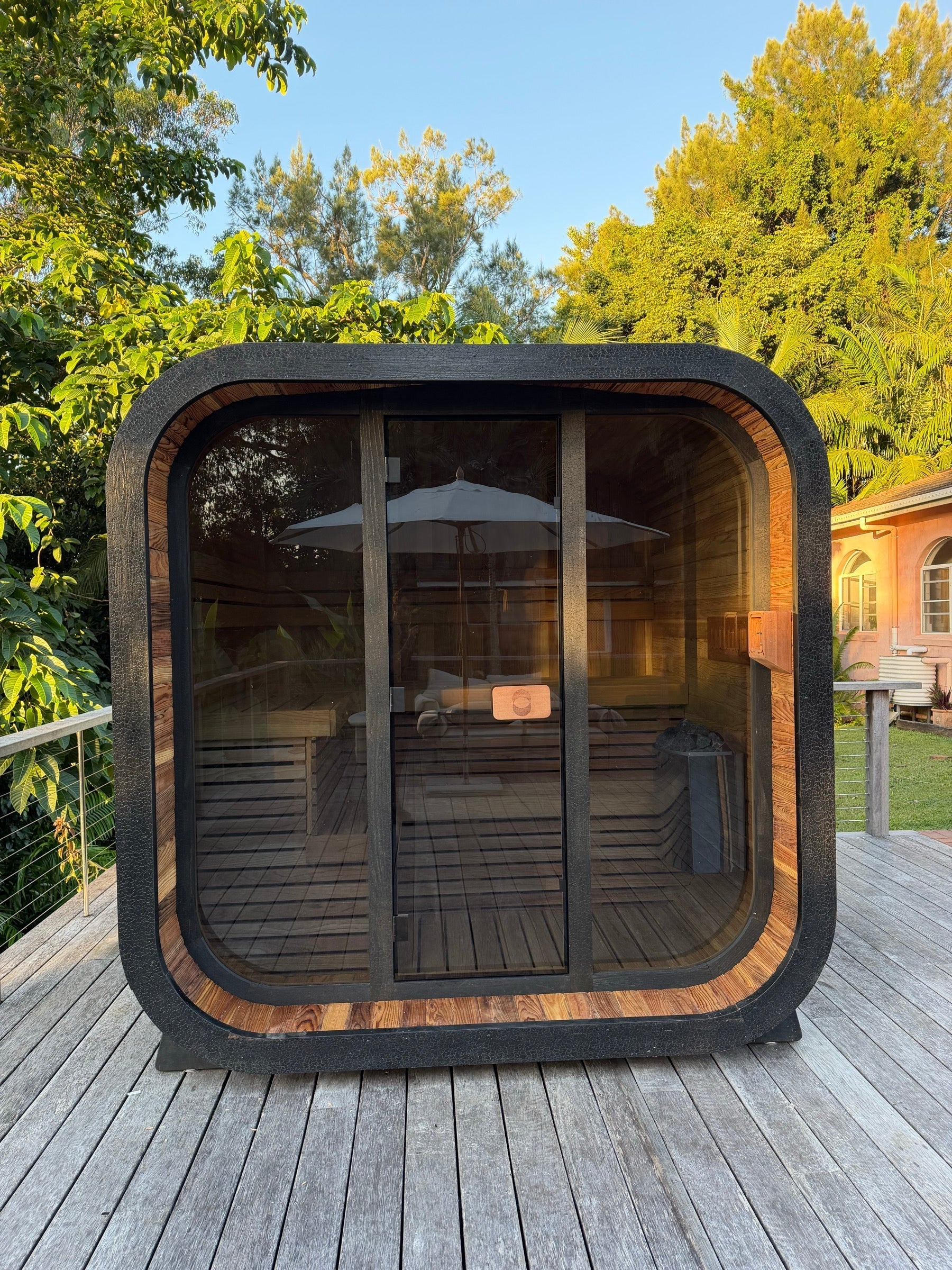
In Byron Bay, the Northern Rivers, and across coastal Queensland and New South Wales, the outdoor sauna has become a distinct part of the home wellness setup. Cedar on a deck. Glass facing the garden. Amber lighting at dusk. The Genesis was designed with this setting in mind — not as a luxury indulgence, but as daily recovery infrastructure that belongs in the outdoor living space.
The charcoal Shou Sugi Ban finish weathers well in humid coastal environments. The optional Colorbond roof kit makes fully exposed outdoor placement weather-resistant year-round. The IP67-rated lighting and sealed construction keep Australian summer humidity and winter rain out of the interior.
For women using sauna as a morning or evening ritual, outdoor placement changes the experience. You are not squeezing into a utility room. You are stepping outside, running the heat while the rest of the house is quiet, and returning to the interior — or the pool, or the ocean — reset. Our complete guide to outdoor saunas in Australia covers everything from site selection to electrical requirements.

How the Genesis Is Built: Why Materials Matter for Women Specifically
Most home saunas sold in Australia are built with glued MDF or particle board panels. Heat that to 90°C and the formaldehyde-based adhesives off-gas continuously. You are sitting in a sealed cabin breathing chemical steam. That is not wellness. That is the opposite of why you are using the sauna.
The Genesis is built differently, from the timber outward. Here is what that means in material terms:
- Japanese Cedar, 38mm walls. Dense, aromatic, naturally antimicrobial. Thermally stable at 90–100°C. No off-gassing. The same timber used in traditional Finnish and Japanese bath houses for centuries.
- Zero-glue mechanical construction. No adhesives anywhere in the cabin. No formaldehyde. No VOC emissions at operating temperature. The air you breathe at 90°C is clean.
- Non-VOC oil finish throughout. Every timber surface treated with a non-volatile organic compound oil. No chemical finish degrading under heat.
- 8mm safety laminated tempered glass (4+4mm dual-layer, grey tint). Structural. Thermal. Safe at operating temperature. Panoramic without compromise.
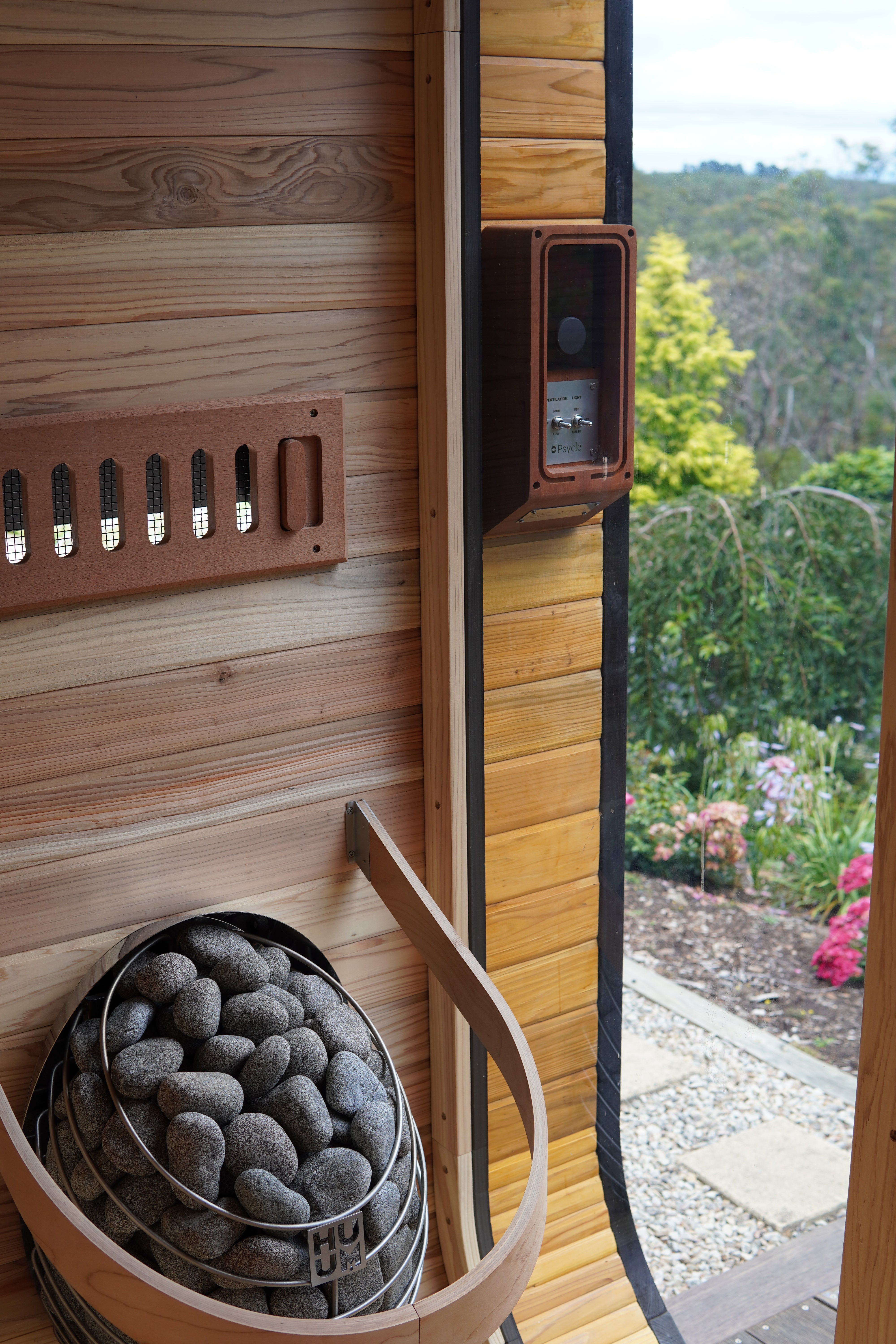
- HUUM DROP 9kW heater with 60kg Olivine diabase stones. The stone mass matters. 60kg holds heat across a full session — the temperature does not drop when you pour löyly. The HUUM UKU WiFi app means you can preheat the sauna from bed.
- Blue-light-free lighting: Amber 585–590nm and Red 630–635nm, IP67 rated. Blue light suppresses melatonin. Amber and red light do not. For women using the sauna in the evening for sleep support, this is not a cosmetic detail. It is a functional one.
- Active mechanical ventilation: 88–120 m³/hr. Forced air exchange keeps the heat clean and the oxygen level stable across a full session. Not a passive vent. A real ventilation system.
The Genesis comes in two finishes: Natural Cedar (warm, aromatic, classic) and Charcoal (Shou Sugi Ban charred timber, architectural, weatherproof). Both carry the same zero-toxin spec. The choice is aesthetic. See the full installation gallery in our guide to sauna rooms in Australia.
For couples or households of 2–3, the Genesis Mini carries the same zero-toxin specification at a smaller footprint — identical Japanese Cedar construction, zero-glue joints, non-VOC finish, and a choice of HUUM DROP 6kW or Harvia Vega 6kW heater. If you have the space, the Genesis (3–5 person capacity) is the choice that grows with the household and holds its value as a long-term asset.
How to Start: A Practical Sauna Protocol for Women
The frequency and duration that delivers results is not the same for everyone, but the research gives clear directional guidance. Our complete guide to sauna frequency covers the full evidence base. For women starting out, here is a practical entry framework:
Weeks 1–2: Acclimatisation
2–3 sessions per week. 10–15 minutes per session at 70–80°C. Exit and cool for 10 minutes. Hydrate with 500ml water before entry. Focus on completing the session comfortably, not maximising intensity.
Weeks 3–4: Building the Protocol
3–4 sessions per week. 15–20 minutes at 80–90°C. Introduce löyly (water on stones) in the final 5 minutes. Begin tracking sleep quality and morning mood as proxies for hormonal recovery effects.
Month 2 Onwards: Maintenance and Optimisation
4–7 sessions per week as tolerated. 20–30 minutes at 85–100°C. For sleep optimisation, schedule your final session 60–90 minutes before bed. For recovery, schedule post-training. For hormonal regulation, consistency of daily timing matters more than duration.
Adding Contrast Therapy
Once comfortable at 4+ sessions per week, introduce cold immersion post-sauna. 2–3 minutes at 10–15°C, repeated 2–3 rounds. The contrast protocol amplifies cardiovascular adaptation, accelerates recovery, and produces the most powerful mood-regulating neuroendocrine response of any passive intervention. See our complete contrast protocol guide for sequencing and duration detail.
Traditional Sauna vs. Infrared Sauna for Women: Which Delivers More
This comparison matters for women specifically, because a significant portion of the sauna marketing directed at the female wellness audience promotes infrared saunas as the gentler, more accessible option. The temperature argument — infrared runs at 50–70°C versus Finnish sauna at 80–100°C — is presented as a feature, not a limitation. It is a limitation.
| Factor | Finnish Sauna (Traditional) | Infrared Sauna |
|---|---|---|
| Temperature range | 80–100°C | 50–70°C |
| Core body temp elevation | Significant — 1.0–1.5°C above baseline | Modest — 0.5–0.8°C |
| Cardiovascular stimulus | HR 100–150 bpm (moderate aerobic equivalent) | HR 80–110 bpm (light exertion) |
| Research base for outcomes | Extensive — 40+ years Finnish epidemiological data | Limited — short-term, small sample studies |
| Löyly (steam generation) | Yes — water on volcanic stones at 80–100°C | No |
| Cortisol reduction evidence | Documented in peer-reviewed literature | Preliminary, not replicated at scale |
| Sleep improvement mechanism | Strong thermoregulatory signal (core temp drop) | Weaker signal at lower temperatures |
| Skin and collagen effects | Documented dermal circulation increase | Less studied, mechanisms differ |
| Construction standards in market | Varies widely — Genesis: zero-glue, zero-toxin | Typically glued MDF, off-gassing risk at operating temp |
The research underpinning the cardiovascular, cortisol, sleep, and longevity claims in this article was built on Finnish sauna data — real heat, real stones, real steam. If you want those outcomes, you need a traditional sauna that can reach and hold 80–100°C. For a complete technical comparison, our guide to traditional versus infrared sauna covers the full evidence base.
Frequently Asked Questions: Sauna Benefits for Women
Is sauna good for menopause in Australia?
Yes. Regular sauna use appears to reduce the frequency and intensity of hot flushes and improve sleep quality in menopausal women through its effects on thermoregulatory sensitivity and cortisol regulation. A 2021 study in the International Journal of Environmental Research and Public Health confirmed measurable cortisol reductions within four weeks of 3+ sessions per week. For Australian women managing menopause without hormone therapy, sauna is one of the most evidence-supported complementary tools available. It does not replace medical management of severe symptoms, but for mild to moderate vasomotor symptoms, the case is compelling.
What are the sauna benefits for women over 40?
Women over 40 derive the most measurable benefits across six areas: cardiovascular protection (50% reduction in fatal events with 4–7x weekly use), cortisol and hormonal regulation, improved sleep architecture, skin health via increased dermal blood flow, immune function, and post-training muscle recovery. The cardiovascular benefit is particularly significant from perimenopause onwards, when oestrogen-driven protection declines and arterial stiffness accelerates. Four sessions per week at 80–100°C appears to be the threshold at which the research-documented outcomes become consistent.
Does sauna affect hormones in women?
Yes — directly and measurably. Regular sauna bathing reduces cortisol levels within four weeks of consistent use. Cortisol sits upstream of several female hormonal systems: elevated baseline cortisol suppresses progesterone, disrupts sleep architecture, and amplifies the vasomotor symptoms of menopause. By down-regulating the HPA axis chronically, sauna improves the broader hormonal environment. There is also emerging evidence that the heat-induced growth hormone pulse (up to 16x baseline post-exercise) may influence body composition and metabolic hormone function, though this area of research is still developing.
How often should women use a sauna for health benefits?
The research supports 4–7 sessions per week for maximum cardiovascular and hormonal outcomes. For women new to sauna, 2–3 sessions per week at 10–15 minutes each is the appropriate entry point, progressing to 20–30 minutes at 85–100°C over 4–6 weeks. The key variable is consistency: the hormonal and cardiovascular adaptations are cumulative and build over weeks and months. Daily use is ideal. Our guide to sauna frequency covers the full evidence-based progression framework.
Can you use a sauna during your period?
For most healthy women, yes. There is no peer-reviewed evidence that sauna use during menstruation causes harm or increases blood loss. Many women find heat reduces period pain by relaxing uterine smooth muscle and improving pelvic blood flow. Women with fibroids, adenomyosis, or unusually heavy menstrual bleeding should speak to their GP before using sauna during their period, as the circulatory effects of heat may be contraindicated in specific conditions.
Is sauna safe during pregnancy?
No — sauna use is contraindicated during pregnancy, particularly in the first trimester. Core body temperature elevation above 38.9°C has been associated with neural tube defects and foetal developmental risks. This applies to traditional Finnish sauna, hot tubs, and extended hot baths. Read our complete evidence-based guide to sauna and pregnancy before using any sauna if you are pregnant, trying to conceive, or recently postnatal. The guide covers the trimester-specific risk windows and the evidence on postnatal reintroduction timing.
Does sauna improve skin for women?
Yes. Finnish sauna at 80–100°C increases dermal blood flow by up to three times resting levels, drives sweat-based pore clearance, and upregulates heat shock proteins involved in collagen synthesis and skin repair. The effect is most visible in women over 40, where declining oestrogen reduces skin thickness and collagen density. The skin benefits of sauna are temperature-dependent — they require the heat levels of traditional Finnish sauna, not the lower temperatures of infrared units. Our guide to sauna and skin health covers the full clinical evidence.
Ready to Build This Into Your Daily Ritual?
Free Australia-wide delivery. 3-year cabin warranty. 120-day build — order now for summer delivery. $1,000 fully refundable deposit to secure your place in the build queue.
SHOP THE GENESIS →