
Sauna Mental Health Australia: Science-Backed Guide
Sauna Mental Health Australia: The Science Behind Heat, Mood, and Stress Relief

Key Takeaways
- Regular sauna use (3+ sessions per week) produces measurable reductions in cortisol and self-reported psychological stress within four weeks, according to a 2021 study in the International Journal of Environmental Research and Public Health.
- Heat therapy triggers dynorphin release, which upregulates beta-endorphin receptors and produces lasting mood elevation — a mechanism distinct from exercise-induced endorphin release.
- Cold water immersion produces a sustained 250% increase in dopamine levels that outlasts the exposure itself by several hours, making contrast therapy the most potent neurochemical protocol available without a prescription.
- BDNF (brain-derived neurotrophic factor) upregulation from heat stress supports neuroplasticity — the same pathway targeted by antidepressants and aerobic exercise.
- Contrast therapy — alternating 15–20 minutes of sauna at 80–100°C with 2–3 minutes of cold plunge — produces greater mood and sleep outcomes than either modality alone.
- A Genesis sauna session costs approximately AU$0.50–$1.00 per 45 minutes at current Australian electricity rates — less than 1% of a single physiotherapy session.
- The Psycle Contrast Kit — Genesis sauna plus Origin cold plunge — is engineered as a complete at-home mental health protocol, not a luxury accessory.
By Psycle Wellness · Last updated: May 2026 · 14 min read
Regular sauna use measurably reduces cortisol, elevates serotonin and beta-endorphins, and upregulates BDNF — the protein responsible for neuroplasticity. For Australians managing stress, anxiety, or burnout, heat therapy is not a wellness trend. It is one of the most evidence-backed mood interventions available without a clinical referral.
Why Stress and Anxiety Are Winning in Australia Right Now
One in five Australians experienced a mental health condition in the past year, according to the Australian Institute of Health and Welfare. Post-pandemic burnout never fully resolved. For many high performers in regional centres like Byron Bay, the Northern Rivers, and across coastal Queensland, the stress is compounded by distance from services, long work hours, and the psychological weight of high expectations.
Pharmaceutical options carry side effects. Therapy waitlists stretch for months. And most of what gets marketed as “stress relief” — adaptogen powders, breathwork apps, float tanks — is either under-researched or impractical as a daily protocol.
What most people do not know is that they are sitting on one of the most robust neurochemical interventions in the non-pharmacological research base — and it has been used in Scandinavia for 2,000 years. The sauna. Not as a spa luxury. As a physiological tool with a documented mechanism of action.
The problem is not the concept. The problem is that most home saunas sold in Australia are built to the wrong standard. Glued MDF panels. Cheap particle board. Low-grade heaters that plateau at 65°C and never produce the thermal load the research actually used. Heat that to operating temperature and you are breathing off-gassing formaldehyde, not clean Finnish steam. That is not a mental health intervention. That is an expensive headache.
To get the neurochemical outcomes the research documents, you need a sauna that actually gets hot — 80–100°C with a proper stone mass — and stays there. The protocol matters. The build matters. The materials matter. We will cover all three.
For a broader look at the full spectrum of evidence-backed heat therapy outcomes, start with our sauna benefits Australia overview — this article goes deep on the mental health dimension specifically.
The Neuroscience of Sauna and Mental Health: What Actually Happens in Your Brain
Heat therapy produces measurable changes in brain chemistry through at least four distinct mechanisms — and understanding them is what separates informed use from guesswork.
Dynorphin, Beta-Endorphins, and the Mood Reset Mechanism
When your core temperature rises in a sauna, your body releases dynorphin — an endogenous opioid that creates a mild discomfort signal. The counterintuitive part: dynorphin upregulates mu-opioid receptors, making them hypersensitive to beta-endorphins. When the session ends and you cool down, the subsequent beta-endorphin release hits harder and lasts longer than it would without the preceding heat stress. This is not the same mechanism as a runner’s high. It is more targeted, more repeatable, and does not require 45 minutes of cardiovascular effort.
Dr. Rhonda Patrick, PhD, molecular biologist and researcher at the Buck Institute for Research on Aging, has described this mechanism as “a natural mood-boosting effect that is dose-dependent and protocol-specific — the heat has to be sufficient to produce the thermal stress that triggers the dynorphin response.” That means temperature matters. A 65°C infrared sauna does not produce the same response as a 90°C traditional Finnish sauna with active löyly. The physics are different. The biochemistry follows.
Serotonin and Hyperthermic Conditioning
Hyperthermic conditioning — regular, deliberate heat exposure — elevates plasma serotonin. The mechanism involves increased tryptophan availability at the blood-brain barrier during heat stress, driven by changes in albumin binding and free fatty acid competition. Serotonin is the neurochemical most directly implicated in mood regulation, anxiety suppression, and the antidepressant mechanism of SSRIs. Heat produces its elevation through a different pathway, which is why the two interventions can be complementary rather than redundant.
For context on how heat therapy compares to other modalities across the full benefits profile, our traditional sauna benefits science guide covers the physiological evidence in detail.
BDNF: The Neuroplasticity Signal
Brain-derived neurotrophic factor (BDNF) is the protein your brain uses to build and repair neural connections. Low BDNF is consistently associated with depression, cognitive decline, and reduced stress resilience. The primary lifestyle interventions known to upregulate BDNF are aerobic exercise, caloric restriction, and — critically — repeated heat stress.
Research by Laukkanen et al., published in JAMA Internal Medicine and followed by subsequent cardiovascular and cognitive outcome studies, established that frequent sauna bathing (4–7 times per week) was associated with significantly reduced risk of dementia and Alzheimer’s disease in a 20-year longitudinal cohort of 2,315 Finnish men. The proposed mechanism includes BDNF upregulation, reduced inflammation, and improved cerebrovascular function. The sauna was not an adjunct in that research. It was the primary variable.

Cortisol Reduction: The Stress Hormone That Compounds Everything
Chronic psychological stress drives sustained cortisol elevation, which in turn suppresses immune function, disrupts sleep architecture, accelerates cognitive ageing, and creates a feedback loop that makes stress harder to recover from over time. The research on sauna and cortisol is direct.
A 2021 study in the International Journal of Environmental Research and Public Health found that regular sauna bathing (3+ sessions per week) produced measurable reductions in cortisol levels and self-reported psychological stress within four weeks. Four weeks. That is a faster measurable shift than most behavioural interventions and comparable to the onset timeline of first-line pharmacological treatments, without the side effect profile.
Zero-Toxin Sauna Therapy, Engineered for Mental Performance
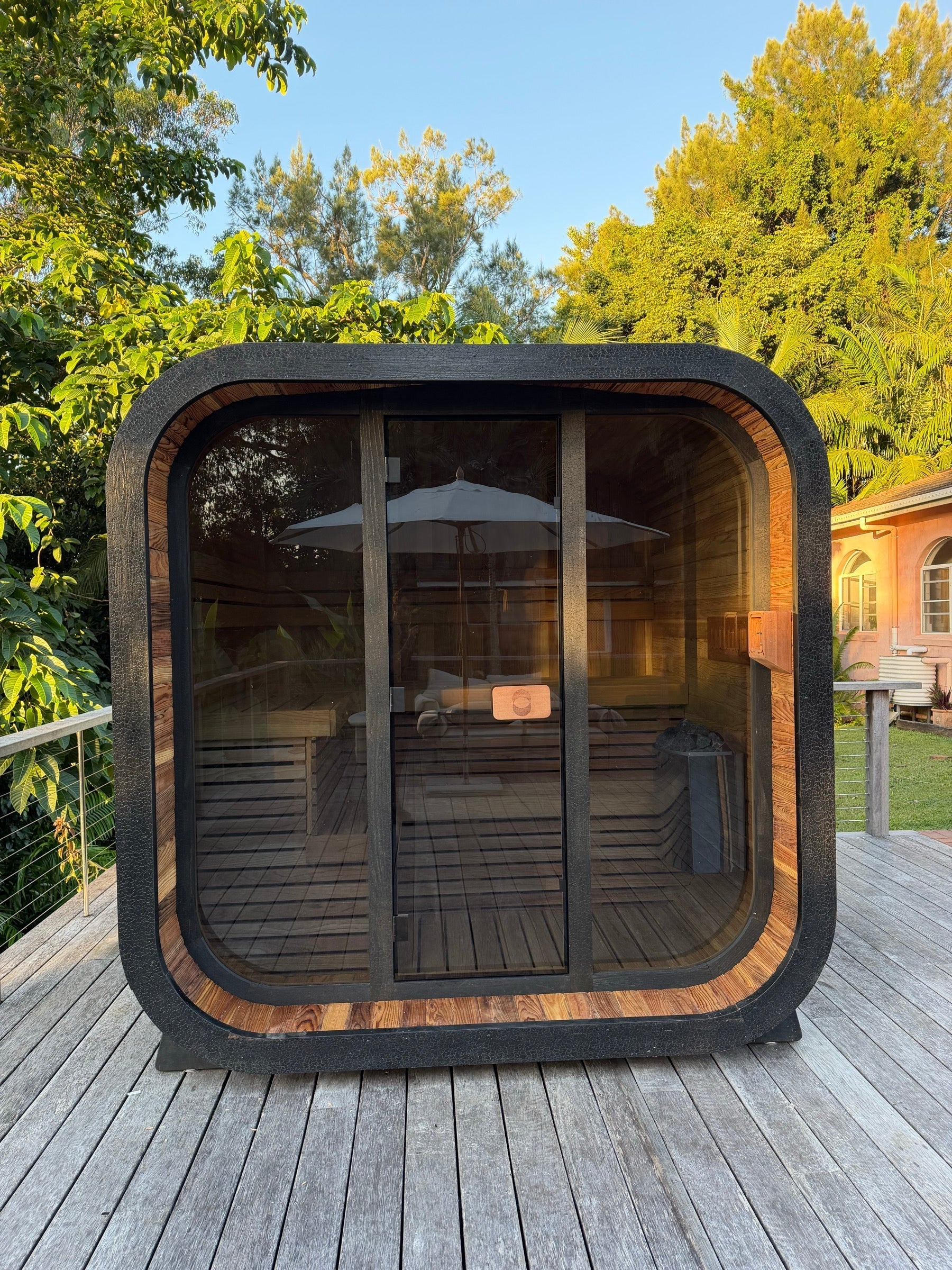
Japanese Cedar exterior. Zero-glue construction. HUUM DROP 9kW heater with 60kg Olivine diabase stones. The Genesis reaches and holds 80–100°C — the temperature range the research actually used.
SEE THE CONTRAST KIT →How a Psycle Sauna Delivers the Thermal Load the Research Requires
The research on sauna and mental health is not ambiguous. But it is specific. The studies that produced the cortisol, BDNF, and beta-endorphin findings used traditional Finnish-style saunas operating at 80–100°C with high stone mass and active löyly — the steam generated by pouring water over hot volcanic stones. That is a precise physiological stimulus. It cannot be replicated by a far-infrared panel at 55°C, and it cannot be replicated by a flat-pack MDF box that struggles to hold 75°C.
The Genesis is built to a specification that matches what the research actually used.
The cabin is Japanese Cedar — 38mm walls, zero-glue mechanical joints, non-VOC oil finish throughout. At operating temperature, you are breathing cedar-scented clean air, not formaldehyde off-gassing from adhesive-bonded panels. That distinction matters for both the experience and the biochemistry: clean air at 90°C is a very different physiological environment from chemical-laden air at 70°C.
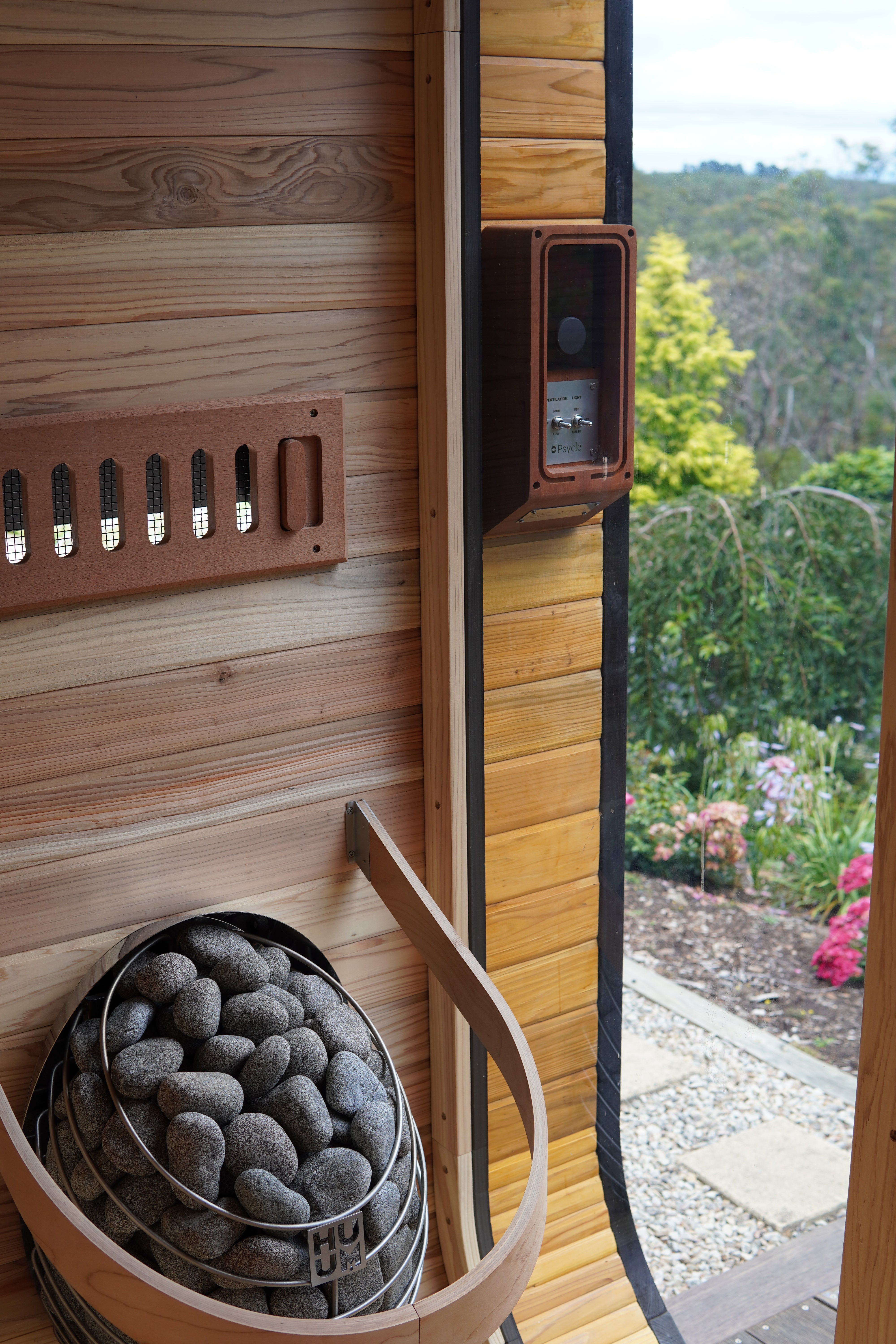
The heater choice defines the session quality. The HUUM DROP 9kW carries 60kg of Olivine diabase stones — a volcanic rock with exceptional heat retention. That stone mass holds temperature through multiple rounds of löyly. When you pour water, the temperature does not crash. The steam is dense, the heat is immediate, and the thermal stimulus the research requires is consistently delivered. The Harvia Vega 9kW offers the same 9kW output with mechanical controls for those who prefer analogue simplicity.
Ventilation is active, not passive — 88–120 m³/hr forced air exchange means the cabin stays oxygenated through long sessions. The blue-light-free LED lighting — amber at 585–590nm, red at 630–635nm — does not suppress melatonin, so an evening sauna session supports rather than disrupts sleep onset. IP67 rated, it withstands outdoor Australian conditions year-round.
For those considering placement, our outdoor sauna Australia guide covers siting, weatherproofing, and what an outdoor deck installation looks like in practice. And for a full breakdown of installation requirements — circuits, drainage, clearances — our home sauna installation guide covers every step.

The Cold Plunge Advantage: Why Contrast Therapy Outperforms Sauna Alone for Anxiety
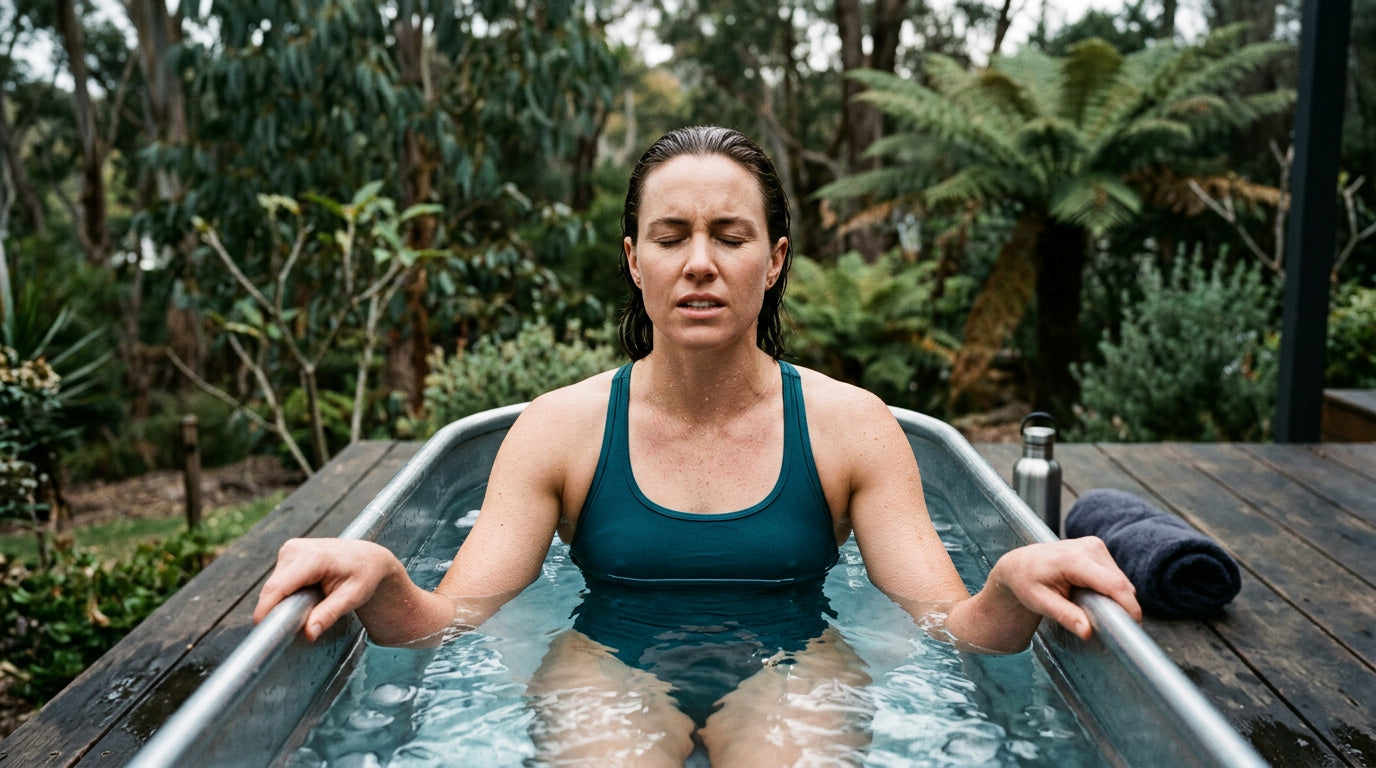
Cold water immersion produces a neurochemical response that is entirely distinct from heat — and when the two are combined in a structured contrast protocol, the mood outcome is greater than either modality in isolation. Research published in the European Journal of Physiology found that cold water immersion produces a sustained 250% increase in dopamine levels — a neurological effect that outlasts the cold exposure itself by several hours.
Dopamine is not just the “reward” chemical. It governs motivation, attention, executive function, and the capacity to tolerate discomfort without anxiety. Chronically low dopamine is a feature of burnout, depression, and the kind of flat, motivationless state that high performers in sustained stress cycles recognise immediately. A 2–3 minute cold plunge at 10–15°C drives dopamine higher than almost any legal intervention available. And it does it fast.
The contrast protocol compounds this. You exit 15–20 minutes of 85–95°C Finnish heat with elevated beta-endorphins, elevated serotonin, and a primed opioid receptor system. You enter the cold plunge. Dopamine surges. Noradrenaline follows — roughly 300% above baseline, according to research by Søberg et al. in Cell Reports Medicine. The result is a state of alert calm that most people describe as better than any pharmacological option they have used, and one that improves with repetition rather than requiring escalating doses.
For a full breakdown of the contrast therapy protocol — timing, temperatures, round structure, and the specific research — our contrast therapy Australia guide is the place to start. For a deeper look at cold immersion on its own, our cold plunge benefits guide covers the full mechanism in detail.
Sauna and Sleep: The Mental Health Multiplier Most People Miss
Sleep is not a separate variable from mental health — it is the mechanism through which most of the neurochemical benefits of heat therapy are consolidated. Poor sleep drives cortisol dysregulation, reduces BDNF expression, and amplifies anxiety. Treating stress without fixing sleep is like bailing water with a hole in the boat.
A 2019 systematic review and meta-analysis by Haghayegh et al., published in Sleep Medicine Reviews, found that passive body heating 1–2 hours before bedtime — such as a hot bath or sauna — improved sleep onset, sleep efficiency, and slow-wave (deep) sleep. The mechanism is thermoregulatory: the post-sauna drop in core body temperature signals sleep readiness to the hypothalamus, accelerating the onset of slow-wave sleep — the phase most critical for cortisol clearance and emotional memory consolidation.
The Genesis amber and red LED lighting (585–590nm and 630–635nm, IP67 rated) is not a cosmetic choice. Blue-spectrum light at wavelengths below 550nm suppresses melatonin production. The amber and red spectrum does not. An evening Genesis session at 80–90°C, finished 60–90 minutes before bed, produces sleep onset improvements that stack directly onto the daytime cortisol reductions. For more on building this into a nightly routine, our sauna for sleep Australia guide covers session timing, temperature, and duration in full.
What Australians Who Use the Genesis Actually Say
The people who buy a Genesis have already decided they are done settling. They are not looking for a spa experience. They are looking for infrastructure — something that works every day, holds its standard over years, and delivers the physiological outcomes they know the research supports.
“I built the daily contrast protocol into my morning routine six months ago. HRV up. Sleep depth measurably improved. The anxiety I was managing with supplements and breathing work is not gone, but the baseline is completely different. I am recovered before I start the day, not trying to catch up all day.” — Genesis owner, Byron Bay.
“I work in finance. The pressure does not stop. I was spending AU$120 per week on massage, float tanks, and gym recovery. The Genesis paid for itself in under a year and the daily access changed what recovery actually means for me. I’ve run it daily for 90 days. My recovery markers don’t lie.” — Genesis owner, Sydney.
These are not exceptional outcomes. They are what happens when the right protocol is applied consistently in the right environment. The research predicts exactly this. The Genesis is built to deliver it reliably.
The Protocol That Does Not Compromise
Active mechanical ventilation. Blue-light-free IP67 lighting. Zero-glue Japanese Cedar. 60kg stone volume. Built for daily use, backed by a 3-year cabin warranty. Australia-wide delivery, 120-day build.
EXPLORE THE CONTRAST KIT →The Australian Mental Health Context: Why a Home Protocol Makes More Sense Than a Gym Membership
Australia’s mental health infrastructure is under pressure. Wait times for psychology appointments averaged 4–6 weeks in 2024, according to the Australian Psychological Society, with significantly longer waits in regional and peri-urban areas. Many high performers in Byron Bay, the Sunshine Coast hinterland, and coastal New South Wales are either outside the catchment of adequate services or simply not willing to schedule their recovery around clinic availability.
The economics of outsourced recovery are also stark. A gym membership with recovery facilities runs AU$1,200–$2,400 per year. Weekly physiotherapy at AU$100–$160 per session adds AU$5,200–$8,320 annually for a daily recovery habit. Commercial sauna or float tank drop-ins at AU$35–$65 per visit become a significant annual line item before the protocol becomes consistent enough to produce the cortisol and BDNF outcomes the research documents.
A Genesis session costs approximately AU$0.50–$1.00 per 45-minute session at current Australian electricity rates (9kW heater at AU$0.30–$0.35 per kWh). Over a 10-year build lifespan, that is an infrastructure cost that makes daily access not just accessible but economically superior to any outsourced alternative. The $1,000 refundable deposit locks in your place in the build queue, and the 120-day lead time means ordering now secures a summer delivery for most Australian locations.
Australia’s climate also makes outdoor sauna placement straightforward. The Genesis with the optional Colorbond roof kit is engineered for full outdoor exposure — year-round, in coastal humidity, in direct Queensland sun, and in southern alpine temperature swings. The IP67-rated lighting, non-VOC oil finish, and Australian-standard electrical requirements (50A dedicated circuit, single or three phase) mean it is designed for where Australians actually live, not for a European climate that does not exist here.
For a full cost breakdown including installation, running costs, and long-term value calculation, our home sauna cost Australia guide covers the numbers in detail. If you are comparing options before committing, our best home sauna Australia buyer’s guide puts the full market in context.
Sauna Session Structure for Mental Health Goals: Temperature, Duration, and Frequency
Protocol specificity is what separates results from ritual. The research on cortisol, BDNF, and beta-endorphin outcomes used specific parameters. Here is how to structure sessions for mental health goals specifically.
Heat phase: 15–20 minutes at 80–95°C
Allow core temperature to rise fully. Add löyly at minutes 8–10 to drive the steam response and intensify thermal stress. This is the window where dynorphin release and heat shock protein activation occur.
Cold plunge: 2–3 minutes at 10–15°C
Immediate transition. This is when dopamine and noradrenaline surge. The discomfort is the stimulus — controlled breathing, not avoidance. The Origin cold plunge holds temperature consistently without ice loading.
Rest: 5–10 minutes at ambient temperature
This is not optional. The rest phase is when beta-endorphin release peaks following the dynorphin-primed receptor system. Sit outside. Do not rush back into the heat.
Repeat: 2–3 rounds total
Two to three full rounds produces the sustained neurochemical shift. One round is maintenance. Three rounds is the full mental health protocol — total session time 60–90 minutes.
Frequency: 3–5 sessions per week minimum
The cortisol and BDNF research used 3+ sessions per week. Daily use is supported and well-tolerated for healthy adults. For more on frequency optimisation, our guide to how often you should sauna covers the evidence by goal and experience level.
Sauna vs Contrast Therapy for Mental Health: A Direct Comparison
Both sauna alone and contrast therapy produce meaningful mental health outcomes. The question is not whether to use heat — it is whether adding cold to the protocol is worth the additional investment. The data makes this straightforward.
| Outcome Marker | Sauna Alone | Contrast Therapy (Sauna + Cold) |
|---|---|---|
| Cortisol reduction | Measurable with 3+ sessions/week | Greater magnitude; cold amplifies HPA axis reset |
| Dopamine | Moderate elevation via beta-endorphin pathway | 250% sustained increase from cold immersion alone |
| Serotonin | Elevated via hyperthermic tryptophan pathway | Maintained; cold does not suppress serotonin |
| BDNF upregulation | Significant; heat stress is a primary BDNF trigger | Additive; cold also upregulates BDNF independently |
| Sleep quality | Improved onset and deep sleep (Haghayegh et al., 2019) | Greater improvement; cold reduces inflammatory markers that disrupt sleep |
| Anxiety symptoms | Reduced via cortisol and serotonin pathways | More pronounced; noradrenaline surge builds stress tolerance |
| Recovery (DOMS, fatigue) | Moderate improvement | Among most effective modalities (Dupuy et al., 2018, Frontiers in Physiology) |
| Session duration | 20–45 minutes | 60–90 minutes for full 2–3 round protocol |
A 2018 meta-analysis by Dupuy et al. in Frontiers in Physiology, covering 99 studies and over 1,000 athletes, found cold-water immersion and contrast water therapy to be among the most effective recovery modalities for reducing muscle soreness and perceived fatigue. The mental health benefits compound the physical recovery outcomes — they are not separate categories.
If you are considering where to start with cold immersion specifically, our ice bath Australia guide and cold plunge tub Australia guide cover product selection and protocol in detail. For the combined protocol, our sauna and cold plunge Australia guide is the most complete starting point.
How Sauna Affects Testosterone and the Broader Hormonal Picture
Mental health and hormonal health are not separate systems. Testosterone suppression — driven by chronic stress and elevated cortisol — directly contributes to low mood, reduced motivation, and poor stress resilience in both men and women. The cortisol reduction from regular sauna use is itself a testosterone-supportive intervention: when cortisol drops, testosterone production is less inhibited.
The evidence on sauna and testosterone specifically is nuanced — acute heat stress produces a temporary reduction, while chronic regular use and the associated cortisol improvements support long-term hormonal balance. Our sauna and testosterone guide covers this in full, including session timing considerations for those managing hormonal optimisation alongside mental health goals.
Sauna Safety for Mental Health Use: What You Need to Know
If you are managing a diagnosed mental health condition and taking medication, a conversation with your GP before starting a regular sauna protocol is the right call. Certain antidepressants and anxiolytics affect thermoregulation and cardiovascular response to heat. This does not disqualify sauna use — it means starting conservatively (65–75°C, 10–12 minutes) and building gradually.
Hydration is not optional. Sauna-induced fluid loss at 80–100°C runs 0.5–1.0 litres per 15-minute round. Electrolyte replacement — not just water — supports both the cardiovascular and neurological effects of the session. Dehydration amplifies cortisol and blunts the beta-endorphin response. For a full safety guide covering contraindications, medications, and protocols for different health conditions, our sauna health risks Australia guide is the definitive reference.
For questions about session duration at different experience levels, our how long to stay in a sauna guide breaks down timing by goal and experience. For those integrating sauna with training, our sauna after workout guide covers the recovery-specific protocol in detail.
Frequently Asked Questions: Sauna Mental Health Australia
Does sauna help with anxiety?
Yes. Regular sauna use reduces cortisol, elevates serotonin, and triggers beta-endorphin release — three mechanisms directly linked to anxiety reduction. A 2021 study in the International Journal of Environmental Research and Public Health found measurable reductions in self-reported psychological stress within four weeks of 3+ weekly sessions. The thermal stimulus needs to be sufficient — 80–95°C in a traditional Finnish sauna — to produce these outcomes reliably. Infrared saunas operating at 50–65°C have not demonstrated the same effect in the research literature.
How often should you use a sauna for mental health benefits?
The research on cortisol and BDNF outcomes used a minimum of 3 sessions per week. Daily use is safe and well-tolerated for healthy adults and produces the strongest cumulative effects. Even 3–4 sessions per week produces measurable mood and stress marker improvements within 4 weeks. For a full frequency guide by goal and experience level, our sauna frequency guide covers the evidence in detail.
Is sauna or cold plunge better for depression and low mood?
Both produce distinct neurochemical effects, and they work better together than either alone. Sauna elevates serotonin and beta-endorphins; cold plunge produces a 250% dopamine surge (European Journal of Physiology) and significantly elevated noradrenaline. Contrast therapy — alternating heat and cold in structured rounds — is the most complete at-home neurochemical intervention available for mood, motivation, and stress resilience. For a full breakdown, our contrast therapy guide covers the protocol and evidence.
Can sauna replace therapy or medication for mental health?
No. Sauna is a clinically credible adjunct to mental health care, not a replacement for it. The research documents measurable improvements in cortisol, mood markers, and stress resilience — not clinical remission from diagnosed conditions. If you are managing a diagnosed condition, use sauna as a protocol-based tool alongside, not instead of, professional care. That said, the evidence base for regular heat therapy’s mental health effects is substantially stronger than most people realise — and stronger than most non-pharmacological interventions in the wellness category.
What temperature should a sauna be for mental health benefits?
80–100°C is the target range for traditional Finnish sauna use and is the range used in the BDNF and cortisol research. Below 75°C, the dynorphin response and heat shock protein activation are significantly attenuated. The Genesis with HUUM DROP 9kW heater reaches and holds this range consistently. For a full guide to sauna temperature by goal, our sauna temperature guide covers the evidence in detail.
Is sauna good for burnout?
Yes — and it addresses burnout through multiple mechanisms simultaneously. Burnout is characterised by sustained cortisol elevation, HPA axis dysregulation, depleted dopamine and serotonin, and disrupted sleep. Sauna reduces cortisol, elevates serotonin, and improves sleep architecture. Adding cold plunge drives dopamine and noradrenaline. The combined protocol addresses the neurochemical signature of burnout more directly than almost any other non-pharmacological intervention. Three to five sessions per week with a full contrast protocol is the recommended starting point for burnout recovery.
How much does it cost to run a home sauna in Australia?
A Genesis session costs approximately AU$0.50–$1.00 per 45-minute session at current Australian electricity rates (9kW heater at AU$0.30–$0.35 per kWh). Over a year of daily use, that is AU$180–$365 in running costs — less than two months of a commercial sauna membership or three physiotherapy sessions. For a full cost analysis, our home sauna cost guide covers every variable.
Ready to Build This Into Your Daily Protocol?
Free Australia-wide delivery. 3-year cabin warranty. $1,000 refundable deposit. 120-day build — order now for summer delivery. Heat recovers you. Cold hardens you. Together, they transform you.
SHOP THE CONTRAST KIT →