
Cold Plunge Tub Australia: Complete Buyer's Guide 2026
Cold Plunge Tub Australia: The Complete Buyer's Guide 2026

Key Takeaways
- Tap water in QLD, NSW, and WA reaches 22–28°C in summer — a chiller is not a luxury, it is the only way to hit the 10–15°C therapeutic window reliably.
- Research published in the European Journal of Physiology found cold water immersion produces a sustained 250% increase in dopamine levels — lasting hours beyond the exposure itself.
- A 2018 meta-analysis by Dupuy et al. in Frontiers in Physiology across 99 studies found cold-water immersion among the most effective recovery modalities for reducing muscle soreness and perceived fatigue.
- Inflatable cold plunge tubs cannot hold temperature in Australian summer heat. 316 marine-grade stainless steel shells with active chillers are the only format built for this climate.
- Total cost of ownership matters more than sticker price: ice-method tubs cost AU$15–$40 per session in ice bags once Australian summer arrives. A chiller costs approximately AU$0.20–$0.50 per day to run.
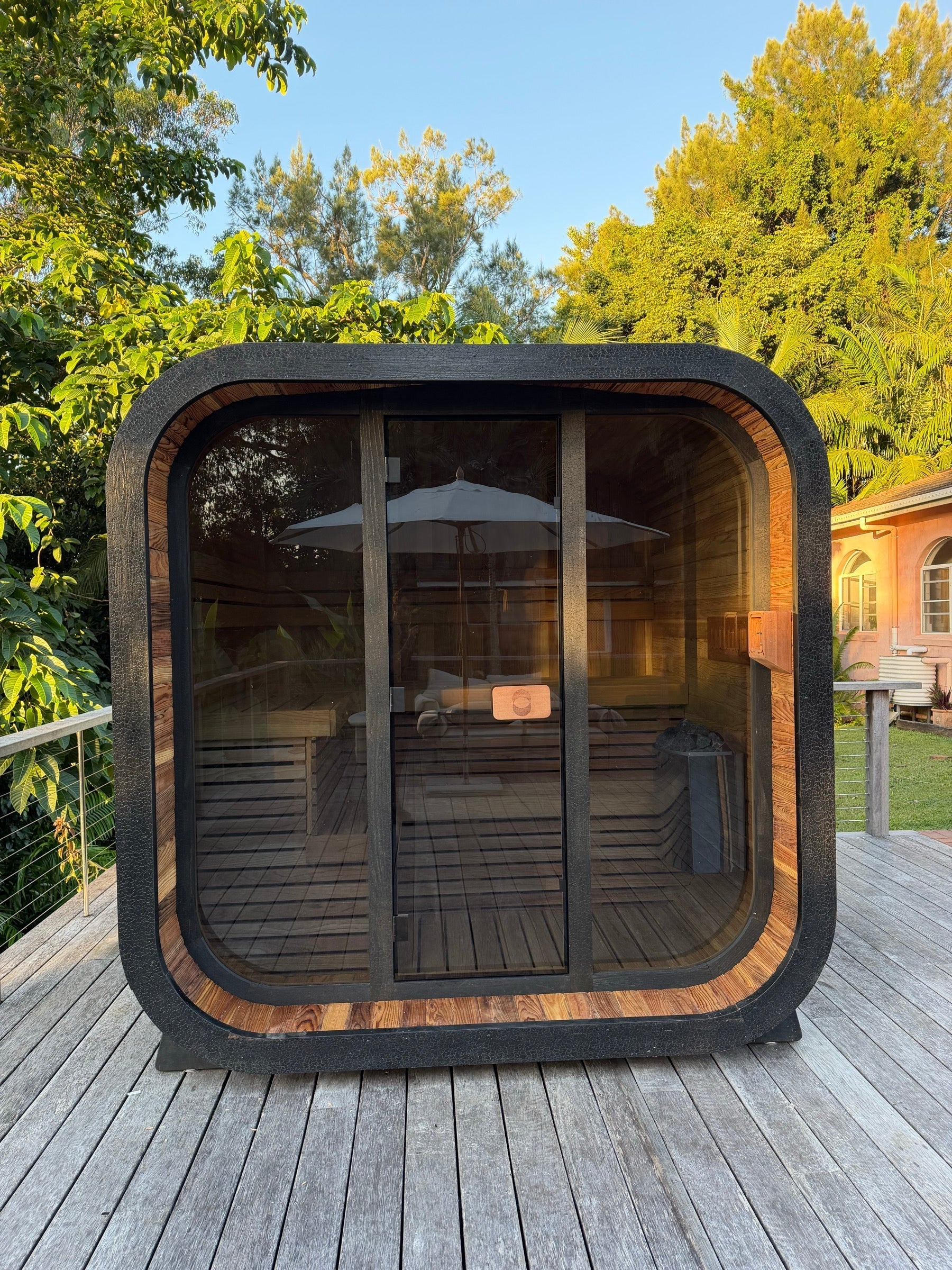
- The Psycle Origin pairs directly with the Genesis sauna in the Contrast Kit — purpose-built for the heat-cold protocol that research consistently identifies as the gold standard for recovery.
- A $1,000 refundable deposit secures your order with a 120-day build lead time — order now and it arrives before the next training block begins.
By Psycle Wellness · Last updated: May 2026 · 16 min read
The best cold plunge tub for Australia is a 316 marine-grade stainless steel shell paired with an active chiller — not an inflatable, not a chest freezer conversion, and not a tub that relies on ice bags when ambient air temperatures sit above 30°C for five months of the year. Tap water in most Australian capitals will not get you to 15°C without mechanical cooling. The right tub solves that problem permanently.
If you are comparing options in the AU$2,000–$8,000+ bracket, this guide covers everything that matters: chiller vs ice, materials, sizing, placement for Australian conditions, total cost of ownership, and the five tubs worth considering. The Psycle Origin ice bath is our recommendation. Here is why — and how it compares to the field.
Why Most Cold Plunge Tubs Fail in Australian Conditions
Most cold plunge tubs sold in Australia were designed for Northern Hemisphere markets where tap water runs cold six months of the year. That design assumption breaks immediately in Brisbane, Perth, or Darwin. Outdoor air temperatures above 35°C in summer mean an uninsulated tub — inflatable or otherwise — equilibrates to ambient temperature within hours. You are not plunging at 12°C. You are sitting in warm water.
The therapeutic window for cold water immersion sits between 10°C and 15°C. Below that, cold shock risk increases. Above 18°C, the neurological and physiological adaptations that make cold plunging worth doing begin to attenuate. Research published in the European Journal of Physiology found that cold water immersion produces a sustained 250% increase in dopamine levels — a neurological effect that outlasts the cold exposure itself by several hours. That effect depends on hitting the right temperature, consistently, session after session.
An inflatable tub and three bags of ice from a servo will not do that. Not in January. Not in February. Not in March. If you are serious about this practice, you need a system engineered for Australian heat — insulated shell, active chiller, and the capacity to hold temperature regardless of what the sky is doing.
The science behind cold plunge benefits is clear. The question is whether your setup can actually deliver the conditions that science was tested under. Most cannot.
What to Look for in an Ice Bath for Sale in Australia
Buying a cold plunge tub in Australia means evaluating five things that do not appear in the marketing copy: insulation rating, chiller capacity relative to ambient conditions, shell material durability, filtration and sanitation, and the maintenance burden over a 5–10 year lifespan. Get any one of these wrong and the tub becomes expensive garden furniture.
Insulation: The Feature That Does the Heavy Lifting
Insulation determines how hard the chiller has to work — and by extension, how much your electricity bill reflects the purchase. An uninsulated shell in 35°C ambient heat forces the chiller to run almost continuously. A well-insulated 316 marine-grade stainless steel shell with closed-cell foam retains temperature for hours, meaning the chiller cycles in short bursts rather than grinding all day. Look for a minimum of 50mm closed-cell foam insulation in the walls and base. Anything less is a compromise designed to reduce manufacturing cost, not running cost.
Chiller vs Ice Method: The Only Real Decision
The chiller vs ice debate is settled the moment you live in a postcode where summer is genuinely hot. Ice works in winter. Ice works in climates where tap water is already cold. In Queensland in January, you need roughly 15–20kg of ice to drop a 500-litre tub from 28°C to 15°C — and then the tub warms back up within 90 minutes in direct sun. At $3–$4 per kilogram of commercial ice, that is AU$45–$80 per session, every session, forever.
A quality chiller — rated for Australian summer ambient temperatures up to 40°C — holds the tub at your dialled-in temperature 24 hours a day. The running cost on Australian electricity tariffs (averaging AU$0.30–$0.35/kWh) sits at approximately AU$0.20–$0.50 per day once the tub is at operating temperature and the insulation is doing its job. That is the correct comparison: ongoing ice cost versus ongoing electricity cost. The maths is not close.
Shell Material: Stainless Steel vs Fibreglass vs Acrylic vs Inflatable
316 marine-grade stainless steel is the correct choice for permanent outdoor installation in Australian conditions. Unlike fibreglass and acrylic, stainless steel does not crack, warp, or degrade under UV exposure. It holds structural integrity across temperature cycling between 5°C water and 40°C ambient air, and 316 grade specifically resists salt-air corrosion — critical for coastal Australian installations. 316 marine-grade stainless steel outlasts fibreglass and acrylic in outdoor Australian conditions, with no gel coat to chip, no liner to replace, and no material degradation from UV or thermal cycling. It is the same grade used in marine hardware and commercial kitchens precisely because of its durability in harsh environments.
Fibreglass shells are acceptable where budget rules out stainless steel. Acrylic shells are acceptable only for indoor placement with controlled ambient temperatures. They are less tolerant of direct UV exposure and thermal shock cycles. If the tub lives outdoors year-round in a Queensland or WA climate, 316 marine-grade stainless steel is not negotiable. Fibreglass shells with gel coats will eventually blister and chalk under sustained UV; acrylic becomes brittle with repeated thermal cycling.
Inflatable cold plunge tubs are designed for people who want to try cold plunging once before they decide. They are not designed for a daily practice. Thin PVC walls hold no insulation value, the seams fail under repeated temperature cycling, and the hygiene maintenance burden is significant because the material cannot be properly sanitised. They are a proof-of-concept, not a protocol.
Filtration, Sanitation and Maintenance Load
A cold plunge tub that does not circulate and filter the water becomes a biofilm problem within days. This is not an aesthetic issue — it is a health risk. Effective filtration should move the full water volume through a filter at least 2–3 times per hour. Ozone or UV sanitation eliminates the need to overdose the water with chlorine, which matters if you are plunging daily and absorbing chlorinated water through your skin and respiratory tract.
Ask every supplier the same question: what is the water change interval? A well-designed system with active filtration and ozone sanitation should hold clean water for 4–8 weeks between full drains. A poorly designed system needs weekly water changes. Multiply that maintenance overhead by five years and it becomes a significant factor in total cost of ownership.
| Feature | Inflatable | Acrylic + Ice | Stainless Steel + Chiller |
|---|---|---|---|
| Australian summer performance | Poor — warms to ambient | Moderate — requires 15–20kg ice per session | Excellent — holds set temperature 24/7 |
| Running cost per session | AU$45–$80 (ice) | AU$15–$40 (ice) | AU$0.20–$0.50/day (electricity) |
| Temperature precision | None | Low — varies by ice quantity | High — ±1°C with quality chiller |
| Lifespan | 1–2 years | 5–10 years (indoor) | 15–20 years |
| Outdoor UV tolerance | Poor | Limited | High (UV-stable gel coat) |
| Maintenance burden | High (frequent water changes) | Medium | Low (4–8 week water cycle) |
| Entry price (AUD) | AU$200–$800 | AU$1,500–$3,500 | AU$3,500–$8,000+ |
Cold Plunge Built for Australian Conditions
The Psycle Origin is engineered for year-round outdoor use in Australian heat. Insulated shell, active chiller, and the temperature precision your protocol demands.
SEE THE ORIGIN →Cold Plunge vs Ice Bath vs Cold Shower: Why a Dedicated Tub Wins
A cold shower activates cold receptors in your skin. It does not achieve full-body cold water immersion. The physiological mechanisms that drive the recovery and performance adaptations associated with cold exposure — vasoconstriction, norepinephrine and dopamine release, brown adipose tissue activation — require submersion. A two-minute cold shower at 18°C is not the same stimulus as three minutes at 12°C with water to your shoulders. The research was not conducted in showers.
The terms “ice bath” and “cold plunge tub” are used interchangeably in Australia but the distinction matters commercially. An ice bath implies a temporary setup — a bathtub, a drum, or a stock tank filled with ice and cold water for an acute post-training intervention. A cold plunge tub is a permanent, purpose-built vessel with insulation, filtration, and temperature control. The difference is the difference between a practice and an occasion. The research on cold plunge benefits consistently comes from controlled, repeatable immersion protocols — not one-off ice baths after big training weeks.
A 2018 meta-analysis by Dupuy et al. in Frontiers in Physiology, covering 99 studies and over 1,000 athletes, found cold-water immersion and contrast water therapy to be among the most effective recovery modalities for reducing muscle soreness and perceived fatigue. That outcome requires a system you can use every single day, not one that depends on a trip to the ice works.
Consistency is the variable that separates the people who get results from the people who have a tub that collects leaves in the backyard.
The Psycle Origin: Specs, Chiller Capacity, and What Makes It Different
The Psycle Origin is a premium ice bath purpose-built for the Australian market. It is not a rebranded European product calibrated for a climate where tap water is already cold. Every specification reflects the conditions of Australian summer — ambient heat, UV exposure, outdoor deck living, and the requirement to hit and hold sub-15°C water in 35°C air.
The Origin pairs directly with the Psycle Genesis sauna as the Contrast Kit — the core Psycle protocol. Heat recovers you. Cold hardens you. Together, they transform you. If you are building a home recovery system and you already have or are considering a sauna, read our guide to sauna and cold plunge in Australia for the full contrast therapy protocol and how to sequence sessions for maximum effect.
The Origin comes with an Australia-wide delivery network, a warranty that matches the build quality, and the same uncompromising standards that define every Psycle product. It is not the cheapest option in the market. It is not designed to be. It is designed to be the last cold plunge tub you ever buy.
The science on contrast therapy in Australia is unambiguous: alternating heat and cold produces measurable adaptations in cardiovascular function, recovery speed, and neurochemical output that neither modality produces alone. The Origin and the Genesis are built as a system. The Contrast Kit bundles both with Australia-wide delivery.
Cold Plunge Sizing Guide for Australian Homes
Sizing a cold plunge tub comes down to three variables: the number of users, your intended placement, and the chiller capacity required to maintain temperature in your local climate. Get any one wrong and the tub either does not fit the space, cannot hold temperature, or becomes a shared use problem that kills the daily practice habit.
Solo Use vs Shared Use
A solo-use cold plunge tub requires a minimum internal volume of 300–400 litres to allow full shoulder submersion for an adult of average to large build. Smaller volumes — the 200–250 litre inflatable category — force a semi-reclined position that limits the immersion stimulus. If two people in the household are using the tub regularly, 500–600 litres is the correct starting point. Larger volume means a larger thermal mass to cool, which requires a chiller with adequate capacity — typically 0.5–1.0 HP for Australian ambient conditions.
Indoor vs Outdoor Placement in Australian Climates
Outdoor placement on a deck or patio is the norm in Australia, and it is where most cold plunge tubs live. This is an advantage — access is frictionless, the ritual is built into the backyard, and the contrast between outdoor heat and cold water has its own psychological effect. But outdoor placement in Australian conditions imposes specific requirements on the tub itself.
Direct sun exposure accelerates chiller workload. A tub sitting in direct afternoon sun in a Perth summer forces the chiller to work significantly harder than one positioned under shade or a pergola. If your placement is sun-exposed, factor this into chiller capacity requirements and consider a purpose-built insulated cover for when the tub is not in use. A good quality insulated cover reduces standby chiller workload by 40–60% in direct sun conditions.
Indoor placement — in a garage, basement, or purpose-built recovery room — is increasingly common for high-performance households. Ambient temperature is controlled, UV degradation is a non-issue, and the chiller operates at peak efficiency. The trade-off is drainage: you need a floor drain or a pump-to-drain setup within the room. If you are building a dedicated recovery space pairing a sauna and cold plunge, our guide to home sauna installation in Australia covers the planning and drainage requirements in detail.
Climate-Specific Placement Notes
South-east Queensland and coastal NSW: shade is essential outdoors. Afternoon sun hits 35–40°C from November through March. A north-facing placement under a pergola or shade sail reduces chiller load meaningfully. Western Australia: the combination of high UV index and hot dry air means the insulated cover is used between every session, not just overnight. Victoria and Tasmania: outdoor placement is less demanding on the chiller in winter, but the tub still needs to be built for year-round use because summer in Melbourne can push 40°C. Do not size the chiller for average conditions — size it for peak summer.
Total Cost of Ownership: What a Cold Plunge Tub Actually Costs in Australia
The sticker price of a cold plunge tub is the wrong number to anchor on. The right number is total cost over five years — including running costs, water and consumables, maintenance, and the opportunity cost of choosing the wrong system and replacing it.
Upfront Investment
Quality cold plunge tubs with active chillers in the Australian market sit between AU$3,500 and AU$8,000+. Below AU$3,500, you are typically buying an acrylic shell without an adequately rated chiller, a Chinese-manufactured unit with limited Australian warranty support, or an inflatable product positioned as a “starter” option. The Psycle Origin sits in the premium tier because the engineering justifies it — the same logic that drives the Genesis sauna range.
Chiller Running Costs on Australian Electricity Tariffs
A well-insulated cold plunge tub with an efficient chiller uses approximately 1–2 kWh per day once the water is at operating temperature, cycling to maintain the set point. At the Australian residential electricity rate of AU$0.30–$0.35 per kWh, that is AU$0.30–$0.70 per day, or roughly AU$110–$260 per year. In peak summer, with high ambient temperatures and a less-insulated shell, that figure increases. With a well-insulated shell and a shaded outdoor position, it can sit at the lower end year-round.
Compare that to the alternative recovery infrastructure. A gym membership with recovery suite access runs AU$1,200–$2,400 per year in Australian capital cities, assuming the facility has a cold plunge at all. A weekly physio appointment for soft tissue work sits at AU$100–$160 per session — AU$5,200–$8,320 per year. The Origin is not an expense. It is capital infrastructure that replaces ongoing service costs with a one-time investment.
Ice Method Running Costs: The Real Number
The ice method is cheap to start and expensive to sustain. A single session requiring 15kg of ice at AU$3–$4/kg costs AU$45–$60. Daily use over a year: AU$16,000–$22,000. Even at two sessions per week that is AU$4,600–$6,200 annually, indefinitely. A chiller-equipped cold plunge tub pays for itself in running cost savings within 12–18 months of regular use, assuming daily practice. The ice method is a trap: low upfront cost, compounding ongoing cost, and temperature inconsistency that compromises the protocol.
| Cost Category | Ice Method (daily) | Chiller Tub (daily) | Gym Membership |
|---|---|---|---|
| Year 1 running cost | AU$16,000–$22,000 | AU$110–$260 | AU$1,200–$2,400 |
| 5-year running cost | AU$80,000–$110,000 | AU$550–$1,300 | AU$6,000–$12,000 |
| Temperature control | None — variable | ±1°C precision | Facility-dependent |
| Session availability | Requires preparation | 24/7, on demand | Opening hours only |
| Summer performance | Unreliable above 30°C ambient | Consistent year-round | Consistent (if facility has plunge) |
How to Use a Cold Plunge Tub: Safety, Duration and Protocol
Cold water immersion is a potent physiological stimulus. Used correctly, it drives recovery, neurochemical output, and cardiovascular adaptation. Used carelessly, it presents real risks — particularly for people with cardiovascular conditions, hypertension, or Raynaud's syndrome. This section covers the protocol for safe, effective cold plunge practice for healthy adults.
Entry Temperature and Duration
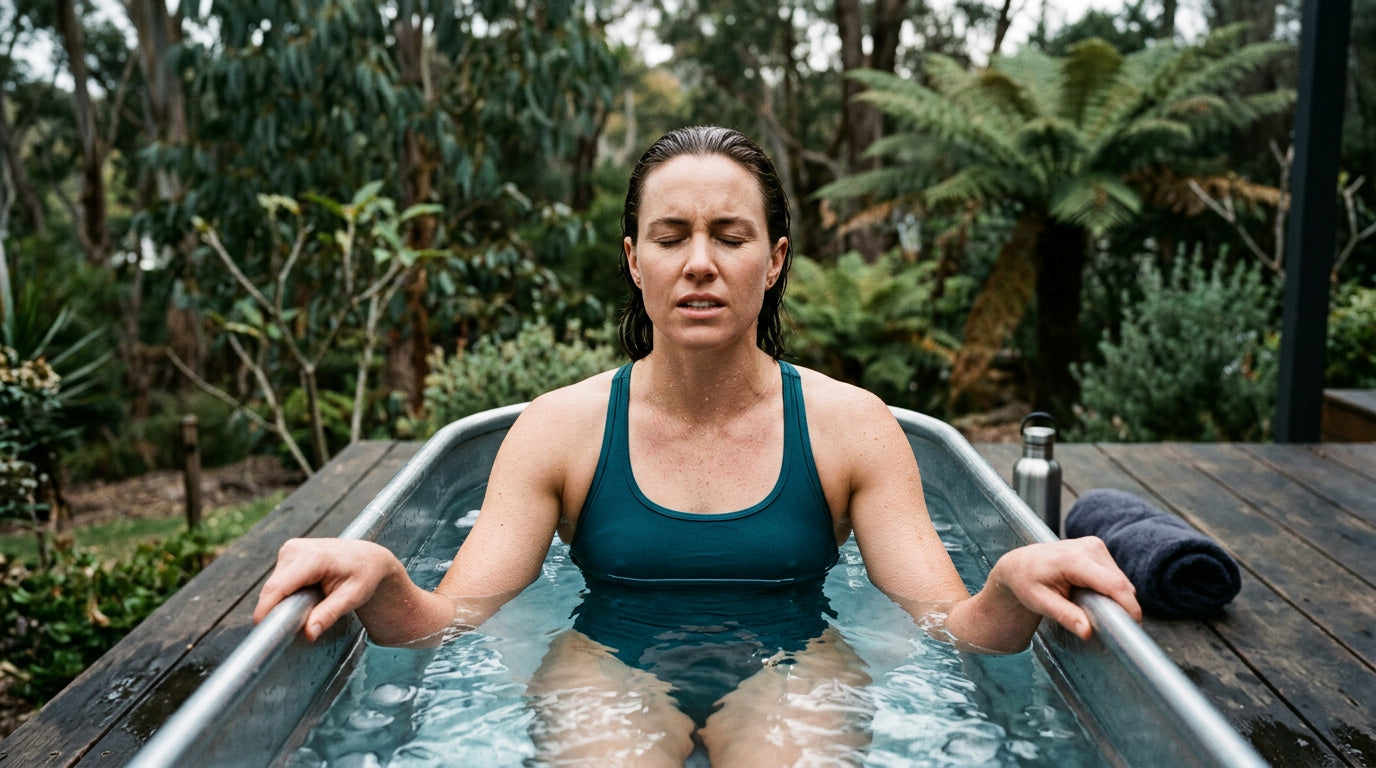
Start at 15°C for your first two weeks of practice. Do not begin at 10°C regardless of what you have seen performed on social media. Cold shock response — the involuntary gasping and hyperventilation that occurs on sudden cold immersion — is most pronounced in people who are unacclimatised. The risk is not discomfort. The risk is cardiac stress and the aspiration of water during the gasping reflex.
Two to three minutes at 15°C is sufficient to trigger the physiological response in an unacclimatised person. Progress to lower temperatures (12–13°C) and longer durations (3–5 minutes) over 4–6 weeks as cold tolerance develops. The research that generated the dopamine and recovery data cited throughout this article was conducted at 14°C, 2–3 times per week, with durations of 2–5 minutes. You do not need to be a cold-water extremist to get the benefits.
Set the chiller to 15°C (weeks 1–2)
Enter slowly. Submerge to shoulder level. Breathe deliberately — slow inhale, controlled exhale. Allow the cold shock response to pass before relaxing into the session.
Hold for 2–3 minutes
Focus on breathing rhythm. The urge to exit peaks at 60–90 seconds and then subsides. Staying through that threshold is the adaptation signal.
Exit and allow natural rewarming
Do not enter a sauna immediately after a cold plunge if your goal is maximising the dopamine response — the norepinephrine and dopamine effect peaks during the rewarming phase. If doing contrast therapy, the sequence is sauna first, cold plunge second, with 10–20 minute intervals. See our contrast therapy guide for the full protocol.
Progress temperature and duration over 6 weeks
Once 15°C feels manageable at 3 minutes, drop to 13°C. Build to 5 minutes at 12–13°C over 4–6 weeks. Most of the physiological benefit plateaus here — colder and longer is not necessarily better.
Maintain a consistent frequency
3–5 sessions per week is the evidence-supported frequency for sustained adaptation. Daily use is fine for recovery protocols. The Dupuy et al. meta-analysis found consistent cold-water immersion, not occasional use, drove the significant reductions in muscle soreness and fatigue markers.
Medical Contraindications
Cold water immersion is contraindicated for people with uncontrolled hypertension, a history of cardiac arrhythmia, Raynaud's syndrome, peripheral neuropathy, or active infection. Pregnant women should not use cold plunge tubs. If you are taking cardiovascular medication, consult your GP or cardiologist before beginning a cold immersion practice — the immediate cardiovascular load of cold shock is real and should be screened for. For a full review of safety considerations, read our guide on sauna and recovery health risks in Australia.
Setup and Placement Guide for Australian Homes
The placement of your cold plunge tub determines how consistently you use it. Access friction is the number one reason recovery equipment goes unused. If the tub requires setting up, sourcing ice, or walking through the house from a training space, the habit degrades. If it is on the back deck, filled, temperature-controlled, and ready at 6am, you will use it every day.
Here is what good placement looks like in practice for Australian homes and climates.
Structural and Drainage Requirements
A full cold plunge tub weighs 500–800kg when filled with water. If the tub is sitting on a deck rather than a concrete slab, verify that the deck is rated for that point load. Most Australian hardwood decks rated at 1.5 kPa (standard residential) will handle a cold plunge tub positioned over bearer-and-joist intersections. If in doubt, consult a structural engineer — this is a $500 conversation that could save a $50,000 deck repair.
Drainage is the other planning item most people overlook. A 500–600 litre water volume needs to go somewhere every 4–8 weeks. A garden hose to a lawn or garden bed works for a single drain. If you are draining frequently, a permanent waste connection to the stormwater or sewer system is cleaner. Check with your local council — in most Australian councils, cold plunge drain water (which contains trace sanitising chemicals) must go to sewer, not stormwater.
Sun, Shade and Cover
Position the tub to avoid direct afternoon sun in summer. In Australian latitudes, the western-facing exposure receives the most intense heat load between 1pm and 5pm. A north-facing position under a pergola or shade sail reduces this significantly. If you cannot avoid sun exposure, a quality insulated cover that sits on the tub whenever it is not in use is non-negotiable — it reduces chiller workload by 40–60% and slows UV degradation of any exposed components.
For people building a full home recovery setup — sauna and cold plunge together — the proximity relationship matters. The ideal contrast therapy flow moves between the sauna and the plunge with minimal time spent walking and rewarming. Adjacent placement on the same deck or in the same purpose-built space is the standard for anyone serious about the protocol. Our guide to outdoor sauna installation in Australia covers the siting principles that apply equally to the cold plunge setup alongside it.
The Contrast Kit: Sauna + Cold Plunge as a System
Over 200 Australian homes have been fitted with Psycle recovery systems. The Contrast Kit — Genesis sauna and Origin cold plunge — delivers the full heat-cold protocol in a single package with Australia-wide delivery.
EXPLORE THE CONTRAST KIT →The Science Behind Cold Water Immersion in Australia: What the Research Actually Says
Cold water immersion is not a trend. The physiological evidence for its effects on recovery, neurochemistry, and metabolic adaptation has been building in peer-reviewed literature for over two decades. What has changed is the translation of that evidence into daily practice — and the availability of equipment that makes daily practice possible in an Australian climate.
Research published in the European Journal of Physiology found that cold water immersion produces a sustained 250% increase in dopamine levels — a neurological effect that outlasts the cold exposure itself by several hours. Dopamine is not a feel-good chemical. It is the neurotransmitter responsible for sustained motivation, focus, and goal-directed behaviour. A 250% sustained elevation is a meaningful performance input for anyone whose work or training demands cognitive output.
A 2018 meta-analysis by Dupuy et al. in Frontiers in Physiology, covering 99 studies and over 1,000 athletes, found cold-water immersion and contrast water therapy to be among the most effective recovery modalities for reducing muscle soreness and perceived fatigue. This is the dataset behind every high-performance sports team and elite training facility that has a cold plunge on site. The recovery benefit is real, quantified, and reproducible.
The cardiovascular evidence is equally compelling. A landmark 20-year cohort study of 2,315 Finnish men by Laukkanen et al., published in JAMA Internal Medicine (2015), found that sauna use 4–7 times per week reduced the risk of fatal cardiovascular disease by 50% compared to once-weekly bathing. The physiological mechanisms — heat stress, cardiovascular adaptation, and the contrast effect of heat followed by cold — are the same mechanisms that drive the protocols Psycle is built around. For a deeper review of how sauna and cold plunge combine to drive cardiovascular and recovery outcomes, read our complete guide to sauna and cold plunge in Australia.
What the research does not support is half measures. A 20-second cold blast at the end of a hot shower does not replicate the stimulus of 3 minutes at 12°C with full body submersion. The protocols that generated these outcomes used real equipment, real temperatures, and real immersion. That is the standard the Origin is built to deliver.
Top 5 Cold Plunge Tubs Ranked for Australia in 2026
The Australian cold plunge market has matured. There are now enough options in the AU$2,000–$8,000+ bracket to warrant a serious comparison. The ranking below is based on four criteria: chiller performance in Australian ambient temperatures, insulation quality, build durability for outdoor use, and total cost of ownership over five years. Marketing claims are not a criterion. Specifications are.
#1 Psycle Origin
The Origin is the benchmark. It is engineered specifically for the Australian market: 316 marine-grade stainless steel shell, active chiller rated for high ambient temperatures, and the build quality that Psycle applies to every product in the range. It is designed to pair with the Genesis sauna as a contrast therapy system, and that pairing reflects a product philosophy that takes the science seriously. Australia-wide delivery, a genuine warranty, and the backing of a brand that does not cut corners on materials.
The $1,000 refundable pre-order deposit secures your position with a 120-day build lead time. This is not flat-pack-from-a-warehouse logistics. It is precision manufacturing with a production schedule. Order now for delivery before summer.
#2 Renu Therapy Cold RUSH
The Cold RUSH is a credible US-engineered option with an active chiller and a fibreglass shell. Its primary limitation for Australian buyers is that the chiller is not rated for sustained operation above 35°C ambient, which is a real-world constraint in northern and western Australian states during peak summer. It performs well in temperate climates and is a reasonable choice for Melbourne or Canberra. For QLD, WA or NT buyers, the chiller capacity is a question that needs a direct answer from the distributor before purchasing.
#3 Ice Barrel 400
The Ice Barrel is an upright cylindrical polyethylene barrel designed primarily for the ice method. It is durable, UV-resistant, and compact enough for a small outdoor space. It does not come with a chiller. In Australian summer conditions, you are buying a vessel for the ice method — which puts you back in the running cost problem outlined earlier. It is a legitimate option for people in cooler climates who are committed to the ice method, but it is not a year-round solution for most Australian postcodes.
#4 Plunge All-In
The Plunge All-In is a US direct-to-consumer option with an integrated filtration and chiller system. Build quality is adequate for indoor use. The chiller performs well in climate-controlled environments but is not independently rated for Australian outdoor ambient temperatures above 35°C. Warranty and service support from within Australia is limited compared to a locally backed product, which matters when a chiller component needs replacement or servicing.
#5 DIY Chest Freezer Conversion
A chest freezer conversion — lining a 250–350 litre chest freezer with an HDPE liner and running it as a cold plunge — is the entry-level proof-of-concept that many serious cold plungers start with. It is cheap (AU$300–$600 for the freezer), gets cold quickly, and requires minimal setup. It is also a rectangular metal box that you sit in on a deck. It has no filtration, no sanitation system, and the liner can leach plasticisers into the water at low temperatures. It is a proof-of-concept, not a protocol. If you have done a chest freezer for six months and you are still doing it daily, the Origin is the logical next step.
Frequently Asked Questions About Ice Baths and Cold Plunge Tubs in Australia
What temperature should a cold plunge tub be set to in Australia?
The therapeutic temperature window for cold water immersion is 10–15°C. Beginners should start at 15°C and progress down to 12–13°C over 4–6 weeks as cold tolerance develops. In Australian summer conditions, without an active chiller, tap water alone will reach 22–28°C — well above the therapeutic range. A chiller is required to reliably achieve and hold sub-15°C temperatures in QLD, NSW, and WA during summer months.
How much does it cost to run a cold plunge chiller in Australia?
A well-insulated cold plunge tub with an efficient chiller costs approximately AU$0.20–$0.50 per day to run at Australian electricity tariffs of AU$0.30–$0.35 per kWh — roughly AU$110–$260 per year. This assumes the tub has adequate insulation (50mm+ closed-cell foam), is shaded from direct sun, and uses an insulated cover when not in use. An uninsulated tub in direct Queensland summer sun will cost significantly more to run. The contrast with the ice method — which can cost AU$16,000–$22,000 per year at daily use — makes the chiller case straightforward.
Is a cold plunge tub worth it in Australia?
Yes, for people who will use it consistently. The evidence base for cold water immersion is robust: Dupuy et al. (2018) in Frontiers in Physiology across 99 studies found it to be among the most effective recovery modalities available. The value case rests on consistency: a chiller-equipped tub at home eliminates access friction, delivers temperature-precise immersion 24/7, and replaces the AU$1,200–$2,400 annual cost of gym or commercial recovery suite memberships. For high performers who train regularly, the return on investment is measurable within months.
What is the difference between a cold plunge tub and an ice bath in Australia?
In commercial usage, both terms refer to cold water immersion — but an ice bath typically describes a temporary, ice-dependent setup, while a cold plunge tub is a permanent, purpose-built vessel with insulation, filtration, and active temperature control. For daily practice in Australian conditions, the distinction matters: an ice bath setup is not sustainable year-round due to the cost and logistics of ice, while a dedicated cold plunge tub with a chiller maintains the therapeutic temperature range — 10–15°C — regardless of season or ambient temperature.
Can I use a cold plunge tub outdoors year-round in Australia?
Yes, with the right equipment. A 316 marine-grade stainless steel shell, an adequately rated chiller (capable of operating in ambient air up to 40°C), and an insulated cover for standby periods will perform outdoors year-round in all Australian climates. Stainless steel requires no gel coat, no liner replacement, and resists the UV and thermal cycling that degrades fibreglass over time. Fibreglass, acrylic, and inflatable tubs are less tolerant of UV exposure and thermal cycling than stainless steel. Placement under shade significantly reduces chiller workload and extends component life. Position the tub away from direct western afternoon sun in summer if possible.
How often should I use a cold plunge tub for recovery?
3–5 sessions per week is the evidence-supported frequency for sustained recovery benefits. Daily use is safe for healthy adults once cold tolerance is established. The Dupuy et al. meta-analysis identified consistent cold-water immersion — not occasional sessions — as the driver of significant reductions in muscle soreness and perceived fatigue. If combining with sauna in a contrast therapy protocol, alternate heat and cold within each session and allow a minimum of 10 minutes in each modality. Our full guide to contrast therapy in Australia covers the optimal sequencing and protocols in detail.
What size cold plunge tub do I need for home use in Australia?
Solo users need a minimum internal volume of 300–400 litres for full shoulder submersion. Households with two regular users should look at 500–600 litres. Larger volume requires a more powerful chiller to achieve the target temperature quickly, particularly in Australian summer ambient conditions. Factor in your available outdoor space, deck load rating (a full tub weighs 500–800kg), and drainage access. Indoor placement in a garage or purpose-built recovery room is an increasingly popular option for households pairing a sauna and cold plunge as a dedicated recovery system.
Ready to Build a Recovery System That Actually Works?
The Psycle Origin is engineered for Australian conditions. AU$1,000 refundable deposit. 120-day build. Australia-wide delivery. 5-year warranty. The last cold plunge tub you will ever need.
SHOP THE ORIGIN →If you are building a complete home recovery system, explore the best home saunas in Australia to find the Genesis configuration that fits your space, or read how to calculate the full cost of a home sauna setup in our home sauna cost guide for Australia. For the science on what heat therapy adds to the equation, start with our evidence-based review of traditional sauna benefits for Australians and our deep dive into using the sauna after training for recovery. The people who get the most from this investment have done the reading first.