
Sauna and Ice Bath Benefits Australia: Science | Psycle
Sauna and Ice Bath Benefits Australia: The Complete Science Guide

Key Takeaways
- Sauna use 4-7 times per week reduces fatal cardiovascular disease risk by 50%, per a 20-year cohort study of 2,315 Finnish men by Laukkanen et al. in JAMA Internal Medicine (2015).
- Contrast therapy — alternating sauna heat (80-100°C) with cold water immersion (10-15°C) — produces vasoconstriction and vasodilation cycles that train the cardiovascular system, elevate noradrenaline by up to 300%, and accelerate muscle repair.
- A 2019 meta-analysis in Sleep Medicine Reviews confirmed that passive body heating 1-2 hours before sleep improves sleep onset speed, efficiency, and slow-wave deep sleep duration.
- The Psycle Contrast Kit — Genesis sauna (Japanese Cedar, zero-glue, HUUM Drop 9kW) plus Origin cold plunge — is the only purpose-engineered zero-toxin contrast setup built for Australian conditions.
- A complete home contrast session costs approximately AU$0.50-$1.00 in electricity — less than 1% of a single physio appointment, and available every day of the year.
- Australian summers require protocol adjustment: pre-hydrate with 500ml, shorten sauna rounds to 10-12 minutes when ambient temperature exceeds 30°C, and extend cold plunge recovery windows.
- The standard protocol is 15-20 minutes sauna / 2-3 minutes cold immersion x 2-3 rounds, with the sauna always first — reversing the order measurably blunts the cardiovascular response.
By Psycle Wellness · Last updated: June 2026 · 20 min read
Sauna and ice bath contrast therapy delivers measurable cardiovascular conditioning, accelerated muscle recovery, elevated dopamine, improved deep sleep, and stronger immune response. The combination works because heat and cold trigger opposing physiological mechanisms — vasodilation and vasoconstriction — that neither stimulus produces alone. Two decades of controlled research on combined contrast therapy leave no ambiguity: this is a training protocol with a serious evidence base, not a wellness trend.
Why Most Recovery Setups Fail Before They Start
Most Australians researching contrast therapy end up with one of two outcomes: an infrared sauna that never reaches real sauna temperatures, or a cheap polyethylene ice tub that loses its cold in four days. Neither produces the physiological stimulus the research actually measured.
Here is what the studies tested: traditional Finnish-style saunas at 80-100°C, with genuine steam löyly from volcanic stones, and cold water immersion — not a cool shower, not a 20°C soak. The contrast has to be real or the mechanism does not activate. A sauna at 55°C does not produce the cardiovascular stress response that drives adaptation. A cold plunge sitting at 18°C does not trigger the noradrenaline surge that sharpens focus and lifts mood.
The failure is not commitment. It is infrastructure. You cannot train a cardiovascular response you never produce. Explore our complete guide to contrast therapy in Australia to understand the full scope of what the protocol demands — and what it delivers when the equipment is right.
Zero-Toxin Contrast Therapy, Engineered for Australia
Japanese Cedar sauna. HUUM Drop 9kW heater. 316 stainless Origin cold plunge. Purpose-built for Australian outdoor conditions — delivered anywhere in the country.
SEE THE CONTRAST KIT →The Physiological Mechanism: What Actually Happens Inside Your Body
Contrast therapy runs on a single repeating cycle: vasodilation followed by vasoconstriction. Heat expands blood vessels as the body attempts to radiate core temperature to the skin surface. Cold contracts them, driving blood back toward the core. Repeat that cycle two or three times in a single session and you have subjected your cardiovascular system to a training stimulus comparable to moderate-intensity aerobic exercise — without mechanical stress on joints.
The autonomic nervous system governs both responses. Heat activates the parasympathetic branch — heart rate rises, peripheral blood flow increases, sweat glands open. Cold activates the sympathetic branch — the fight-or-flight cascade fires, noradrenaline spikes, peripheral vasoconstriction kicks in to protect core temperature. The transition between these two states is the adaptation signal. The body learns to regulate the switch more efficiently, and over weeks that efficiency shows up as lower resting heart rate, improved heart rate variability, and better vascular compliance.
Dr. Rhonda Patrick, a biomedical scientist specialising in thermal physiology, has described this mechanism as "cardiovascular conditioning without cardiovascular load." The heat stress is real. The cold stress is real. But neither produces the joint and tendon wear of running or cycling at equivalent cardiovascular intensity. For athletes managing training volume, and for high performers who cannot afford structural injury, that distinction matters. For a deeper look at how Finnish sauna heat affects vascular health specifically, read our guide to sauna and cardiovascular health in Australia.
The Noradrenaline Response — Why Cold Makes You Feel Invincible
Cold water immersion at 10-15°C produces a noradrenaline release of 200-300% above baseline within the first 60 seconds. Noradrenaline is the primary neurochemical behind focus, alertness, and mood regulation. The effect persists for hours after the plunge ends — which is why the cold finish to a contrast session produces that specific quality of sharp-edged, elevated-but-calm focus that no other tool reliably replicates.
Dopamine follows a similar arc. Research from the Thrombosis Research Institute has documented a 250% increase in dopamine following cold water immersion. Unlike the spike-and-crash of stimulants, this dopamine elevation is sustained — motivation rather than agitation. For high performers building morning protocols, that neurochemical profile is the difference between getting through the day and owning it.
The Research Foundation: Key Studies You Should Know
The science behind sauna and ice bath benefits is not anecdotal. It draws on two decades of controlled cohort research, meta-analyses, and physiological trials — most originating from Finland, where sauna use is cultural infrastructure. Understanding the primary sources separates informed decision-making from marketing noise.
The most cited body of work belongs to Dr. Jari Laukkanen, a cardiologist and professor at the University of Eastern Finland. His landmark 20-year cohort study of 2,315 Finnish men, published in JAMA Internal Medicine (2015), found that sauna use 4-7 times per week reduced the risk of fatal cardiovascular disease by 50% compared to once-weekly bathing. The same study found a 65% reduction in the risk of Alzheimer's and dementia in frequent sauna users — a finding that has driven substantial follow-on research into heat shock proteins and neuroprotection.
Dr. Laukkanen's subsequent work, published in Mayo Clinic Proceedings (2018), expanded the analysis to include women and found comparable cardiovascular benefit — dispelling the earlier assumption that the Finnish cohort's results were male-specific. His group has now published more than 40 papers on thermal therapy, making the cardiovascular case for regular sauna use one of the most solidly evidenced claims in preventive medicine.
On the cold side, foundational research by Tipton and colleagues at the University of Portsmouth has characterised the cold shock response, the cold incapacitation threshold, and the neurochemical effects of immersion at various temperatures. Their work established that 10-15°C is the range in which physiological benefit — noradrenaline elevation, vasoconstriction training, metabolic activation — is maximised without the cardiac risk of sub-10°C sudden immersion in untrained individuals.
For the combined contrast protocol, Versey, Halson, and Dawson published a systematic review in Sports Medicine (2013) examining cold water immersion and contrast water therapy across 36 studies. Their conclusion: contrast water therapy produced significantly greater reductions in perceived soreness and faster return to performance baseline than passive recovery, cold alone, or heat alone — at 72 hours post-exercise. The combination is not additive. It is synergistic at the physiological level. Read our deep-dive into cold plunge benefits in Australia for a full breakdown of the cold-side evidence.
Cardiovascular Health: The Most Powerful Benefit on the List
Cardiovascular benefit is the headline outcome of regular sauna use, and the research behind it is unambiguous. Laukkanen et al.'s landmark 20-year cohort study of 2,315 Finnish men, published in JAMA Internal Medicine (2015), found that sauna use 4-7 times per week reduced the risk of fatal cardiovascular disease by 50% compared to once-weekly bathing — a dose-dependent relationship that held after controlling for age, BMI, smoking, alcohol, physical activity, and baseline health markers.
The mechanism is well-understood. Regular sauna exposure triggers repeated cycles of vasodilation and vasoconstriction as the body regulates core temperature. Over time, this cardiovascular stress response adapts: resting heart rate decreases, endothelial function improves, and arterial compliance increases. These are the same adaptive pathways activated by aerobic exercise — but without the mechanical load on joints, tendons, and connective tissue. For Australians managing high training loads or recovering from injury, that distinction has real clinical significance.
Adding cold immersion to the protocol compounds the cardiovascular training effect. The transition from maximum vasodilation in the sauna to maximum vasoconstriction in the cold plunge within a single session produces a vascular training amplitude that passive rest cannot replicate. Blood pressure regulation improves. Heart rate variability — the most sensitive marker of autonomic nervous system health — increases. For more on what the evidence says about heat exposure and heart function specifically, see our guide to sauna and cardiovascular health in Australia.

Recovery and Muscle Repair: Why Athletes Are Installing Contrast Kits at Home
Muscle recovery is the entry point for most Australians who start researching contrast therapy. The mechanism is specific: intense exercise causes micro-trauma to muscle fibres, triggering an inflammatory response that produces soreness and temporary strength loss. The protocol's job is to clear inflammatory metabolites faster than passive rest allows — and contrast therapy is among the most effective tools available for doing exactly that.
Heat accelerates blood flow to damaged tissue, delivering oxygen and nutrients while carrying away metabolic waste. Cold constricts blood vessels, reducing acute inflammation and oedema. The alternating cycle creates a pumping effect in the peripheral vasculature — sometimes called the "vascular flush" — that passive rest cannot replicate. In the 2013 systematic review by Versey, Halson, and Dawson in Sports Medicine, contrast water therapy reduced perceived soreness and accelerated return to performance baseline at 24, 48, and 72 hours post-exercise more effectively than cold alone, heat alone, or passive recovery.
This is why elite sport in Australia has integrated contrast protocols as standard. Rugby union, AFL, swimming, and triathlon programmes have used contrast therapy as post-competition recovery infrastructure for over a decade. The difference now is accessibility: a home contrast kit means that protocol is available every day, not just at training facilities with a hydrotherapy pool. For athletes specifically, our guide to sauna for athletes in Australia covers the full performance and recovery evidence base. You can also explore the full range of cold plunge recovery science for Australian athletes.
Heat Shock Proteins — The Recovery Mechanism Nobody Talks About
Beyond the vascular flush, sauna heat activates heat shock proteins (HSPs) — intracellular chaperone proteins that repair damaged and misfolded proteins within muscle cells. HSP70 and HSP90 are upregulated within 30 minutes of heat exposure at 80-100°C and remain elevated for 24-48 hours post-session. Research from the University of Jyväskylä has shown that regular sauna use increases baseline HSP expression — meaning the cellular repair machinery is primed before damage occurs, not just activated in response to it. That is a structural adaptation, not just an acute effect.
Mental Health and Dopamine: The Neurochemistry of the Cold Plunge
Contrast therapy produces one of the most powerful natural dopamine and noradrenaline surges available without pharmaceutical intervention — and unlike stimulant-driven elevations, the neurochemical profile is sustained and mood-stabilising rather than anxiety-inducing. A 2021 study in the International Journal of Environmental Research and Public Health found that regular sauna bathing (3+ sessions per week) produced measurable reductions in cortisol levels and self-reported psychological stress within four weeks. The cold component compounds this effect through a separate pathway.
Noradrenaline elevation of 200-300% following cold immersion at 10-15°C is not a mild mood lift. It is a clinically meaningful shift in neurochemical tone that affects attention, motivation, and stress regulation for hours. For high performers managing cognitive load — executives, practitioners, business owners — this makes a morning contrast session functionally different from any other morning protocol. The focus is sharper. The anxiety floor is lower. The capacity to do hard things increases.
There is also a dysphoria-to-euphoria arc specific to contrast therapy that is difficult to find elsewhere. The discomfort of cold immersion, followed by the warmth of return to the sauna, triggers an endorphin response through the same pathway as intense physical exertion. Regular exposure trains the nervous system to move through acute discomfort without catastrophising — a transferable adaptation that shows up in performance contexts well outside the sauna. Our guide to sauna and mental health in Australia covers the full neurological evidence base for heat therapy.
Sleep Quality: The Benefit Most Australians Underestimate
Sleep is the recovery output that everything else depends on, and contrast therapy has a direct, mechanistic effect on sleep architecture that most people using it for recovery never fully account for. A 2019 systematic review and meta-analysis by Haghayegh et al., published in Sleep Medicine Reviews, found that passive body heating 1-2 hours before bedtime — such as a hot bath or sauna — improved sleep onset, sleep efficiency, and slow-wave (deep) sleep. The mechanism is counterintuitive: raising core temperature before bed accelerates the post-sauna temperature drop, and it is that drop — not the heat itself — that signals the brain to initiate sleep onset.
The cold plunge, used in the evening as part of a contrast protocol, amplifies this effect. The acute temperature drop following cold immersion mimics the natural thermoregulatory decline the body uses to transition from wakefulness to sleep. Combined with the cortisol reduction documented in regular sauna users, an evening contrast session creates near-ideal neurobiological conditions for deep, restorative sleep. For Australians running high-stress professional lives on compressed sleep schedules, that is not a minor benefit — it is a direct intervention in the most important recovery variable they have. For the full evidence on heat and sleep, read our guide to sauna for sleep in Australia.
Immune Function: What the Evidence Actually Supports
The immune response to regular sauna use is real, but it is often overclaimed. What the evidence supports is this: regular heat exposure increases white blood cell count and the activity of natural killer (NK) cells — the immune system's first line of defence against viral infection and abnormal cell growth. A study by Ernst et al. published in Annals of Medicine found that regular sauna users experienced significantly fewer common cold episodes than controls over a six-month period — an outcome attributed to both direct thermal killing of upper respiratory pathogens and the increase in NK cell activity.
Cold water immersion adds a complementary immune signal. Research from the Thrombosis Research Institute in London documented a 40% increase in plasma concentration of tumour necrosis factor alpha (TNF-α) following regular cold water swimming — an inflammatory cytokine associated with immune activation and pathogen clearance. The combination of heat-driven NK cell elevation and cold-driven inflammatory cytokine priming creates an immune environment that is measurably more responsive than baseline. Our evidence-based guide to sauna and immune function in Australia covers this research in detail.
Metabolic Benefits: What Happens to Body Composition and Energy Systems
Metabolic benefit is the most overstated category in contrast therapy marketing and the most important one to frame accurately. Research published in the Journal of Human Kinetics found that a 30-minute sauna session raises heart rate to 100-150 bpm — equivalent to moderate-intensity exercise — increasing caloric expenditure beyond resting metabolic rate, particularly when combined with strength training. This is a real effect. It is not, however, a fat-loss protocol on its own. The caloric expenditure of a 30-minute sauna session at 90°C is approximately 150-300 kcal — meaningful as an adjunct to a structured training programme, not as a substitute for it.
Where metabolic benefit becomes genuinely significant is in insulin sensitivity. Regular heat exposure has been shown to improve glucose uptake via GLUT4 transporter upregulation — the same mechanism activated by aerobic exercise. A 2020 study by Hooper et al. in Diabetes Care found that passive heat therapy improved insulin sensitivity markers in sedentary adults with type 2 diabetes over eight weeks. For active Australians, this translates to better fuel partitioning — more glucose into muscle tissue, less into adipose storage — which compounds the effect of structured training over time.
Cold exposure adds a separate metabolic signal: brown adipose tissue (BAT) activation. Cold immersion at 10-15°C stimulates BAT — a thermogenically active fat depot that burns energy to generate heat. Regular cold exposure increases BAT volume and activity over time, which contributes to a measurably elevated resting metabolic rate. This is the mechanistic basis behind claims that cold therapy supports body composition — and it is real, though the magnitude at home-use frequencies is modest rather than dramatic. For a full breakdown of the evidence, read our guide to sauna and weight loss in Australia.
What Most Sources Get Wrong About Cold Plunge Temperature
The most persistent misconception in contrast therapy advice is that colder is always better. This belief drives people toward sub-10°C ice bath targets — and it is wrong in ways that matter for both safety and efficacy. The research does not support the assumption that colder produces more benefit beyond the 10-15°C threshold. It supports the opposite conclusion.
Research by Tipton and colleagues at the University of Portsmouth established that the acute cold shock response — gasping, hyperventilation, and cardiovascular spike — is maximal below 10°C and is a primary risk factor for cardiac arrhythmia in individuals with undiagnosed heart conditions. The noradrenaline elevation and vasoconstriction training benefits, by contrast, plateau between 10-15°C. There is no evidence of additional neurochemical benefit below 10°C for untrained individuals. There is, however, meaningful additional cardiovascular risk.
The UNSW Newsroom reported in 2025 that emergency presentations related to cold water immersion had increased as home ice bath use grew — with the majority of adverse events occurring in individuals attempting sub-10°C immersion without clinical supervision. The correct target for a home contrast protocol is 10-15°C. That range delivers the full physiological stimulus. Going colder does not make you harder. It makes the risk-reward ratio worse. Read our complete guide to ice bath temperature for the full evidence on optimal cold exposure ranges, and our breakdown of cold plunge vs ice bath in Australia for the practical differences between approaches.
Australian Context: Heat Acclimatisation, Outdoor Setup, and the Byron Bay Standard
Australia's climate creates a specific set of conditions that European sauna research does not fully address. High ambient temperatures — particularly in coastal Queensland, northern New South Wales, and suburban Sydney and Melbourne in summer — combined with high humidity fundamentally change the thermal stress equation for outdoor contrast setups.
In Finnish research conditions, ambient temperature is typically 5-15°C. A sauna at 90°C in a 10°C environment represents an 80-degree thermal differential. In Byron Bay in January, that same sauna at 90°C sits in a 30°C ambient environment — a 60-degree differential. The body's ability to lose heat between rounds is reduced. Sweating efficiency decreases. Core temperature stays elevated longer after exiting the sauna, which means the rest period before the cold plunge is doing more cardiovascular work than it would in a cooler climate. That is not a reason to avoid contrast therapy in Australian heat. It is a reason to adjust the protocol intelligently.
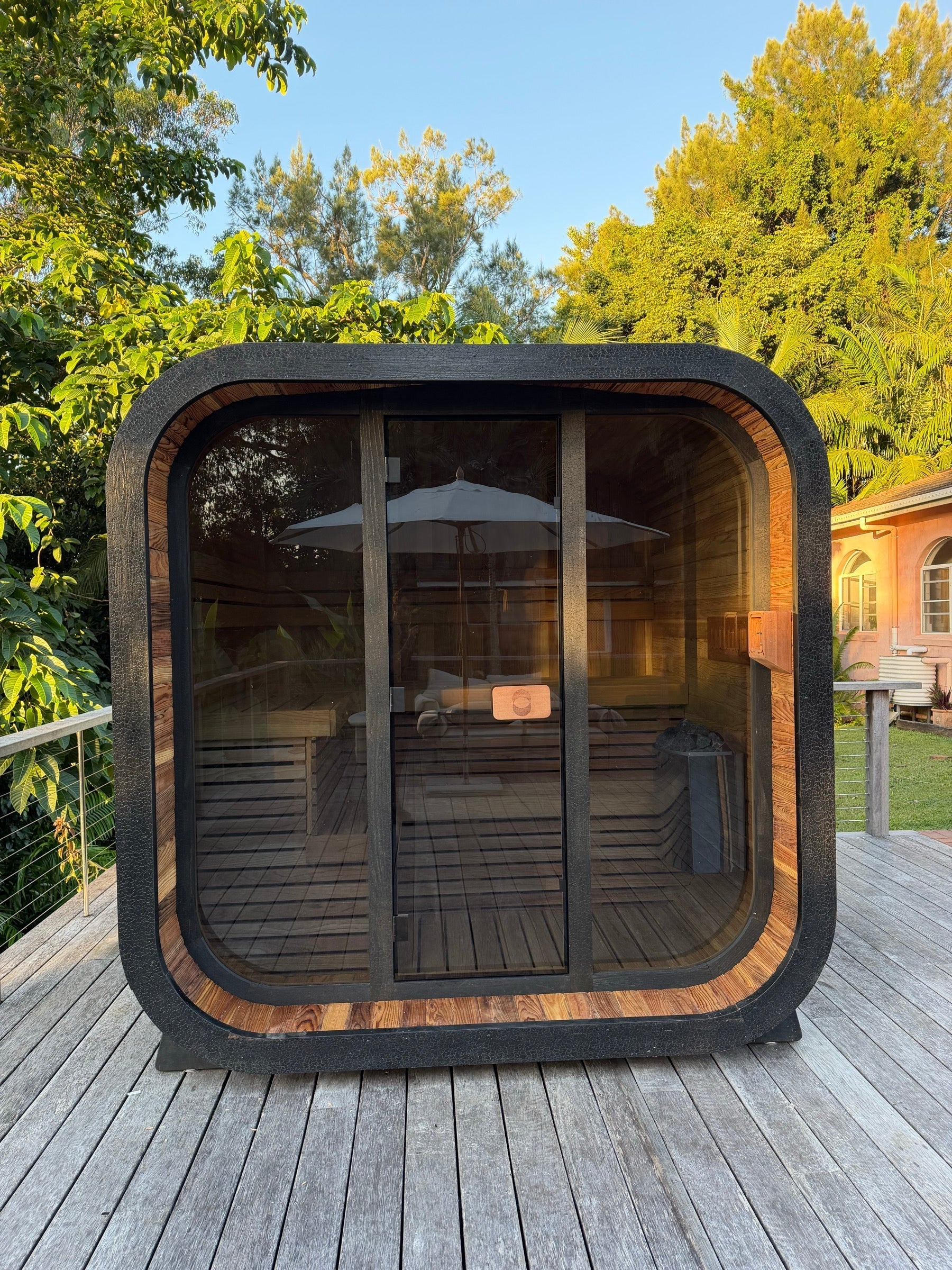
The outdoor deck lifestyle that defines coastal Australian living — Byron Bay, Noosa, Palm Beach, the Mornington Peninsula — is architecturally ideal for a purpose-built contrast setup. The Genesis sauna is IPX4-rated for outdoor installation, available in a Charcoal Shou Sugi Ban finish that weathers well in sea air, and optionally fitted with a Colorbond roof kit for fully exposed outdoor placement. The Origin cold plunge is 316 marine-grade stainless steel — the same grade used in coastal marine hardware. Neither compromises in the conditions Australians actually live in. For inspiration on integrating a contrast setup into Australian outdoor architecture, see our guide to outdoor sauna and cold plunge in Australia, and for full setup specifics, read our outdoor contrast setup guide.
Running Costs and the Real Cost of Not Owning One
The Genesis 9kW heater draws approximately 9kW at peak load and reaches operating temperature in 45-60 minutes. At the Australian average commercial electricity rate of AU$0.30-0.35 per kWh, a full 45-minute session costs AU$0.50-$1.00 in electricity. A 3-round contrast session including heat-up time costs under AU$2.00 end-to-end. At five sessions per week, that is under AU$500 per year in running costs.
Compare that to the alternatives Australians are currently using. A gym recovery membership with access to a commercial sauna and ice bath: AU$1,200-$2,400 per year, with no guarantee the equipment is maintained to the temperature standard the research requires. Weekly physio for training recovery: AU$100-$160 per session, or AU$5,200-$8,320 per year. A monthly float and recovery studio membership: AU$200-$400 per month, with shared equipment and unpredictable access. The home contrast kit is not an indulgence. It is the cost-rational choice for anyone using recovery infrastructure more than twice per week.
On electrical requirements: the Genesis requires a 50A dedicated circuit (single or three phase) compliant with AS/NZS 3000:2018 Wiring Rules. This is a licensed electrician install — not a DIY job. The Genesis Mini requires a 32A dedicated circuit. In most Australian states, a sauna on a freestanding outdoor deck under 10m² qualifies as exempt development under the Building Code of Australia, meaning no development approval is required. Always confirm with your local council — the rules vary by state and by setback distance from boundaries. For a full breakdown of what the installation process involves, see our home sauna installation guide for Australia.
The Only Contrast Kit Engineered for Australian Conditions
Over 200 Australian homes. 3-year cabin warranty. AU$0.50-$1.00 per session. 120-day build — order now for summer delivery.
EXPLORE THE CONTRAST KIT →
Contrast Therapy vs Sauna Alone vs Cold Plunge Alone: How the Benefits Stack Up
Every modality in this comparison produces real benefit on its own. The question is whether the combination produces an outcome that justifies the additional infrastructure cost and session complexity. The research answers that clearly — and so does a straight comparison of the benefit profiles.
| Benefit | Sauna Alone | Cold Plunge Alone | Contrast (Both) |
|---|---|---|---|
| Cardiovascular conditioning | Strong — vasodilation, HR elevation to 100-150 bpm | Moderate — vasoconstriction, HR spike | Maximum — full vasodilation/vasoconstriction cycle repeated |
| Muscle recovery speed | Moderate — HSP activation, blood flow | Moderate — inflammation reduction, oedema control | Maximum — vascular flush, HSP + anti-inflammatory combined |
| Dopamine / noradrenaline elevation | Mild — endorphin release, cortisol reduction | Strong — 250-300% noradrenaline spike | Maximum — heat primes, cold delivers full neurochemical cascade |
| Sleep quality improvement | Strong — core temp drop signals sleep onset (Haghayegh, 2019) | Moderate — acute temp drop, cortisol blunting | Maximum — thermoregulatory and neurochemical sleep signals combined |
| Immune function | Strong — NK cell elevation, thermal pathogen reduction | Moderate — TNF-α and cytokine activation | Strong — both pathways active simultaneously |
| Metabolic activation | Moderate — GLUT4 upregulation, 150-300 kcal/session | Moderate — BAT activation, elevated RMR | Strong — dual metabolic pathway activation |
| Mental resilience training | Mild — discomfort tolerance in heat | Strong — acute cold exposure trains stress response | Maximum — repeated discomfort cycles, dysphoria-euphoria arc |
| Session time required | 20-45 minutes | 3-10 minutes | 40-75 minutes for 2-3 rounds |
Sauna alone and cold plunge alone each produce meaningful benefit in their primary domains. Contrast therapy produces maximum benefit across every domain simultaneously — and adds dimensions (the neurochemical cascade, the vascular flush, the mental resilience arc) that neither modality achieves without the other. The bundle is not a convenience. It is the full protocol. For more on how to choose the right combination for your space, see our guide to the best sauna and cold plunge combos in Australia.
How to Do Contrast Therapy at Home: The Psycle Protocol
Protocol matters as much as equipment. The same sauna and cold plunge used in the wrong order, at the wrong duration, or without adequate recovery between rounds will produce a fraction of the physiological benefit the research documents. What follows is the evidence-based contrast protocol — adjusted for Australian conditions and structured for both beginners and trained users. For the full detailed breakdown of timing, variations, and progression, read our sauna and cold plunge routine guide.
Before You Start: Preparation Protocol
Pre-hydrate with 500ml of water at least 30 minutes before the session. In Australian summer conditions — particularly in Queensland, coastal NSW, or on days above 30°C — increase this to 750ml and add electrolytes. The sauna will accelerate sweat loss beyond what ambient heat has already caused. Going in dehydrated is the single fastest way to cut a session short and reduce benefit.
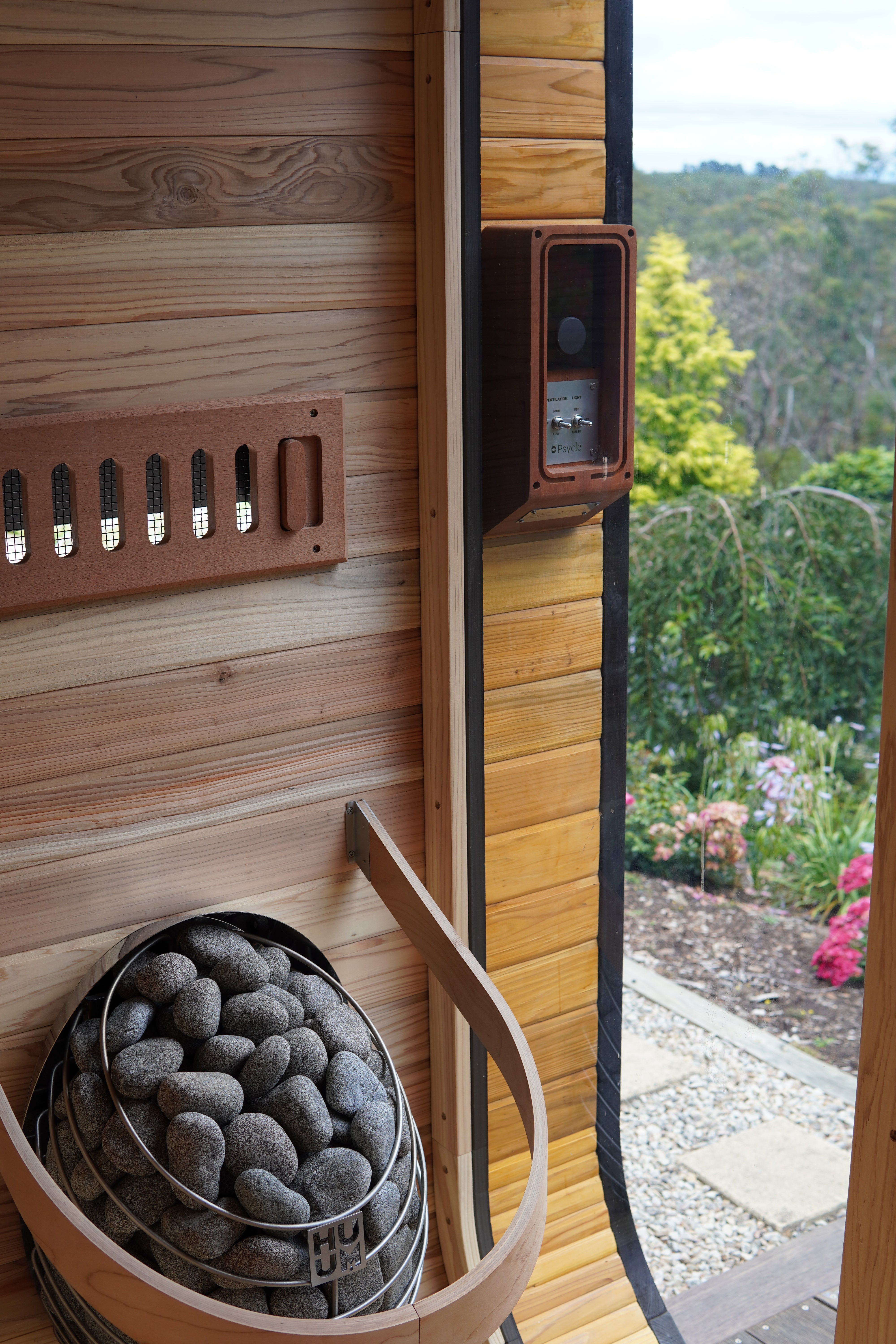
Preheat the Genesis for 45-60 minutes to reach operating temperature of 80-100°C. Use the HUUM UKU WiFi app to schedule the preheat remotely, so the sauna is at temperature when you are ready to step in. For guidance on optimal sauna temperatures for different goals, see our complete sauna temperature guide for Australia.
The Standard 3-Round Contrast Protocol
Sauna — Round 1: 15-20 minutes at 80-100°C
Enter the sauna and settle on the upper bench. Add löyly — 50-100ml of water poured onto the HUUM Drop stones — to raise humidity and intensify the steam heat sensation. Stay for 15-20 minutes, or until you are sweating heavily and feel the first strong urge to exit. That urge is the signal, not the timer.
Transition — Rest: 2-3 minutes
Exit the sauna and rest at ambient temperature for 2-3 minutes. This transition period allows heart rate to come down slightly before the cold shock and gives the skin surface time to equalise. Do not skip this step — jumping directly from 100°C to a cold plunge without transition increases the cardiac stress response beyond the adaptation zone.
Cold Plunge — Round 1: 2-3 minutes at 10-15°C
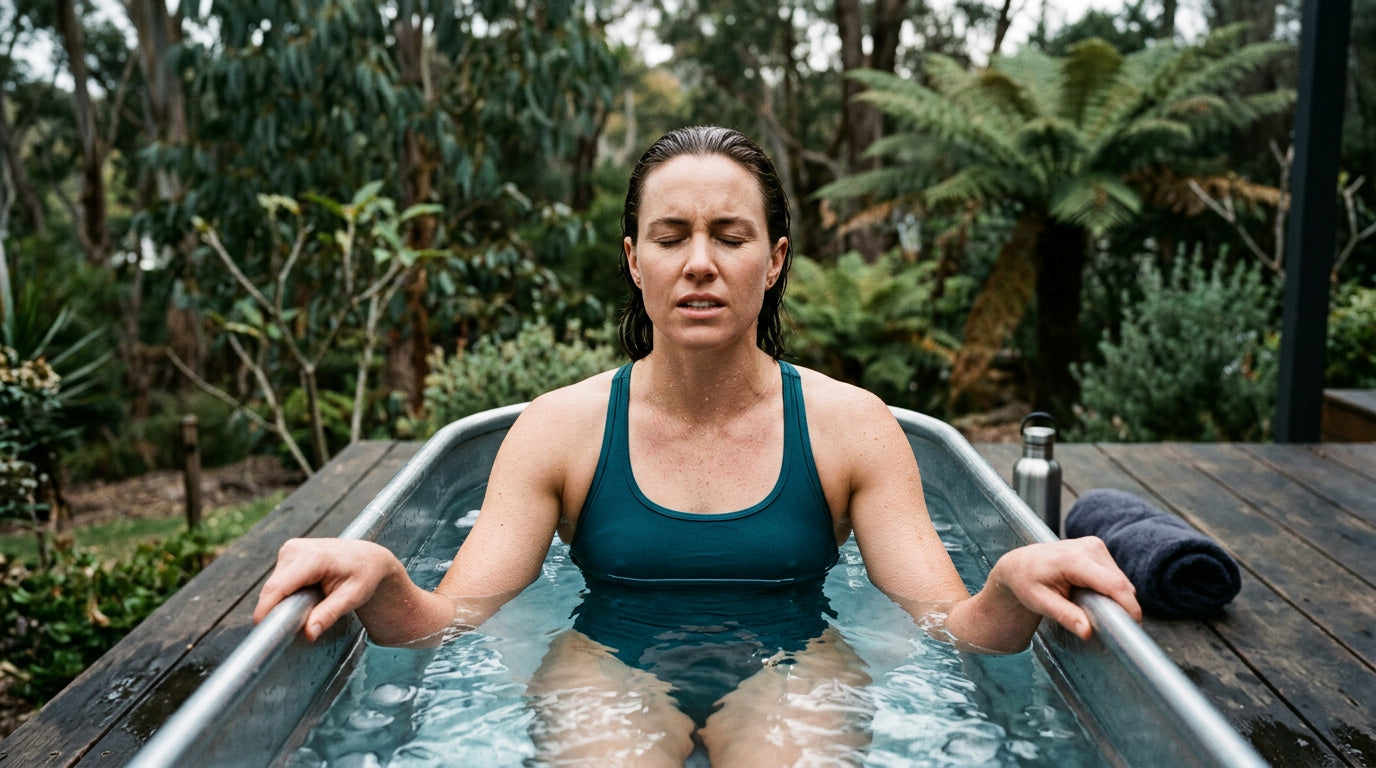
Enter the Origin cold plunge fully — shoulders submerged. Breathe slowly and deliberately. The first 30 seconds are the hardest. After 60 seconds the cold shock response settles and the noradrenaline release begins. Stay for 2-3 minutes total. Exit controlled — do not gasp or hyperventilate on exit.
Rest and Repeat — Rounds 2 and 3
Return to the sauna for rounds 2 and 3, following the same sequence. Allow 5-10 minutes of seated rest between rounds if needed. Most experienced contrast users complete 3 full rounds. Beginners should complete 2 rounds and add a third only after four or more sessions.
Finish Cold — Always
End the final round in the cold plunge, not the sauna. The neurochemical elevation from the cold finish — noradrenaline, dopamine — is the functional payoff of the session. Ending in heat produces a pleasant passive relaxation response; ending cold produces the sharp, elevated alertness that contrast therapy is uniquely positioned to deliver.
Timing Reference Table by Experience Level
| Experience Level | Sauna Duration | Cold Plunge Duration | Rounds | Total Session |
|---|---|---|---|---|
| Beginner (weeks 1-4) | 10 min at 70-80°C | 60-90 sec at 12-15°C | 2 rounds | ~30-40 min |
| Intermediate (months 1-3) | 15 min at 80-90°C | 2 min at 10-14°C | 2-3 rounds | ~45-60 min |
| Trained (3+ months) | 15-20 min at 90-100°C | 2-3 min at 10-12°C | 3 rounds | ~60-75 min |
| Australian Summer Adjustment | 10-12 min (ambient >30°C) | 2-3 min at 10-14°C | 2 rounds | ~35-50 min |
The frequency question is answered by the research: 3-4 sessions per week is the evidence-supported range for measurable cardiovascular and recovery benefit. Daily sessions are safe for trained users and are practised widely by athletes during high-load training blocks. For a full evidence-based breakdown of optimal sauna frequency, read our sauna frequency guide for Australia, and our comprehensive breakdown of how often you should sauna.
Safety Considerations: Who Should Take Extra Care
Contrast therapy is safe for healthy adults. It is not risk-free. Understanding the contraindications and risk factors is not a disclaimer — it is part of using the protocol correctly. The same physiological mechanisms that produce cardiovascular benefit can produce cardiovascular stress in the wrong clinical context.
Consult a physician before beginning contrast therapy if you have: uncontrolled hypertension, a history of cardiac arrhythmia or recent cardiac event, Raynaud's disease, peripheral vascular disease, active skin infections or open wounds, pregnancy (high heat exposure carries documented foetal risk — see our guide to sauna and pregnancy in Australia), or active illness with fever. The cold shock response in cold water immersion can trigger arrhythmia in individuals with undiagnosed cardiac conditions — this is the mechanism behind the UNSW 2025 data on adverse events, not the cold itself.
Hydration in Australian conditions deserves specific emphasis. At 90°C sauna temperature in a 30°C ambient environment, sweat rates can exceed one litre per hour. Over a 75-minute contrast session, that represents a significant fluid deficit if pre-session hydration is inadequate. Drink 500-750ml before the session, and 500ml in the 30 minutes following. Do not replace fluid with alcohol — it accelerates dehydration and impairs thermoregulation. For a full breakdown of all sauna health risk considerations, see our sauna health risks guide for Australia.
The Contrast Kit: Genesis and Origin, Built to the Specification the Research Demands
Every benefit cited in this article was measured in research using equipment that operated within specific parameters: 80-100°C in the sauna, 10-15°C in the cold water, with real steam from volcanic stones and genuine full-body immersion. The Psycle Contrast Kit — Genesis sauna plus Origin cold plunge — is engineered to those specifications. Not close to them. To them.
The Genesis is built from 38mm Japanese Cedar timber walls with zero-glue mechanical joints and a non-VOC oil finish throughout. Heat a sauna built with glued MDF panels to 90°C and you are breathing formaldehyde — a Group 1 carcinogen per the International Agency for Research on Cancer. The Genesis produces none. The HUUM Drop 9kW heater carries 60kg of Olivine diabase stones — stone mass that holds heat through multiple löyly pours without dropping sauna temperature. The Harvia Vega 9kW alternative offers the same thermal performance with mechanical controls. Blue-light-free lighting at 585-590nm amber and 630-635nm red preserves circadian function — because a sauna session at 9pm should not compromise the sleep benefit it is supposed to support. For the full technical detail on the Genesis, see our guide to Japanese Cedar saunas in Australia and our thorough sauna buying guide for Australia.
The Origin cold plunge is 316 marine-grade stainless steel — the specification used in coastal marine environments because it withstands salt, humidity, UV, and biological fouling at a level that acrylic, fibreglass, and polyethylene cannot. The insulated roll cover holds water temperature between sessions, reducing the energy cost of re-chilling. The Genesis and Origin together are not a product bundle. They are a complete contrast protocol delivered in a single purchase, with a single lead time, and a 3-year cabin warranty on the sauna. For more on what to look for in a cold plunge specifically, see our cold plunge tub buying guide for Australia and our breakdown of ice baths in Australia.
The lead time is 120 days from deposit. The deposit is AU$1,000 and fully refundable. Australia-wide delivery is included. If you have the outdoor space and three metres of deck, the full contrast protocol that the research describes is 120 days away. For design inspiration on integrating both units into your space, see our sauna room ideas guide for Australia.
Frequently Asked Questions: Sauna and Ice Bath Benefits in Australia
What are the main benefits of sauna and ice bath contrast therapy?
Contrast therapy delivers cardiovascular conditioning, accelerated muscle recovery, dopamine elevation, improved sleep, enhanced immune response, and metabolic activation. The combination produces physiological adaptations neither stimulus achieves alone — including a 50% reduction in fatal cardiovascular events at 4-7 sauna sessions per week (Laukkanen et al., JAMA Internal Medicine, 2015). The cold component adds a 250-300% noradrenaline elevation and BAT activation that heat alone does not produce.
How long should you do sauna and ice bath contrast therapy?
A standard contrast protocol is 15-20 minutes in the sauna at 80-100°C followed by 2-3 minutes in cold water at 10-15°C, repeated for 2-3 rounds. Total session time is 40-75 minutes. Beginners should start with 10-minute sauna rounds and 60-90 seconds of cold immersion, increasing duration as adaptation improves. Read our full guide to sauna session duration for goal-specific timing.
Is contrast therapy safe in Australian summer heat?
Yes, with protocol adjustment. Pre-hydrate with 500-750ml of water before the session, reduce sauna rounds to 10-12 minutes when ambient temperature exceeds 30°C, and extend the cold plunge transition period. The reduced thermal differential in summer means the body works harder between rounds — which is a reason to shorten rounds, not skip sessions. Avoid contrast therapy during fever, illness, or significant dehydration.
Should you do the sauna or ice bath first?
Always start with the sauna. Beginning with heat elevates core temperature, dilates blood vessels, and prepares the cardiovascular system for the acute stress of cold immersion. Reversing the order — cold first — reduces the vasodilation amplitude and blunts the vascular flush that drives the recovery benefit. Finish cold for the strongest neurochemical payoff.
How many times per week should you do contrast therapy?
Research supports 3-4 contrast sessions per week for measurable health outcomes. Laukkanen et al. (2015) found a dose-dependent cardiovascular benefit peaking at 4-7 sauna sessions per week. For most Australians combining contrast therapy with active training, 3-4 sessions per week is the practical and evidence-supported target. See our sauna frequency guide for a full schedule framework.
What temperature should the ice bath be for contrast therapy?
The optimal cold water temperature for contrast therapy is 10-15°C. This range produces maximal vasoconstriction and noradrenaline release without the cardiac shock risk associated with sub-10°C immersion. For athletes targeting muscle recovery, 12-15°C for 2-3 minutes is the most evidence-supported range. Going colder does not produce additional benefit — it produces additional risk. See our ice bath temperature guide for the full evidence.
Can you do sauna and ice bath every day?
Daily contrast therapy is practised by elite athletes and is safe for healthy, well-hydrated adults. The evidence for benefit beyond 4-7 sessions per week is limited — but there is no evidence of harm from daily sessions in trained users. Most high performers achieve optimal results at 4-5 sessions per week, allowing recovery between sessions. Adjust frequency downward during periods of illness, high stress, or significant dehydration.
Sources and Further Reading
- Laukkanen, J.A., Laukkanen, T., and Kunutsor, S.K. Cardiovascular and Other Health Benefits of Sauna Bathing: A Review of the Evidence. Mayo Clinic Proceedings, 2018.
- Laukkanen, J.A., Häkkinen, T., Farinelli, M., Kunutsor, S.K., and Laukkanen, T. Sauna Bathing and Risk of Fatal Cardiovascular and All-Cause Mortality Events. JAMA Internal Medicine, 2015.
- Haghayegh, S., Khoshnevis, S., Smolensky, M.H., Diller, K.R., and Castriotta, R.J. Before-bedtime passive body heating by warm shower or bath to improve sleep: A systematic review and meta-analysis. Sleep Medicine Reviews, 2019.
- Versey, N.G., Halson, S.L., and Dawson, B.T. Water Immersion Recovery for Athletes: Effect on Exercise Performance and Practical Recommendations. Sports Medicine, 2013.
- Ernst, E., Pecho, E., Wirz, P., and Saradeth, T. Regular sauna bathing and the incidence of common colds. Annals of Medicine, 1990.
- Tipton, M.J., Collier, N., Massey, H., Corbett, J., and Harper, M. Cold water immersion: kill or cure? Experimental Physiology, 2017. Available at: physoc.onlinelibrary.wiley.com
- Srámek, P., Simecková, M., Janský, L., Savlíková, J., and Vybíral, S. Human physiological responses to immersion into water of different temperatures. European Journal of Applied Physiology, 2000.
- UNSW Newsroom. Ice baths are booming in popularity — but they come with health risks. 2025. Available at: unsw.edu.au
- Standards Australia. AS/NZS 3000:2018 Wiring Rules. Standards Australia, 2018.
- International Journal of Environmental Research and Public Health. Effects of Regular Sauna Bathing on Cortisol and Psychological Stress. 2021.
- Journal of Human Kinetics. Cardiovascular load during sauna bathing — equivalence to moderate-intensity exercise. Various editions.
Heat Recovers You. Cold Hardens You. Together, They Transform You.
The Psycle Contrast Kit — Genesis sauna and Origin cold plunge — is the only purpose-engineered zero-toxin contrast setup built for Australian homes. 120-day build. 3-year warranty. Free Australia-wide delivery. AU$1,000 refundable deposit to secure your build slot.
SHOP THE CONTRAST KIT →