
Cold Plunge vs Ice Bath Australia: Full Guide | Psycle
Cold Plunge vs Ice Bath Australia

Key Takeaways
- Ice baths are low-cost to start but carry real drawbacks: inconsistent temperatures, ice sourcing logistics, bacterial build-up in stagnant water, and poor insulation in warm Australian climates.
- Purpose-built cold plunge units like the Origin deliver a consistent 3–15°C range, filtered and circulating water, and daily-use durability — eliminating every variable the DIY approach cannot control.
- Research published in the European Journal of Physiology found cold water immersion produces a sustained 250% increase in dopamine — a neurological effect that outlasts exposure by several hours.
- A 2018 meta-analysis by Dupuy et al. in Frontiers in Physiology, covering 99 studies and over 1,000 athletes, confirmed cold-water immersion is among the most effective modalities for reducing muscle soreness and perceived fatigue.
- In Australia's year-round warm climate, a cold plunge is a viable daily tool — not a seasonal indulgence. Outdoor-rated units built to withstand humidity and UV exposure make that practical.
- Pairing cold immersion with a traditional Finnish sauna session — contrast therapy — delivers compounding physiological benefits beyond either practice alone.
- The right choice depends on where you are: ice baths suit the curious beginner; a purpose-built cold plunge suits anyone who takes recovery seriously enough to do it every day.
By Psycle Wellness · Last updated: May 2026 · 10 min read
A cold plunge and an ice bath both deliver cold water immersion, but the similarity ends there. An ice bath is a DIY setup: a tub, ice, and inconsistent temperature. A cold plunge is purpose-built cold therapy infrastructure with filtered water, precise temperature control, and materials engineered for daily outdoor use in Australian conditions.
Why Cold Water Immersion Works and Why the Method Matters
Cold water immersion triggers three immediate physiological responses: the cold shock response, vagal activation, and a significant norepinephrine release. Understanding each explains why so many high performers have made cold therapy a fixed part of their weekly routine, and why the delivery method determines how consistently you actually get the benefit.
When you submerge in cold water, your body's cold shock response fires within the first two to three seconds. Your heart rate spikes, your breathing becomes rapid and shallow, and your sympathetic nervous system engages hard. This is the moment most people exit a bad DIY ice bath. If the temperature has drifted to 14°C instead of the intended 10°C, the stimulus is blunted. Your body knows the difference.
Cold exposure also activates the vagus nerve, a mechanism linked to reduced inflammation, improved heart rate variability, and a measurable shift in mood and stress regulation. The depth of that vagal response depends on the consistency and depth of the cold stimulus. A half-melted ice bath at 13°C on a 32-degree Byron Bay afternoon is not the same experience as 8°C in a filtered, insulated plunge unit.
Research published in the European Journal of Physiology found that cold water immersion produces a sustained 250% increase in dopamine levels, a neurological effect that outlasts the cold exposure itself by several hours. That is not a minor side effect. That is the mechanism behind the mental clarity, reduced anxiety, and sustained drive that regular cold plunge users describe. You need the temperature to be right to access it reliably.
This is where the cold plunge vs ice bath comparison stops being theoretical. If you are serious about the full benefits of cold plunge therapy, the infrastructure you use determines whether you get them consistently. Read on for the full breakdown.
The Real Problem With DIY Ice Baths in Australia
An ice bath sounds simple. A chest freezer, a wheelie bin, or a stock tank: fill it with water and ice, get in, get out. For an initial experiment, it works. But stack up the variables that accumulate over weeks of daily use, and the DIY approach has compounding problems that most guides quietly ignore.
Temperature inconsistency is the first problem. Ice melts unevenly. In an uninsulated container on an Australian summer day, you might start a session at 12°C and finish at 18°C. The research on cold water immersion is built on controlled temperature ranges, typically 10–15°C for recovery, as low as 3°C for hardening protocols. When your tub cannot hold that range, you are guessing at the dose.
Ice sourcing is a genuine logistics problem. A 15-minute session at 10°C on a 30-degree day can require 10–15kg of ice just to maintain the temperature. If you are doing this four or five times per week, you are making multiple trips to the servo or supermarket every week, spending $15–$30 per session on ice alone. That adds up to $3,000–$6,000 per year, before accounting for the time cost.
Hygiene is the problem nobody talks about. Stagnant water in an unfiltered container is a bacterial breeding ground. Without active filtration and sanitisation, a chest freezer or stock tank used daily accumulates biofilm, skin cells, and bacteria. You are submerging your whole body in that. Understanding proper ice bath temperature management is only part of the equation, hygiene is the other half.
Australia's climate actively works against the DIY setup. In Queensland, New South Wales, and Western Australia, ambient temperatures above 30°C make maintaining sub-10°C water in an insulated tub a constant battle. What works as an ice bath in a Melbourne winter garage becomes impractical on an exposed Byron Bay deck in January. Purpose-built cold plunge units are engineered for exactly this environment: insulated walls, active chilling systems, and UV-rated materials.
What a Purpose-Built Cold Plunge Actually Delivers
A purpose-built cold plunge unit is not a luxury version of an ice bath. It is a different product category, designed from the ground up for daily cold water immersion, outdoor installation, and precise thermal control.
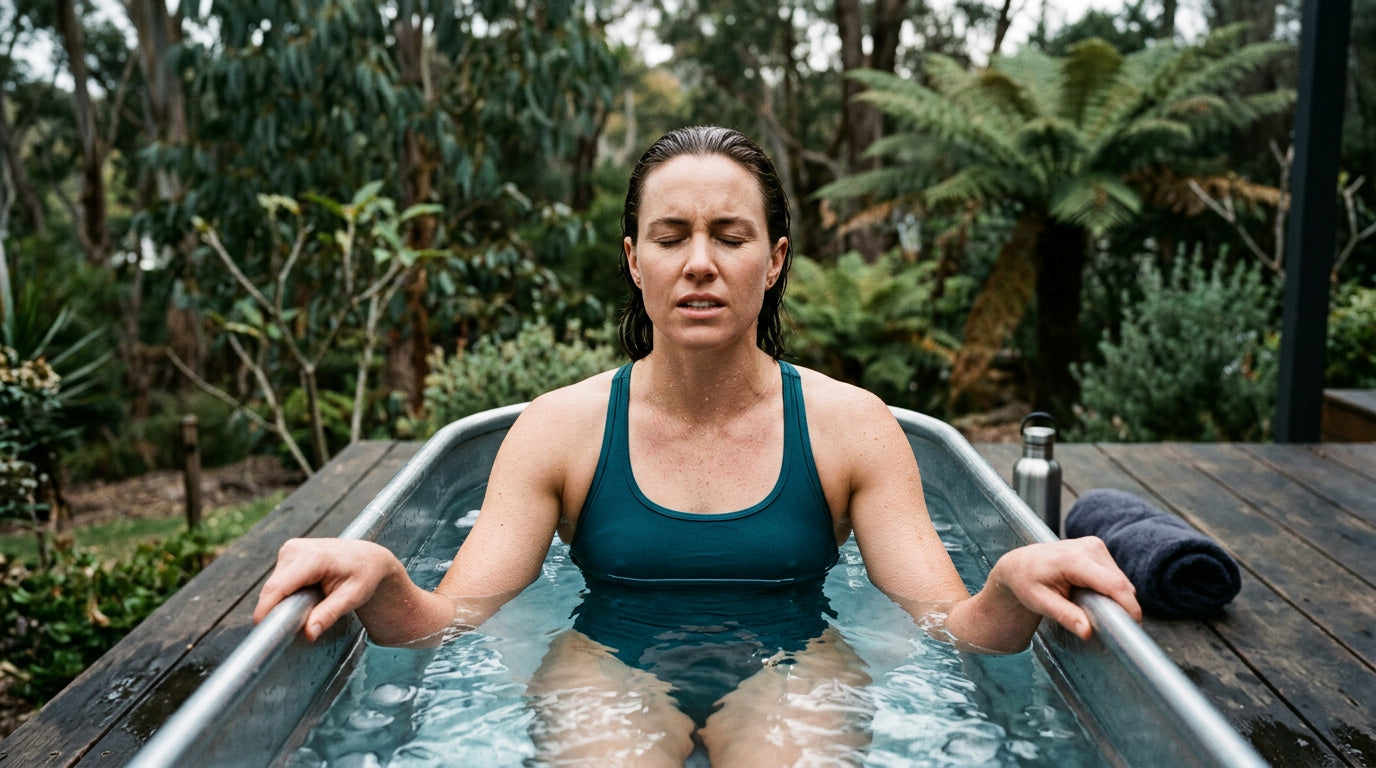
The Psycle Origin is built to that standard. 316 marine-grade stainless steel construction, the same alloy used in coastal marine applications, means it withstands salt air, UV exposure, and the humidity of outdoor Australian installations without corroding. This is not cosmetic. The material choice determines whether your cold plunge looks and performs the same in five years as it does today.
Temperature control is precise and programmable. The Origin maintains a consistent 3–15°C range regardless of ambient temperature, so whether you are plunging at 7am on a Gold Coast summer morning or mid-afternoon in a Perth heatwave, the water is exactly where you set it. That consistency is the entire point. For a full breakdown of what to look for in a cold plunge unit, see our complete guide to cold plunge tubs in Australia.
Active water filtration and sanitisation keeps the water clean between sessions. You are not draining and refilling after every use. You are not sourcing ice. You fill it once, set the temperature, and the unit maintains it. That is the difference between a daily practice and a weekly experiment.
The insulated roll cover does two things: it keeps the temperature stable between sessions without the chiller running constantly, reducing energy use, and it blocks debris, insects, and UV degradation of the water. In outdoor Australian installations, that cover is not optional. It is what makes the product viable year-round.
Zero-Compromise Cold Therapy, Built for Australian Conditions
316 marine-grade stainless steel. Active chilling to 3°C. Filtered water. Outdoor-rated for year-round Australian use. The Origin is not an ice bath upgrade — it is a different category of cold therapy.
SEE THE ORIGIN →Cold Plunge vs Ice Bath: The Five Decisive Dimensions
Here is the comparison that matters, not a feature list, but a real-world assessment of how each approach performs across the dimensions that determine whether cold therapy actually becomes a daily practice.
| Dimension | DIY Ice Bath | Purpose-Built Cold Plunge (Origin) |
|---|---|---|
| Temperature consistency | Variable — drifts with ambient temperature and ice melt | Precise 3–15°C, maintained automatically |
| Hygiene | Stagnant water; bacterial build-up without drainage | Active filtration and sanitisation; clean between sessions |
| Convenience | Ice sourcing required; 15–30 min setup per session | Fill once, set temperature, use daily |
| Running cost | $15–$30 per session in ice alone ($3,000–$6,000/yr at 5x/wk) | Electricity to maintain temperature; no ongoing ice cost |
| Experience quality | Inconsistent; diminishing stimulus as ice melts | Consistent depth, duration, and temperature every session |
| Safety | No temperature monitoring; risk of overcooling | Programmable safety limits; temperature display at all times |
| Outdoor suitability (Australia) | Poor — insulation inadequate in ambient heat above 25°C | Engineered for outdoor installation; UV-rated, marine-grade materials |
| Entry cost | Low ($0–$500 for a container) | Higher upfront; significantly lower 12-month total cost of use |
The Science Behind Cold Water Immersion Benefits
Cold water immersion benefits are real, peer-reviewed, and specific, not wellness marketing. But the dose determines the outcome. Temperature, duration, and frequency are the three variables the research controls for. A DIY setup that cannot hold all three consistently is not delivering the same protocol the studies are measuring.
A 2018 meta-analysis by Dupuy et al. in Frontiers in Physiology, covering 99 studies and over 1,000 athletes, found cold-water immersion and contrast water therapy to be among the most effective recovery modalities for reducing muscle soreness and perceived fatigue. The temperatures used across those studies were controlled and consistent, not left to ambient conditions or ice melt rate. That is the standard your cold therapy setup should meet if you want the same outcomes. For a deeper look at the evidence, our guide to cold plunge recovery in Australia covers the full research breakdown.
Beyond recovery, the neurological effects of cold immersion are substantial. The dopamine response documented in the European Journal of Physiology research, a sustained 250% increase, is tied to norepinephrine release that also supports focus, motivation, and stress resilience. These are not short-lived effects. They persist for hours post-immersion, which is why athletes and executives who cold plunge daily describe sustained improvement in cognitive clarity throughout the day.
The cold shock response itself, that initial spike in heart rate and respiratory rate, is also a trainable adaptation. Regular cold immersion trains your nervous system to regulate that response more efficiently over time. You become better at staying calm under physiological stress. That adaptation requires consistent exposure to a reliable cold stimulus. An ice bath sitting at 16°C because it was a warm afternoon does not drive that adaptation. Our complete guide to ice baths in Australia covers the mechanisms in detail.
What Australian Cold Plunge Users Actually Say
The people who buy the Origin are not experimenting with cold therapy. They have already been doing it, usually for months in a DIY setup, and they reached a point where the friction became the thing standing between them and their practice.
The pattern is consistent: start with a chest freezer or a hire tub, run the protocol for six to eight weeks, get genuine results, then hit the wall of ice logistics, temperature variance, and hygiene management. The Origin is what they move to when they decide the practice is permanent. See how the Origin performs in real Australian homes in our Origin lifestyle gallery.
“I ran a cold plunge protocol for 90 days. My recovery markers improved measurably — HRV up, resting heart rate down. The chest freezer worked to prove the concept. But sourcing ice four times a week in Queensland is not a sustainable practice. The Origin made it daily without the overhead.” — Origin customer, Gold Coast QLD
The consistent thread: the product itself is not the behaviour change. The elimination of friction is. When the cold plunge is on your deck, at temperature, ready every morning, the practice becomes as automatic as a coffee. That is the real return on the infrastructure investment.

Built for the Practice You Actually Intend to Keep
Marine-grade 316 stainless steel. Active chilling to 3°C. Filtration between sessions. Delivered Australia-wide and built for outdoor installation. The Origin removes every excuse not to go in.
EXPLORE THE ORIGIN →Cold Therapy in Australia's Climate and Why the Hardware Matters More Here
Cold water immersion is not a cold-weather practice. That is a European assumption. In Australia, the year-round warm climate makes cold therapy a viable daily habit rather than a seasonal experiment, and the contrast between outdoor heat and a 10°C plunge is far more dramatic than anything you experience in Scandinavia. The same warm climate that makes the practice feel extraordinary also makes maintaining cold water temperatures in DIY setups genuinely difficult.
Ambient temperatures above 30°C in Queensland, Northern NSW, and WA mean an uninsulated container loses cold fast. On a 35-degree Byron Bay afternoon, a stock tank filled with 15kg of ice will hit 16°C within 20 minutes. You are not cold plunging at that point; you are sitting in mildly cool water. The stimulus is gone. See how well-installed units perform year-round in our coastal Queensland installation gallery.
An outdoor-rated cold plunge like the Origin is engineered for exactly this environment. The insulation maintains target temperature between sessions without the chiller running constantly. The UV-rated materials do not degrade in direct sunlight. The marine-grade stainless does not corrode in salt-air coastal environments. These are not premium-marketing details. They are the engineering decisions that determine whether your cold plunge performs the same way in year five as it did in week one.
Australians who use their deck as an extension of their living space understand this intuitively. The Origin integrates into that environment as a permanent fixture, not a temporary rig. For Australians considering both sauna and cold plunge together, our guide to sauna and cold plunge in Australia covers outdoor setup planning in detail.
The Case for Contrast Therapy and Why 1 + 1 = 3
Contrast therapy, alternating heat and cold exposure in sequence, produces physiological outcomes that neither practice achieves in isolation. The heat from a traditional Finnish sauna drives vasodilation, deep muscle temperature elevation, and heat shock protein activation. The cold plunge that follows drives vasoconstriction, norepinephrine release, and a strong parasympathetic rebound. Alternating between the two creates a circulatory pumping effect, a vascular workout that drives nutrient delivery and metabolic waste clearance at a rate that passive recovery cannot match.
A landmark 20-year cohort study of 2,315 Finnish men by Laukkanen et al., published in JAMA Internal Medicine (2015), found that sauna use 4–7 times per week reduced the risk of fatal cardiovascular disease by 50% compared to once-weekly bathing. The cardiovascular adaptations from regular heat exposure compound over time, and the cold plunge accelerates the vascular response that makes those adaptations more pronounced. For the full contrast therapy protocol, our guide to contrast therapy in Australia covers session structure, timing, and progression.
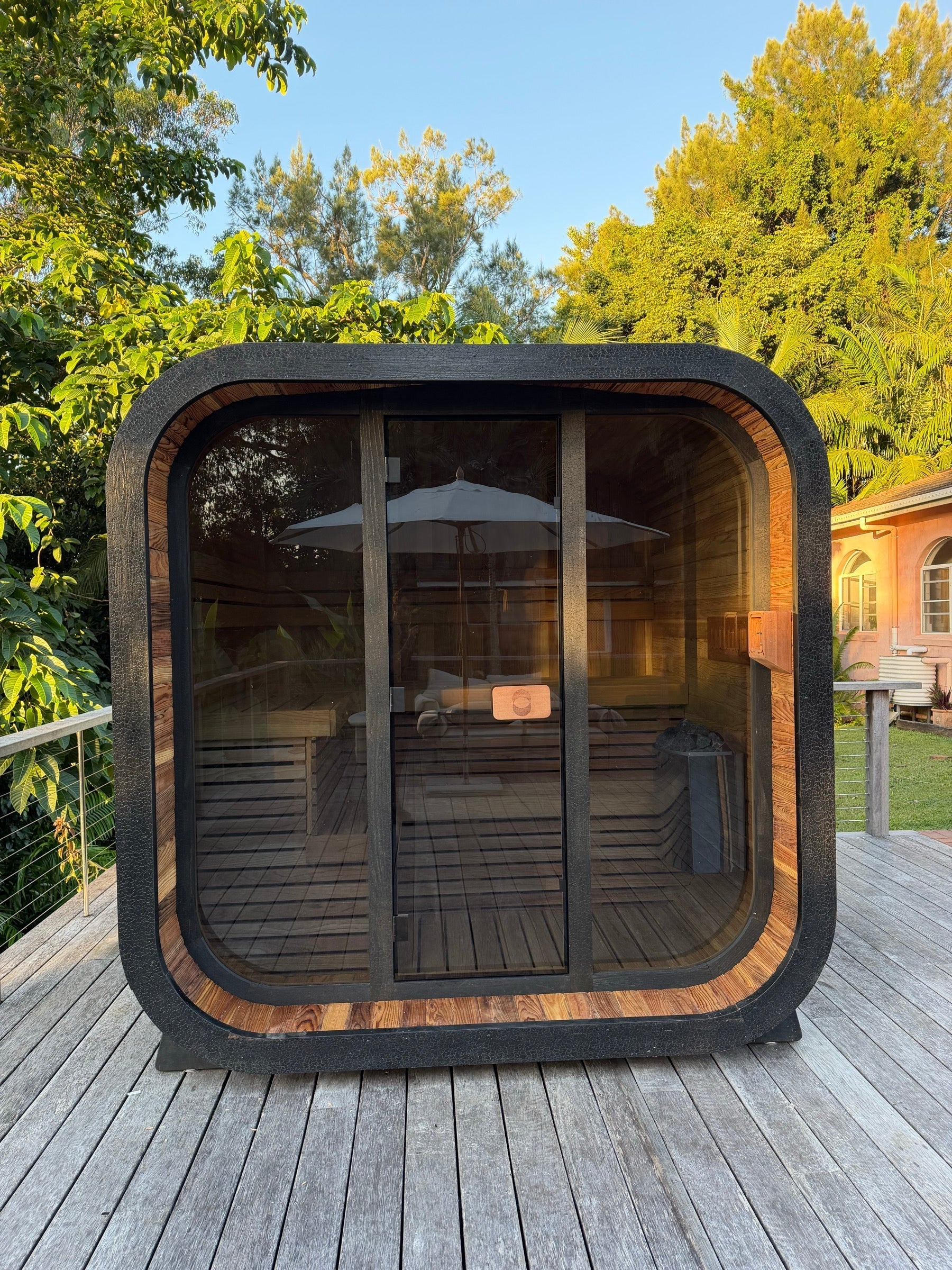
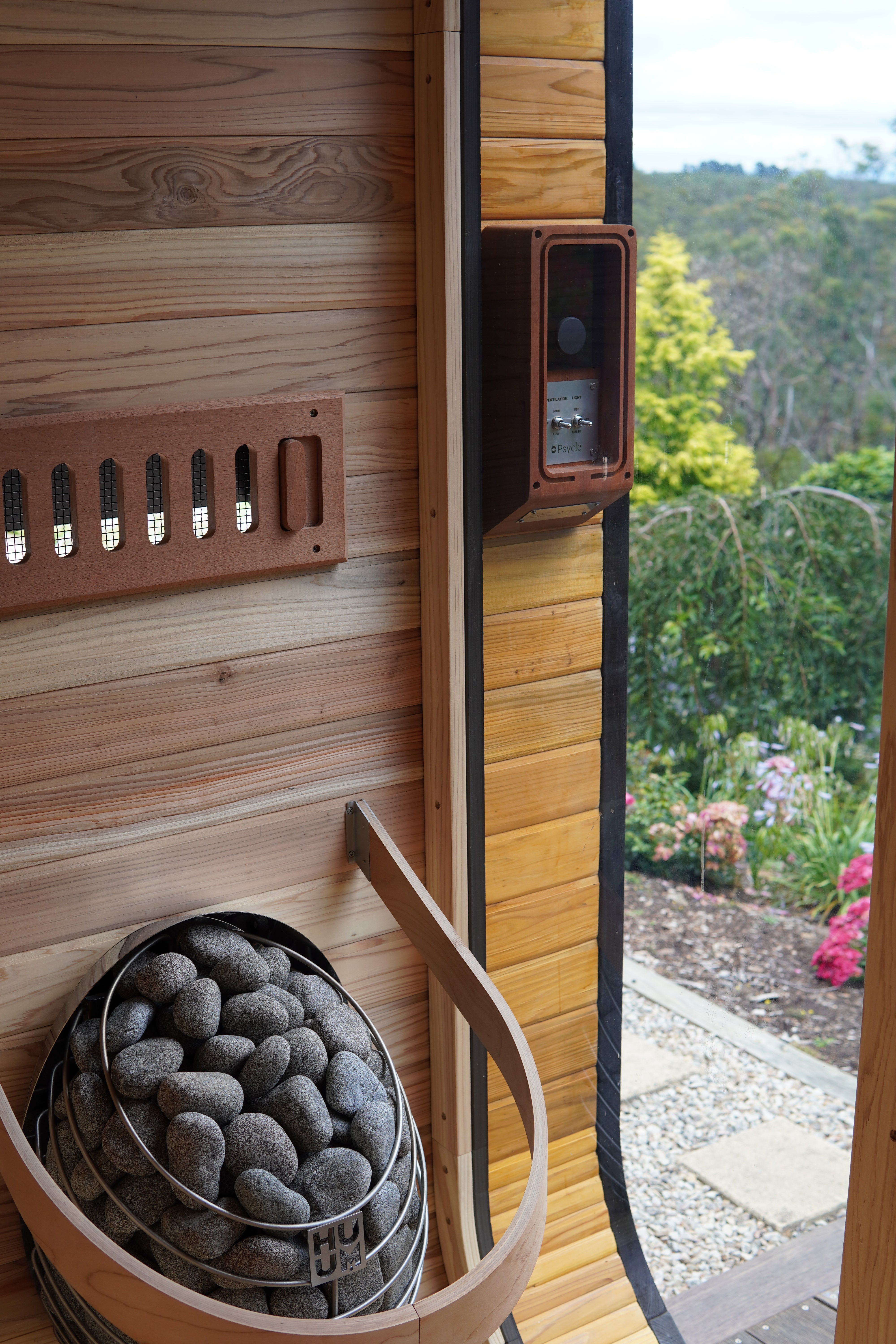
Psycle builds the Contrast Kit specifically for this protocol: the Genesis sauna (3–5 person, Japanese Cedar, 38mm walls, HUUM Drop 9kW heater or Harvia Vega 9kW, 80–100°C operating temperature) paired with the Origin cold plunge. Heat recovers you. Cold hardens you. Together, they transform you. That is not a tagline. That is the physiological sequence. For a complete look at sauna and cold plunge combinations, see our best sauna cold plunge combo guide for Australia.
What does a contrast session actually look like on your deck? You exit the Genesis at 90°C. You step into the Origin at 10°C. Twelve minutes of heat, two to three minutes of cold, repeated two to three rounds. The Genesis needs a 50A dedicated circuit. The Origin sits alongside it on the same deck. The setup is permanent, the protocol is daily, and the compounding physiological return over 12 months shows up in recovery markers, cardiovascular fitness, and cognitive output. See the Genesis installed in a real outdoor setting in our Genesis deck installation gallery.
Which Is Right for You? A Decision Framework
The honest answer is: it depends on where you are in your cold therapy practice and what you intend to do with it.
You are new to cold therapy
Start with a DIY ice bath. Prove the concept. Run a 30-day protocol and track how your recovery and mental clarity respond. The entry cost is low and the experience will tell you whether this is a practice you intend to keep.
You have validated cold therapy and want to make it daily
You already know this works for you. The DIY setup is now the friction point. An ice bath at this stage is costing you time, money on ice, and the consistency that drives adaptation. A purpose-built cold plunge pays back in compliance alone.
You are in a warm Australian climate (Queensland, Northern NSW, WA)
A DIY ice bath in ambient temperatures above 28°C is a logistical problem, not a recovery tool. If the ice cost and temperature variance are already frustrating you, the Origin is the answer. It was built for this environment.
You train seriously and use cold therapy as part of a recovery stack
Temperature consistency is not optional at this level. You are not experimenting; you are running a protocol. The Origin at 10°C, session after session, is a different tool than an ice bath at whatever temperature the ice happened to land on today.
You want to pair cold with heat — contrast therapy
If a sauna is already part of your setup or is on the roadmap, the Contrast Kit is the logical answer. The Genesis and Origin are designed to sit alongside each other. The protocol they enable together is the most research-backed recovery and performance modality available for home use. See how the Genesis looks installed on an outdoor deck at golden hour.
For a complete exploration of the sauna side of that equation, our science-backed guide to traditional sauna benefits in Australia covers everything from cardiovascular health to sleep and mental performance.
Frequently Asked Questions: Cold Plunge vs Ice Bath Australia
What is the difference between a cold plunge and an ice bath?
A cold plunge is a purpose-built cold water immersion unit with active temperature control, filtration, and materials designed for daily use. An ice bath is a DIY setup, a tub filled with water and ice, that offers cold immersion at low entry cost but with inconsistent temperatures, hygiene risks, and ongoing ice sourcing logistics. The cold plunge is infrastructure; the ice bath is an experiment.
Is a cold plunge better than an ice bath for recovery?
For recovery outcomes, temperature consistency matters. A 2018 meta-analysis by Dupuy et al. in Frontiers in Physiology found cold-water immersion most effective at controlled temperatures, something a DIY ice bath cannot reliably deliver. A purpose-built cold plunge holds a precise 3–15°C range session after session, which means the dose is consistent and the adaptation is progressive. An ice bath can deliver a useful stimulus occasionally; a cold plunge delivers it every time.
What temperature should a cold plunge be in Australia?
For general recovery and mental health benefits, 10–15°C is the research-backed target range. For more advanced adaptation and hardening protocols, 6–10°C is appropriate for experienced users. Below 6°C is reserved for very short exposures and experienced practitioners. Our complete guide to ice bath temperature covers the full evidence base for each range and how to progress safely.
How much does it cost to run a cold plunge vs an ice bath in Australia?
A DIY ice bath used five times per week requires 10–15kg of ice per session at 30-degree ambient temperatures, roughly $15–$30 per session, or $3,000–$6,000 per year in ice alone. A purpose-built cold plunge runs on electricity to maintain and chill water. Running costs depend on the unit and ambient temperature, but the elimination of ongoing ice costs means most users reach break-even on a purpose-built unit within 12–18 months of daily use.
Can you use a cold plunge outdoors in Australia year-round?
Yes, provided the unit is built for outdoor installation. The Origin uses 316 marine-grade stainless steel rated for salt-air coastal environments, UV-rated components, and an insulated roll cover that maintains temperature between sessions regardless of ambient heat. Australia's warm climate makes year-round cold plunging practical; the right hardware makes it effortless. A DIY ice bath in a Queensland summer is a different story entirely.
Is cold water immersion safe for everyone?
Cold water immersion is contraindicated for people with certain cardiovascular conditions, Raynaud's disease, or those who are pregnant. The cold shock response triggers a significant spike in heart rate and blood pressure in the first seconds of immersion, a risk factor for those with pre-existing cardiac conditions. If you have any cardiovascular history, consult your GP before beginning a cold immersion protocol. Start at higher temperatures (15°C) and shorter durations (60–90 seconds) regardless of baseline fitness.
What is contrast therapy and is it better than cold plunging alone?
Contrast therapy is the practice of alternating heat and cold exposure, typically 10–15 minutes in a sauna followed by 2–3 minutes in a cold plunge, repeated for two to three rounds. The compounding effect on circulation, recovery, and neurological state is greater than either practice alone. Our complete guide to contrast therapy in Australia covers the full protocol, research base, and how to set it up at home.
How long should you stay in a cold plunge?
For recovery, 2–5 minutes at 10–15°C is the evidence-backed range. For dopamine and norepinephrine effects, research supports sessions of 2–3 minutes at 10°C or colder. Longer is not always better. The acute stimulus drives the adaptation, and prolonged cold exposure beyond 10–15 minutes at low temperatures carries hypothermia risk. The goal is consistent, appropriately dosed cold exposure, not endurance.
Ready to Make Cold Therapy a Daily Practice?
The Origin is built for exactly this: outdoor Australian conditions, daily cold immersion, zero compromise on temperature control or hygiene. 316 marine-grade stainless. Precise 3–15°C range. Delivered Australia-wide. Or pair it with the Genesis for the complete contrast therapy setup.
SHOP THE ORIGIN →If you are still building out the full picture of what a home recovery setup looks like, our guide to home saunas in Australia and our complete buyer's guide to the best home sauna in Australia cover the sauna side of the equation in the same depth.