
Cold Plunge Recovery Australia: Science Guide | Psycle
Cold Plunge Recovery Australia

Key Takeaways
- Cold water immersion at 10–15°C for 3–5 minutes post-training is the evidence-based protocol for reducing delayed onset muscle soreness (DOMS) and accelerating recovery.
- A 2018 meta-analysis by Dupuy et al. in Frontiers in Physiology — covering 99 studies and over 1,000 athletes — identified cold-water immersion as one of the most effective modalities for reducing muscle soreness and perceived fatigue.
- Cold immersion produces a sustained 250% increase in dopamine, a neurological effect that outlasts the exposure itself by several hours, supporting focus, mood, and nervous system regulation.
- Contrast therapy — alternating heat and cold — amplifies recovery outcomes beyond either modality alone; the Psycle Contrast Kit pairs the Genesis sauna with the Origin cold plunge for a complete at-home protocol.
- The Origin uses 316 marine-grade stainless steel, engineered for outdoor Australian conditions year-round.
- Wait 30–60 minutes post-strength session before cold immersion if hypertrophy is your primary goal — immediate post-lift cold blunts anabolic signalling.
- Commercial cold plunge facilities charge AU$30–$60 per session; owning the Origin eliminates that recurring cost and gives you daily access on your own schedule.
By Psycle Wellness · Last updated: May 2026 · 14 min read
Cold plunge recovery works by triggering vasoconstriction, flushing metabolic waste from fatigued muscle tissue, and activating the nervous system in ways that reduce soreness, sharpen cognition, and accelerate readiness to train again. The evidence is solid. The protocol is specific. And for Australians who train hard, it belongs at home — not at a commercial facility charging $40 a dip.
Why Most Recovery Approaches Leave You Undertrained
You train. You eat. You sleep when you can. But recovery — the actual biological process of repairing muscle, resetting the nervous system, and clearing the metabolic debris of hard effort — is often the gap between where you are and where you want to be.
The standard toolkit is thin. Foam rolling addresses surface-level tension. Stretching does not accelerate tissue repair. Active recovery sessions burn time without driving the physiology. And rest alone, without deliberate intervention, leaves you relying entirely on passive processes that operate on their own timeline — not yours.
Cold water immersion changes that equation. It is not a wellness trend or a social media ritual. It is a physiological intervention with a measurable mechanism and a documented outcome. The research on cold plunge recovery has matured significantly over the past decade, and the direction is consistent: when applied correctly, it works.
The problem with how most Australians access cold immersion is structural. Commercial recovery facilities — even excellent ones — require a drive, a booking, a fee, and a slot in someone else's timetable. That friction kills compliance. And a recovery protocol you only follow occasionally is not a recovery protocol at all.
What Cold Water Immersion Actually Does to Your Body
Cold water immersion recovery is the controlled exposure of the body to water at 10–15°C, typically for 3–10 minutes, immediately or shortly after exercise — producing a cascade of physiological responses that reduce inflammation, clear metabolic waste, and reset autonomic nervous system tone.
The mechanism starts with vasoconstriction. When your body hits cold water, peripheral blood vessels constrict sharply, driving blood toward the core and vital organs. When you exit, vasodilation follows — vessels dilate and blood floods back into the periphery, carrying fresh oxygen and nutrients while flushing out lactate, inflammatory cytokines, and the metabolic by-products of hard effort.
That pump-and-flush cycle is the primary driver of reduced DOMS — delayed onset muscle soreness, the soreness that peaks 24–48 hours after training. A 2018 meta-analysis by Dupuy et al. in Frontiers in Physiology, covering 99 studies and over 1,000 athletes, found cold-water immersion and contrast water therapy to be among the most effective recovery modalities for reducing muscle soreness and perceived fatigue. That is not a marginal finding. That is a consistent signal across a large evidence base.
Beyond the muscular recovery effect, cold immersion has a documented neurological impact. Research published in the European Journal of Physiology found that cold water immersion produces a sustained 250% increase in dopamine levels — an effect that outlasts the cold exposure itself by several hours. For athletes managing training load, competition stress, or the grinding cognitive demands of high-output professional life, that neurological reset is as valuable as the physical recovery.
The third mechanism is autonomic nervous system regulation. Repeated cold exposure trains the vagal brake — your parasympathetic nervous system's ability to down-regulate stress responses rapidly. Over time, this translates to lower baseline cortisol, faster recovery between high-intensity efforts, and improved heart rate variability (HRV). These are measurable markers of physiological resilience.
For a thorough breakdown of the broader benefits of cold exposure beyond recovery, our guide to cold plunge benefits in Australia covers the full evidence base in detail.

The Origin: Cold Plunge Engineering for Australian Conditions
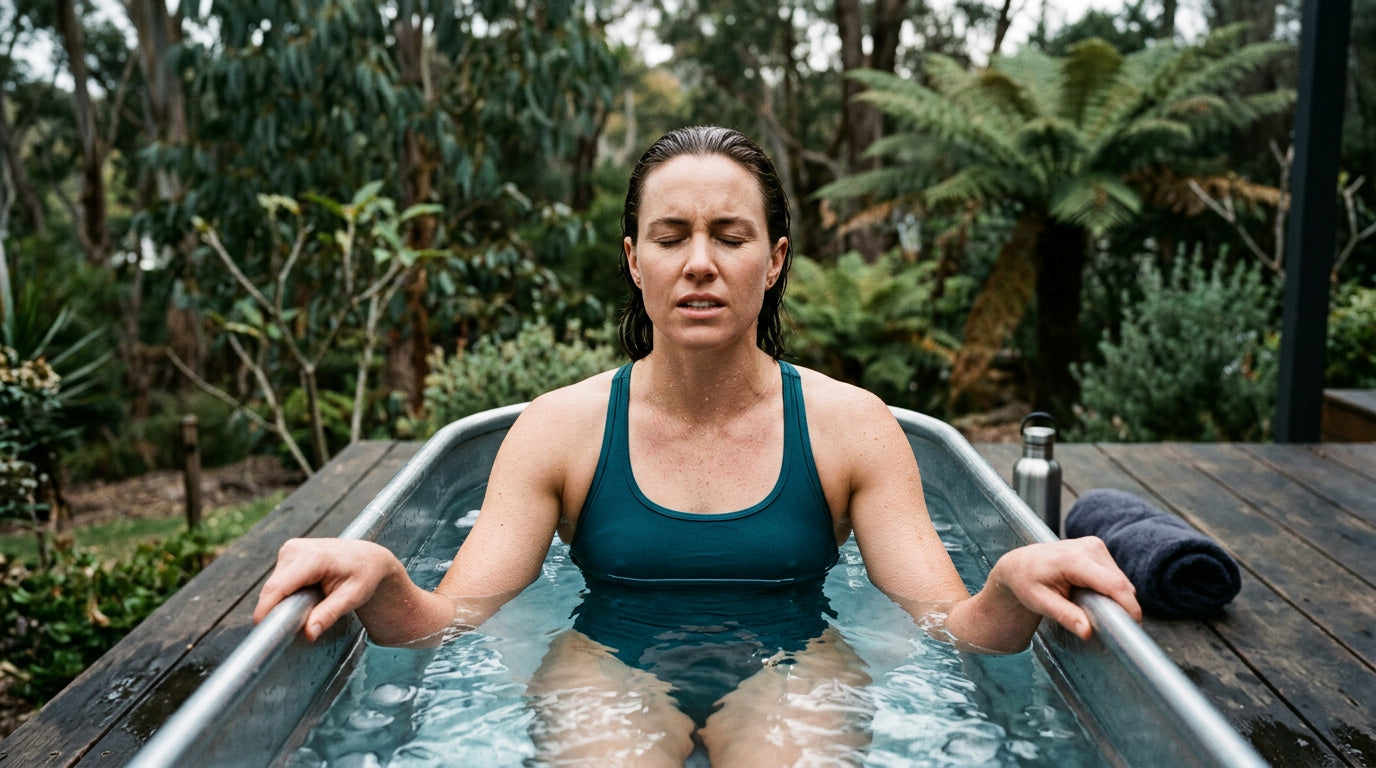
The Origin is Psycle's premium cold plunge, engineered for daily use in outdoor Australian conditions — from coastal Queensland humidity to Melbourne winters. Most cold plunge tubs on the market are built to a price point. The Origin is built to a standard.
The shell is 316 marine-grade stainless steel. Not 304. Not polymer. 316 — the alloy grade used in marine environments where corrosion resistance is non-negotiable. That matters when your cold plunge lives on a deck exposed to salt air, UV, and the full range of Australian weather year-round.
The insulated roll cover maintains water temperature between sessions. You should not have to wait for your cold plunge to reach temperature after a training session. It should be ready when you are. That is what a serious recovery tool looks like.
If you are comparing options across the Australian market, our cold plunge tub Australia buyer's guide covers what to look for in engineering, materials, and temperature control before you commit.
Cold Plunge Recovery at Home, on Your Schedule
316 marine-grade stainless steel. Insulated roll cover. Engineered for outdoor Australian conditions. No bookings. No drive time. No $40-per-session fees.
SEE THE ORIGIN →How Cold Water Immersion Reduces DOMS and Muscle Fatigue
Cold water immersion reduces DOMS primarily through three converging mechanisms: mechanical compression from hydrostatic pressure, temperature-driven reduction in nerve conduction velocity, and the vasoconstriction-vasodilation cycle that accelerates metabolite clearance.
Hydrostatic pressure is underappreciated. When you are immersed in water, every centimetre of depth adds measurable pressure to the tissue beneath it. That compression reduces interstitial swelling and limits the inflammatory cascade in the hours immediately following training. For high-volume athletes — CrossFit competitors, surfers running multiple sessions per day, or rugby players with back-to-back game weeks — that compression effect meaningfully accelerates tissue readiness.
Reduced nerve conduction velocity sounds counterintuitive as a benefit, but the mechanism is straightforward. Cold slows the transmission of pain signals from damaged muscle fibres to the brain. That is not masking the damage. The inflammation is still being addressed through the vascular cycle. The reduced nerve signal simply means you perceive less soreness in the 24–48 hours post-session — which means you move better, train harder, and recover with less interference to normal function.
The research supporting this is substantial. Professor Chris Bleakley at Ulster University has published extensively on cold water immersion in sport, consistently finding that cold immersion reduces perceived soreness and improves subjective recovery ratings compared to passive rest. His work underpins the current protocols used by professional rugby, AFL, and elite swimming programs in Australia.
For a detailed look at how ice bath recovery applies to Australian conditions and training styles, our complete guide to ice baths in Australia goes deeper on application and frequency.
The Cold Plunge Recovery Protocol: Temperature, Timing, and Duration
An effective cold plunge recovery protocol targets a water temperature of 10–15°C, an immersion duration of 3–5 minutes, and a post-exercise timing window of 30–60 minutes — with one critical exception for strength-focused athletes.
The temperature range matters. Below 10°C, the physiological benefit does not scale proportionally to the discomfort — and the risk of cold shock response increases. Above 15°C, the vasoconstriction signal weakens and the recovery effect diminishes. The sweet spot is 10–15°C for most recovery applications. If your primary goal is nervous system activation rather than DOMS reduction, you can work toward the lower end of that range as your tolerance builds. Our dedicated guide to ice bath temperature covers exactly how to calibrate this based on your training goals and experience level.
Set your target temperature: 10–15°C
Confirm water temperature before entry. Below 10°C increases cold shock risk without proportionally increasing benefit. Above 15°C reduces the vasoconstriction signal.
Time your entry: 30–60 minutes post-training
For endurance, CrossFit, or sport-specific training: enter within 30 minutes. For pure hypertrophy sessions: wait at least 60 minutes to preserve anabolic signalling (mTOR pathway).
Immerse for 3–5 minutes
Submerge to the shoulders where possible. Control your breathing from the first second — slow nasal inhale, extended exhale. The physiological benefit is primarily captured in this window.
Exit and rewarm passively
Do not jump immediately into a hot shower. Allow the vasodilation phase to complete naturally — 5–10 minutes of passive rewarming before applying external heat. This extends the metabolite clearance window.
Repeat 3–5 sessions per week
Daily use is appropriate for endurance athletes and during high training loads. For recreational athletes, 3–4 sessions per week aligned to hard training days produces the strongest cumulative adaptation.
The timing question is where most athletes get it wrong. The instinct after a heavy lift is to go straight to ice. But the inflammatory response triggered by resistance training is not purely destructive — it is part of the anabolic signalling cascade that drives hypertrophy. Immediate cold immersion post-strength training blunts that signal. If your goal is muscle growth, wait. If your goal is recovery for performance the next day — endurance, sport, CrossFit — the 30-minute window is appropriate.
This distinction is supported by Dr. Mikkel Paulsen at the Norwegian School of Sport Sciences, whose research on cold water immersion and strength adaptation found that athletes who immersed immediately post-resistance training showed attenuated long-term strength gains compared to passive recovery controls. The mechanism is mTOR pathway suppression — the molecular signal for protein synthesis.

Contrast Therapy: When Heat and Cold Work Together
Contrast therapy alternates heat and cold exposure in sequence, producing rapid swings between vasoconstriction and vasodilation that clear metabolites more aggressively than cold alone.
The standard contrast protocol runs 2–3 rounds of heat (10–20 minutes at 80–100°C in the sauna) followed by cold immersion (2–4 minutes at 10–15°C in the plunge). The vascular pump effect is more pronounced in contrast than in cold water immersion alone because the preceding heat phase drives vasodilation first — maximising the delta when you hit cold. That swing drives a stronger clearance response.
The 2018 meta-analysis by Dupuy et al. in Frontiers in Physiology identified contrast water therapy as comparably effective to cold water immersion alone for DOMS reduction, with some studies showing a marginal advantage for contrast in perceived fatigue outcomes. For athletes already running sauna sessions, adding the cold plunge to complete the contrast cycle is not an incremental upgrade — it is what makes the protocol whole.
For the full contrast therapy framework — protocols, timing, and the science behind alternating thermal stress — our contrast therapy Australia guide is the definitive resource.
The specific combination of sauna and cold plunge in the same session also carries neurocognitive benefits that neither modality delivers independently. The heat phase drives heat shock protein production and cardiovascular conditioning. The cold phase produces the dopamine spike and autonomic regulation effect. Sequenced correctly, the session leaves you physiologically recovered and mentally sharp — the combination high performers actually need.
Our best sauna cold plunge combo guide for Australia covers how to pair equipment correctly, what to look for in a combined setup, and why the Psycle Contrast Kit is built the way it is.
Cold Plunge Recovery in Australian Conditions: Real-World Use Cases
Cold plunge recovery in Australia operates in a specific environmental and cultural context that generic international content rarely addresses — and getting those details right changes how you apply the protocol.
Surf Recovery
Australian surfers already know what the ocean does to fatigued paddling muscles. Post-surf inflammation from repetitive rotator cuff and lat engagement is real — and ocean swims, particularly in Queensland or NSW summer conditions where water temperatures sit above 22°C, do not provide the temperature differential needed for meaningful vasoconstriction. A controlled plunge at 10–15°C after a dawn session is a different stimulus entirely. It clears the residual inflammation from the paddle, resets the nervous system, and gets you back in the water the next morning without the accumulated soreness that compounds across a week of daily surfing.
CrossFit and High-Volume Training Recovery
CrossFit athletes in Australia carry a training load that demands deliberate recovery infrastructure. Multiple high-intensity sessions per week, with mixed modalities including heavy lifting, gymnastics, and metabolic conditioning, produce significant systemic fatigue across different tissue types simultaneously. Cold immersion at 10–15°C for 4–5 minutes post-WOD — timed 30 minutes after the session ends — addresses the inflammatory component without blunting the metabolic adaptation effect. Paired with adequate sleep and protein intake, it meaningfully increases the number of quality sessions you can sustain per week.
Heat Adaptation and Summer Training
Training through an Australian summer — particularly in Queensland, WA, and NT where ambient temperatures regularly exceed 35°C — accumulates a heat load that standard recovery does not address. Core temperature elevation persists for longer than most athletes realise, and sustained core heat delays the cellular repair processes that drive tissue recovery. Cold immersion post-summer training sessions accelerates core temperature normalisation, restoring the thermal conditions that allow recovery processes to run at full efficiency. It is the same principle elite cycling teams applied in Tour de France preparation when racing through heat stages.
The Origin's outdoor-rated 316 stainless steel construction handles Australian summer conditions without degradation — UV, humidity, salt air, and heat cycling do not compromise its integrity over years of use.
What Australians Are Saying About Daily Cold Plunge Recovery
The feedback from Australian Origin users is consistent across different training backgrounds: the compliance that home access enables is what generates the actual results.
“I've been running the contrast protocol daily for 11 weeks. My HRV is up significantly and my recovery between sessions is measurably faster. The difference between using a commercial facility twice a week and having this at home every day is not subtle.” — CrossFit athlete, Brisbane.
“I surf six days a week and I was accumulating soreness through every week until about the third session after installing the Origin. Two weeks in, the cumulative fatigue curve flattened. It's daily now.” — Origin owner, Byron Bay.
“I travel for work and was relying on commercial recovery facilities. The Origin paid for itself in less than 18 months of sessions I would have paid for elsewhere — and I'm using it four times a week instead of twice.” — Origin owner, Sydney.
That last point is a financial reality check. Commercial cold plunge facilities in Australian capital cities charge AU$30–$60 per session. At four sessions per week, that is AU$120–$240 per week, or AU$6,240–$12,480 per year. The Origin is a capital outlay with a finite payback period — after which every session is free.
Used by Australian Athletes. Built for Australian Conditions.
316 marine-grade stainless steel. Insulated roll cover. Origin owners across Australia are running daily protocols — not occasional ones. That's the difference home access makes.
EXPLORE THE ORIGIN →The Real Cost of Cold Plunge Recovery in Australia
Commercial cold plunge facilities charge AU$30–$60 per session. At three sessions per week, that is AU$4,680–$9,360 per year — which is also a weekly physio bill of AU$100–$160 you might be running concurrently if soreness and overuse injuries are accumulating from inconsistent recovery.
The Origin eliminates that recurring cost and gives you daily access with zero friction. No booking. No drive. No waiting for the facility to open at 6 am. You walk out to your deck, check the temperature, and get in. That operational simplicity is not a luxury — it is the variable that determines whether you actually run the protocol consistently enough to see results.
If you are weighing the Origin against a gym membership that includes recovery access (typically AU$1,200–$2,400 per year for a mid-tier gym), the comparison is not clean. Gym cold plunges are shared, often poorly maintained, and almost never at a controlled temperature. That is not the same tool.
For broader context on what home recovery infrastructure costs across the Australian market, our home sauna cost guide for Australia covers the full investment picture including sauna, cold plunge, and contrast kit configurations.
Cold Plunge vs Other Recovery Methods: What the Evidence Supports
| Recovery Method | DOMS Reduction | Neurological Reset | Compliance (at home) | Evidence Quality |
|---|---|---|---|---|
| Cold Water Immersion | Strong | Strong (250% dopamine) | High (with home setup) | High — meta-analysis level |
| Contrast Therapy | Strong | Strong | High (with home setup) | High — meta-analysis level |
| Foam Rolling | Moderate | Minimal | High | Moderate — mixed findings |
| Active Recovery | Moderate | Low | High | Moderate |
| Compression Garments | Moderate | Minimal | High | Moderate |
| Passive Rest | Low | Low | High | Low |
| Sauna Only | Moderate | Moderate | High (with home setup) | High — strong evidence base |
The pattern is clear. Cold water immersion and contrast therapy sit at the top of the evidence hierarchy for recovery — specifically for DOMS reduction and neurological adaptation. Everything else is adjunctive.
Sauna alone is a serious recovery tool. Our guide to sauna after workout recovery covers how heat exposure accelerates muscle repair, growth hormone release, and cardiovascular conditioning post-training. But the sauna works best when cold immersion completes the cycle.
If you are running a sauna protocol and not following it with cold, you are leaving recovery adaptation on the table. The contrast sequence is more than the sum of its parts.
The Psycle Contrast Kit: Heat and Cold in a Single System
The Contrast Kit bundles the Genesis sauna and the Origin cold plunge into a single system designed for the complete contrast protocol at home. It is not a convenience bundle. It is the logical infrastructure for the evidence-based protocol: 10–20 minutes at 80–100°C, exit, 2–4 minutes at 10–15°C, repeat.
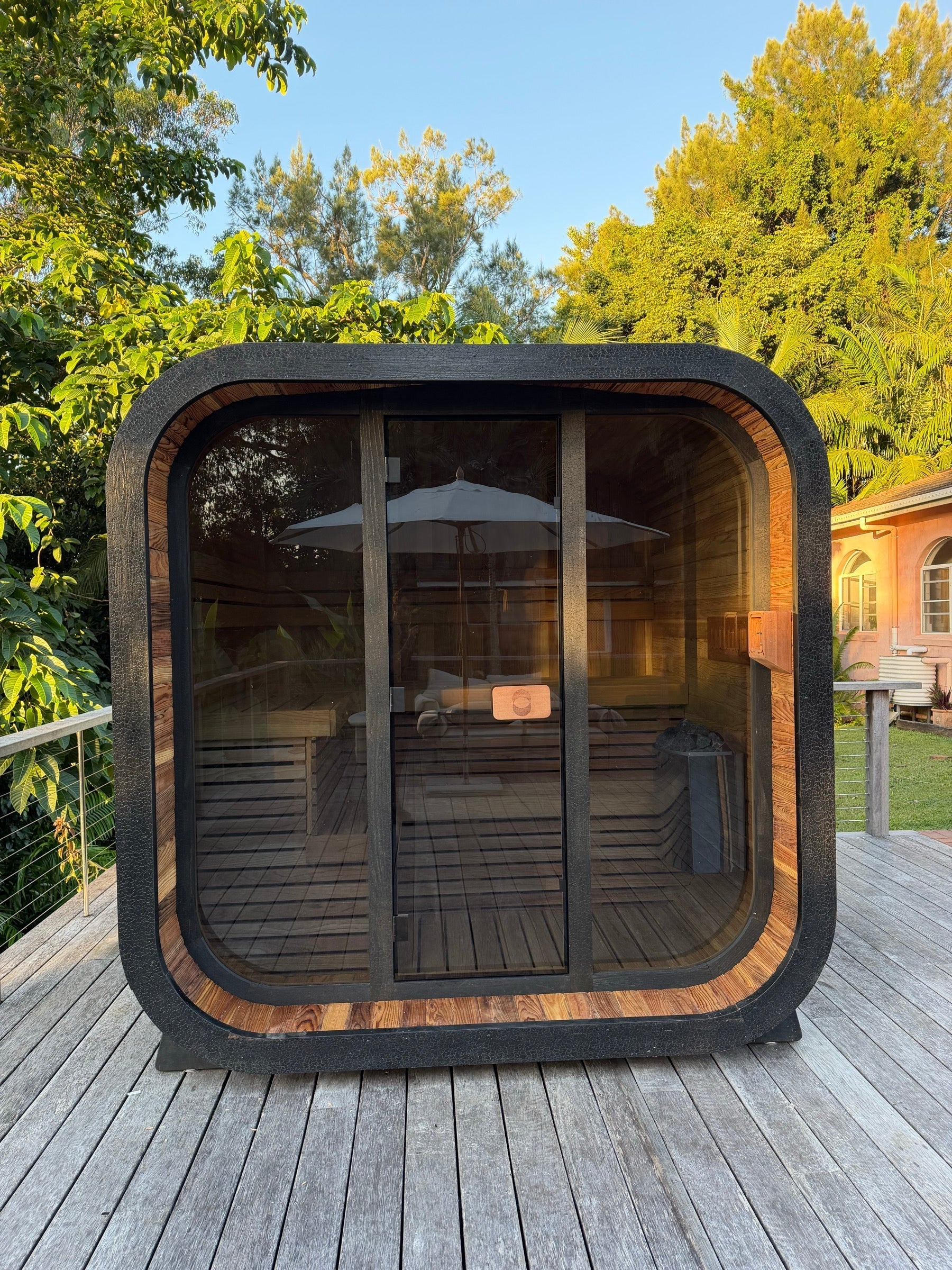
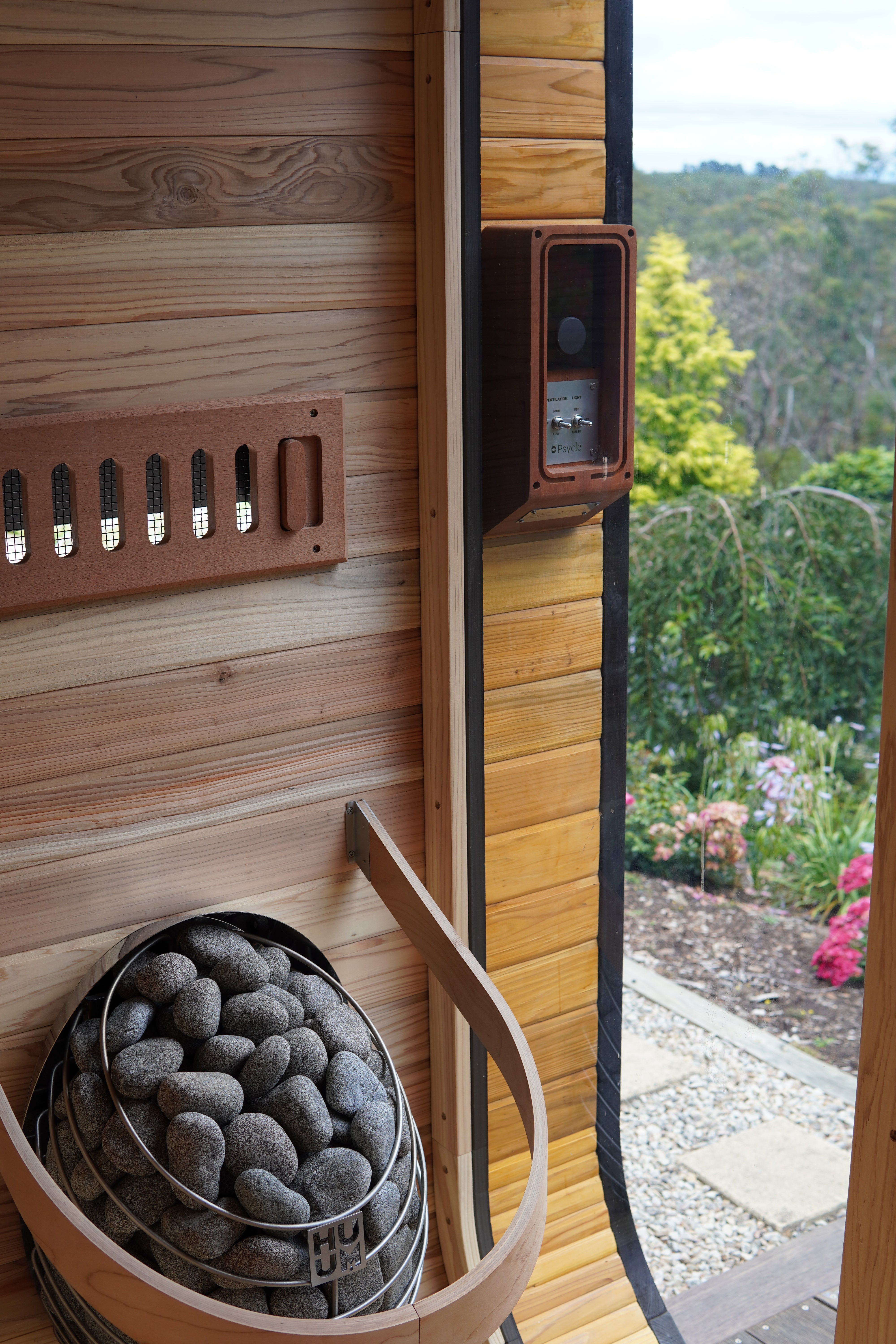
The Genesis is a zero-toxin Finnish-style traditional sauna — 38mm Japanese Cedar walls, zero-glue mechanical construction, non-VOC oil finish, HUUM DROP 9kW heater with 60kg Olivine diabase stone mass or Harvia Vega 9kW with 20kg of stones. You choose your heater based on how you want to control your sessions: the HUUM UKU WiFi app, or direct mechanical controls. The Genesis reaches operating temperature in 30–45 minutes and holds 80–100°C without fluctuation. That stone mass matters — it is what delivers the real löyly response when you pour water, and it is what sustains heat through the full session.
The Genesis Mini offers the same zero-toxin specification in a 1–3 person footprint, with a HUUM DROP 6kW or Harvia Vega 6kW heater, and requires a 32A dedicated circuit. For apartments, compact outdoor decks, or solo users, the Genesis Mini paired with the Origin as the Contrast Kit Mini is the configuration that makes sense.
Both setups ship Australia-wide with a 120-day build lead time. A AU$1,000 fully refundable deposit holds your place in the build queue.
For a detailed comparison of what to look for in a combined sauna and cold plunge setup, our guide to the best sauna and cold plunge options in Australia benchmarks the key specifications across the market.
The Genesis Charcoal finish — shou sugi ban Japanese Cedar — installed alongside the Origin on a hardwood deck is architecturally serious. It is the kind of recovery setup that changes how you think about your property and your training simultaneously.
Cold Plunge Recovery FAQs
How long should I stay in a cold plunge for recovery?
3–5 minutes at 10–15°C is the evidence-based target for post-workout recovery. This duration captures the vasoconstriction response, the nerve conduction reduction that limits perceived soreness, and the initial dopamine response — without unnecessary exposure duration that adds discomfort without proportional benefit. Beginners should start at 2–3 minutes and build tolerance progressively. Extended sessions beyond 10 minutes at these temperatures carry increasing risk of hypothermia and are not supported by the recovery research.
What temperature should a cold plunge be for muscle recovery?
10–15°C is the target range for cold plunge recovery, supported by the majority of sports science research. Below 10°C increases cold shock response risk without a proportional increase in recovery benefit. Above 15°C reduces the vasoconstriction signal meaningfully — warm water simply does not produce the vascular pump effect that drives metabolite clearance. The specific temperature you target within that range depends on your experience level and training goal. Our dedicated ice bath temperature guide maps the full range against different use cases and experience levels.
Should I cold plunge before or after a workout?
After — specifically 30–60 minutes post-session for most training types. Cold immersion before training is not evidence-supported for recovery and may blunt the neuromuscular activation and power output you need for the session itself. Post-workout is when the vasoconstriction-vasodilation cycle delivers value. The one exception: cold water on the face and forearms pre-training in high-heat conditions can reduce core temperature elevation and extend performance capacity in hot Australian conditions, but this is a pre-cooling strategy, not a recovery protocol.
Does cold plunge help with DOMS?
Yes — the evidence is among the strongest in the recovery literature. A 2018 meta-analysis by Dupuy et al. in Frontiers in Physiology, analysing 99 studies across more than 1,000 athletes, found cold-water immersion to be one of the most effective interventions for reducing delayed onset muscle soreness and perceived fatigue. The mechanism is the vasoconstriction-vasodilation cycle, hydrostatic pressure reducing interstitial swelling, and reduced nerve conduction velocity limiting pain signal transmission in the 24–48 hours post-training.
Can I do a cold plunge every day?
Yes, for most healthy adults — daily cold immersion is well-tolerated and beneficial for nervous system regulation, mood, and recovery continuity. Daily use is common among endurance athletes, surfers, and high-training-load CrossFit athletes. The caveat is for pure strength and hypertrophy goals: on heavy lifting days, wait at least 60 minutes post-session before immersing to preserve anabolic signalling. On non-lifting training days or rest days, immediate immersion is fine. Frequency builds tolerance — the cold shock response diminishes with regular practice.
What is the difference between a cold plunge and an ice bath?
Functionally, both deliver cold water immersion at controlled temperatures — the physiological mechanism is identical. The difference is infrastructure and control. An ice bath relies on manual ice addition to achieve and maintain temperature, which is inconsistent, expensive over time, and operationally demanding at scale. A cold plunge like the Origin uses active chilling to hold a set temperature precisely, requires no ice, and is designed for daily use without preparation overhead. Our complete ice bath guide for Australia covers both formats in depth if you are weighing your options.
Is cold plunge recovery safe for everyone?
For healthy adults without cardiovascular conditions, cold water immersion at 10–15°C is well within established safety parameters. Individuals with diagnosed cardiovascular disease, Raynaud's syndrome, uncontrolled hypertension, or who are pregnant should consult a medical professional before beginning a cold immersion protocol. The cold shock response — the involuntary gasp and sharp heart rate increase on entry — is the primary acute risk. It is managed by controlled breathing before and during entry, and by starting at the warmer end of the temperature range (15°C) while building tolerance. Our broader guide to sauna health risks in Australia also covers thermal exposure contraindications in detail.
Ready to Build a Recovery Protocol That Actually Works?
316 marine-grade stainless steel. Outdoor-rated. Free Australia-wide delivery. 120-day build — order now for your delivery window. AU$1,000 refundable deposit holds your place in the build queue.
SHOP THE ORIGIN →If you are building out a complete home recovery system, the full evidence base for sauna benefits in Australia covers the cardiovascular, longevity, and mental health research that sits alongside the recovery application. The Genesis and Origin together are not a wellness aesthetic. They are a performance infrastructure decision.
For those earlier in the research process, our complete buyer's guide to home saunas in Australia covers everything from installation requirements and electrical specifications to finish selection and warranty terms.