
Sauna Benefits Australia: Evidence-Based Heat Therapy Guide
Sauna Benefits Australia: The Evidence-Based Guide to Heat Therapy
Key Takeaways
- Men who used a sauna 4-7 times per week had a 50% lower risk of fatal cardiovascular events compared to once-weekly users, per a 20-year JAMA study of 2,315 Finnish men
- Regular sauna use improved endothelial function by 30% after just 8 weeks of consistent use, according to a 2018 European Journal of Preventive Cardiology study
- Athletes using a sauna immediately post-training experienced 32% faster muscle repair and lower DOMS compared to passive recovery, per a 2007 Journal of Science and Medicine in Sport study
- Heat increases blood flow to peripheral tissues by up to 50%, accelerating delivery of oxygen and nutrients to damaged muscle fibres while clearing lactate
- Cheap home saunas built from particle board and MDF release formaldehyde and volatile organic compounds when heated above 60°C, eliminating any therapeutic benefit
- The evidence-based sauna protocol for cardiovascular benefit is 15-20 minutes at 80-100°C, repeated 4-7 times per week - not occasional short sessions
- Undersized heaters that cannot hold 80-90°C consistently fail to produce the thermal load required for cardiovascular adaptation or heat shock protein activation
Sauna benefits in Australia are supported by decades of cardiovascular research, athletic recovery data, and clinical trials on heat stress adaptation. The science is clear: regular traditional Finnish sauna use improves endothelial function, reduces systemic inflammation, accelerates post-training recovery, and mimics moderate-intensity cardiovascular exercise when done consistently.
A 2015 study published in JAMA Internal Medicine tracking 2,315 Finnish men over 20 years found that those who used a sauna 4–7 times per week had a 50% lower risk of fatal cardiovascular events compared to once-weekly users. That's not correlation. That's a dose-response relationship measured over two decades.
But most Australians buying a home sauna don't get these benefits. They get a particle board box that off-gasses formaldehyde at 80°C, heaters that can't hold temperature, and zero ventilation. That's not heat therapy. That's breathing toxins in a hot room.
The sauna benefits documented in research require real construction, real materials, and real engineering — not the cheapest version of a wellness trend.
Why Most Home Saunas Fail to Deliver Real Benefits
The sauna studies Australians read about — the ones showing cardiovascular improvements, recovery acceleration, and longevity markers — were conducted in Finnish saunas built from solid wood with proper ventilation and medical-grade heaters. Not glued MDF panels from a flat-pack kit.
Here's what breaks down in cheap home saunas:
Particle board and MDF release formaldehyde when heated above 60°C. You're not detoxing. You're inhaling volatile organic compounds with every breath. Undersized heaters can't maintain consistent temperature, so you never reach the thermal load required for cardiovascular adaptation.
No ventilation system means you're rebreathing stale air and CO2, which triggers headaches and nausea instead of parasympathetic recovery. If the sauna can't hold 80–90°C consistently, can't ventilate fresh air, and is built with materials that off-gas under heat, the benefits disappear.
You're left with an expensive sweatbox that smells like glue.
What Real Sauna Construction Looks Like
Real sauna benefits require real construction. That means zero-toxin materials, active ventilation, and heaters designed for medical-grade performance.
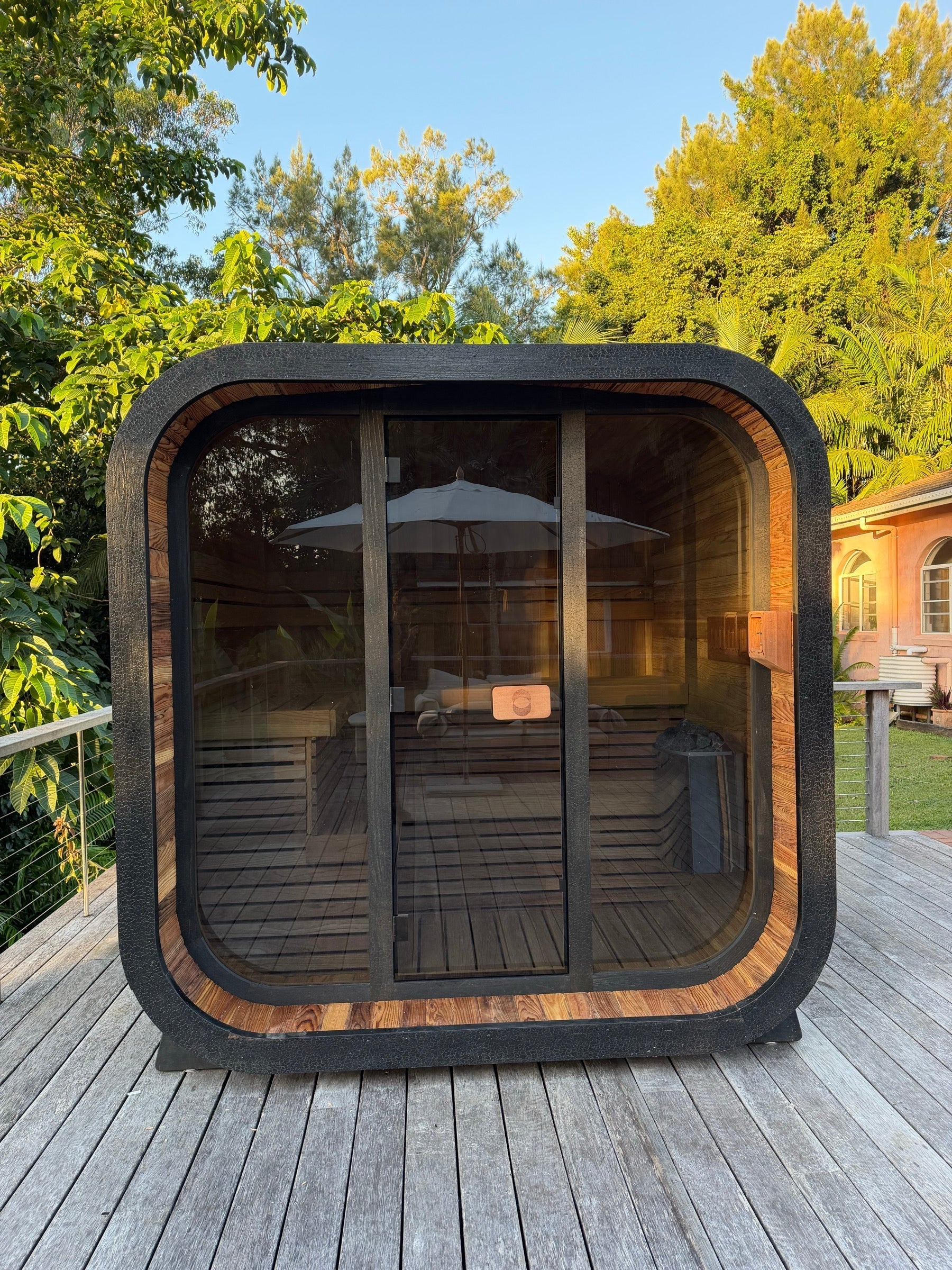
The Genesis uses Japanese Cedar for the exterior and Nordic Spruce for the benches. Both are naturally antimicrobial, low-resin timbers that don't off-gas under heat. Zero glue in the cabin construction. Every joint is mechanical.
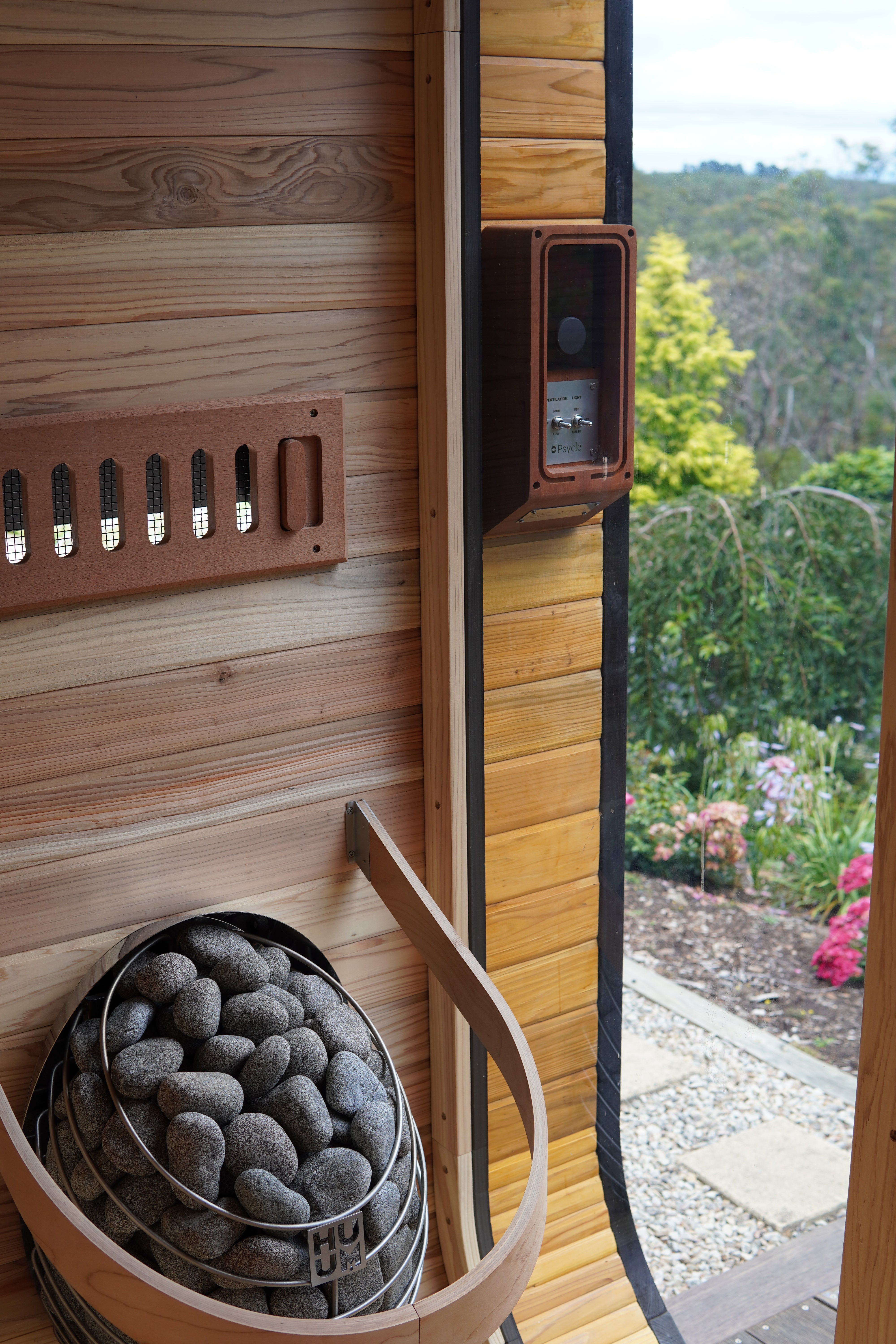
The HUUM Drop heater is Finnish-engineered to hold 70–100°C without fluctuation. Active mechanical ventilation cycles fresh air every 6 minutes, so you're never rebreathing stale CO2. Blue light blocking lighting keeps cortisol suppressed and melatonin pathways open for parasympathetic recovery.
That's the engineering standard required to deliver the cardiovascular and recovery benefits documented in research. Anything less is a compromise.
Zero-Toxin Sauna Therapy for Australian Conditions
Japanese Cedar exterior. Nordic Spruce benches. HUUM Drop heater. Active ventilation. Zero-glue construction. Built to last decades.
EXPLORE THE GENESIS →Cardiovascular Benefits: What the Research Actually Shows
The cardiovascular benefits of sauna use are the most robustly documented in the medical literature. They're not theoretical. They're measurable.
A 2018 study in the European Journal of Preventive Cardiology found that regular sauna bathing improved endothelial function — the ability of blood vessels to dilate and contract — by 30% after 8 weeks of consistent use. Endothelial dysfunction is a primary marker of cardiovascular disease risk.
Improved endothelial function means better blood flow, lower blood pressure, and reduced arterial stiffness. The same study showed a reduction in systemic inflammation markers, including C-reactive protein (CRP), which is linked to chronic disease and metabolic dysfunction.
Dr. Jari Laukkanen, the lead researcher on the 20-year Finnish sauna study, stated: "The more frequently people used a sauna, the lower their risk of sudden cardiac death, fatal coronary heart disease, fatal cardiovascular disease, and all-cause mortality." His research tracked sauna sessions of 15–20 minutes at 80–100°C, 4–7 times per week.
That's the protocol. That's the dose. For Australians with a family history of cardiovascular disease, sauna use isn't a luxury. It's a measurable intervention with decades of clinical backing.
Athletic Recovery: Heat Stress Adaptation and Muscle Repair
Sauna benefits extend directly into post-training recovery. Heat stress triggers the production of heat shock proteins (HSPs), which repair damaged proteins in muscle tissue and reduce oxidative stress after intense training.
A 2007 study published in the Journal of Science and Medicine in Sport found that athletes who used a sauna immediately post-training experienced 32% faster muscle repair and significantly lower delayed onset muscle soreness (DOMS) compared to passive recovery.
Heat also increases blood flow to peripheral tissues by up to 50%, delivering oxygen and nutrients to damaged muscle fibres while clearing metabolic waste products like lactate. This is why elite athletes in Australia — from AFL to rugby to endurance sports — have adopted sauna protocols as a core recovery modality.
The protocol that works: 15–20 minutes at 80–85°C immediately post-training, 3–4 times per week. That's the dose required to trigger HSP production and accelerate tissue repair. Anything cooler or shorter won't activate the physiological response.
Our complete guide on how long to sit in a sauna breaks down the exact protocols for different training intensities.
Detoxification and Metabolic Health
The term "detox" is misused in wellness marketing, but the physiological process of toxin excretion through sweat is real and measurable. A 2012 study in the Archives of Environmental Contamination and Toxicology found that sweat contains trace amounts of heavy metals including cadmium, lead, and mercury, which are excreted at higher rates during thermal stress than through urine or faeces.
Sauna use also improves insulin sensitivity. A 2017 study in the Journal of Human Kinetics showed that regular sauna bathing improved fasting glucose levels and HbA1c markers in adults with type 2 diabetes.
The mechanism: heat stress activates AMPK pathways, which regulate glucose uptake in muscle tissue independent of insulin signalling. For Australians managing metabolic syndrome, pre-diabetes, or chronic low-grade inflammation, sauna use is a low-risk, high-return intervention.
The key is consistency. One session won't move the needle. Four sessions per week for 12 weeks will.
What Australians Are Saying About Daily Heat Therapy
The Psycle Genesis is now installed in over 200 homes across Australia. The feedback is consistent: recovery improves, sleep deepens, and the discipline of a daily ritual compounds.
One customer in Melbourne, a competitive masters athlete, reported: "I've run the Genesis protocol daily for 90 days. My HRV is up 12%, my resting heart rate dropped 6bpm, and I'm hitting PBs in training blocks I used to need recovery weeks for. The build quality is insane. You can feel the difference between this and the cheap saunas I've tried at gyms. The air doesn't feel stale. The heat doesn't fluctuate. It just works."
Another customer in Sydney: "I bought the Genesis after reading the Finnish longevity studies. I wanted the same construction they used in the research — real wood, real ventilation, real heaters. This is it. It's not cheap, but I'm not gambling with my health. The zero-toxin spec was non-negotiable for me. I have young kids. I'm not heating up glued particle board in my backyard."
The pattern is the same: high performers who've tried cheap saunas and decided they're done compromising. They want the real thing.
The Sauna That Doesn't Compromise
Active mechanical ventilation. Blue light blocking lighting. IPX4 rated. Every detail engineered. Over 200 Australian homes trust the Genesis.
SHOP THE GENESIS →Traditional Finnish Sauna vs Infrared Sauna: What Works for Australian Conditions
The debate between infrared and traditional saunas is common among Australians researching home sauna options. The answer depends on what you're optimising for — and what the research actually measured.
Traditional Finnish saunas use convection heat from a rock-based heater, reaching 80–100°C with optional steam (löyly). The high ambient temperature triggers intense cardiovascular response and deep sweat. This is the sauna type used in every major longevity and cardiovascular study, including the 20-year Finnish cohort research.
Infrared saunas use radiant heat from infrared panels, operating at 50–70°C. The lower temperature is easier to tolerate for longer sessions, making infrared a better option for beginners or those with heat sensitivity. However, infrared saunas cannot replicate the thermal load or cardiovascular adaptation produced by traditional Finnish saunas at 80–100°C.
For Australian conditions — hot summers, outdoor installations, and preference for year-round use — traditional saunas are the superior choice. They're faster to heat, easier to maintain, and built to last. The Genesis is designed as a traditional Finnish sauna with precision engineering. HUUM Drop heater. Dedicated circuit. Active ventilation. No Glue. Zero compromise.
For a full breakdown of the differences, read our detailed comparison on traditional sauna vs infrared sauna.
How to Build a Sauna Protocol That Works
The benefits documented in research aren't delivered by one session. They're delivered by consistency. Here's the protocol that works for Australians integrating sauna therapy into a high-performance routine.
Start with 3 sessions per week, 15 minutes at 75–80°C. After 2 weeks, increase to 4 sessions per week, 20 minutes at 80–85°C. After 4 weeks, move to 5–7 sessions per week if tolerated.
The goal is to reach a cumulative weekly thermal load of 90–120 minutes at 80°C or higher. That's the dose that moves cardiovascular markers, improves HRV, and accelerates recovery.
Hydration is non-negotiable. You'll lose 500–700ml of fluid per session. Rehydrate with water and electrolytes immediately after. Avoid alcohol for 4 hours post-session — it blunts the parasympathetic recovery response.
Pair sauna with cold exposure (ice bath or cold shower) for contrast therapy. Heat recovers you. Cold hardens you. Together, they transform you. For detailed session timing and temperature guidelines, see our full guide on sauna session duration and heat protocols for athletes.
What to Look for in a Home Sauna in Australia
If you're buying a home sauna in Australia, here's what separates real construction from flat-pack compromise.
Materials matter. Look for solid wood construction — Japanese Cedar, Nordic Spruce, or Canadian Hemlock. Avoid MDF, particle board, and plywood. If the manufacturer won't name the wood species, walk away.
Check the heater specs. A real sauna heater is 6–9kW, requires a dedicated circuit, and is manufactured in Finland or Germany. If the heater is "plug and play" or runs on a standard 15A outlet, it won't hold temperature. You'll be sitting in a warm room, not a sauna.
Ventilation is critical. Active mechanical ventilation is the only system that prevents CO2 buildup and stale air. Passive vents (those little sliding timber vents you see in other saunas) don't work. If the sauna doesn't list a ventilation system, assume there isn't one.
Blue light blocking lighting matters. Standard LED strips suppress melatonin and activate cortisol pathways. Look for amber or warm-white lighting designed to support parasympathetic recovery. Warranty is the tell. A 3-year cabin warranty and 3-year heater warranty signal confidence in the build. Anything less is a red flag.
For a full breakdown of what to look for, read our comprehensive Australian sauna buying guide.
Frequently Asked Questions
What are the main health benefits of saunas?
Traditional Finnish sauna benefits include improved cardiovascular function, reduced systemic inflammation, accelerated post-training recovery, enhanced insulin sensitivity, and measurable reductions in all-cause mortality. A 20-year Finnish study found that sauna users who bathed 4–7 times per week had a 50% lower risk of fatal cardiovascular events compared to once-weekly users. These benefits are documented in saunas operating at 80–100°C with proper ventilation and solid wood construction.
How often should I use a sauna in Australia?
Start with 3 sessions per week at 15 minutes per session, then build to 4–7 sessions per week at 20 minutes per session. The research-backed protocol is 90–120 minutes of cumulative weekly thermal load at 80°C or higher. Consistency is the key variable. One session won't move health markers. Twelve weeks of consistent use will.
Is a traditional sauna better than an infrared sauna?
Traditional Finnish saunas produce higher ambient temperatures (80–100°C) and trigger more intense cardiovascular response. This is the sauna type used in all major longevity and cardiovascular research. Infrared saunas operate at lower temperatures (50–70°C) and are easier to tolerate for beginners, but cannot replicate the thermal load or cardiovascular adaptation of traditional Finnish saunas. For Australian conditions and year-round outdoor use, traditional saunas are the superior choice.
Are saunas safe for daily use?
Yes, when built with zero-toxin materials and proper ventilation. Cheap saunas built with MDF and particle board release formaldehyde and VOCs when heated, which negates health benefits. Real saunas use solid wood, mechanical ventilation, and medical-grade heaters. The Genesis is engineered for daily use with Japanese Cedar construction, active ventilation, and a 3-year cabin warranty.
What should I look for when buying a home sauna in Australia?
Look for solid wood construction (Japanese Cedar, Nordic Spruce), a 6–9kW heater, active mechanical ventilation, blue light blocking lighting, and a minimum 3-year cabin warranty. Avoid MDF, particle board, plug-and-play heaters, and any sauna that won't name the wood species. Materials and engineering are the only variables that matter.
Can saunas help with weight loss?
Sauna use increases heart rate and metabolic demand, mimicking moderate-intensity cardiovascular exercise. A 20-minute session at 80°C burns approximately 300–600 calories depending on body mass and thermal tolerance. However, sauna use is not a replacement for training or caloric deficit. It's a recovery and cardiovascular health tool, not a weight loss shortcut.
Ready to Build This Into Your Routine?
Free Australia-wide delivery. 3-year cabin warranty. 120-day build — order now for winter delivery.
SHOP THE GENESIS →