
Sauna Temperature Australia: Complete Heat Guide | Psycle
Sauna Temperature Australia: The Complete Guide to Finnish Heat

Key Takeaways
- Authentic Finnish sauna temperature sits between 80°C and 100°C — below this range, you are not replicating the cardiovascular and recovery stimulus that two decades of Kuopio research is built on.
- Heater-to-room-volume ratio is the single most important spec when buying a home sauna in Australia. A 9kW heater is required to sustain 90°C in a 3–5 person room; a 6kW heater handles up to 6m³ reliably.
- Löyly — steam from pouring water on hot stones — raises perceived temperature by 10–15°C without changing the air thermometer reading. Stone volume matters: 60kg of Olivine diabase holds heat far better than 20kg.
- A landmark 20-year cohort study by Laukkanen et al. in JAMA Internal Medicine (2015) found sauna use 4–7 times per week reduced fatal cardiovascular disease risk by 50% compared to once-weekly bathing.
- Queensland and Northern Territory climates reduce sauna heat-up times by 10–15 minutes versus Victoria and Tasmania — but insulation quality determines whether your cabin holds 90°C on a cold winter morning.
- Running a 9kW Genesis costs approximately AU$0.50–$1.00 per 45-minute session at current Australian electricity rates — less than a quarter of a commercial sauna drop-in.
- Red flags when buying: heaters under 6kW for rooms above 4m³, walls thinner than 35mm, non-volcanic stones, and no active ventilation system.
By Psycle Wellness · Last updated: June 2026 · 12 min read
The ideal sauna temperature in Australia for authentic Finnish heat therapy is 80°C to 100°C, measured at head height on the upper bench. This range is not arbitrary. It is the thermal threshold at which cardiovascular adaptation, heat shock protein activation, and meaningful sweat-rate responses occur. Below 70°C, you are warm. You are not in a Finnish sauna.
Why Most Australians Have Never Experienced a Real Finnish Sauna Temperature
Most Australians who have used a sauna have used an infrared cabinet, a poorly specified hotel steam room, or a flat-pack timber box that struggles to break 70°C on a warm Queensland afternoon. These are not the same thing. Not even close.
Infrared saunas operate at 45–60°C using radiant panels that heat the body directly. That is a different physiological mechanism, a different thermal experience, and a different health outcome. The science separating traditional and infrared saunas makes this distinction clearly: the Kuopio cohort studies that produced the most compelling cardiovascular data were built on Finnish bathers using traditional convective heat at 80–100°C. Infrared was not involved.
The problem in the Australian market is supply-side. Most home saunas sold here are either underpowered infrared units or traditional-style cabins with heaters too small to sustain authentic temperatures. A 4kW heater in a 7m³ room will plateau at 65°C and hold there. The thermometer reads “sauna.” The experience does not.
There is also a material problem. Most budget home saunas are built with glued MDF panels, particle board, and low-grade softwood. Heat that to 90°C and the adhesives off-gas. You are breathing formaldehyde at the moment you are meant to be recovering. That is not a small compromise — that is the opposite of what you are trying to achieve.
If you want to understand what underpowered heaters actually cost your session quality, our guide to how hot a sauna should be covers the physiology in full. This article focuses on what that means when you are buying and using a sauna in Australia specifically.
The Non-Negotiable Temperature Range: Why 80°C to 100°C Is the Standard
The 80–100°C range is not a preference — it is the physiological threshold at which Finnish sauna research was conducted and at which the documented health benefits occur. A landmark 20-year cohort study of 2,315 Finnish men by Laukkanen et al., published in JAMA Internal Medicine (2015), found that sauna use 4–7 times per week reduced the risk of fatal cardiovascular disease by 50% compared to once-weekly bathing. Those bathers were using traditional Finnish saunas at authentic Finnish temperatures.
The cardiovascular mechanism is heat-driven. Core body temperature rises 1–2°C during a well-conducted sauna session. Heart rate climbs to 100–150 beats per minute, comparable to moderate aerobic exercise. Skin blood flow increases sharply as the body attempts to dissipate heat through the periphery. This stress response is the signal. It only activates reliably above 80°C.
Research by Laukkanen et al. in Neurology (2018) found that sauna bathing 4–7 times per week was associated with a 61% lower risk of stroke compared to once-weekly use. Again: traditional Finnish sauna temperatures. Not warm rooms. Not 65°C infrared panels.
The practical implication for Australian buyers: if your sauna cannot sustain 80°C at head height on the upper bench with a standard 20-minute preheat, it cannot replicate the conditions under which the most compelling research was conducted. You are not getting the same return.
To understand the full physiology of why this temperature range matters and how it differs across sauna types, read our evidence-based guide to sauna benefits in Australia. For the cardiovascular science specifically, our sauna cardiovascular health guide covers the Kuopio cohort data in depth.

The Genesis: Built to Hold Authentic Finnish Sauna Temperatures
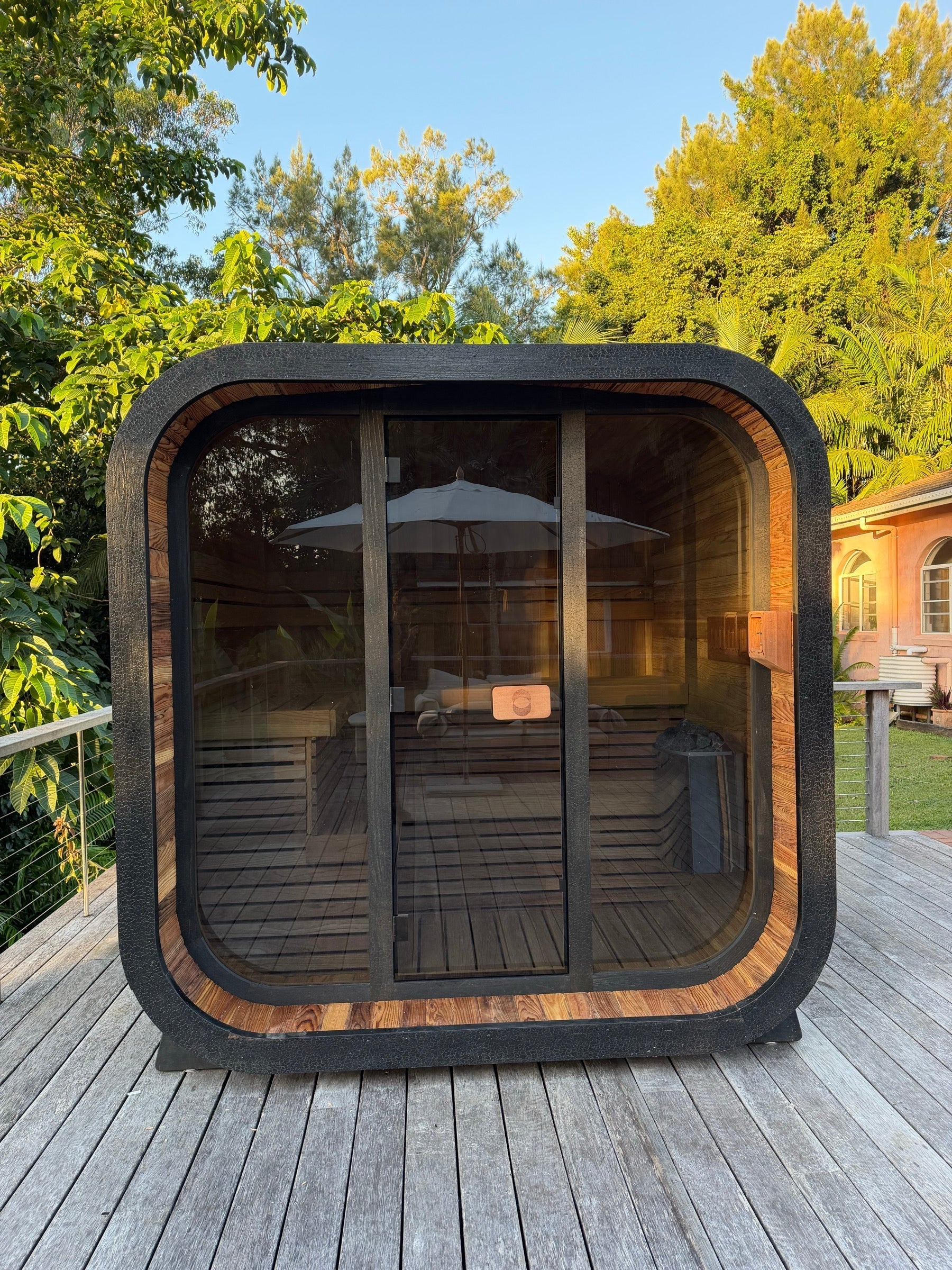
The Psycle Genesis is engineered around one principle: sustain 80–100°C in a residential setting without compromise. Every material choice, every wall thickness, every heater specification exists to make that possible.
The cabin is built from Japanese Cedar at 38mm wall thickness. Cedar is the traditional choice for Finnish sauna construction. It has low thermal conductivity, high dimensional stability at elevated temperatures, and natural antimicrobial properties. At 38mm, the Genesis walls retain heat through a full session without the internal temperature dropping when the door opens. Thin-wall cabins, 20mm to 28mm and common in budget units, lose temperature rapidly and force the heater to cycle hard to recover.
Construction uses zero-glue mechanical joinery throughout. No adhesives. No VOC-emitting resins. No MDF or particle board anywhere in the structure. The non-VOC oil finish means that at 90°C, you are breathing clean air, not formaldehyde off-gassing from heat-activated adhesives. This is not a premium feature. It is the baseline standard that the category largely ignores.
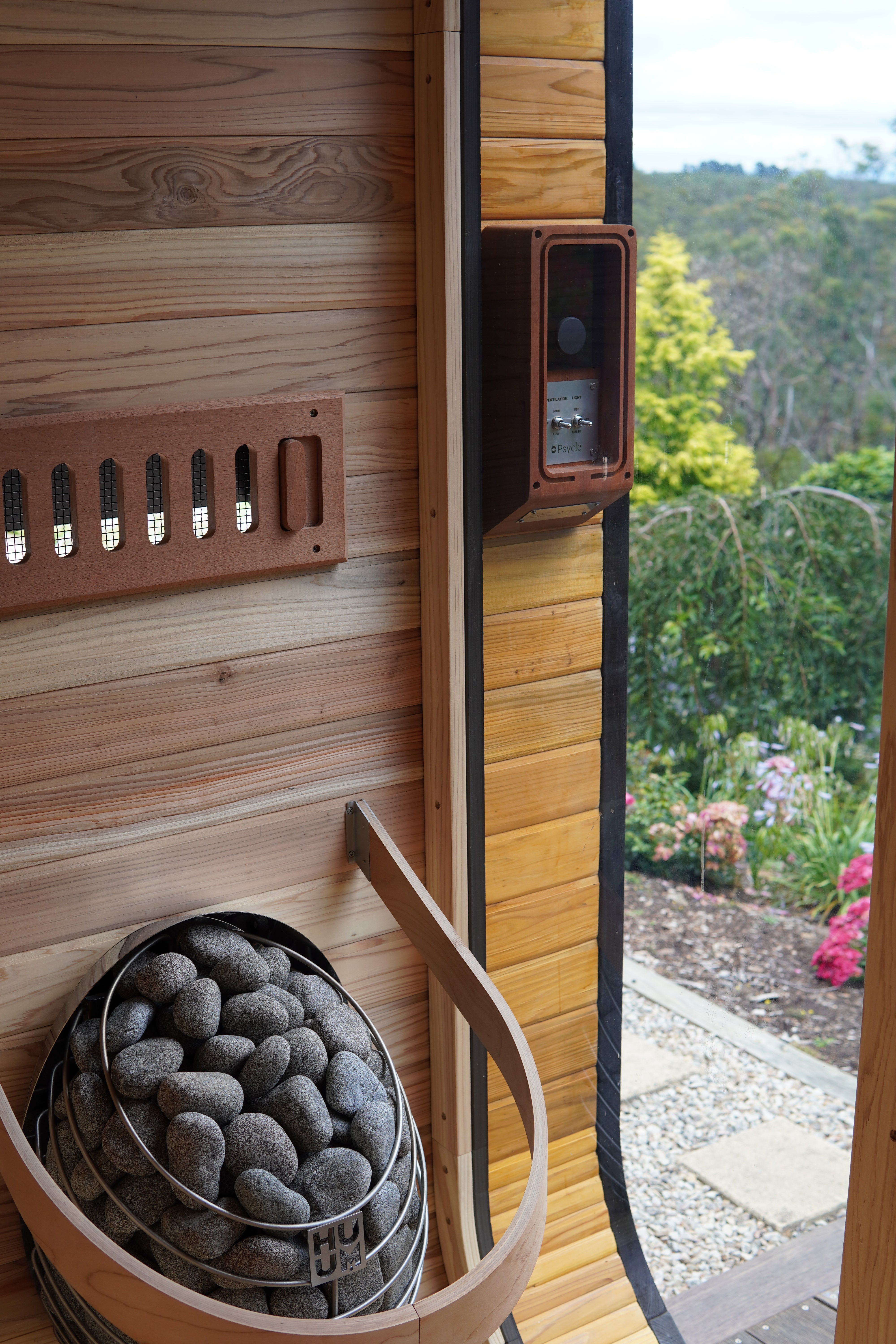
The heater options are HUUM DROP 9kW (60kg Olivine diabase stone volume, WiFi UKU app control) or Harvia Vega 9kW (20kg Olivine diabase stones, mechanical controls). Either heater delivers enough wattage to heat the Genesis cabin to 100°C and hold it. The HUUM's 60kg stone load is the differentiator for löyly quality, addressed in the humidity section below.
The active mechanical ventilation system at 88–120 m³/hr is not a passive vent slot. It is a forced ventilation circuit that pulls fresh air in at floor level and exhausts used air at the ceiling. This matters for temperature consistency: passive-vent saunas develop cold spots at bench height as stale air stratifies. Active ventilation maintains even heat distribution through the full room volume.
For a full technical breakdown of what to evaluate before buying, our complete Australian sauna buying guide covers every specification category.
Zero-Toxin Sauna Engineered for Real Finnish Heat
Japanese Cedar. 38mm walls. HUUM DROP 9kW. Zero-glue construction. Built to sustain 80–100°C, session after session.
SEE THE GENESIS →Heater Wattage vs Room Volume: The Calculation That Determines Your Sauna Temperature
Heater-to-room-volume ratio is the most consequential specification in a home sauna purchase, and the one most buyers overlook. A heater that is undersized for the room it is heating will never reach authentic Finnish temperatures regardless of how long it preheats.
The Finnish standard for heater sizing is approximately 1kW per 1m³ of sauna room volume as a baseline, adjusted upward for rooms with large glass panels, outdoor installations, or insulation thinner than 35mm. In practice, reputable manufacturers recommend slightly higher ratios to achieve and sustain upper-range temperatures (90–100°C).
How to Calculate Your Room Volume
Room volume = interior length × interior width × interior height. For the Genesis (external dimensions 2289H × 2288W × 1945D mm), the interior sauna volume is approximately 6.5–7m³ depending on bench configuration. The Genesis Mini (external 2267H × 1571W × 1950D mm) delivers an interior volume of approximately 4–4.5m³.
| Sauna Volume | Minimum Heater | Recommended Heater | Max Temp Achievable | Psycle Model |
|---|---|---|---|---|
| Up to 4m³ | 4kW | 6kW | 85–95°C | Genesis Mini (6kW) |
| 4–6m³ | 6kW | 8kW | 88–100°C | Genesis Mini (6kW) — upper limit |
| 6–8m³ | 8kW | 9kW | 90–100°C+ | Genesis (9kW) |
| 8–10m³ | 9kW | 12kW | 85–95°C | Custom or commercial |
| Infrared cabin (any) | N/A (radiant panels) | N/A | 45–60°C | Not a Psycle product |
The Genesis Mini's 6kW HUUM DROP will sustain 90°C in its interior volume without overworking. The Genesis's 9kW heater gives headroom: it reaches 90°C faster and can push to 100°C for high-heat sessions without running at ceiling capacity. That headroom matters in cooler climates and for outdoor installations.
When you undersize, the heater runs continuously to compensate. Temperature plateaus 10–15°C below target. The stones never reach their optimal surface temperature, so löyly quality degrades. The heater also wears faster because it never cycles off. An undersized heater is not a cost saving. It is a performance ceiling you cannot override.
For a side-by-side comparison of the Genesis and Genesis Mini specifications, including room volumes and circuit requirements, see our guide to 3-person saunas in Australia and the 4-person sauna buyer guide.
How Löyly and Humidity Interact with Sauna Temperature in Australia
Löyly, the Finnish word for the steam produced when water is poured over hot sauna stones, changes your perceived temperature without moving the thermometer. Understanding this interaction is essential for anyone buying a traditional sauna in Australia, particularly in high-ambient-humidity climates like Queensland and the tropical Northern Territory.
When you pour water onto stones heated to 300–400°C, it flash-evaporates into steam. That steam raises the relative humidity in the room from 5–20% (dry heat) to 20–40% in seconds. Higher humidity slows the evaporation of sweat from your skin, the body's primary cooling mechanism. Your skin thermoreceptors register a sharp spike in perceived heat. The effective temperature feels 10–15°C higher than the air temperature alone.
This is why 90°C Finnish sauna feels dramatically more intense than 90°C in an infrared cabinet. Infrared does not produce steam. It operates at low relative humidity throughout. The heat penetrates tissue differently, without the convective steam spike that drives the most acute cardiovascular response in Finnish bathers. For a full breakdown of how humidity shapes the sauna experience, our guide to sauna humidity in Australia covers the physiology and the practical protocols.
Stone Volume and Why It Determines Löyly Quality
Stone volume is the variable most buyers ignore and most regret. The stones are the thermal battery of the sauna. Their mass determines how much heat energy is stored, and therefore how well they sustain temperature across multiple löyly pours.
The HUUM DROP 9kW in the Genesis carries 60kg of Olivine diabase, a dense, basalt-family volcanic rock with exceptional heat retention and no documented risk of spalling or chemical release at high temperatures. Pour water on 60kg of stones at 300°C and the stone mass absorbs the thermal shock without a significant temperature drop. Pour water on 20kg of stones and you can drop the stone surface temperature measurably, degrading löyly quality for subsequent pours.
The Harvia Vega 9kW in the Genesis carries 20kg of Olivine diabase. It produces quality löyly, particularly for shorter sessions or single users. The HUUM's 60kg load is purpose-built for multiple users, extended sessions, and enthusiasts who pour löyly aggressively. For everything you need to know about getting this ritual right, read our complete löyly guide.
Non-volcanic stones, porous granite, sandstone, smooth river rocks, are a red flag. They crack under thermal cycling, can spall dangerously, and do not retain heat efficiently. The stone specification is as important as the heater wattage. Our complete guide to sauna rocks in Australia covers which stone types are safe, which are not, and why Olivine diabase is the benchmark.

Temperature Protocols by Goal: Detox, Recovery, Sleep, and Cardiovascular
Not every session has the same objective, and temperature interacts with session duration to produce different outcomes. These protocols are built around the 80–100°C range achievable in a properly specified home sauna, not the 50–65°C compromise of an underpowered unit.
Cardiovascular stimulus — 85–100°C, 15–20 min
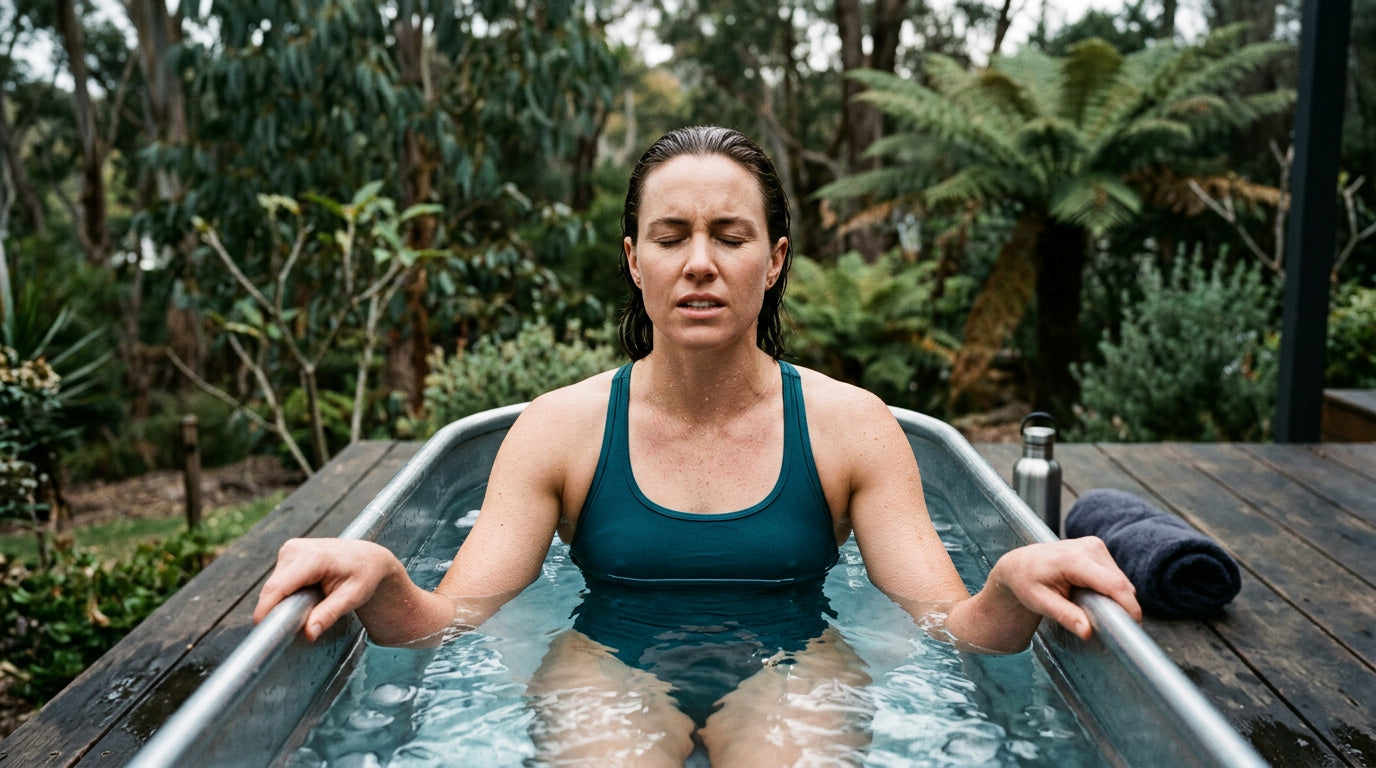
The conditions used in the Laukkanen cohort studies. Upper bench. Two to three rounds with 10-minute cooling intervals. This is the protocol linked to the 50% cardiovascular mortality reduction. Pair with cold plunge between rounds for maximum vasomotor stress — see our sauna cold plunge protocol guide.
Post-training recovery — 80–90°C, 10–20 min
Heat increases blood flow to worked muscles, accelerating lactate clearance and nutrient delivery. Moderate temperature with löyly pours every 5 minutes. Best used within 60 minutes of training. For timing specifics, see our guide on sauna before or after a workout.
Sleep preparation — 80–85°C, 15–20 min, 1–2 hours before bed
A 2019 systematic review and meta-analysis by Haghayegh et al., published in Sleep Medicine Reviews, found that passive body heating 1–2 hours before bedtime improved sleep onset, sleep efficiency, and slow-wave (deep) sleep. The post-sauna temperature drop is the signal: the body's thermoregulatory system interprets falling core temperature as a sleep cue. Use a lower heat setting than cardiovascular sessions to avoid excessive sympathetic activation before bed. More on this in our guide to sauna for sleep in Australia.
Stress and cortisol reset — 80–90°C, 20–30 min total session
A 2021 study in the International Journal of Environmental Research and Public Health found that regular sauna bathing (3+ sessions per week) produced measurable reductions in cortisol levels and self-reported psychological stress within four weeks. Moderate heat with extended dwell time. The parasympathetic recovery period after the session is part of the protocol — build 20 minutes of cool-down into your routine. Full mental health data in our sauna mental health guide.
Detoxification and sweat-rate maximisation — 90–100°C, 10–15 min rounds
Upper-bench high-heat sessions maximise sweat output. Multiple short rounds are more productive than one extended session at this temperature. Aggressive löyly pours at this range drive deep dermal sweating. For evidence on what sauna sweating actually eliminates, see our guide to sauna detoxification and sweat toxin research.
For complete dwell-time guidance across experience levels and health objectives, our guide to how long to stay in a sauna covers every protocol in detail.
What Australians Who Own a Genesis Actually Say
Australians who upgrade from a budget flat-pack or commercial sauna to a Genesis report the same thing: they did not know what a proper sauna felt like until they were in one. The difference is not subtle.
“I had a $3,000 flat-pack cedar sauna for two years. It topped out at 68°C and smelled like chemicals every time I heated it up. The Genesis is a completely different experience — 94°C within 40 minutes, no smell, and the löyly is intense. I've run a daily 20-minute session for 90 days. My recovery markers don't lie.” — Genesis owner, Sydney
“The HUUM heater was the deciding factor. That stone volume is not a marketing spec — you feel it the moment you pour the first ladle. The temperature doesn't drop. It just keeps building.” — Genesis owner, Melbourne
The 3-year cabin warranty and 3-year heater warranty are not small print. They are a signal that the engineering standard behind the Genesis is not a compromise. Psycle builds to a standard they are willing to stand behind for half a decade, because at 90°C, every material decision is exposed.
The Sauna That Does Not Compromise on Temperature
9kW HUUM DROP heater. 60kg Olivine diabase stones. 38mm Japanese Cedar walls. Active ventilation. Australia-wide delivery. 120-day build.
EXPLORE THE GENESIS →Australian Climate Considerations: How Your State Affects Sauna Temperature and Heat-Up Times
Australia's climate range, from tropical Darwin to alpine Hobart, creates genuine differences in home sauna performance that the European-centric specifications of most sauna brands do not account for.
Heat-Up Time by Region
Ambient outdoor temperature directly affects how quickly a sauna cabin reaches target temperature. A Genesis installed on an outdoor deck in Brisbane during summer (ambient 30°C) will reach 90°C in approximately 30–35 minutes. The same cabin installed in a Melbourne backyard in winter (ambient 8°C) may require 45–55 minutes to reach the same temperature. The 9kW heater gets there regardless: ambient differential only affects the timeline, not the ceiling.
Thin-walled cabins (20–25mm) see this differential amplified. At 8°C ambient, a 20mm wall loses heat faster than the heater replaces it at temperature extremes. The Genesis' 38mm walls insulate well enough that cold ambient conditions extend preheat time without preventing the target temperature from being reached.
Outdoor Installation and the Colorbond Roof Option
The Genesis is IP67 rated for outdoor installation, which means Australian weather is not a limitation. The optional Colorbond roof kit is designed for fully exposed outdoor deck placement, handling direct sun, rain, and coastal conditions. This is the installation most Australian buyers choose: the Genesis on a timber deck, accessed from the back door, paired with an Origin cold plunge or natural body of water for contrast.
For Queensland and tropical installations, the sauna's ambient humidity interacts with löyly differently. External relative humidity of 70–90% means the dry preheat phase feels less dry than in southern states. The sauna still hits 80–100°C: ambient humidity affects perceived intensity in the first few minutes, not the thermal ceiling. Our outdoor sauna guide for Australia covers climate-specific installation considerations in detail, and our guide to outdoor sauna and cold plunge setups covers the full contrast installation picture.
Running Costs: What a Daily Sauna Session Actually Costs in Australia
Running a Genesis 9kW heater for a 45-minute session costs approximately AU$0.50–$1.00 at current Australian electricity rates of AU$0.30–0.35 per kWh. A 6kW Genesis Mini session costs slightly less. These figures include preheat time.
Compare that to a commercial sauna drop-in at a gym or recovery studio: typically AU$20–$40 per session in Sydney or Melbourne. A gym membership with sauna access runs AU$1,200–$2,400 per year, with no guarantee of authentic Finnish temperatures, no löyly capability, and shared infrastructure you cannot control. Weekly physio sits at AU$100–$160 per session. A daily Genesis session at $0.75 running cost is not a luxury line item. It is the cheapest high-return recovery tool you can put in your home.
Over a 10-year lifespan, the Genesis running cost is a rounding error against the capital cost of the cabin itself. The cabin is the investment. The running cost is the ongoing return on it. For full cost modelling, our complete guide to home sauna costs in Australia runs the numbers across purchase price, installation, running costs, and opportunity cost.
Red Flags When Buying a Sauna in Australia: What Kills Temperature Performance
The Australian home sauna market contains a wide range of products at a wide range of price points. Most buyers do not know what to inspect. Here is what matters, and what to walk away from.
| Specification | Red Flag | Psycle Standard |
|---|---|---|
| Wall thickness | Under 32mm — loses heat rapidly in cold climates, cannot sustain 90°C+ | 38mm Japanese Cedar throughout |
| Heater wattage | Under 6kW for rooms above 4m³ — will plateau below target temperature | 9kW (Genesis) / 6kW (Genesis Mini) |
| Stone type | Porous granite, sandstone, smooth river rocks — crack under thermal cycling | Olivine diabase only |
| Stone volume | Under 15kg — drops temperature sharply with each löyly pour | 60kg (HUUM DROP) / 20kg (Harvia Vega) |
| Construction adhesives | Glued MDF or particle board — formaldehyde off-gassing at 90°C | Zero-glue mechanical joints throughout |
| Ventilation | Passive vent slots only — uneven heat distribution, stale air | Active mechanical ventilation 88–120 m³/hr |
| Lighting | Standard white or blue-spectrum LEDs — suppress melatonin, disrupt sleep protocols | Amber 585–590nm / Red 630–635nm, IP67, 200°C rated |
| Warranty | Under 2 years — signals low confidence in material longevity | 3-year cabin warranty, 3-year heater warranty |
If you are considering a barrel sauna, prefab kit, or custom build alongside a modular option like the Genesis, our guide to the best home saunas in Australia runs a full market comparison. For installation requirements including electrical circuits, our home sauna installation guide for Australia covers the 50A and 32A circuit requirements, council considerations, and siting decisions.
Ventilation rarely appears in product listings, but it determines whether the heat inside the cabin stays clean and evenly distributed or becomes stale and stratified. A sauna without active ventilation develops temperature differentials of 10–20°C between the floor and the upper bench. You are not getting the full 90°C if the ventilation is passive. Our guide to sauna ventilation in Australia explains why this specification matters more than most buyers realise.
Frequently Asked Questions: Sauna Temperature Australia
What is the ideal sauna temperature in Australia?
The ideal sauna temperature for authentic Finnish heat therapy is 80°C to 100°C, measured at head height on the upper bench. This is the range used in the Kuopio cohort studies, the most thorough long-term sauna health research in existence, and the threshold at which cardiovascular and thermoregulatory adaptations are reliably triggered. Below 70°C, the physiological stimulus is meaningfully reduced.
How does Australian climate affect sauna performance?
Ambient outdoor temperature affects heat-up time, not the temperature ceiling. A Genesis in Brisbane (ambient 28–32°C summer) reaches 90°C in approximately 30–35 minutes. The same cabin in Melbourne in winter (ambient 6–10°C) takes 45–55 minutes. The 38mm Cedar walls and 9kW heater reach the same target temperature in both climates: the insulation standard absorbs the differential. Thin-walled cabins with undersized heaters struggle in cold climates and may not reach 90°C at all in sub-10°C ambient conditions.
What is the difference between Finnish sauna temperature and infrared sauna temperature?
Traditional Finnish saunas operate at 80–100°C using convective heat and steam (löyly). Infrared saunas operate at 45–60°C using radiant panels that heat the body directly rather than heating the air. These are different mechanisms, different physiological responses, and different evidence bases. The landmark cardiovascular studies, Laukkanen et al., 2015 and 2018, were conducted on traditional Finnish sauna bathers, not infrared users. Our traditional vs infrared sauna comparison covers the full science.
How do I know if my sauna heater is powerful enough?
The Finnish standard is approximately 1kW per 1m³ of interior room volume, adjusted upward for large glass panels, outdoor placement, or thin walls. A room of 6–8m³ requires a 9kW heater to sustain 90–100°C. If your heater runs continuously without the room reaching target temperature, or if the temperature drops sharply when the door opens and does not recover within 3–4 minutes, the heater is undersized. No amount of preheating time compensates for insufficient wattage.
Does sauna temperature affect health benefits?
Yes, and specifically, whether you reach the 80–100°C threshold matters. Research by Laukkanen et al. in JAMA Internal Medicine (2015) found that 4–7 weekly sauna sessions at Finnish temperatures reduced fatal cardiovascular disease risk by 50%. These benefits are temperature-dependent: the cardiovascular stress response that drives adaptation requires core body temperature to rise by 1–2°C, which requires sustained ambient heat above 80°C. A 60–70°C session is a warm room. It is not the same stimulus.
How long should I stay in a sauna at 90°C?
For most adults, 10–20 minutes per round at 90°C is the effective window. Beyond 20 minutes, returns diminish and dehydration risk increases. Two to three rounds with 10-minute cooling intervals is the standard Finnish protocol. Beginners should start at 10 minutes per round and build tolerance over several weeks. For a full breakdown by goal and experience level, see our complete guide to sauna session duration.
What is the best sauna temperature for recovery after exercise?
Post-training recovery sessions work well at 80–90°C for 10–20 minutes, used within 60 minutes of finishing exercise. This temperature range promotes blood flow to worked muscles, supports lactate clearance, and begins the parasympathetic recovery shift. Very high heat (95–100°C) immediately post-training can extend sympathetic activation, so moderate heat with controlled löyly is more appropriate for recovery goals. Our guide to sauna for Australian athletes covers performance recovery protocols in full.
How often should I use a sauna to get health benefits?
The Laukkanen cohort data points to 4–7 sessions per week as the frequency associated with the most significant cardiovascular and longevity outcomes. Two to three sessions per week still produced measurable benefits compared to once-weekly use. Daily use at 80–100°C is safe for healthy adults and is the protocol reported by the majority of Genesis owners. For frequency guidance by goal, see our guide on how often you should use a sauna.
Ready to Build Real Heat Into Your Routine?
Free Australia-wide delivery. 3-year cabin warranty. 3-year heater warranty. $1,000 refundable deposit. 120-day build — order now to secure your place in the current production run.
SHOP THE GENESIS →