

The optimal post-workout sauna session is 15–20 minutes at 80–100°C in a traditional Finnish sauna. That duration is long enough to drive measurable cardiovascular and hormonal responses — increased blood flow, accelerated lactate clearance, and a documented rise in human growth hormone — without pushing your already-taxed body into heat stress. Shorter does less. Longer is not better.
Most people who ask this question have already been through a commercial sauna that barely hits 65°C and wondered why they felt nothing. The answer is not longer sessions. The answer is real heat. How hot a sauna should be is the variable that determines whether post-workout heat exposure is recovery or theatre.
Zero-Toxin Sauna Therapy, Built for Australians
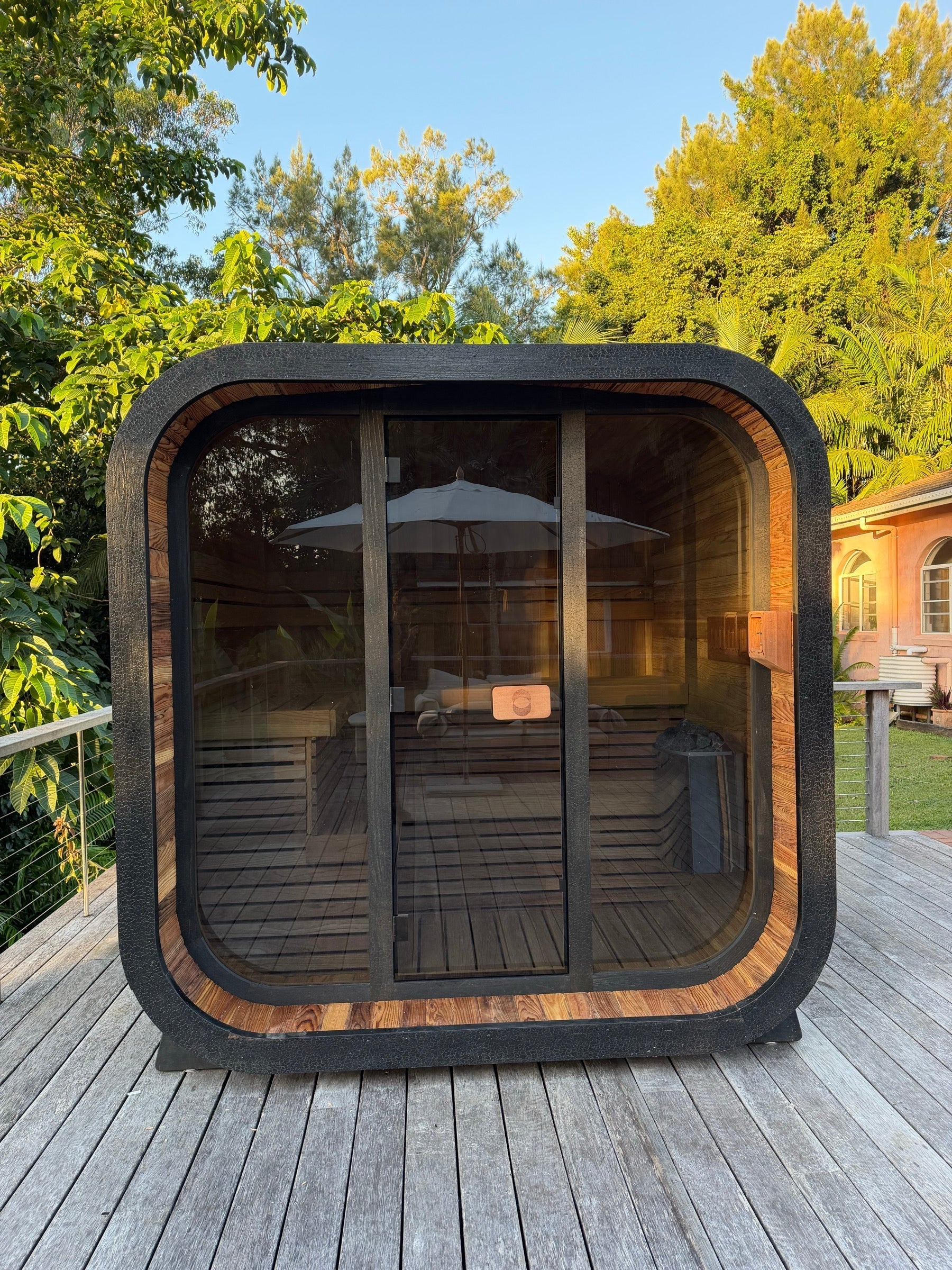
Japanese Cedar exterior. Zero-glue construction. HUUM Drop heater. Built to last decades — not seasons.
SEE THE GENESIS →Why Post-Workout Sauna Sessions Actually Work
When you finish training, your body is in a state of productive stress — elevated heart rate, muscle fibre damage, lactic acid accumulation, depleted glycogen. The goal of recovery is to accelerate the repair cycle, not just wait it out.
Heat exposure at sauna temperatures (80–100°C) triggers a specific set of physiological responses that directly address every one of those stressors. This is not passive relaxation. It is active stimulus.
A 2017 study by Scoon et al., published in the Journal of Science and Medicine in Sport, found that a 30-minute post-exercise sauna session significantly reduced the time to recovery in endurance athletes, decreased muscle soreness, and improved muscle function markers. A separate study in the Journal of Athletic Training (2013) demonstrated that even a 15-minute post-workout session improved perceived soreness and muscle function in elite junior swimmers compared to controls.
What Happens in Your Body During Post-Workout Heat Exposure
Blood flow increases immediately. Sauna heat causes peripheral vasodilation — blood vessels dilate and circulation to fatigued muscle tissue accelerates. Oxygen and nutrients flood tissue that is actively repairing. This is the same mechanism targeted by ice baths, only the opposite thermal direction, and both have distinct roles. The evidence behind sauna benefits covers this in more depth — cardiac output during sauna exposure can match moderate aerobic exercise.
Lactic acid clears faster. Increased circulation accelerates the removal of lactate from muscle tissue. Less residual lactic acid means less next-day soreness — delayed onset muscle soreness (DOMS) is partly a function of metabolic waste accumulation, and heat helps clear it.
Growth hormone spikes. This is the mechanism that separates serious post-workout sauna use from casual relaxation. Dr. Rhonda Patrick — biochemist, researcher, and one of the most cited voices on heat stress and longevity — has documented the hormonal response precisely: two 20-minute sauna sessions at 176°F (80°C) separated by a 30-minute cooling period elevated growth hormone levels two-fold over baseline. Two 15-minute sessions at 212°F (100°C) in dry heat produced a five-fold increase in growth hormone.
Growth hormone drives muscle repair and fibre regeneration. If you train hard and you are not using post-workout heat exposure, you are leaving a significant recovery stimulus on the table.
Core temperature drops post-session, improving sleep. The core temperature rise during sauna, followed by rapid cooling on exit, triggers a parasympathetic shift. Heart rate slows, cortisol drops, and sleep onset is improved. Sleep is when the majority of muscle protein synthesis occurs — this matters.
How Long to Stay in a Sauna After a Workout — By Goal
The right duration depends on what you are trying to achieve and how your body responds to heat. Use this as your framework.
| Goal | Duration | Temperature | Notes |
|---|---|---|---|
| General recovery | 15–20 min | 80–90°C | Standard post-training protocol |
| HGH maximisation | 2 × 15 min | 95–100°C | 30-min cool between sessions |
| New to saunas | 8–10 min | 70–80°C | Build tolerance across 4–6 sessions |
| Contrast protocol (sauna + cold) | 15 min sauna / 2–3 min cold | 80–100°C sauna / 10–15°C cold | 2–3 cycles; end on cold |
| Heavy strength day | 20 min | 85–100°C | Rehydrate fully before entering |
For a full breakdown by experience level and session goal, our guide to sauna session duration covers the full spectrum.
The Post-Workout Sauna Protocol That Delivers Results
Finish training — wait 5–10 minutes
Let your heart rate drop below 120 bpm before entering the sauna. You are adding a thermal load, not sustaining the workout load.
Hydrate before entering
500ml of water minimum before your session. You are already depleted from training — going into a sauna dehydrated accelerates the problem.
Enter at 80–100°C — sit for 15–20 minutes
Upper bench for maximum temperature exposure. Pour löyly (water on the stones) at the 5-minute mark to drive humidity and deepen the heat response. What löyly is and why it matters explains the difference it makes to perceived and physiological heat load.
Exit and cool — 10–15 minutes
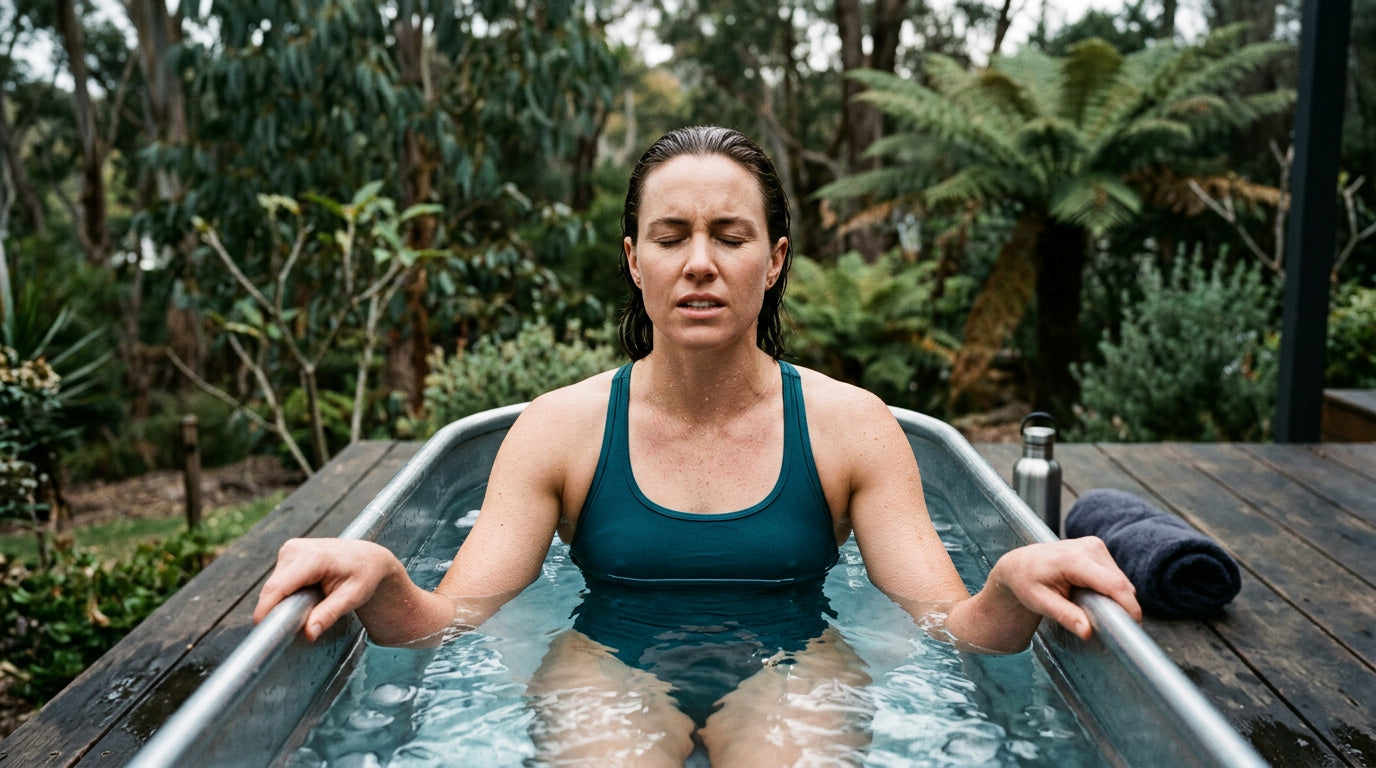
Cold shower, cold plunge, or simply sit in cool air. Do not rush back in. The cooling phase is when the parasympathetic response kicks in and the recovery cascade begins.
Optional second round for HGH maximisation
If your goal is growth hormone elevation, re-enter for a second 15–20 minute session after the cooling period. Two rounds is the protocol documented in the research. One round still delivers.
Rehydrate and eat
Replace fluids — 750ml minimum post-session. If you trained fasted, eat within 30 minutes of exiting the sauna. For sauna use during fasted training windows, our guide to sauna while fasting covers the specific considerations.
The Sauna That Does Not Compromise
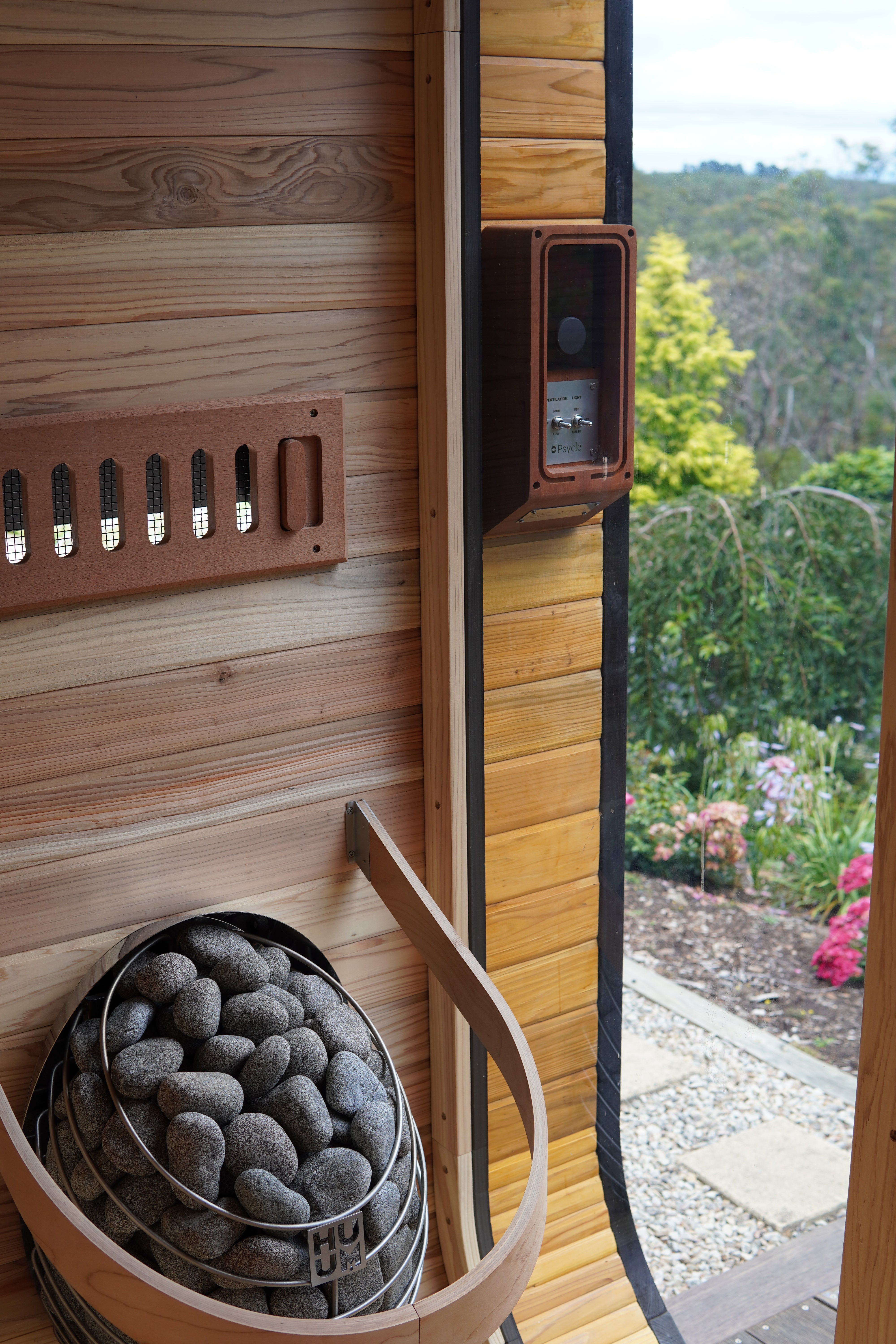
Active mechanical ventilation. Blue light blocking lighting. HUUM Drop 9kW heater with 60kg stone volume. IPX4 rated for year-round outdoor installation across Australia.
EXPLORE THE GENESIS →Why the Sauna You Use Changes the Outcome
Most home saunas sold in Australia are built with glued MDF panels and particle board. Heat that to 90°C and the adhesives off-gas formaldehyde directly into the air you are breathing during your session. That is not recovery. That is a different kind of physiological stress — one you are paying for the privilege of inflicting on yourself.
The research on post-workout sauna recovery is conducted in traditional Finnish saunas operating at 80–100°C with natural timber construction. The results do not transfer cleanly to a cheap flat-pack unit running at 60°C with synthetic materials. The full comparison between traditional and infrared saunas makes this distinction plain.
The Genesis is built differently. Japanese Cedar exterior — naturally antimicrobial, dimensionally stable in Australian conditions, aged beautifully. Nordic Spruce benches. Zero-glue mechanical joints throughout — no formaldehyde, no off-gassing, no compromise. The HUUM Drop 9kW heater carries 60kg of volcanic stone volume, which means the temperature does not drop when you pour löyly. It holds.
This is what the Finnish research is actually testing. Build your protocol around a sauna that delivers those conditions.
If you are weighing up which model fits your space and household, our complete home sauna buyer's guide for Australia covers the decision in full — size, installation, power requirements, and what separates a sauna that performs from one that just looks like one.
How Often Should You Sauna After Workouts
The research on sauna frequency for performance and recovery points to 3–5 sessions per week as the sweet spot. A 2018 study published in JAMA Internal Medicine by Laukkanen et al. tracked 2,315 Finnish men over 20 years and found that men who used a sauna 4–7 times per week had a 50% lower risk of fatal cardiovascular events compared to once-weekly users — suggesting that frequency is the variable that compounds over time.
For post-workout use specifically: if you train 4 times per week, sauna after each session. If you train daily, every second day is sufficient to avoid cumulative heat fatigue. How often you should use a sauna provides the full frequency breakdown across training loads and health goals.
Sauna After Workout vs Before — Does Timing Matter?
Yes. Post-workout sauna is generally the correct order for recovery goals. Pre-workout sauna can elevate core temperature and heart rate before you even begin training — which adds cardiovascular load without performance upside for most athletes. The exception is cold weather and specific mobility work, where pre-session heat loosens tissue effectively.
For the majority of people training for performance, aesthetics, or health: train first, sauna second. The heat stimulus compounds the training adaptation. It does not replace it.
Safety — What You Need to Know
Post-workout sauna is safe for most healthy adults when done correctly. Several conditions change the calculus:
- Cardiovascular conditions: Consult your GP before adding sauna to a post-exercise routine. The cardiovascular load during sauna use is real — cardiac output increases significantly.
- Medications: Some medications affect thermoregulation or blood pressure response to heat. Check with your prescribing doctor.
- Alcohol: Never use a sauna post-workout if you have consumed alcohol. Alcohol impairs thermoregulation and compounds dehydration risk.
- Illness: Running a fever or managing an acute illness — skip the session. Additional heat load is not the right stress during systemic infection.
Dehydration is the most common issue. You are already in a sweat deficit from training before you enter the sauna. 500ml before, 750ml after — minimum.
Frequently Asked Questions
How long should I sit in a sauna after a workout?
15–20 minutes at 80–100°C is the evidence-based target for post-workout sauna sessions. This duration is sufficient to drive blood flow increases, lactate clearance, and a meaningful growth hormone response. Beyond 20–25 minutes, the additional benefit diminishes and dehydration risk rises — particularly after a training session that already depleted your fluid levels.
Should I shower before getting in the sauna after a workout?
A quick rinse is advisable for hygiene, particularly if you are using a shared sauna. For a home sauna, it is personal preference. What matters more is that you are dry when you enter — wet skin reduces the initial heat tolerance and can make the air feel uncomfortably humid before the stones have had time to drive the right kind of steam.
How long after a workout should I wait before entering a sauna?
Wait until your heart rate has returned to below 120 bpm — typically 5–10 minutes of rest post-training. Entering the sauna at peak heart rate immediately after a high-intensity session layers cardiovascular stress on top of cardiovascular stress. The recovery response is better if your body has had a brief window to begin transitioning out of fight-or-flight mode.
Is a sauna good for muscle recovery after weights?
Yes — with evidence. Heat exposure at sauna temperatures increases blood flow to muscle tissue, accelerating nutrient delivery and metabolic waste removal. The documented growth hormone elevation from two 15-minute sessions at high heat (documented by Dr. Rhonda Patrick citing research at 100°C) is directly relevant to post-resistance training recovery. Muscle protein synthesis continues for hours after training — the hormonal environment matters.
Can I use a sauna every day after working out?
For most people training at moderate intensity, daily post-workout sauna use is manageable. The primary limiting factor is cumulative dehydration — you need to be replacing fluids consistently. If you are training at high volume or in Australian summer conditions, consider alternating sauna days and monitoring recovery markers. Sleep quality and morning resting heart rate are the most accessible indicators that your recovery load is balanced.
Build This Into Your Daily Routine
Free Australia-wide delivery. 3-year cabin warranty. 120-day build — order now for delivery this season. $1,000 refundable deposit to secure your place in the build queue.
SHOP THE GENESIS →