
Contrast Therapy Australia: The Complete Science Guide
Contrast Therapy Australia: The Complete Science Guide

Contrast therapy is the deliberate alternation of heat and cold exposure—typically a traditional sauna at 80–100°C followed immediately by a cold plunge at 10–15°C, repeated across multiple rounds. In Australia, contrast therapy is gaining serious traction among athletes, high performers, and anyone who wants to recover harder, think more clearly, and condition their cardiovascular system without adding another session to their training week.
This is not a trend. Nordic and Finnish populations have practised heat-cold cycling for centuries. The science explaining why it works has accumulated rapidly over the past two decades. A 2022 meta-analysis published in the British Journal of Sports Medicine found contrast water therapy outperformed passive recovery and cold water immersion alone for reducing delayed-onset muscle soreness (DOMS) and accelerating return-to-performance metrics. The question for Australians is no longer whether it works—it’s how to build it properly at home.
Why Most Australians Are Recovering Wrong
The standard recovery toolkit in Australia is a foam roller, a cold shower, and maybe a protein shake. For the training loads that serious athletes and high performers are putting themselves through, that is not enough. Not even close.
Cold showers do not get cold enough to drive the vascular adaptations that matter. A shower at 18–22°C produces minimal norepinephrine response. It is not the same stimulus. You are not getting the same result. You are just uncomfortable for a few minutes and calling it recovery.
Commercial recovery suites—the ones attached to gyms and wellness studios—are expensive per visit, inconvenient to schedule around training, and built for throughput, not precision. You are sharing water, working around operating hours, and paying $30–$60 per session for access to equipment that may or may not be maintained to the temperature specifications that matter.
The other failure point is heat quality. If you have tried a budget home sauna and wondered why it did not feel like the real thing, the answer is usually the heater and the construction. Flat-pack saunas with low-mass heaters and MDF panels do not reach or hold the temperatures required for genuine thermotherapy. Some use glued particle board that off-gasses formaldehyde at elevated heat. That is not a minor inconvenience—that is the direct opposite of what you are trying to achieve.
If you want to understand the full case for traditional Finnish-style heat before pairing it with cold, our guide to sauna benefits in Australia covers the evidence base in detail.
What Contrast Therapy Actually Does to Your Body
Contrast therapy is a form of hormetic stress—a controlled physiological challenge that produces adaptation when the stimulus and recovery are balanced correctly. The mechanism operates through two primary pathways: vascular cycling and neuroendocrine response.
Vasodilation and vasoconstriction cycling. When you enter a sauna at 80–100°C, your peripheral blood vessels dilate aggressively. Blood flow to the skin surface increases by up to 50–70% as your body attempts to dissipate heat. Heart rate rises to match the cardiovascular load. When you immediately transfer to cold water at 10–15°C, your vessels constrict hard and fast. Blood is driven back toward your core and your organs. Repeat this cycle across three rounds and you are essentially doing cardiovascular interval training without moving.
Norepinephrine and neurotransmitter release. A 2021 study by Søberg et al. published in Cell Metabolism found that cold water immersion at 14°C drove a 300% increase in norepinephrine and a 250% increase in dopamine. These are not marginal shifts. Norepinephrine improves focus, mood, and alertness for hours post-exposure. Dopamine drives motivation and sustained attention. The heat component amplifies this by priming the vascular system for a more dramatic cold response.
Metabolite clearance and inflammation control. Heat-driven vasodilation pushes blood through fatigued muscle tissue, accelerating the removal of lactate, creatine kinase, and other metabolic byproducts. The cold phase reduces pro-inflammatory cytokine activity without shutting down the anabolic signalling that drives adaptation. This is the key distinction between contrast therapy and cold-only protocols: cold alone post-training can blunt muscle protein synthesis if used immediately and aggressively. Contrast therapy, by including heat, preserves the anabolic window while still controlling excessive inflammation.
For athletes timing their recovery sessions around training, our guide to sauna after workout covers the optimal timing and sequencing in detail.
The Finnish and Nordic Roots of Contrast Therapy
This is not a wellness industry invention. Finnish sauna culture—dating back over 2,000 years—has always included cold exposure as an integral part of the ritual. In Finland, rolling in the snow or jumping through a hole cut in a frozen lake after sauna is standard practice, not an extreme sport. It is called avantouinti—ice swimming—and it is a winter staple for a significant portion of the Finnish population.
The Scandinavian tradition is built on the same principle: heat until you are fully saturated, then cold until your skin screams, then rest. Repeat. The rest phase is not passive—it is when the adaptation consolidates. The parasympathetic nervous system takes over, heart rate slows, and the body begins its repair sequence.
Finnish saunas operate at 80–100°C with high stone mass to maintain temperature stability when water is thrown on the rocks. The practice of löyly—pouring water over heated stones to produce steam—amplifies the perceived heat and drives sweat response more aggressively than dry heat alone. Without high stone mass, löyly fails. The temperature drops, the steam is thin, and the experience bears no resemblance to the genuine article.
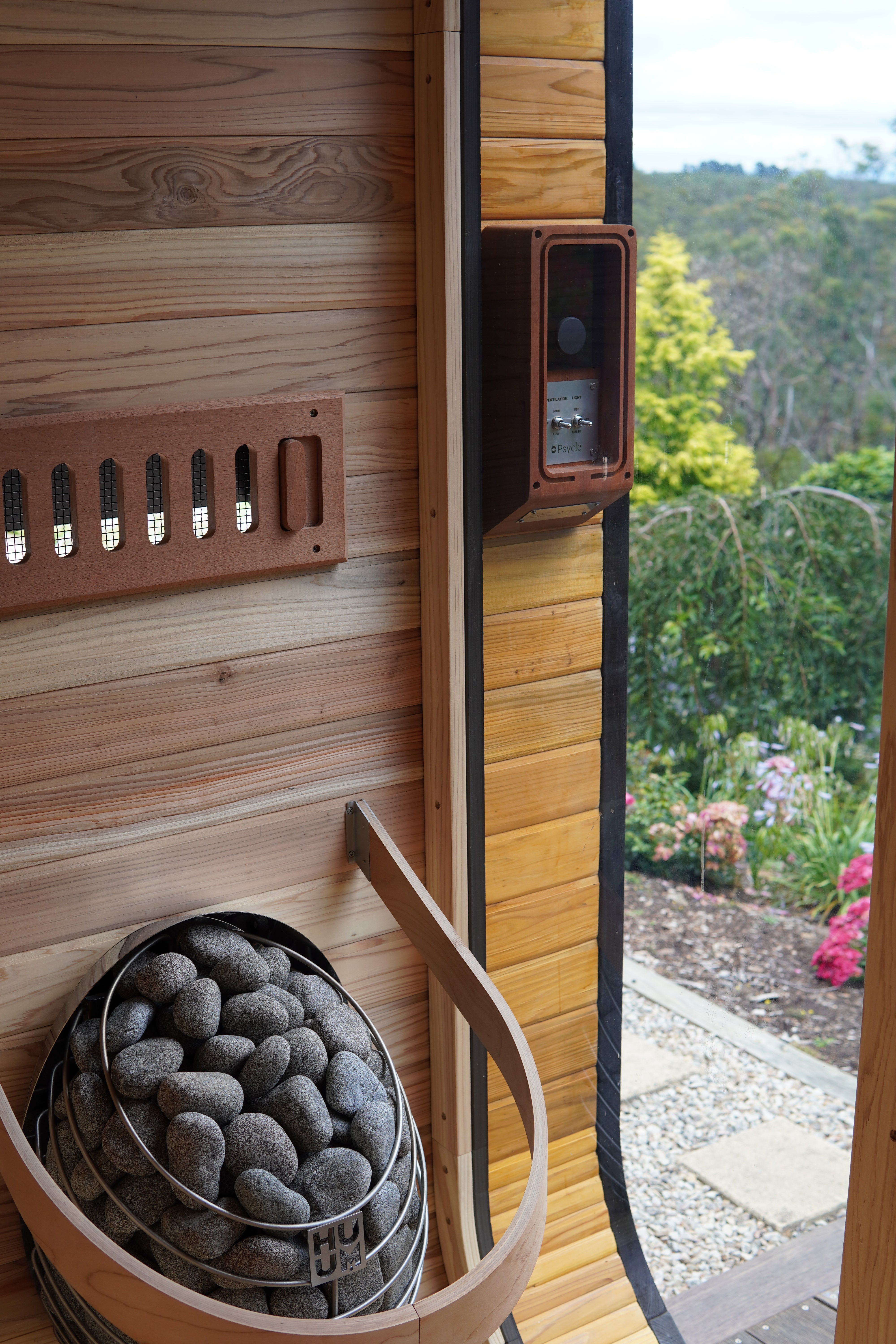
Psycle’s Genesis sauna uses a HUUM Drop heater loaded with 60kg of volcanic stone. That stone mass is why the temperature holds when you pour. It is why the löyly is dense and enveloping, not a brief puff of mist that dissipates in seconds. Engineering matters here in ways that are immediately, physically apparent.
The Science of Heat Alone vs Cold Alone vs Contrast
| Outcome Marker | Sauna Only | Cold Plunge Only | Contrast Therapy |
|---|---|---|---|
| Muscle soreness (DOMS) | Moderate reduction | Good reduction | Strongest reduction |
| Cardiovascular conditioning | Strong—passive cardiac load | Moderate—vagal tone | Strongest—vascular interval effect |
| Norepinephrine release | Moderate increase | High increase (~300%) | Very high—heat primes the response |
| Mood and mental clarity | Strong—beta-endorphin release | Strong—dopamine uplift | Strongest—both pathways activated |
| Metabolic rate | Mild elevation | Moderate—brown fat activation | Moderate to strong |
| Sleep quality | Strong—core temp drop post-sauna | Moderate | Strong—parasympathetic activation |
| Anabolic signalling preservation | Neutral to positive | Risk of blunting if post-training | Preserved when heat leads |
The pattern is consistent across markers. Contrast therapy does not just add the benefits of each modality—it produces outcomes that neither achieves alone. The vascular cycling effect, the compounded neuroendocrine response, the parasympathetic activation during rest phases: these are emergent properties of the combination. This is why the Contrast Kit exists. Heat recovers you. Cold hardens you. Together, they transform you.
Zero-Toxin Contrast Therapy, Built for Australian Homes
Genesis sauna: Japanese Cedar exterior, HUUM Drop heater, 60kg stone volume, zero-glue construction. Origin cold plunge: precision temperature control, purpose-built for daily use. Both delivered and installed across Australia.
SEE THE CONTRAST KIT →Contrast Therapy Benefits: What the Research Confirms
Dr Rhonda Patrick, biomedical scientist and researcher at the Buck Institute for Research on Aging, has written extensively on heat shock proteins, hyperthermic conditioning, and cold exposure. Her work synthesises the molecular mechanisms behind sauna and cold protocols, noting that heat stress upregulates heat shock proteins (HSPs) which repair damaged proteins and maintain cellular function under stress. Cold exposure independently activates cold shock proteins and drives mitochondrial biogenesis through norepinephrine-mediated pathways.
Together, these stress responses create a dual hormetic signal. Your body is receiving two distinct adaptive challenges in close succession. The rest phase between rounds is when the consolidation happens—heart rate drops, HRV recovers, parasympathetic tone reasserts. This is not passive time. It is when the adaptation is being written into your physiology.
Cardiovascular health. A 2018 study by Laukkanen et al. in Mayo Clinic Proceedings found that sauna use 4–7 times per week was associated with a 50% reduction in fatal cardiovascular events compared to once-weekly use. This was for sauna alone. Contrast therapy adds vascular interval training on top of that base—the rapid cycling between high peripheral blood flow and high central pooling conditions the vessel walls and improves endothelial function.
Inflammation and immune function. Regular contrast therapy has been shown to modulate inflammatory markers including IL-6, TNF-alpha, and C-reactive protein. This is not immune suppression—it is immune regulation. Athletes using contrast protocols consistently report fewer minor illness episodes during heavy training blocks, which aligns with research on the immunomodulatory effects of thermal cycling.
Mental health and cognitive performance. The norepinephrine and dopamine surges from cold exposure translate to measurable improvements in mood, attention, and stress resilience. A 2023 review in Neuroscience and Biobehavioural Reviews found that cold water immersion protocols produced significant reductions in self-reported depression and anxiety scores across multiple study cohorts. The heat component adds beta-endorphin release and dynorphin-mediated euphoria—the same mechanisms behind runner’s high.
For a full breakdown of the evidence behind heat therapy alone, our sauna benefits guide for Australians covers the research across cardiovascular, cognitive, metabolic, and longevity markers.
Contrast Therapy in Australia: Year-Round Usability
One of the objections you hear about cold plunging in Australia is timing. The assumption is that it is a northern hemisphere winter practice—that Australians have no cultural context for cold immersion and no climatic need for heat therapy.
This is backwards. Byron Bay, where Psycle is based, sits at a latitude where summer temperatures regularly exceed 30°C. The psychological resistance to entering a sauna in summer heat is real. But the physiology does not change. Your body’s vascular response to moving from 100°C sauna heat to 10°C water is just as powerful in February as in July. The cold plunge is, if anything, more immediately reinforcing in summer—the contrast between ambient heat and cold water is sharper, the sensation more acute, the catecholamine response no less intense.
Australian outdoor living also means the infrastructure makes sense here in a way it does not in apartment-dense cities. A backyard sauna and cold plunge setup in a Byron Bay or Sydney garden is architecturally coherent and year-round functional. The Genesis is IPX4 rated—it handles Australian weather, full stop. You do not need to build a shed around it or bring it inside for summer.
The broader Australian wellness culture has moved decisively in this direction. Cold plunging culture has accelerated significantly since 2021, driven by both research dissemination and a shift toward performance-oriented approaches to health. The demand for home setups has outpaced commercial facility capacity in most major Australian cities. People who take their recovery seriously are building it into their homes, not scheduling it around a gym’s operating hours.
What You Need to Build Contrast Therapy at Home
There are two components. Both matter. Neither can be compromised without degrading the protocol.
The sauna. You need a traditional Finnish-style sauna capable of reaching and holding 80–100°C with a high-mass heater that supports löyly. This rules out infrared saunas—infrared operates at 50–70°C and does not use steam, which means it cannot produce the heat stress required for genuine thermotherapy or the vascular response that contrast protocols depend on. If you want to understand the differences in depth, our traditional sauna vs infrared comparison covers the physiological and experiential distinctions without bias.
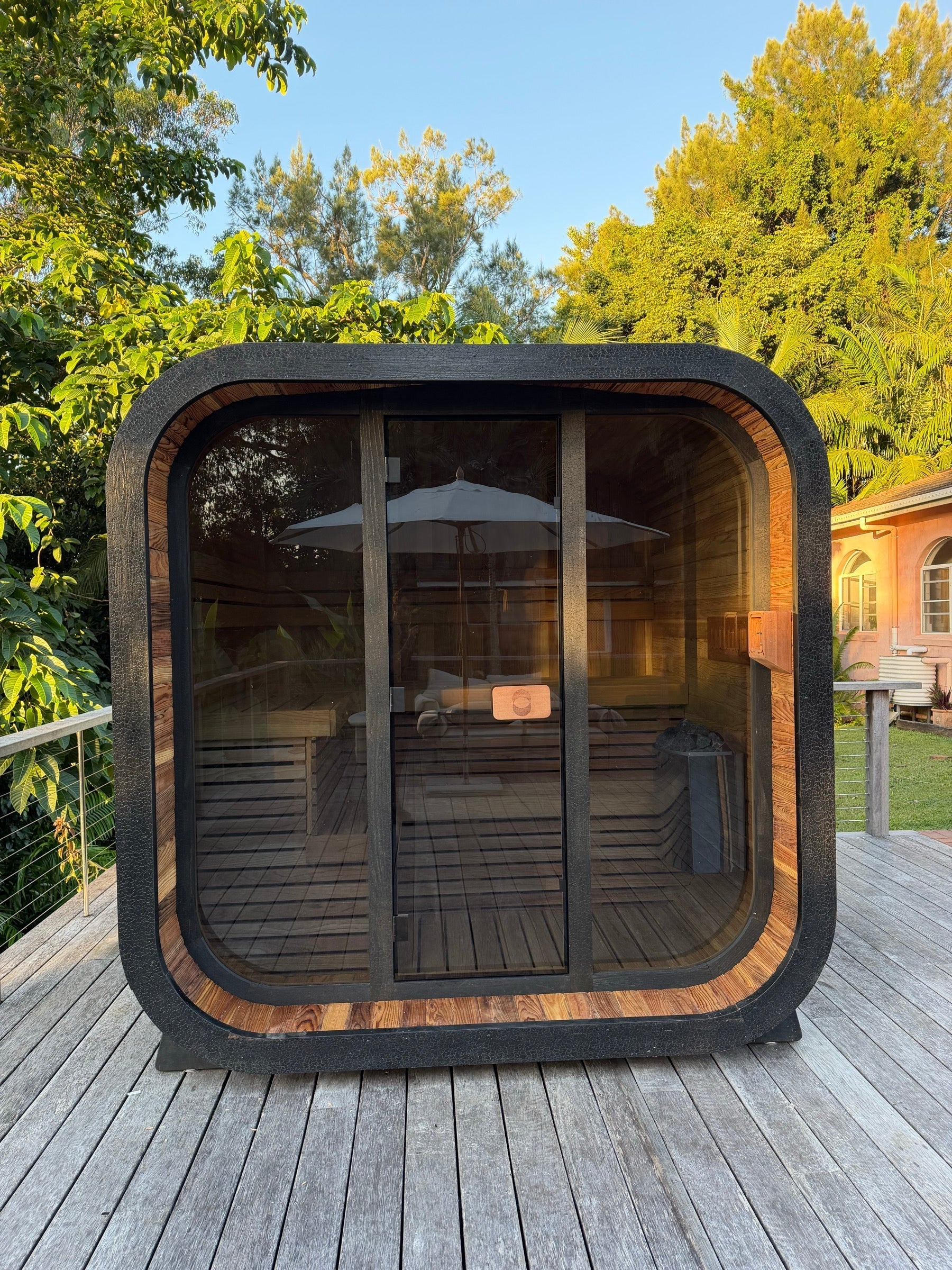
The Genesis is Psycle’s flagship home sauna. Japanese Cedar exterior. Nordic Spruce benches. HUUM Drop 9kW heater with 60kg of volcanic stone. Zero-glue mechanical joints throughout—no formaldehyde off-gassing at temperature. Active mechanical ventilation keeps the air clean and fresh across a full session. Blue light blocking lighting preserves melatonin if you are using it in the evening. IPX4 rated for permanent outdoor installation. It runs on a 50A circuit and reaches 70–100°C. Five-year cabin warranty. Three-year heater warranty. 120-day build from order to delivery.
The Genesis Mini carries the same zero-toxin specification and material standards in a smaller footprint—correct for apartments, tight outdoor spaces, or households with two users. It runs a HUUM Drop 6kW heater and requires a 32A circuit. If you have the space, the Genesis 3–5 person capacity means it grows with your household and holds its value as a long-term lifestyle asset.
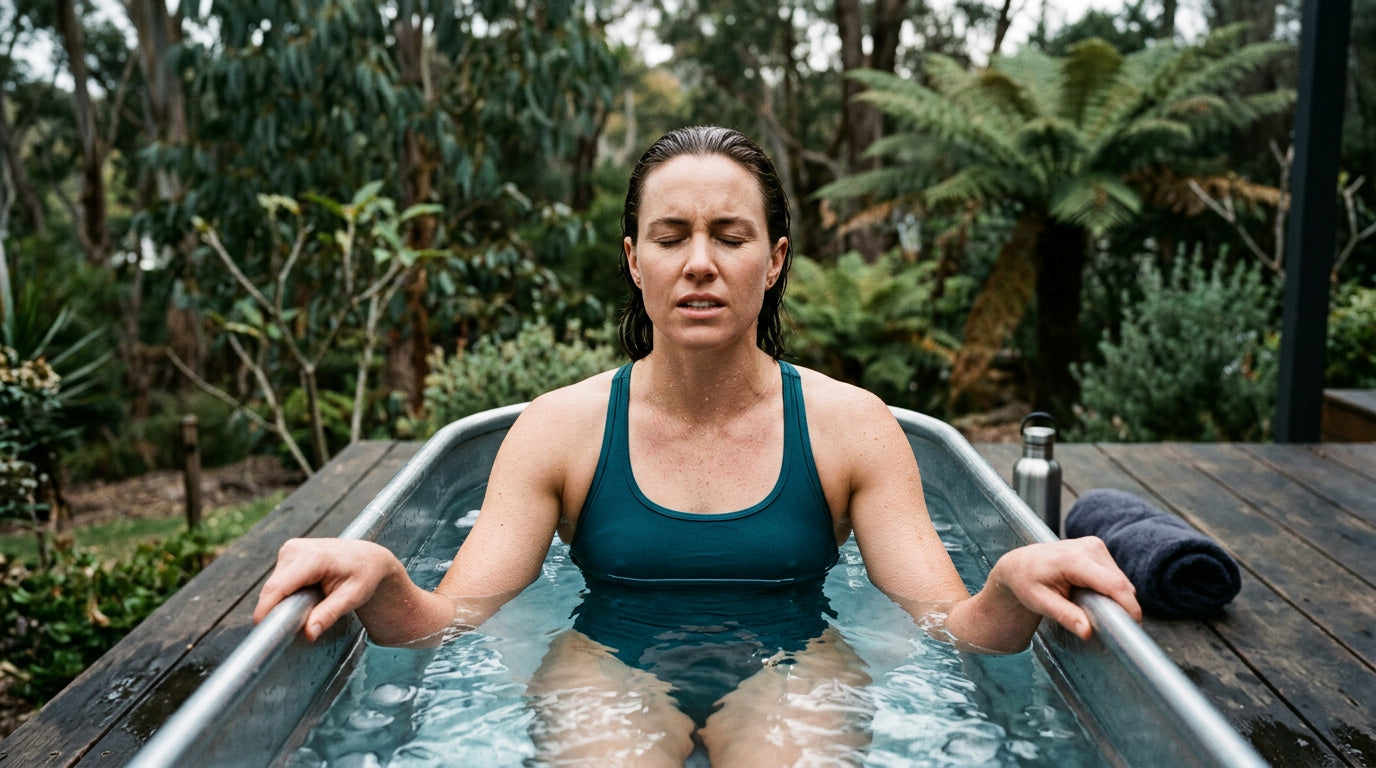
The cold plunge. Purpose-built is not optional. A bath filled with ice does not maintain temperature across a full contrast session. Ice melts. Temperature drifts. You spend half the session adjusting the stimulus instead of completing the protocol. The Origin is Psycle’s premium cold plunge—built for precision temperature control and daily use in Australian conditions.
Together, the Genesis and Origin are sold as the Contrast Kit—Psycle’s highest-value bundle, delivered and installed across Australia. The Contrast Kit Mini pairs the Genesis Mini with the Origin for smaller footprints. If you are researching what a full home setup costs relative to commercial alternatives, our home sauna cost guide for Australia breaks down the numbers across build, installation, and long-term value.
The Contrast Therapy Protocol: How to Structure Your Sessions
This is the protocol that the research supports and that high performers across Australia are running. It is not complicated. The discipline is in the execution.
Pre-Session: Hydrate and Set Temperature
Drink 500ml of water 20 minutes before your session. Set the Genesis to 90°C and allow 30–40 minutes for the heater and stone mass to reach operating temperature. Set the Origin to 10–12°C.
Round 1: Sauna 12–15 Minutes
Enter the sauna and allow your core temperature to rise. Pour löyly at the 8-minute mark to intensify the heat and drive sweat response. Stay until you are fully saturated—12 to 15 minutes for most people. If you are new to sauna, start at 10 minutes and build over sessions. Our guide to how long to stay in a sauna covers duration by goal and experience level.
Immediate Transfer: Cold Plunge 2–3 Minutes
Move directly to the Origin. Do not shower first. Do not pause. The abruptness of the transition is the stimulus. Submerge to shoulder level. Breathe slowly and deliberately. Stay for 2–3 minutes. The first 30 seconds are the hardest. After that, the cold shock response settles and the dopamine begins.
Rest: 5 Minutes
Exit the cold plunge and rest in open air. Do not immediately re-enter the sauna. This rest phase is when the parasympathetic nervous system consolidates the adaptation. Sit. Breathe. Let your heart rate settle. This is not optional downtime—it is part of the protocol.
Repeat: Rounds 2 and 3
Complete the sauna–cold–rest cycle two more times for three total rounds. Most of the physiological adaptation occurs across the three-round structure. If time permits, a fourth round adds incremental benefit without significant additional recovery cost.
End on Cold
Always finish on the cold plunge, not the sauna. Ending on cold maximises vasoconstriction, drives the final norepinephrine peak, and sets the physiological state for recovery and sleep. Ending on heat leaves your core temperature elevated, which works against sleep quality and the recovery consolidation you are trying to drive.
For questions about how often to run this protocol, our sauna frequency guide covers the research on optimal session cadence across different training volumes and recovery goals.
What Australians Who Run This Protocol Say
The shift people report is not subtle. It is not a minor improvement at the margins. The pattern across people who have built a daily or near-daily contrast protocol is consistent: recovery markers improve within the first two weeks, sleep quality shifts noticeably within the first month, and the psychological dependency—the feeling that something is off when a session is missed—develops within 30 to 60 days.
“I’ve run this protocol daily for 90 days. My recovery markers don’t lie. HRV up, resting heart rate down, and I haven’t had a significant DOMS episode since week three. The Genesis gets to temperature fast and holds it—the 60kg stone mass makes a real difference when you pour.”
“I was spending $50 a session at a recovery studio twice a week. That’s $5,200 a year for someone else’s equipment on someone else’s schedule. The Contrast Kit paid for itself in the first year and I’m using it every day instead of twice a week.”
This is the logic that most serious buyers arrive at. The cost of a Contrast Kit, amortised over ten years of daily use, is less per session than a single commercial recovery visit. It is not a luxury purchase. It is an infrastructure decision.
The Sauna That Does Not Compromise
Genesis + Origin delivered and installed across Australia. 3-year cabin warranty. 120-day build. A $1,000 refundable deposit holds your place in the build queue.
EXPLORE THE CONTRAST KIT →Frequently Asked Questions About Contrast Therapy
How do you do contrast therapy at home?
To do contrast therapy at home, heat your sauna to 80–100°C and spend 12–15 minutes inside. Immediately transfer to a cold plunge at 10–15°C for 2–3 minutes. Rest for 5 minutes, then repeat for 3 rounds total. End on cold for maximum vasoconstriction and norepinephrine release. You need a traditional Finnish-style sauna and a purpose-built cold plunge—not a bath filled with ice. Temperature drift across a session eliminates the precision the protocol requires.
Is contrast therapy safe?
Contrast therapy is safe for most healthy adults when protocols are followed correctly. Avoid contrast therapy if you have uncontrolled hypertension, cardiovascular disease, Raynaud’s syndrome, or are pregnant. The rapid vascular shifts put demand on your cardiovascular system—begin with shorter cold exposures (60 seconds) and build gradually over two to four weeks. If you feel dizzy, lightheaded, or experience chest discomfort, exit immediately. Consult a physician before starting any contrast therapy protocol if you have existing health conditions.
How often should you do contrast therapy?
Research supports contrast therapy 3–4 times per week for athletes in heavy training blocks. For general recovery and cardiovascular conditioning, 2–3 sessions per week is sufficient and sustainable. Daily contrast therapy is practised by many high performers without adverse effects, provided adequate hydration is maintained before and after each session. The Finnish population has used daily sauna bathing for centuries—the addition of cold plunging is a natural extension of that tradition, not an escalation of it.
What is the difference between contrast therapy and cold water immersion?
Cold water immersion is cold exposure only—you enter cold water without prior heat exposure. Contrast therapy alternates between heat (sauna at 80–100°C) and cold (plunge at 10–15°C) across multiple rounds. The cycling of vasoconstriction and vasodilation in contrast therapy produces physiological adaptations that cold alone cannot replicate, including greater norepinephrine release, stronger cardiovascular conditioning, and superior metabolite clearance from muscle tissue. Cold alone post-training can also blunt muscle protein synthesis if applied immediately and aggressively—contrast therapy, by including heat, preserves the anabolic window.
Does contrast therapy help with muscle recovery?
Yes. A 2022 meta-analysis published in the British Journal of Sports Medicine found that contrast water therapy reduced delayed-onset muscle soreness more effectively than passive recovery or cold water immersion alone. The mechanism is vascular: heat-driven vasodilation flushes metabolic waste from muscle tissue, while cold-driven vasoconstriction reduces inflammatory cytokine activity. Together, the two modalities produce a pumping effect that accelerates tissue repair and reduces the performance deficit in the 24–72 hours following high-intensity training.
For those considering the full home sauna category before committing to a contrast setup, our home sauna buyer’s guide for Australia covers everything from electrical requirements to outdoor installation and material standards.
Ready to Build This Into Your Routine?
Free Australia-wide delivery. Full installation included. 3-year cabin warranty—the longest in the Australian market. 120-day build: order now and your Contrast Kit is ready for winter.
SHOP THE CONTRAST KIT →