
Ice Bath Australia: Complete Guide to Cold Immersion
Ice Bath Australia: The Complete Guide to Cold Water Immersion

Key Takeaways
- Cold water immersion at 10-15°C for 10-15 minutes triggers a 200-300% norepinephrine spike, directly improving focus, mood, and stress resilience.
- A 2018 meta-analysis by Dupuy et al. in Frontiers in Physiology found cold-water immersion is among the most effective modalities for reducing delayed onset muscle soreness across 99 studies and 1,000+ athletes.
- 316 marine-grade stainless steel is the only material worth considering for a permanent Australian home installation - it handles UV, humidity, salt air, and full outdoor exposure without degrading.
- A dedicated cold plunge unit with a chiller holds your target temperature 24/7 - no ice runs, no temperature drift, no compromises between sessions.
- Beginners should start at 15°C for 2-3 minutes and acclimatise progressively - cold shock response is real and gradual exposure is the protocol that sticks.
- Contrast therapy - alternating heat and cold - produces recovery outcomes neither modality achieves alone. The Psycle Contrast Kit pairs the Genesis sauna with the Origin cold plunge for exactly this.
- The Psycle Origin ships Australia-wide with a 5-year warranty and arrives ready to install - no assembly complexity, no cutting corners on materials.
By Psycle Wellness · Last updated: May 2026 · 16 min read
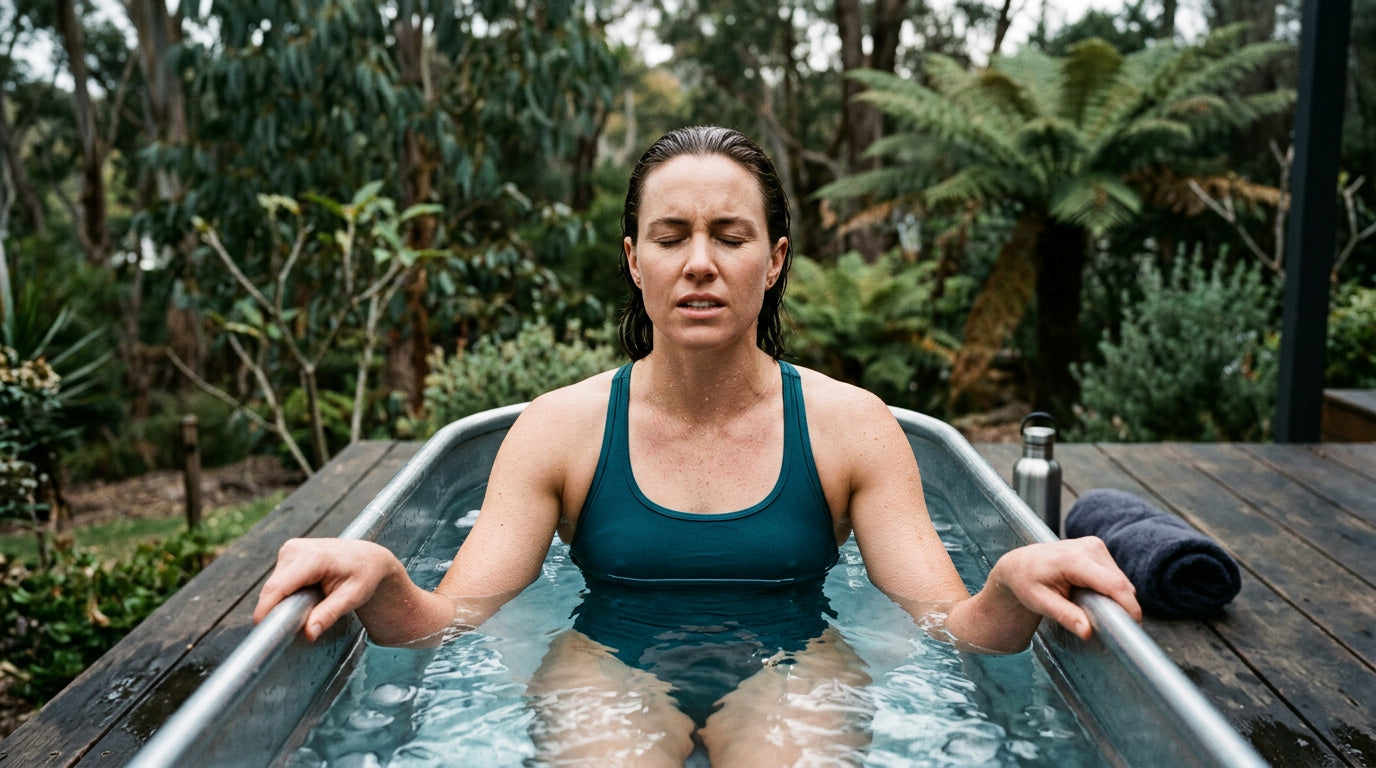
Ice baths in Australia are no longer the preserve of elite athletes. Cold water immersion - defined as full or partial body immersion in water between 10-15°C - is now a mainstream recovery and wellness practice adopted by athletes, biohackers, and high performers across every Australian state. The science is clear, the protocols are established, and the equipment has caught up.
Why Australians Are Taking the Cold Plunge
Most people who research ice baths already know the names: Wim Hof, Andrew Huberman, David Goggins. They've watched the interviews, read the protocols, and understood the premise. What they're searching for now is not permission to start - it's clarity on how to do it properly and what to buy.
Cold water immersion has been used therapeutically for centuries. Ancient Romans bathed in cold pools post-hypocaust. Scandinavian cultures paired sauna with icy lake plunges for generations. Finnish athletes formalised contrast therapy as a recovery tool in the 20th century. What's new is the physiology research that explains precisely why it works - and the consumer equipment that brings it home.
Australia's climate makes cold immersion both compelling and achievable. In summer - particularly in Queensland, Western Australia, and the Northern Territory - ambient temperatures strip the body of its natural ability to recover. Heat loads compound training stress. A cold plunge on the back deck becomes less a lifestyle choice and more a performance necessity.
The growth of home wellness infrastructure in Australia has been significant. Australians spent an estimated AU$2.4 billion on home fitness and wellness equipment in the years following 2020, and dedicated cold plunge tubs are now among the fastest-growing categories in that market. People who were driving to commercial ice baths or filling wheelie bins with ice are replacing improvised solutions with purpose-built hardware.
For a deeper look at how cold plunge tubs compare across the Australian market, our complete guide to cold plunge tubs in Australia covers every option in detail.
The Science of Ice Bath Benefits in Australia and Globally
Cold water immersion works because it triggers a cascade of physiological responses that your body cannot produce through training alone. Understanding the mechanisms helps you use the tool correctly - and explains why the protocol matters as much as the plunge itself.
Norepinephrine and Dopamine: The Chemical Argument for Cold
Cold water immersion at 14°C for two to three minutes produces a 200-300% increase in norepinephrine - the neurotransmitter responsible for alertness, attention, and mood regulation. This is not a metaphor for feeling good after a cold shower. It is a measurable neurochemical event, documented in peer-reviewed research and cited by neuroscientists including Stanford's Dr Andrew Huberman as one of the most efficient ways to modulate the stress response.
Dopamine levels also rise significantly during cold exposure - and unlike the sharp spike associated with stimulant drugs, the dopamine increase from cold water immersion is sustained over two to four hours. That's the physiological basis for the mental clarity and reduced anxiety that consistent practitioners report. It is not placebo. It is biochemistry.
Muscle Recovery and Inflammation: What the Research Says
A 2018 meta-analysis by Dupuy et al. in Frontiers in Physiology, covering 99 studies and over 1,000 athletes, found cold-water immersion and contrast water therapy to be among the most effective recovery modalities for reducing muscle soreness and perceived fatigue. This is the gold standard evidence base for athletic use of cold immersion - not anecdote, not influencer content, peer-reviewed data across a thousand subjects.
The mechanism is vasoconstriction followed by vasodilation. Cold causes blood vessels to constrict, reducing localised inflammation and metabolite accumulation in muscle tissue. On exit from the plunge, vasodilation drives a fresh blood supply through recovering tissue. The cycling of constriction and dilation is the biological foundation of contrast therapy - and explains why ice baths alone produce results that static rest cannot.
For the full breakdown of cold plunge benefits with citations, read our evidence-based guide to cold plunge benefits in Australia.

Metabolic Effects and Body Composition
Cold exposure activates brown adipose tissue - the metabolically active fat that burns energy to generate heat. Regular cold immersion increases brown fat volume and thermogenic capacity over time, contributing to improved insulin sensitivity and metabolic rate. The effect is incremental, not dramatic, but it compounds with consistent use in a way that passive recovery never does.
Cold water immersion also triggers a measurable cortisol reduction post-session in trained individuals who have acclimatised to the stimulus. The initial cold shock response involves a cortisol spike - but with regular practice, this habituates and the net effect shifts toward improved stress regulation across the day.
Cold Therapy, Engineered for Home Use
316 marine-grade stainless steel. Insulated roll cover. Australia-wide delivery. No compromises on materials or construction.
SEE THE ORIGIN →How Cold and How Long: Ice Bath Temperature and Duration Protocols
Temperature and duration are the two variables that determine what physiological response you get from cold immersion. Get them right and you unlock measurable benefit. Get them wrong and you either underdeliver or risk cold shock.
Temperature Ranges Explained
15-20°C - acclimatisation range: appropriate for beginners. Uncomfortable but manageable. Activates mild vasoconstriction and introduces the body to the cold shock response without overwhelming it. Use this range for your first two to four weeks.
10-15°C - the performance and recovery window: this is where the norepinephrine spike, dopamine elevation, and recovery benefits are most consistently documented in the research literature. Most trained practitioners operate here permanently. Dupuy et al.'s 2018 meta-analysis used protocols primarily in this range.
1-10°C - advanced cold exposure: associated with Wim Hof protocols and extreme cold adaptation. Not recommended for casual use or early practitioners. The physiological benefits do not scale linearly below 10°C - the primary variable at this range is psychological stress tolerance, not additional biological upside.
Duration: How Long to Stay In
The research-backed sweet spot for most adults is 10-15 minutes at 10-15°C per session. This duration is sufficient to produce measurable norepinephrine elevation, reduce post-exercise inflammation markers, and activate brown adipose tissue thermogenesis.
Beginners should start at two to three minutes and extend by one minute per session over two to three weeks. The goal is not suffering. The goal is physiological adaptation - and that requires consistency over weeks, not heroics on session one.
| Protocol | Temperature | Duration | Primary Goal |
|---|---|---|---|
| Beginner acclimatisation | 15-20°C | 2-3 minutes | Cold shock habituation |
| Athletic recovery | 10-15°C | 10-15 minutes | DOMS reduction, inflammation control |
| Mental wellness / mood | 10-15°C | 5-10 minutes | Norepinephrine and dopamine elevation |
| Wim Hof method | Cold tap to 10°C | 2-5 minutes, post-breathing | Stress tolerance, autonomic control |
| Contrast therapy | Sauna 80-100°C / plunge 10-15°C | 3-4 cycles, 10-15 min each | Maximum recovery, cardiovascular benefit |
Contrast therapy - cycling between sauna heat and cold immersion - is where the research shows the most pronounced combined effect. Our dedicated guide to contrast therapy in Australia covers the full protocol, sequencing, and evidence base.
Ice Bath vs Cold Shower vs Cold Plunge Tub: Why DIY Fails
Most people start with a cold shower. It's free, it's immediate, and it feels like the logical first step. But a cold shower and a cold plunge are not the same stimulus. Not even close.
The critical variable is surface area. A cold shower hits roughly 15-20% of your body surface area at any one time. Full immersion in a plunge tub - from the feet to the collar - exposes 80-90% of your surface area simultaneously. The physiological response scales with immersion area: the norepinephrine spike, the vasoconstriction, the metabolic response. A cold shower produces a fraction of the stimulus.
The DIY ice bath - a chest freezer, a wheelie bin, a tub of water with bagged ice - is a step up from a shower, but it introduces a different set of problems. Temperature is inconsistent. Maintaining 12°C with ice bags in a Brisbane summer requires buying and hauling ice multiple times per week. Hygiene degrades rapidly in still water without filtration. The experience is uncomfortable in the wrong ways - not the productive discomfort of cold, but the logistics of managing a compromised setup.
| Method | Temperature Control | Immersion Coverage | Ongoing Cost | Hygiene |
|---|---|---|---|---|
| Cold shower | None (tap-dependent) | 15-20% | Nil | N/A |
| DIY ice bath (bin + ice) | Manual, inconsistent | 60-75% | AU$30-80/week ice cost | Poor without treatment |
| Chest freezer conversion | Semi-reliable | 70-80% | Electricity + maintenance | Variable |
| Psycle Origin (316SS + chiller) | Precise, 24/7 maintained | 80-90% | Low - electricity only | Filtration system included |
A dedicated cold plunge unit with a chiller holds your exact target temperature around the clock. You step in when you're ready, at the temperature you set. That consistency is not a luxury feature - it is the foundation of a protocol that actually sticks.
What to Look for in a Home Ice Bath in Australia
Not all cold plunge tubs are built for the Australian environment. Buying the wrong unit means UV degradation, material failure, temperature inconsistency, and a product that looks compromised within two years outdoors. Here is what the specification sheet needs to say before you buy.
Material: Why 316 Marine-Grade Stainless Steel Is the Standard
316 marine-grade stainless steel is the only shell material that handles full outdoor Australian exposure without compromise. It resists UV radiation, salt air in coastal environments, chlorinated water, and the thermal cycling of hot days and cold plunge temperatures.
Fibreglass and acrylic shells degrade under sustained UV. They become porous over time, harbouring bacteria and making sanitation genuinely difficult. Polypropylene plastic units are inexpensive at purchase and expensive over their lifespan - brittleness, cracking, and UV yellowing within two to three years of outdoor use in Australian conditions.
316 stainless steel does not degrade outdoors. It does not become porous. It does not crack. It can be cleaned thoroughly and efficiently. It also looks architectural rather than clinical - an important distinction when the unit lives on a visible deck or in a garden.
Chiller Unit vs Ice-Only
An ice-only cold plunge requires ongoing ice procurement - which in a Queensland summer means two to three ice purchases per week at AU$15-30 each to maintain temperature across sessions. An integrated chiller eliminates this entirely and maintains precise temperature without intervention.
The economics are clear within the first year. The protocol consistency is clearer still - when your plunge is ready at 12°C every morning, you use it. When it requires 45 minutes of ice preparation, you find reasons not to.
Insulation, Drainage, and Size
An insulated cover is non-negotiable in Australian conditions. Without one, a chiller unit works continuously against ambient air and solar heat gain - running costs climb, and temperature consistency suffers in peak summer. An insulated roll cover maintains target temperature between sessions passively.
Drainage determines how practical your maintenance schedule becomes. A drain port at the base of the shell makes water changes a 10-minute task. Without it, you're bailing or siphoning. For a unit that requires water changes every one to three weeks depending on use and treatment, drainage is not a minor convenience.
Size for single use requires a minimum internal length of approximately 160cm from end to end - enough to fully submerge to collar height for a 180cm adult. Two-person units need significantly more volume and a higher-capacity chiller to maintain temperature.
Introducing the Psycle Origin: Australia's Premium Home Ice Bath
The Psycle Origin is built without compromise on any of the variables that matter for a permanent Australian installation. It starts with a 316 marine-grade stainless steel shell - not fibreglass, not polypropylene, not acrylic. The material that handles coastal salt air, UV exposure, and the thermal demands of cold immersion without degrading over time.
The Origin ships with an insulated roll cover that maintains water temperature between sessions - reducing chiller running costs and protecting water quality. Clean contemporary lines. An architecture that belongs on a deck or in a garden, not one that looks like a livestock trough or a repurposed appliance.

Delivery is Australia-wide. The warranty is five years. The 120-day build lead time reflects manufacturing standards that cannot be rushed - the same philosophy that governs every Psycle product.
Psycle founders built this brand from a position of personal frustration with what existed in the market. Every cheap plastic tub, every fibreglass unit that degrades in two Australian summers, every poorly insulated vessel that cannot hold temperature against Queensland heat - each one represented a market that had stopped demanding more. The Origin is the answer to that.
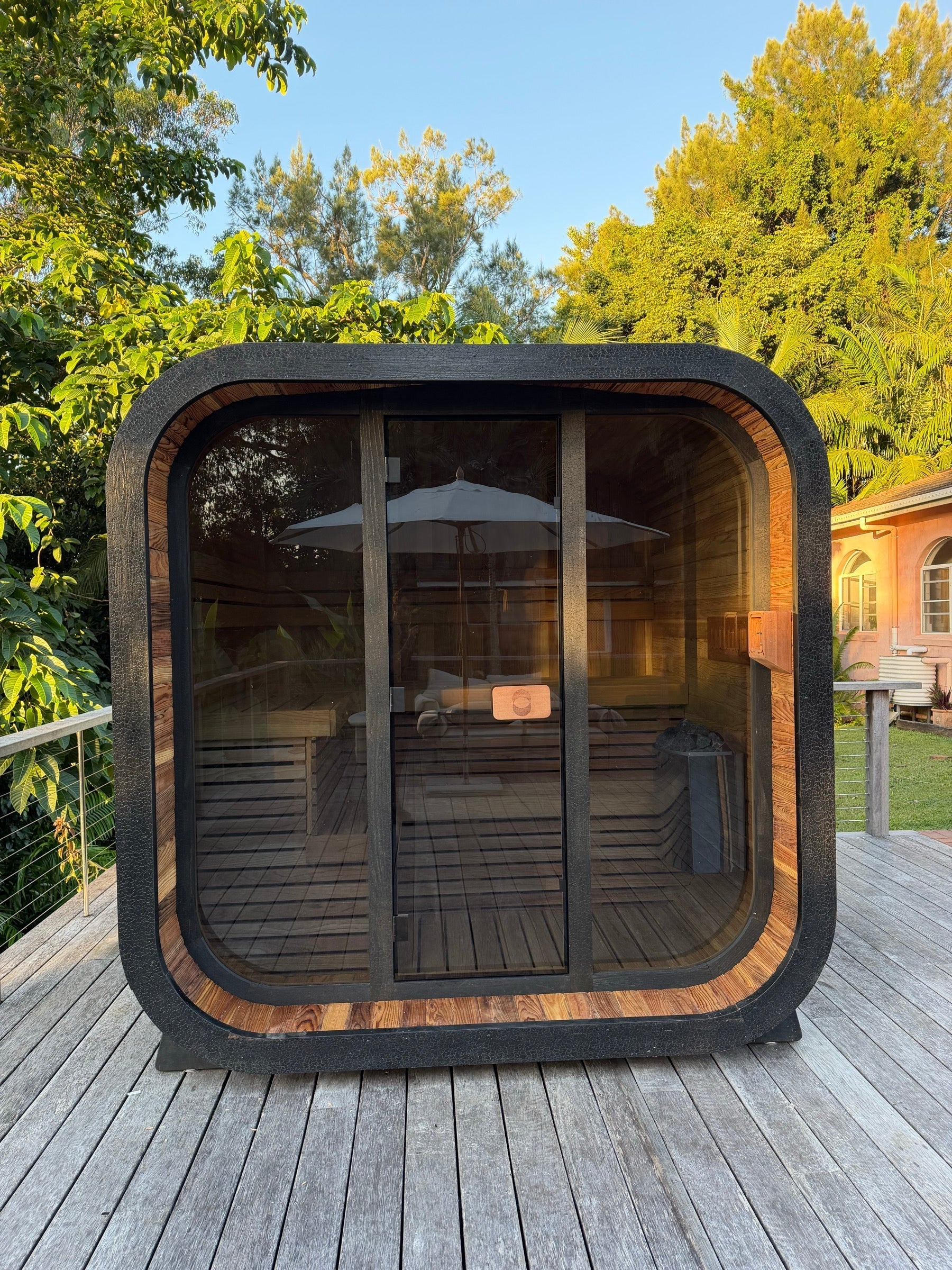
The Origin pairs directly with the Genesis sauna as the Contrast Kit - the complete heat-cold protocol in a single infrastructure purchase. For Australians building a serious home recovery setup, the combination produces outcomes that neither product achieves in isolation. Our guide to sauna and cold plunge in Australia explains the contrast protocol and the physiology in full.
The Origin: Built for the Australian Environment
316 marine-grade stainless steel shell. Insulated roll cover. 5-year warranty. Australia-wide delivery. This is what a permanent installation looks like.
EXPLORE THE ORIGIN →What Australians Who Use the Origin Every Day Say
The practitioners who use the Origin daily describe the same pattern. The first week is about building tolerance. The second week is where the morning routine locks in. By week four, skipping a session becomes the exception rather than the norm - because the difference in how you feel, think, and perform on session days versus rest days becomes impossible to ignore.
"I was running to a commercial recovery suite twice a week and spending AU$60 each visit. The Origin paid for itself in the first year and I'm doing it every single day now. My training load is higher than it's been in five years," says one Sydney-based strength athlete who installed the Origin alongside a Genesis in early 2025.
The pattern holds across user types. Triathletes describe improved perceived recovery between hard training blocks. High-volume business executives cite mental clarity and stress regulation as the primary motivator for daily use. A Melbourne-based physio who purchased the Contrast Kit describes contrast therapy as "the one protocol I can point to that has a measurable impact on how I recover and how I show up the next day - I've run this protocol daily for 90 days. My recovery markers don't lie."
The commercial sauna drop-in costs AU$30-60 per session in major Australian cities. A commercial ice bath or recovery suite adds another AU$30-50. Two sessions per week at those rates equals AU$2,400-4,800 per year - on infrastructure you do not control, at times that work around other people's schedules, in a shared environment. That calculus changes the moment the Origin is installed on your own deck.
Ice Bath in the Australian Context: Running Costs, Climate, and Outdoor Life
Australia's outdoor deck culture makes the Origin a natural fit for the way Australians actually live. Unlike European or North American cold plunge users who manage cold exposure indoors against ambient winter temperatures, Australians need to actively cool their plunge water against ambient heat - particularly in the northern states from October to April.
This is where the chiller unit and insulated cover earn their value. A well-insulated 316 stainless steel vessel with a chiller maintains 12°C in a Brisbane January without labouring at full capacity - particularly with the cover on between sessions. The energy draw is comparable to a standard household refrigerator running continuously.
At Australian electricity rates of approximately AU$0.30-0.35 per kWh, the running cost of a cold plunge chiller in steady-state maintenance mode is well within the range most users find negligible relative to the benefit. Compare this to the AU$1,200-2,400 per year the average Australian spends on a gym membership, the AU$100-160 per physio session for weekly treatment, or the AU$2,400-4,800 per year accessing commercial recovery suites.
The outdoor lifestyle argument extends to placement. The Origin is designed for deck, courtyard, and garden installation - not a bathroom conversion or an indoor utility room. It sits in the Australian outdoor living space that high performers already invest in and use daily.
If you're pairing the Origin with a sauna, placement adjacent to the Genesis on an outdoor deck creates the complete contrast therapy setup. Our guide to combining sauna and cold plunge in Australia covers placement, sequencing, and the specific outdoor deck considerations for Australian climates in detail. For those building a broader home wellness setup, the complete home sauna Australia guide and outdoor sauna Australia guide provide additional context on outdoor installation requirements.
Best Ice Baths in Australia: How the Origin Compares
The Australian cold plunge market has expanded rapidly, and not all of it deserves consideration. Here is an honest assessment of the options available to Australian buyers at the premium end of the market.
| Unit | Shell Material | Chiller | Outdoor Rating | AU Warranty |
|---|---|---|---|---|
| Psycle Origin | 316 marine-grade stainless steel | Yes | Full outdoor | 5 years |
| Typical fibreglass unit | Fibreglass / GRP | Some models | Limited - UV degrades | 1-2 years typical |
| Polypropylene / acrylic units | Plastic / acrylic | Rarely | Poor - cracks outdoors | 1 year typical |
| Chest freezer conversion | Steel / foam | Via conversion | Minimal | None |
| US import brands | Varies - fibreglass common | Yes | Moderate | Servicing from overseas |
The comparison is not close on what matters most for a permanent Australian installation: material durability, full outdoor rating, local warranty support, and the absence of ongoing ice costs. The Origin is the clear answer for buyers who are done compromising.
For a full comparison of cold plunge options available in Australia, including budget, mid-range and premium tiers, our cold plunge tub Australia buyer's guide covers the complete market.
Ice Bath Setup and Maintenance in Australia
Setup is straightforward for a unit like the Origin. Placement requires a level surface capable of bearing the filled weight of the unit - typically 500-800kg depending on dimensions and water volume. A reinforced deck or concrete slab is the correct base. Timber decks require engineering assessment if the sauna and plunge are being co-located.
Water Treatment and Cleaning Schedule
Still water at plunge temperatures is not self-sanitising. A basic maintenance schedule involves water treatment with a chlorine or bromine-based solution after each use, pH testing twice per week, and a full water change every two to three weeks under regular use.
316 stainless steel simplifies this process considerably. The non-porous surface does not harbour biofilm the way fibreglass or acrylic does. Wiping the interior with a diluted sanitiser solution before refilling takes under 10 minutes. With fibreglass, you are scrubbing microscopic surface texture that accumulates bacteria between cleans.
Running Costs on Australian Electricity
At AU$0.30-0.35 per kWh - the current residential rate across most Australian states - a cold plunge chiller running at maintenance load consumes approximately AU$2-5 per day depending on ambient temperature, insulation quality, and how often the cover is used between sessions. In peak summer in Queensland, the chiller works harder. In a Sydney winter, it barely runs at all.
An insulated cover - standard on the Origin - reduces chiller running time by maintaining water temperature passively between sessions. In practice, users who cover the unit after every session report chiller running times that are a fraction of those who leave the vessel open to ambient air and sunlight.
Morning session: pre-work protocol
10-15 minutes at 10-15°C before breakfast. Cover off, step in, control the breath. This is the highest-impact cold exposure window for dopamine and norepinephrine.
Post-training: recovery protocol
10-15 minutes within 30-60 minutes of training completion. Temperature 10-12°C. Do not pair with cold immediately post-strength training if hypertrophy is the primary goal - cold blunts mTOR signalling acutely.
Cover and treat
Replace the insulated cover immediately after the session. Add water treatment dose as per schedule. Check pH twice weekly.
Full water change: every 2-3 weeks
Drain via base port, wipe interior with diluted sanitiser, refill. With a 316 stainless steel shell this takes under 15 minutes.
Ice Bath Safety: What Every Australian User Needs to Know
Cold water immersion is a powerful physiological stimulus. That is exactly why it produces results - and exactly why it requires informed use. The risks are manageable and rare for healthy adults, but they are real and must be understood before your first session.
Who Should Not Use an Ice Bath
Cold water immersion is contraindicated for individuals with diagnosed cardiac conditions, Raynaud's phenomenon, peripheral artery disease, uncontrolled hypertension, or open wounds. Pregnant women should avoid cold plunge use without explicit medical clearance. If you are on medications that affect cardiovascular function or thermoregulation, discuss cold exposure with your GP before beginning.
The cold shock response - an involuntary gasp, rapid heart rate increase, and brief hypertension spike in the first 30-60 seconds of cold immersion - is the primary risk window for all users. It is strongest in untrained individuals and reduces significantly with regular exposure. This is why the beginner protocol starts at 15-20°C and short durations: you are training the response, not just tolerating it.
The Never-Alone Rule
Do not use a cold plunge alone, particularly in the early stages of a practice. Cold shock can cause involuntary hyperventilation and, in extreme cases, loss of consciousness. A trained person present for your session is not overcaution - it is basic risk management for an activity that involves water immersion.
As you acclimatise over weeks and the cold shock response habituates, solo use becomes progressively lower risk. Most experienced practitioners manage solo sessions routinely. But the first month demands another person within earshot at minimum.
For a comprehensive overview of contraindications, gradual exposure protocols, and risk management for sauna and cold therapy, our sauna and cold therapy health risks guide for Australia covers the full safety picture.
Frequently Asked Questions About Ice Baths in Australia
What temperature should an ice bath be in Australia?
The research-backed optimal range for cold water immersion is 10-15°C. This temperature window produces the most documented physiological benefits - including norepinephrine elevation, reduced inflammation, and improved recovery markers - without the excessive cold shock risk of sub-10°C immersion. Beginners should start at 15-20°C and acclimatise progressively over two to four weeks before moving into the 10-15°C range. In Australian summers, maintaining this temperature without a chiller unit requires continuous ice input that makes the practice impractical at volume.
How long should you stay in an ice bath?
10-15 minutes at 10-15°C is the evidence-based recommendation for trained adult users. This duration is sufficient to produce measurable norepinephrine elevation, reduce post-exercise inflammation, and activate thermogenic brown adipose tissue. Beginners should start at 2-3 minutes and extend by one minute per session over the first two to three weeks. Duration beyond 20 minutes at temperatures below 15°C does not produce proportionally greater benefit and increases the risk of hypothermia in unconditioned individuals.
How many times per week should you do an ice bath?
Most practitioners benefit from three to five sessions per week, with daily use appropriate for those who have fully acclimatised. The research supporting cold immersion for mood, stress regulation, and recovery does not require daily use to show effect - three sessions per week at consistent temperature and duration produces measurable outcomes. Daily use is common among high performers and athletes in structured recovery protocols, but frequency should increase gradually alongside acclimatisation, not be forced from session one.
Is cold water therapy good for you? What does the evidence say?
Yes - the evidence base for cold water immersion is substantial and growing. A 2018 meta-analysis by Dupuy et al. in Frontiers in Physiology, covering 99 studies and over 1,000 athletes, found cold-water immersion to be among the most effective modalities for reducing muscle soreness and perceived fatigue. Cold exposure at 14°C produces a 200-300% increase in norepinephrine, a neurotransmitter associated with mood, focus, and stress regulation. Brown adipose tissue activation, improved insulin sensitivity, and sustained dopamine elevation are additional documented effects. The evidence is clear for recovery, mood, and metabolic function in healthy adults.
What is the best home ice bath in Australia?
The Psycle Origin is the best home ice bath in Australia for permanent installation. Its 316 marine-grade stainless steel shell handles full outdoor Australian exposure - UV, salt air, humidity, and thermal cycling - without degrading. It includes an insulated roll cover for temperature maintenance between sessions, ships Australia-wide with a 5-year warranty, and is engineered for the Australian outdoor lifestyle. DIY alternatives using chest freezers, fibreglass tubs, or acrylic vessels all involve material compromises that become apparent within two to three Australian summers.
Can I use a cold plunge after a sauna?
Yes - and this is the most researched and recommended protocol for combining the two modalities. Contrast therapy alternates sauna heat (80-100°C) with cold plunge immersion (10-15°C) across multiple cycles. The 2018 Dupuy et al. meta-analysis identified contrast water therapy as among the most effective recovery modalities across all methods studied. The Psycle Contrast Kit - the Genesis sauna paired with the Origin cold plunge - is designed specifically for this protocol. For the full contrast therapy evidence base and sequencing guide, read our guide to contrast therapy in Australia.
How much does an ice bath cost in Australia?
Home ice bath costs in Australia range from under AU$500 for basic DIY setups (chest freezer conversions, polypropylene tubs without chillers) to AU$5,000-15,000 for premium 316 stainless steel units with integrated chiller systems. The Psycle Origin sits at the premium end and reflects 316 marine-grade stainless steel construction, a chiller unit, insulated cover, 5-year warranty, and Australia-wide delivery. Compare this to AU$60-110 per commercial ice bath session in Australian recovery centres, and the Origin's cost is recovered within 12-18 months of consistent use for most practitioners. A AU$1,000 refundable deposit secures your place in the build queue with a 120-day lead time.
Ready to Build This Into Your Routine?
316 marine-grade stainless steel. Insulated roll cover. Australia-wide delivery. 5-year warranty. AU$1,000 refundable deposit holds your build slot - 120-day lead time.
SHOP THE ORIGIN →