
Sauna for Cold and Flu: What the Science Actually Says
Sauna for Cold and Flu: What the Science Actually Says

Key Takeaways
- Men who used a sauna 4-7 times per week had significantly lower pneumonia risk than once-weekly users (Laukkanen et al., 2017)
- Temperatures of 80-100°C are required to trigger meaningful heat shock protein production, particularly HSP70
- A minimum of 20 minutes per session is needed for sustained cardiovascular and immune benefits
- Heat shock proteins play a direct role in antigen presentation, helping the immune system identify and respond to pathogens faster (Calderwood et al., 2016)
- Repeated heat exposure induces heat acclimation that reduces inflammatory burden from thermal stress and supports immune resilience (Pryor et al., 2019)
- Sauna use during active cold or flu symptoms compounds existing physiological stress - including dehydration, elevated core temperature, and cardiovascular load - and can worsen symptoms
- The immune benefits of sauna are preventive and cumulative - 90 sessions over 6 months may meaningfully change your immune baseline, but a single session provides no acute protection
Using a sauna when you have a cold or flu is not straightforward. The short answer: sauna use can strengthen your immune system over time and may reduce how often you get sick — but once symptoms are already present, heat exposure adds physiological stress your body cannot afford. Rest, hydration, and recovery come first. The sauna comes after.
Here is what the research shows, what it does not show, and how to use heat therapy intelligently around illness.
Zero-Toxin Sauna Therapy, Built for Australians
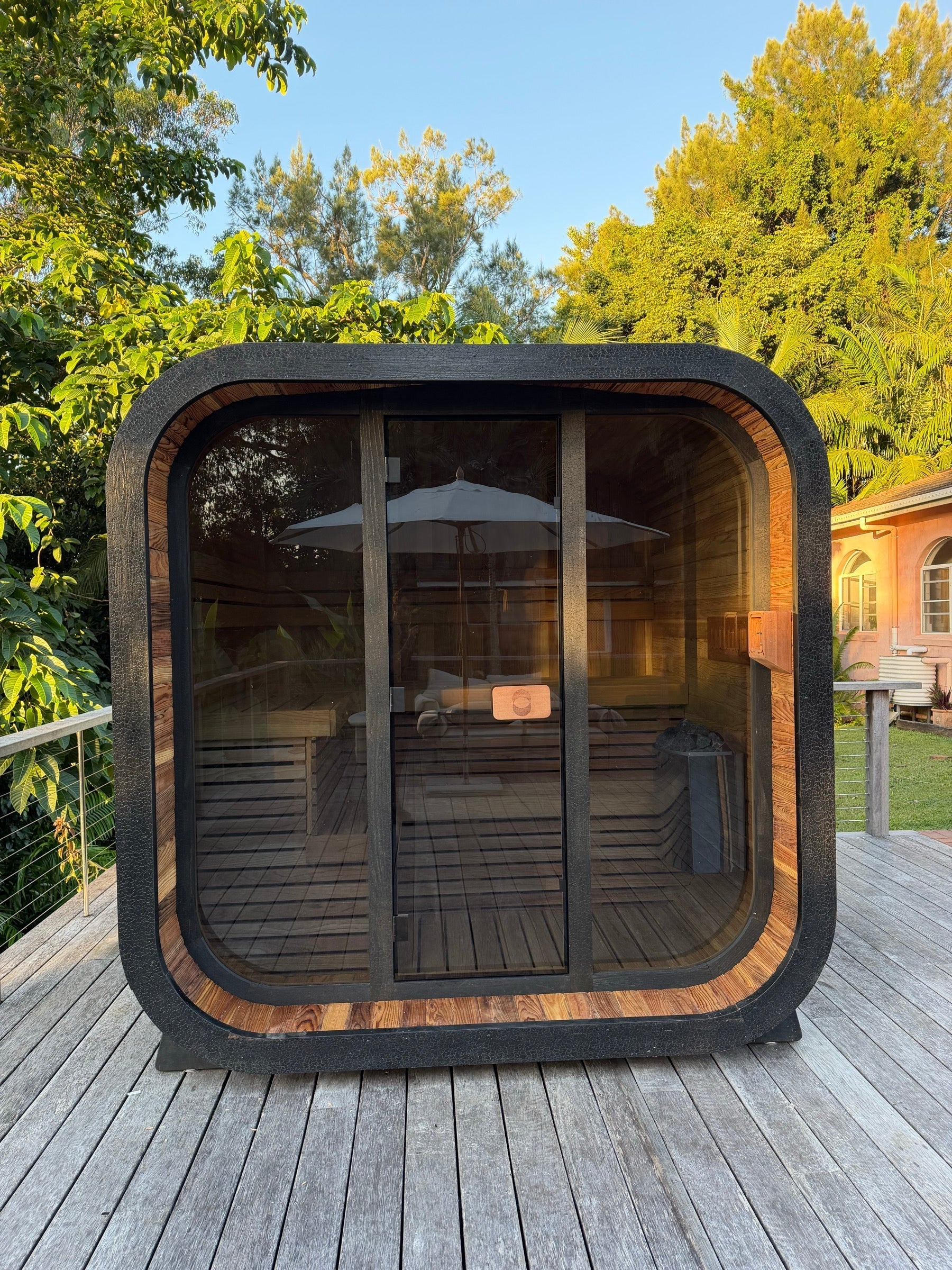
Japanese Cedar exterior. Zero-glue construction. HUUM Drop heater. Built to last decades.
SEE THE GENESIS →How Sauna Use Affects Your Immune System
Regular sauna sessions trigger a measurable immune response — not through one mechanism, but several working in parallel. Understanding each one clarifies why frequency and timing matter so much when you are trying to use heat for immune support.
A 2017 study published in Age (Laukkanen et al.) found that men who used a sauna four to seven times per week had a significantly lower risk of pneumonia compared to those who used one once per week. That is not a marginal finding — it points to sauna as a genuine preventive practice, not a passive wellness habit.
What Are Heat Shock Proteins and Why Do They Matter?
Heat shock proteins (HSPs) are a family of proteins produced by cells in response to thermal stress. In the context of sauna use, they are one of the primary mechanisms through which heat exposure supports immune function.
A 2016 paper by Calderwood et al. in Cell Stress and Chaperones established that HSPs play a direct role in cellular repair and immune modulation — specifically in antigen presentation, the process by which your immune system identifies and mounts a targeted response to pathogens. Put simply: regular heat exposure trains your immune system to recognise threats faster and respond more precisely.
This is not a marginal benefit. It is the cellular-level argument for building sauna into your weekly routine — not as a recovery tool, but as a preventive one. For a deeper look at the full evidence base, our evidence-based heat therapy guide covers the research in detail.
How Heat Improves Circulation and Immune Cell Distribution
When you sit in a traditional Finnish sauna at 80–100°C, your core body temperature rises and your cardiovascular system responds immediately. Blood vessels dilate. Heart rate increases. Cardiac output can roughly double within minutes.
That acute cardiovascular response has a direct immune consequence: immune cells — including white blood cells, natural killer cells, and lymphocytes — are distributed faster and more efficiently throughout the body. Your immune surveillance improves. Pathogens that might otherwise go undetected longer are flagged and targeted sooner.
This is why consistent sauna practice builds a more responsive immune system over time. The effect is cumulative, not immediate. One session does not make you immune to the flu. Ninety sessions over six months might meaningfully change your immune baseline.
If you are building a regular protocol, our guide on how often you should sauna gives frequency recommendations based on your health goals.
Heat Acclimation: The Long-Term Immune Argument
A study published in Frontiers in Physiology (Pryor et al., 2019) examined the effects of repeated heat exposure on physiological adaptation. The findings confirm that consistent sauna use induces heat acclimation — a systemic adaptation that reduces physiological strain from subsequent heat exposures and appears to have downstream effects on immune resilience.
Heat acclimation is not about getting comfortable with being hot. It is about training your body to manage thermal stress efficiently, which in turn reduces the inflammatory burden of that stress. A body that handles heat stress well handles other stressors — including infection — more efficiently.
This is the long-term argument for owning a sauna rather than visiting one occasionally. Consistency changes your biology. Occasional use keeps you comfortable.
Should You Use a Sauna When You Have a Cold or Flu?
This is where the nuance matters most. The immune benefits described above are preventive — they accrue through regular use in a healthy state. They do not apply in the same way when you are already sick.
When you have active cold or flu symptoms, your body is already under significant physiological stress. Your core temperature may already be elevated. Your immune system is actively fighting. Your fluid balance is compromised. Adding the thermal load of a sauna session — especially at 80–100°C — compounds every one of those stressors simultaneously.
The specific risks during active illness:
- Dehydration accelerates. You are already losing fluids through fever and mucus production. A 20-minute sauna session at high temperature significantly increases sweat rate. Dehydration impairs immune function directly.
- Cardiovascular load increases. A compromised body managing an infection does not need an additional cardiovascular demand layered on top.
- Symptom severity can worsen. The additional heat stress may intensify fatigue, headache, and body aches rather than relieving them.
- You risk infecting others. If you use a shared sauna, you are exposing other people to your illness in an enclosed, high-humidity environment.
The position is unambiguous: if you have active cold or flu symptoms, skip the sauna. Rest, hydrate, and let your immune system do its work without additional interference.
Once symptoms have fully cleared — not just subsided, but cleared — you can ease back into your protocol. Start with shorter sessions at moderate temperatures and rebuild from there.
Hydration: Non-Negotiable Before, During, and After
Whether you are healthy or recovering, hydration is the foundational variable in any sauna protocol. A typical sauna session at 80–100°C can produce between 0.5 and 1 litre of sweat — more in longer sessions or higher temperatures.
That fluid loss is manageable when you are healthy and well-hydrated going in. It becomes a genuine risk when you are already depleted from illness. Dehydration does not just make you feel worse — it directly impairs the immune response by reducing blood volume, impairing lymphatic function, and increasing circulating cortisol.
Practical hydration protocol for healthy sauna sessions:
Pre-session: 500ml water
Drink at least 500ml of water in the 30 minutes before entering the sauna. Do not enter already thirsty.
During breaks: sip, do not gulp
Between rounds, drink 200–300ml of water. Gulping cold liquid rapidly while overheated can trigger nausea.
Post-session: electrolytes
Sweat contains sodium, potassium, and magnesium. Plain water after a long session is not enough — include an electrolyte source, especially in Australian summer conditions.
If recovering from illness: wait longer
Even after symptoms clear, your fluid balance and immune reserves take several days to fully restore. Add an extra 48–72 hours before returning to full-intensity sessions.
The Sauna That Does Not Compromise
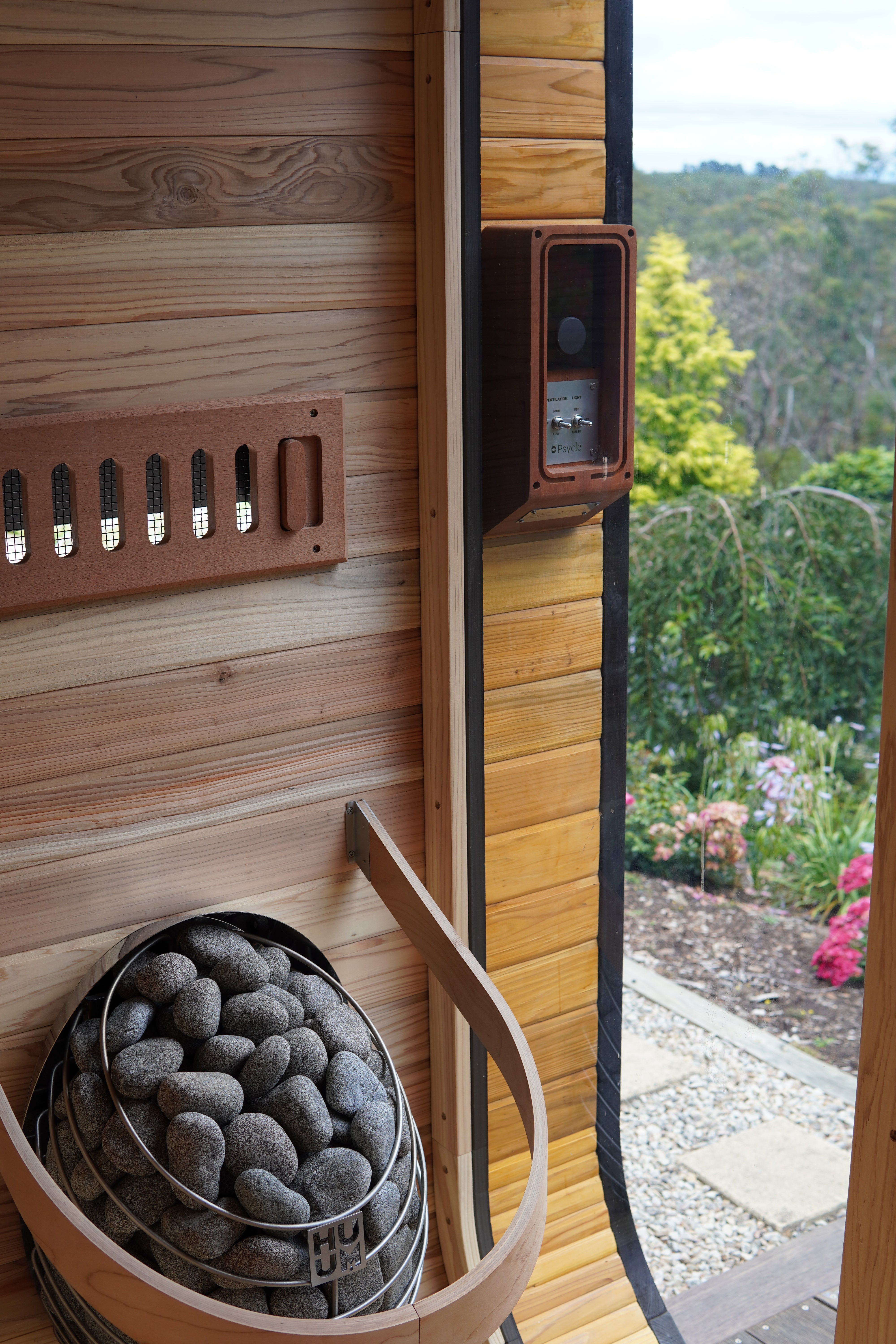
Active mechanical ventilation. Blue light blocking lighting. IPX4 rated for year-round outdoor use. Every detail engineered for Australian conditions.
EXPLORE THE GENESIS →The Real Toxin Problem Most Sauna Buyers Miss
There is an irony in using a sauna to support immune health while breathing off-gassing chemicals for every session. Most home saunas on the Australian market are built with glued MDF panels and particle board. Heat that to 90°C and formaldehyde — a known carcinogen — off-gasses directly into the air you are inhaling. That is not a marginal concern. It actively undermines the immune benefits you are trying to achieve.
The Genesis uses zero-glue mechanical joints throughout. Japanese Cedar exterior. Nordic Spruce interior benches. No adhesives, no particle board, no off-gassing at temperature. The HUUM Drop 9kW heater carries 60kg of volcanic stone — which means the thermal mass holds heat for the full session, so the temperature does not drop every time you pour löyly. Active mechanical ventilation pulls fresh air in and exhausts stale air out, keeping the heat clean.
If you are building a sauna practice specifically for immune support, the cabin you sit in matters as much as the protocol you follow. You can read more about what separates real Finnish sauna construction from flatpack alternatives in our complete home sauna buying guide for Australia.
Sauna as Prevention vs Treatment: The Correct Mental Model
The evidence for sauna and immune health is primarily preventive, not therapeutic. This distinction matters enormously when deciding whether to use a sauna with cold or flu symptoms.
| Scenario | Recommendation | Rationale |
|---|---|---|
| Healthy, no symptoms | Sauna as scheduled | Preventive immune benefit, HSP production, circulation |
| Feeling run-down, no active symptoms | Short session, well hydrated, monitor closely | Possible early immune activation, but limit load |
| Active cold symptoms (runny nose, mild fatigue) | Avoid sauna | Adds thermal and cardiovascular stress to an already taxed system |
| Flu symptoms (fever, body aches, fatigue) | Do not sauna | Fever plus sauna heat is a dehydration and cardiovascular risk |
| Recovering, symptoms cleared 48–72hrs | Ease back in — shorter, lower temperature | Fluid reserves and immune load not yet fully restored |
| Fully recovered | Resume normal protocol | Return to preventive benefit and performance recovery |
The right question is not "will a sauna cure my cold?" — it will not. The right question is "am I using sauna consistently enough that my immune system is stronger baseline?" That is where the real return is.
For guidance on session length that actually produces measurable outcomes, our guide on how long to stay in a sauna by goal and experience level gives evidence-based benchmarks.
What Temperature Actually Matters for Immune Benefit
Not all heat is equal. The physiological responses described above — heat shock protein production, cardiovascular adaptation, immune cell mobilisation — require genuine thermal stress. That means traditional Finnish sauna temperatures: 80–100°C.
Infrared saunas typically operate at 50–70°C. At those temperatures, you may sweat, but you do not produce the same acute thermal stress that drives HSP upregulation. The Finnish research — including the Laukkanen cohort studies that form the foundation of sauna and immune research — was conducted in traditional saunas operating at high dry heat. The immune findings do not automatically transfer to lower-temperature modalities.
This is not a minor distinction. If immune resilience is part of your rationale for buying a sauna, you need one that actually reaches and holds Finnish temperatures. Our comparison of traditional sauna versus infrared covers this in full detail — including where the research diverges between the two formats.
The Genesis operates at 70–100°C. The HUUM Drop 9kW heater with 60kg of volcanic stone holds that temperature consistently across a full session. That is the thermal standard the research is built on.
Frequently Asked Questions
Is sauna good for a cold?
Sauna is not a treatment for an active cold. Once you have cold symptoms, the thermal and cardiovascular stress of a sauna session adds load to a body that is already taxed. The immune benefits of sauna are preventive — they accrue through regular use in a healthy state and build a more resilient immune system over time. During illness, rest and hydration are more effective than heat exposure.
Can you use a sauna with flu symptoms?
No. Flu symptoms — particularly fever, body aches, and fatigue — indicate significant physiological stress. Adding sauna heat when your core temperature is already elevated from fever compounds dehydration risk and cardiovascular load. Wait until symptoms have fully cleared for at least 48–72 hours before returning to sauna use.
Does sauna help prevent colds?
The evidence suggests yes, for regular users. A 2017 study by Laukkanen et al. found that frequent sauna use — four to seven times per week — was associated with significantly lower risk of pneumonia. The proposed mechanisms include heat shock protein production, improved immune cell circulation, and heat acclimation effects on immune resilience. Consistency is the operative variable.
How hot does a sauna need to be to boost immune function?
Traditional Finnish sauna temperatures of 80–100°C appear to be the threshold at which the physiological responses linked to immune benefit — including heat shock protein upregulation and acute cardiovascular response — are reliably triggered. The Finnish population studies on sauna and immune health were conducted at these temperatures. Lower-temperature formats such as infrared (50–70°C) have not demonstrated equivalent immune effects in the research.
How long after being sick can you use a sauna?
Wait until all active symptoms have been fully absent for at least 48–72 hours. Even when you feel better, your fluid balance, immune reserves, and cardiovascular baseline take several additional days to normalise. Return with a shorter session at moderate temperature — 15–20 minutes at 70–80°C — before resuming your full protocol. For more guidance, see our article on sauna frequency by health goal.
Ready to Build This Into Your Routine?
Free Australia-wide delivery. 3-year cabin warranty. 120-day build — order now for summer delivery.
SHOP THE GENESIS →