
Sauna and Blood Pressure Australia: The Science Guide
Sauna and Blood Pressure Australia: The Science Guide

Key Takeaways
- A 20-year Finnish cohort study of 2,315 men found sauna use 4–7 times per week reduced fatal cardiovascular disease risk by 50% compared to once-weekly bathing (Laukkanen et al., JAMA Internal Medicine, 2015).
- The cardiovascular evidence base is built almost exclusively on traditional Finnish sauna at 80–100°C — not infrared, not steam rooms, not heated yoga studios.
- Approximately 34% of Australian adults have hypertension, according to the Heart Foundation of Australia — making heat therapy one of the most relevant preventive tools available.
- The mechanism is real: sauna heat triggers vasodilation, reduces arterial stiffness, and activates heat-shock proteins — producing acute blood pressure reductions comparable to moderate aerobic exercise.
- Combining sauna with cold plunge contrast therapy compounds vascular benefit — alternating vasodilation and vasoconstriction trains arterial elasticity over time.
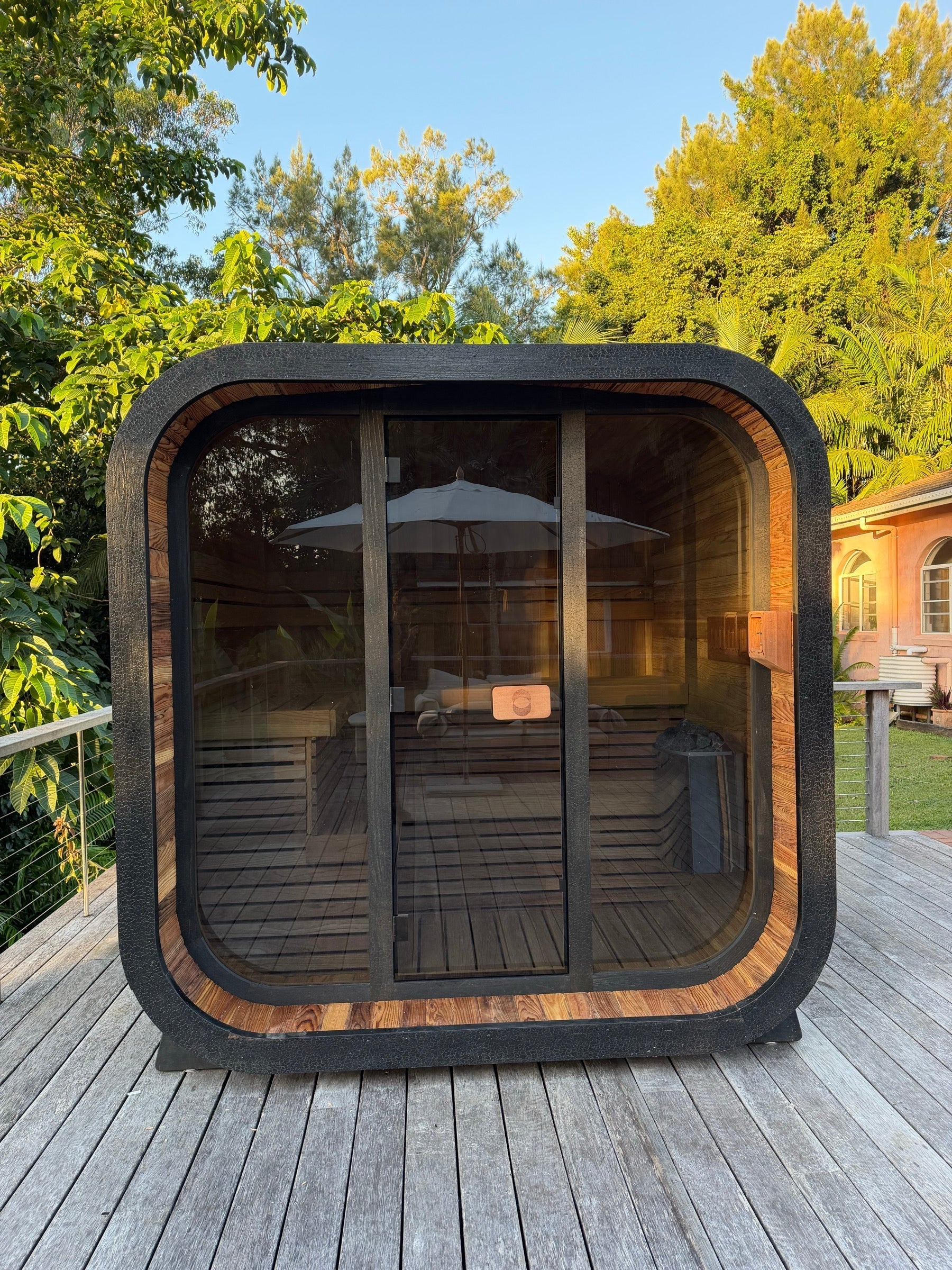
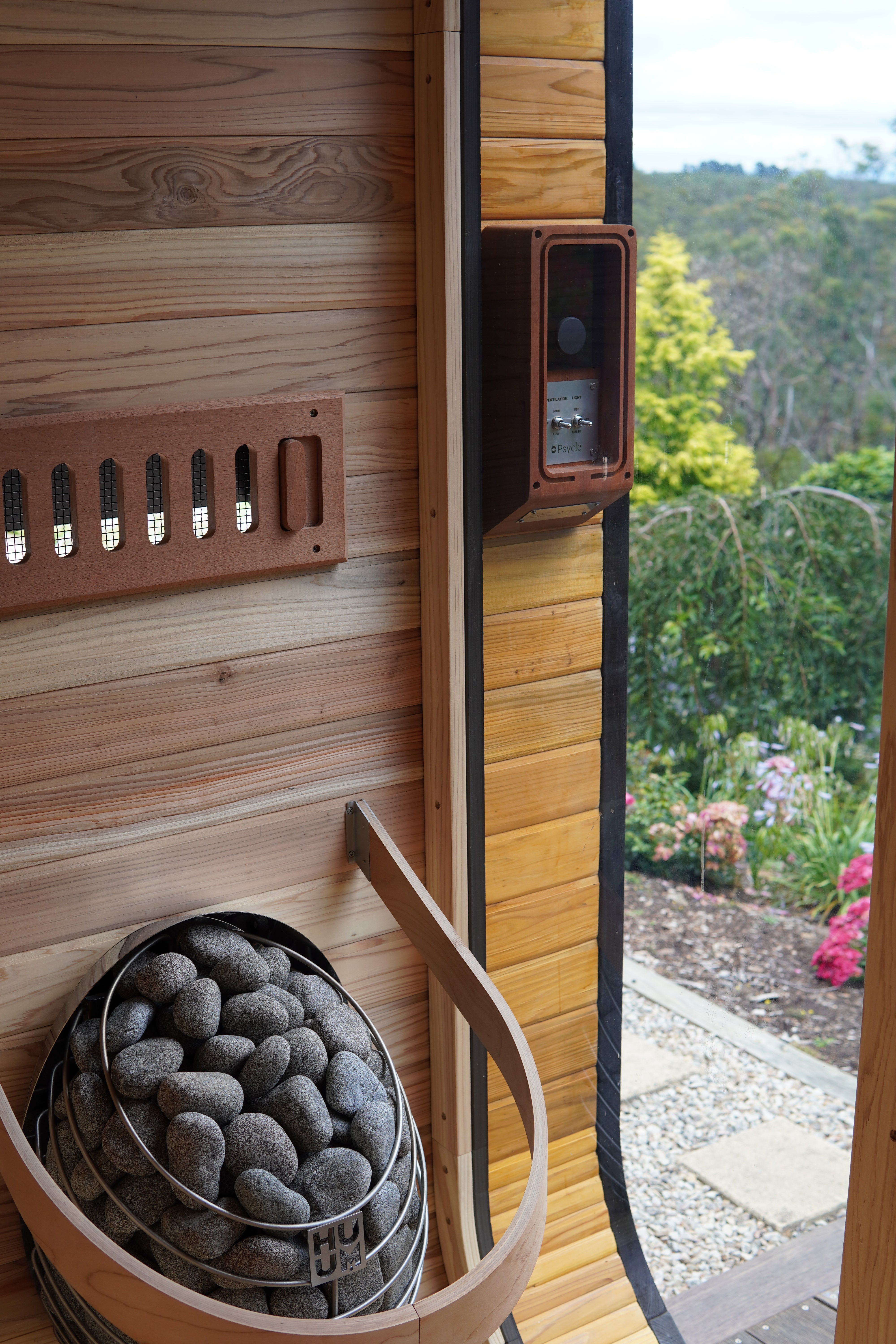
- The Genesis 9kW HUUM DROP heater with 60kg of Olivine diabase stone delivers authentic 80–100°C dry heat — the temperature range the cardiovascular research was actually conducted at.
- People with uncontrolled hypertension, recent cardiac events, or who are pregnant should consult a doctor before beginning a sauna protocol. See our evidence-based guide to sauna use during pregnancy for more detail.
By Psycle Wellness · Last updated: May 2026 · 14 min read
Regular traditional sauna use at 80–100°C measurably lowers blood pressure, reduces arterial stiffness, and cuts fatal cardiovascular disease risk by up to 50% in people who bathe 4–7 times per week. That finding comes from a 20-year prospective cohort study of 2,315 men by Laukkanen et al., published in JAMA Internal Medicine in 2015. The evidence is specific to traditional convective heat — not infrared, not steam, not anything assembled flat-pack at 50°C.
For the 34% of Australian adults living with hypertension, that is not a minor detail. It is the difference between a protocol that works and one that does not. This guide covers the mechanisms, the research, the correct session protocol, and what “real sauna” actually requires to produce these results.
Zero-Toxin Sauna Therapy, Built for Australians
Japanese Cedar exterior. Zero-glue construction. HUUM DROP 9kW heater. 60kg of Olivine diabase stone. Built to reach 80–100°C, session after session, for decades.
SEE THE GENESIS →One in Three Australians Has High Blood Pressure. Most Are Treating It Wrong.
Approximately 34% of Australian adults live with hypertension, according to the Heart Foundation of Australia. That is roughly 6.2 million people. Most are managing it with medication, dietary modification, or aerobic exercise. All three are evidence-backed. But there is a substantial, peer-reviewed body of evidence pointing to an additional modality that most Australians have never taken seriously: traditional Finnish sauna.
The problem is not access to the research. The problem is that “sauna” in Australia has been conflated with whatever infrared cabinet you can buy flat-packed from a big-box retailer, assembled in forty minutes, and operated at 50°C. That is not sauna. That is a warm box. And the science was never conducted on a warm box.
If you are managing cardiovascular risk and someone told you sauna therapy might help, they were right. But the version they were describing requires 80–100°C of genuine convective heat, real stone mass to hold temperature through a löyly pour, and a heater built to produce that environment reliably session after session. Our complete guide to sauna benefits in Australia covers the full breadth of what the research supports — this article focuses specifically on blood pressure and cardiovascular evidence.
Does Sauna Lower Blood Pressure? What the Finnish Research Actually Shows
Traditional Finnish sauna produces both acute and chronic reductions in blood pressure through three well-documented mechanisms: vasodilation, reduced arterial stiffness, and heat-shock protein activation. The evidence is not theoretical — it comes from two decades of prospective cohort research involving thousands of participants.
The landmark study: Laukkanen et al., JAMA Internal Medicine, 2015. A 20-year cohort of 2,315 Finnish men. Sauna use 4–7 times per week reduced the risk of fatal cardiovascular disease by 50% compared to once-weekly bathing. The dose-response relationship was unambiguous — more frequent sessions correlated directly with lower cardiovascular mortality, independent of smoking status, resting blood pressure, and cholesterol levels.
The blood pressure effect in isolation is significant. A single 30-minute sauna session at 80–100°C can produce reductions in systolic blood pressure of 5–10 mmHg in the hours following exposure — an effect size comparable to a moderate aerobic exercise bout. Over repeated sessions, the cumulative vascular adaptation is substantial. This is not correlation. It is a documented biological response to sustained heat stress.
A subsequent study by Laukkanen et al. in Neurology (2018) found that sauna bathing 4–7 times per week was associated with a 61% lower risk of stroke compared to once-weekly use. The authors proposed that regular heat exposure improves endothelial function, lowers systemic inflammation, and reduces the arterial rigidity that underpins both hypertension and stroke risk.
“The cardiovascular benefits of sauna bathing appear to be mediated through multiple pathways,” said Dr Jari Laukkanen, Professor of Medicine at the University of Eastern Finland, in an interview with The European Heart Journal. “Haemodynamic changes, improvements in arterial compliance, and reductions in systemic inflammation all appear to play a role — effects that accumulate with regular use.”
For a deeper look at cardiac output, arterial compliance, and heart rate variability research, see our detailed guide on sauna cardiovascular health in Australia.
The Physiological Mechanism: How Heat Changes Your Vascular System
Sauna heat acts on your vascular system through three distinct, well-characterised pathways. Understanding them explains why the temperature has to be right, why session frequency matters, and why infrared at 50°C does not replicate the studied effect.
Vasodilation and Cardiac Output
When core body temperature rises above 38°C, the cardiovascular system responds as if you are performing moderate aerobic exercise. Peripheral blood vessels dilate aggressively. Heart rate climbs to 120–150 beats per minute. Cardiac output can double or triple from resting levels. Blood is redirected from core organs to the skin surface to facilitate heat dissipation.
The result is a sustained post-session reduction in peripheral vascular resistance. Your arteries, having accommodated dramatically increased blood flow, remain more elastic and less resistant after the session ends. Over weeks and months of regular exposure, this adaptation accumulates into measurable reductions in resting blood pressure.
Reduced Arterial Stiffness
Arterial stiffness is one of the strongest independent predictors of cardiovascular events. It correlates directly with hypertension, left ventricular hypertrophy, and all-cause cardiovascular mortality. Traditional sauna measurably reduces arterial stiffness both acutely and chronically.
Regular sauna users show significantly lower pulse wave velocity — the gold-standard measure of arterial stiffness — compared to age-matched non-users. Heat stress stimulates nitric oxide production in the vessel wall, improving endothelial function and arterial compliance. This is a structural vascular adaptation, not a transient response.
Heat-Shock Proteins and Systemic Inflammation
Elevated core body temperature triggers the production of heat-shock proteins (HSPs) — molecular chaperones that protect cells from oxidative stress, repair misfolded proteins, and modulate inflammatory signalling. Regular HSP activation is associated with reduced systemic inflammation, improved insulin sensitivity, and protection against atherosclerotic plaque formation.
Chronic low-grade inflammation is a core driver of hypertension and cardiovascular disease progression. By repeatedly activating HSP pathways, regular sauna use appears to downregulate the inflammatory state that accelerates arterial damage. The effect compounds with frequency — this is the biological basis for the dose-response relationship Laukkanen's cohort data revealed. For more on how these adaptations interact with ageing markers, read our guide on sauna and longevity in Australia.
Why Temperature Is Non-Negotiable: Traditional Sauna vs Infrared
This is where most Australian buyers get misled. The cardiovascular research — every major cohort study, every mechanistic trial — was conducted in traditional Finnish saunas operating at 80–100°C. The physiological triggers that produce vasodilation, HSP activation, and arterial adaptation require reaching and sustaining that core temperature load.
Infrared saunas typically operate at 45–60°C. At that temperature, you sweat. You may feel warm. But the cardiovascular stimulus is categorically different — you do not achieve the heart rate elevations, the peripheral vasodilation magnitude, or the core temperature rise that the research documents. The mechanisms are not fully activated at 55°C.
| Variable | Traditional Sauna (Finnish) | Infrared Sauna |
|---|---|---|
| Operating temperature | 80–100°C | 45–60°C |
| Heat mechanism | Convective air + radiant stone | Radiant infrared panels |
| Heart rate elevation | 120–150 bpm (moderate exercise equivalent) | Moderate — lower thermal load |
| HSP activation | Strong — documented in multiple trials | Limited evidence at lower temps |
| Long-term CV evidence | 20-year cohort data (Laukkanen et al.) | No equivalent long-term studies |
| Löyly (steam pour) | Yes — central to the experience | No |
If blood pressure and cardiovascular adaptation are the goal, the evidence points in one direction. Our detailed breakdown of traditional sauna vs infrared covers the full comparison across temperature, humidity, and documented health outcomes.
The Sauna That Delivers the Research Temperature
HUUM DROP 9kW. 60kg Olivine diabase stone. Zero-glue Japanese Cedar construction. Active mechanical ventilation. Built to hold 80–100°C — every session, without compromise.
EXPLORE THE GENESIS →Sauna and Contrast Therapy: Does Adding Cold Plunge Amplify the Blood Pressure Benefit?
Contrast therapy — alternating sauna heat with cold water immersion — compounds the vascular training effect beyond what either modality produces alone. The mechanism is straightforward: heat drives aggressive vasodilation; cold triggers vasoconstriction. Alternating the two forces your arterial walls to repeatedly expand and contract, building elasticity over time in a way that resembles interval training for your cardiovascular system.
A 2021 study by Brunt et al. in The Journal of Physiology found that hot-water immersion performed daily for eight weeks produced significant reductions in both systolic and diastolic blood pressure, alongside improvements in arterial stiffness and endothelial function. Contrast protocols that include cold exposure have been shown to produce additional sympathetic nervous system benefits — improved vagal tone, reduced resting heart rate, and enhanced heart rate variability — all markers associated with lower cardiovascular risk.
For Australians building a home contrast setup, the protocol is specific: 15–20 minutes at 80–100°C in the sauna, followed by 2–3 minutes of cold immersion at 10–15°C, repeated for 2–3 rounds. Our complete guide to contrast therapy in Australia details the full evidence base and session structure. For detail on the cold side of the equation, read our science guide to cold plunge recovery.
What Does a Blood-Pressure Sauna Protocol Actually Look Like?
The research dose is 4–7 sessions per week at 80–100°C for 15–30 minutes per session. That is not a casual recommendation — it is the frequency at which the 50% cardiovascular mortality reduction was observed. Two sessions per week produces benefit, but the dose-response data shows diminishing returns below four.
Preheat to 80–100°C
Allow the Genesis to fully preheat for 45–60 minutes. The 60kg stone volume in the HUUM DROP holds temperature through the session — do not enter until the target range is reached.
15–20 minute first round
Sit at bench height in dry heat. Pour löyly at 10–15 minutes to spike humidity and intensify the thermal load. Stay in the upper bench position for maximum heat exposure.
Cool-down: 5–10 minutes
Exit and cool at ambient temperature or with a cold shower. If adding contrast protocol, move to cold plunge at 10–15°C for 2–3 minutes. Hydrate with 500ml of water.
Second round: 15–20 minutes
Re-enter the sauna. A second round further elevates the cardiovascular training stimulus and extends the HSP activation window. Most experienced users run two to three rounds per session.
Final cool-down and rehydration
Allow 15–20 minutes of passive recovery. Replace 1–1.5L of fluid. The post-sauna vasodilated state persists for 60–90 minutes — this is the window of maximum blood pressure reduction.
Frequency matters more than session length. Four sessions of 20 minutes at 90°C will produce greater cardiovascular adaptation than one 90-minute session per week. The research dose is consistent exposure, not heroic single efforts. For a full breakdown of how session timing interacts with training, sleep, and fasting, see our guide on how often you should sauna.
Is Sauna Safe for People with High Blood Pressure?
For the majority of people with well-managed hypertension, traditional sauna is not only safe — it is beneficial. The acute blood pressure reduction that follows a session is a therapeutic response, not a dangerous one. The long-term data shows a protective cardiovascular effect, not increased risk.
The contraindications are specific. If you have uncontrolled hypertension (systolic consistently above 180 mmHg), a recent cardiac event within the past 6 months, severe aortic stenosis, or unstable angina, do not use a sauna without medical clearance. These are rare conditions in the context of the general population — but they are real, and they matter.
For people who are new to sauna and managing cardiovascular risk factors, start conservatively: 10–15 minutes at 80°C, exit if you feel dizzy or uncomfortable, and progress session duration and frequency over 4–6 weeks. The Finnish cohort data was built on lifelong habitual users — the benefit accrues over months and years, not sessions. Our complete guide to sauna health risks and safety in Australia covers the full contraindication landscape in detail.
Why Most Home Saunas Cannot Deliver These Results
If you are reading this and thinking “I should get a home sauna,” you are right. But most home saunas sold in Australia cannot produce the temperature, the stone mass, or the air quality the research requires.
Most flat-pack home saunas are built with glued MDF panels and particle board. Heat that to 90°C and you are breathing formaldehyde off-gassing with every session. That is not wellness. That is the opposite of it. The Genesis uses zero-glue mechanical joints throughout — no adhesives, no resins, no chemical emission at heat. Japanese Cedar walls at 38mm. Non-VOC oil finish on every surface. Nothing in the cabin off-gasses at temperature.
The heater matters just as much. The HUUM DROP 9kW carries 60kg of Olivine diabase stone. That stone mass is what holds temperature when you pour löyly — when water hits the rocks, the humidity spikes and the thermal load intensifies, but the temperature does not crash. A cheap 4.5kW element with 10kg of stones will drop from 90°C to 70°C the moment you pour. The physiological stimulus is diminished. The protocol does not work as the research describes it.
Active mechanical ventilation at 88–120 m³/hr means fresh air enters and stale air exits continuously — so the heat stays clean across a full multi-round session, not stagnant by round two. IP67-rated amber and red lighting means the Genesis can be installed outdoors year-round across Australian climates without compromise. And the 3-year cabin warranty is the longest in the Australian market — because it is built to last decades, not seasons.
Genesis vs Genesis Mini: Which Is Right for Your Home?
Both carry identical zero-toxin specifications. The decision comes down to space and how many people will use it regularly.
| Specification | Genesis | Genesis Mini |
|---|---|---|
| Capacity | 3–5 person | 1–3 person |
| Heater options | HUUM DROP 9kW or Harvia Vega 9kW | HUUM DROP 6kW or Harvia Vega 6kW |
| Stone volume | 60kg (HUUM) / 20kg (Harvia) | 60kg (HUUM) / 20kg (Harvia) |
| External dimensions | 2289H × 2288W × 1945D mm | 2267H × 1571W × 1950D mm |
| Circuit requirement | 50A dedicated circuit | 32A dedicated circuit |
| Timber finish | Natural Cedar or Charcoal (Shou Sugi Ban) | Natural Cedar or Charcoal (Shou Sugi Ban) |
| Warranty | 5-year cabin / 3-year heater | 5-year cabin / 3-year heater |
If you have the space, the Genesis is the choice. The 3–5 person capacity means it grows with your household and holds its value as a long-term lifestyle asset. The Genesis Mini is the correct choice for apartments, tight courtyards, or single-user installations where footprint is the constraint — not a compromise on quality, just a fit-for-purpose footprint.
Both require a dedicated electrical circuit and professional installation. Build lead time is approximately 120 days from order confirmation. The $1,000 deposit is fully refundable — you are not locked in before production begins. Our complete guide to home sauna costs in Australia covers the full price breakdown, installation costs, and how to frame the investment over a 10-year lifespan.
Frequently Asked Questions: Sauna and Blood Pressure Australia
Does sauna lower blood pressure?
Yes. A single traditional sauna session at 80–100°C can reduce systolic blood pressure by 5–10 mmHg in the hours following exposure — comparable to a moderate aerobic exercise bout. Over repeated sessions across weeks and months, the cumulative vascular adaptation produces sustained reductions in resting blood pressure. The evidence is specific to traditional Finnish sauna at the correct temperature range.
Is sauna safe if you have high blood pressure?
For the majority of people with well-managed hypertension, traditional sauna is safe and beneficial. The long-term research shows a protective cardiovascular effect. People with uncontrolled hypertension (systolic consistently above 180 mmHg), recent cardiac events, unstable angina, or severe aortic stenosis should seek medical clearance before beginning a sauna protocol. If in doubt, start conservatively and consult your GP.
How often do you need to sauna to lower blood pressure?
The Laukkanen et al. cohort data shows a clear dose-response relationship. The 50% reduction in fatal cardiovascular events was observed in people who sauna bathed 4–7 times per week. Two to three sessions per week produces measurable benefit, but the research dose for maximum cardiovascular protection is four or more sessions. Frequency matters more than session duration.
Does infrared sauna lower blood pressure the same way?
No. The blood pressure and cardiovascular research was conducted in traditional Finnish saunas at 80–100°C. Infrared saunas typically operate at 45–60°C — a temperature range that does not produce the same magnitude of vasodilation, heat-shock protein activation, or core temperature elevation. There is no equivalent long-term cohort data for infrared sauna and cardiovascular mortality.
Can sauna replace blood pressure medication?
No, and it should not be framed that way. Sauna is a complementary modality with strong evidence for cardiovascular benefit — not a pharmaceutical substitute. People on antihypertensive medication should continue their prescribed treatment and discuss any lifestyle additions, including sauna use, with their GP or cardiologist. The research positions sauna as a powerful adjunct to conventional cardiovascular risk management, not a replacement for it.
Ready to Build This Into Your Routine?
Free Australia-wide delivery. 3-year cabin warranty. 120-day build — order now for spring delivery. $1,000 fully refundable deposit. Nothing comes close.
SHOP THE GENESIS →