
Sauna Longevity Australia: The Science Guide | Psycle
Sauna Longevity Australia: The Complete Science Guide

Key Takeaways
- A 20-year Finnish cohort study found sauna use 4-7 times per week reduces fatal cardiovascular disease risk by 50% compared to once-weekly use (Laukkanen et al., JAMA Internal Medicine, 2015).
- The same dose-response relationship holds for stroke: 4-7 weekly sessions are associated with a 61% lower stroke risk (Laukkanen et al., Neurology, 2018).
- Repeated heat stress at 80-100°C triggers heat shock proteins (HSPs), which drive cellular repair, proteostasis, and a measurable growth hormone spike of 2x or more above baseline.
- Regular sauna use reduces inflammatory markers including CRP and IL-6 - the same markers associated with accelerated biological ageing.
- Traditional Finnish sauna outperforms infrared for longevity-linked outcomes because it reaches the core temperatures (80-100°C) used in every major longevity study - infrared typically operates at 50-70°C.
- Contrast therapy - pairing sauna with cold immersion - amplifies cardiovascular and neurological adaptations beyond what sauna alone achieves.
- Running a Genesis home sauna costs approximately AU$0.50-$1.00 per 45-minute session - less than a single gym recovery suite visit, with no travel, no booking, and no waiting.
By Psycle Wellness · Last updated: May 2026 · 12 min read
Sauna use 4-7 times per week is associated with a 50% reduction in fatal cardiovascular events and a 61% lower stroke risk, based on a 20-year Finnish cohort study of 2,315 men. That is not a trend. That is peer-reviewed, longitudinal, dose-response evidence that positions regular sauna bathing as one of the most powerful longevity tools available to Australians today.
Why Most Australians Are Leaving Longevity Gains on the Table
The research has been published. The mechanisms are understood. The dose-response relationship is clear. And yet most Australians who care about longevity are spending thousands each year on supplements, wearables, and gym memberships while ignoring the single intervention with the strongest cardiovascular mortality data in the preventative health literature.
Part of that is access. Commercial saunas in Australia are inconsistent - temperature, hygiene, and wood quality vary wildly. You cannot control the protocol when the equipment is unreliable. And the cheap flat-pack units sold online? Most are built with glued MDF and particle board. Heat that to 90°C and you are not creating a therapeutic environment. You are off-gassing formaldehyde into a sealed box and breathing it with every session.
That is not wellness. That is the opposite of it.
The other part is information. Most longevity content in Australia stops at "saunas are good for you." It does not explain the mechanisms - what actually happens at the cellular level when you expose your body to 80-100°C air repeatedly, consistently, across weeks and months. Understanding the science is what separates people who use a sauna occasionally from those who treat it as a non-negotiable longevity protocol.
This guide covers the full picture. The Laukkanen studies and what the dose-response curve actually means. Heat shock proteins, BDNF, growth hormone, and inflammation markers. The Rhonda Patrick protocol. The case for contrast therapy. And why traditional Finnish sauna - not infrared - is the modality behind every major longevity finding. For a broader overview of the evidence base, start with our sauna benefits Australia evidence-based guide.
The Laukkanen Studies: What the Best Longevity Data Actually Shows
The most important sauna longevity research comes from a series of studies led by Dr Jari Laukkanen and colleagues at the University of Eastern Finland, drawing on the Kuopio Ischaemic Heart Disease Risk Factor Study - a 20-year prospective cohort of over 2,300 Finnish men.
A landmark 20-year cohort study of 2,315 Finnish men by Laukkanen et al., published in JAMA Internal Medicine (2015), found that sauna use 4-7 times per week reduced the risk of fatal cardiovascular disease by 50% compared to once-weekly bathing. The dose-response relationship was linear: 2-3 sessions per week produced a 27% reduction. Four to seven sessions nearly doubled that benefit.
Research by Laukkanen et al. in Neurology (2018) found that sauna bathing 4-7 times per week was associated with a 61% lower risk of stroke compared to once-weekly use. Again, the data followed a clear dose-response curve - more frequent sessions, lower risk. Both associations held after controlling for traditional cardiovascular risk factors including blood pressure, BMI, smoking, and exercise.
What makes these figures significant for Australians is not just the magnitude - it is the mechanism. Cardiovascular disease is the leading cause of death in Australia, responsible for around 30% of all deaths according to the Australian Institute of Health and Welfare. An intervention with this level of mortality reduction data that can be done at home, daily, for under AU$1 per session, is not a marginal gain. It is a structural change to your longevity trajectory.
For a deeper breakdown of the traditional sauna evidence base, see our article on traditional sauna benefits Australia.
How Sauna Triggers Longevity at the Cellular Level: Heat Shock Proteins and Proteostasis
Every time you sit in a sauna at 80-100°C, your core temperature rises by 1-2°C. That thermal stress is not damage - it is a signal. Your cells interpret it as a threat and respond by producing heat shock proteins (HSPs), a family of molecular chaperones whose job is to find misfolded or damaged proteins and either repair them or mark them for disposal.
This process - proteostasis, or protein homeostasis - is one of the central mechanisms of cellular ageing. As proteins accumulate damage over time, the cellular machinery responsible for clearing them becomes overwhelmed. The result is the kind of cellular dysfunction associated with neurodegeneration, cardiovascular decline, and accelerated biological ageing.
Regular heat exposure upregulates HSP production chronically - meaning your baseline capacity for cellular repair is elevated between sessions, not just during them. Longevity scientist Dr Rhonda Patrick, PhD, has described heat shock proteins as "one of the most important longevity mechanisms we can deliberately activate," noting that the HSP response is dose-dependent and strongest in the 80-100°C range used in Finnish traditional sauna.
This is one of the reasons temperature matters. Infrared saunas typically operate between 50-70°C - below the threshold required to produce a strong HSP response. The longevity data from the Laukkanen studies was generated using Finnish-style saunas at 80-100°C. You cannot assume the findings transfer to lower-temperature modalities.
Cardiovascular Adaptations: What Happens to Your Heart and Blood Vessels
Regular sauna use produces measurable cardiovascular adaptations that go well beyond temporary heart rate elevation during a session. The mechanisms are now well characterised in the literature.
During a sauna session at 80-100°C, cardiac output increases substantially as your body shunts blood to the periphery to dissipate heat. Heart rate rises to 100-150 beats per minute - comparable to moderate aerobic exercise. Over repeated sessions, this cardiovascular loading produces training-like adaptations: improved left ventricular function, reduced arterial stiffness, and enhanced endothelial function.
Endothelial function - the capacity of blood vessel walls to dilate and contract appropriately - is a key predictor of long-term cardiovascular health. Sauna bathing stimulates the release of nitric oxide from endothelial cells, which relaxes vessel walls and improves blood pressure regulation. Regular sessions are associated with clinically meaningful reductions in both systolic and diastolic blood pressure in hypertensive individuals.
For Australians with sedentary occupations or limited aerobic exercise capacity, this cardiovascular loading is particularly relevant. It is not a replacement for exercise - but as a daily adjunct, it adds a daily dose of cardiovascular stress that the body adapts to over time.

The Genesis: Engineered for the Protocols That Produce Longevity Outcomes
The longevity data is built on daily or near-daily sauna use at specific temperatures. That requires infrastructure you control - not a commercial facility you book, wait for, and share with strangers.
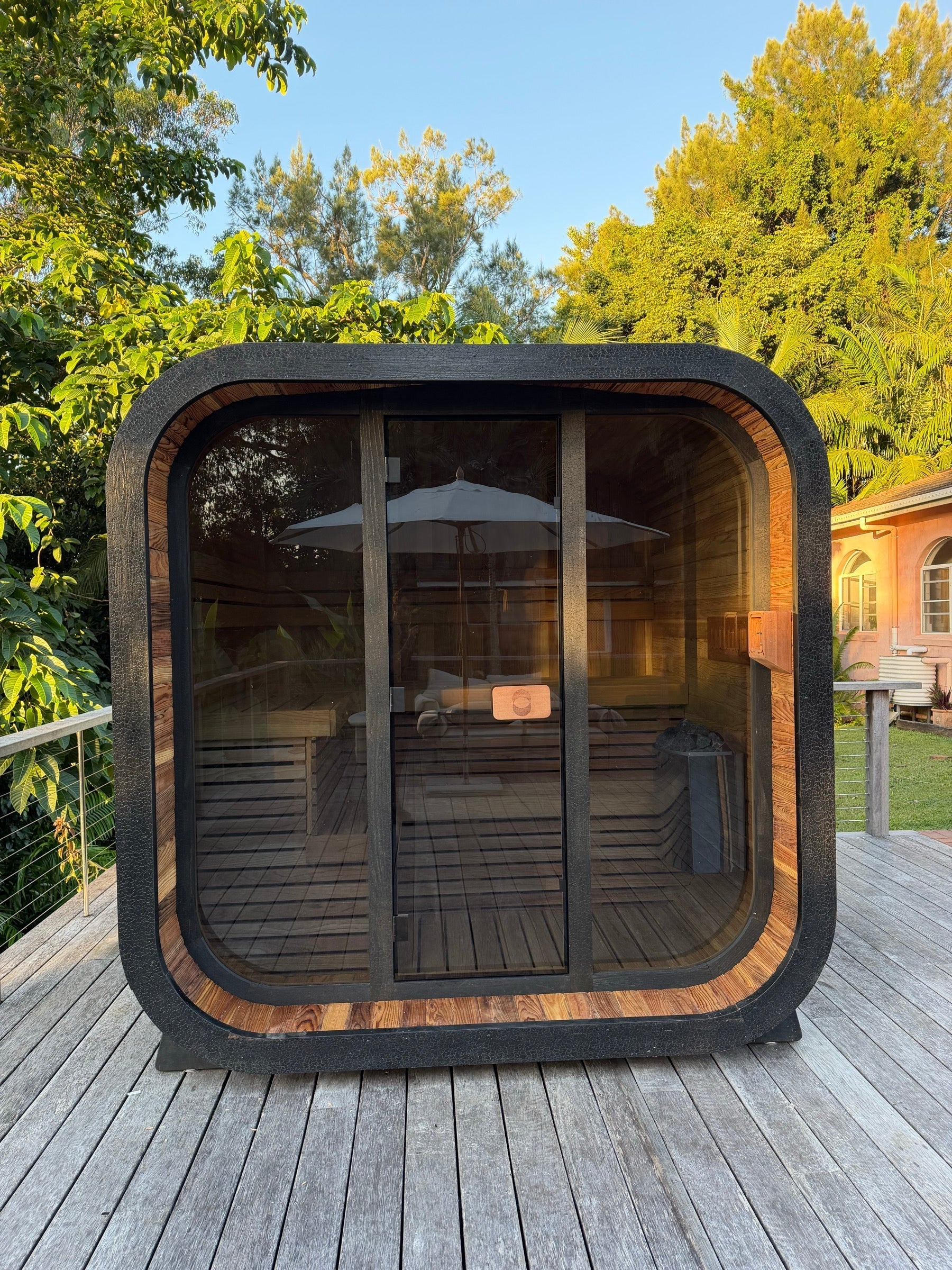
The Genesis is built for this. Japanese Cedar timber at 38mm wall thickness maintains stable heat with minimal energy loss. Zero-glue mechanical construction means no formaldehyde off-gassing at 90°C - the air inside your Genesis is clean air, the same at session 1,000 as it was at session one. The non-VOC oil finish holds the same standard throughout.
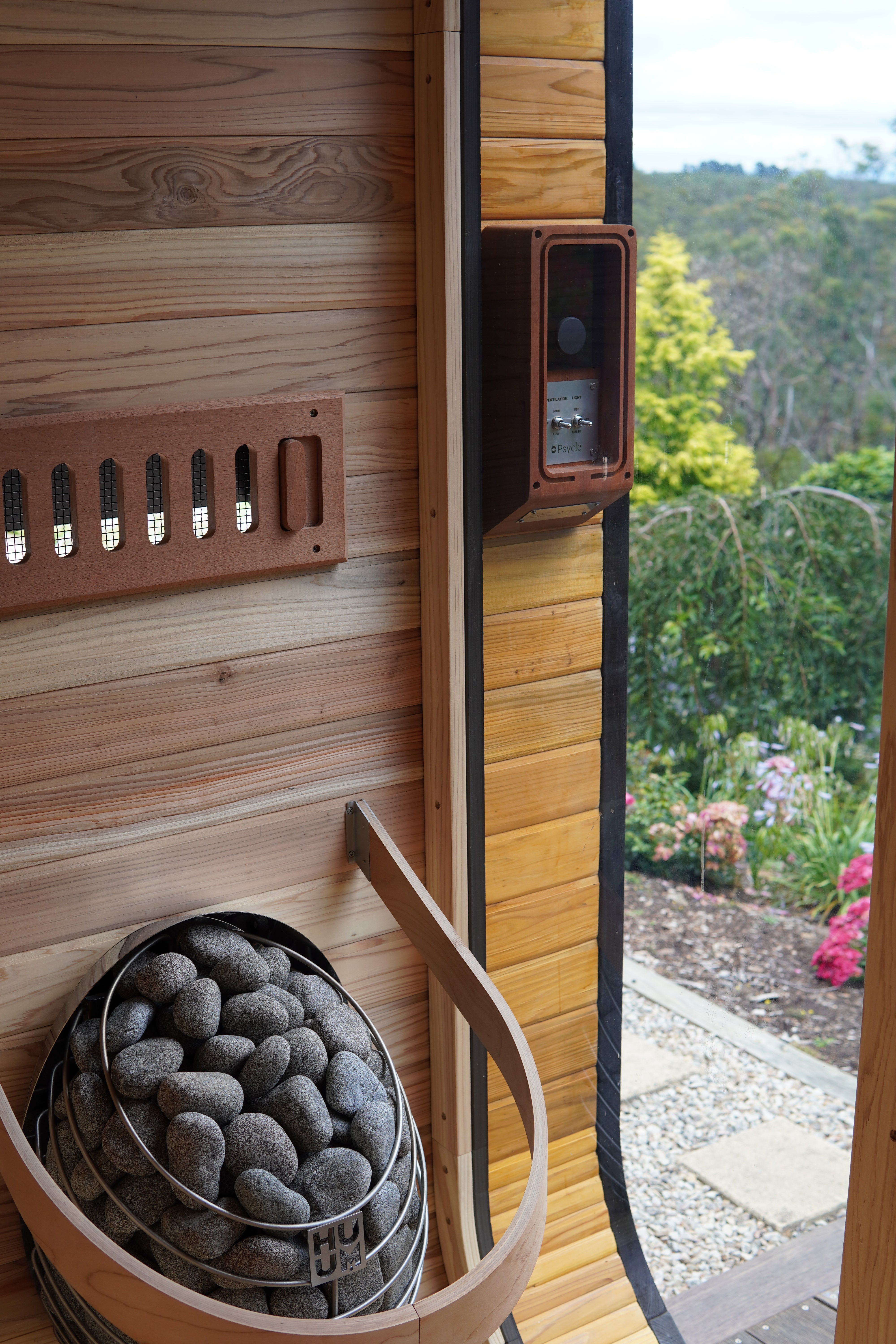
Heater choice matters for longevity protocols. The HUUM DROP 9kW carries 60kg of Olivine diabase stones - that mass holds heat through long sessions and through löyly without temperature drop. When you pour water on the stones at the 15-minute mark, the temperature does not collapse. It holds. The Harvia Vega 9kW offers the same output with 20kg of stones and mechanical controls for those who prefer simplicity over app connectivity.
Active ventilation at 88-120 m³/hr pulls fresh air through the cabin continuously. Blue-light-free lighting - amber 585-590nm and red 630-635nm, IP67-rated to withstand 200°C - means your evening sessions do not suppress melatonin. You get the heat exposure without the circadian cost. For anyone serious about sauna's effects on sleep quality, our guide to sauna for sleep Australia covers the full picture.
The Genesis is available in Natural Cedar or Charcoal (Shou Sugi Ban) finish. External dimensions: 2289H x 2288W x 1945D mm. It requires a 50A dedicated circuit. Lead time is 120 days. Delivery is Australia-wide.
Built for Daily Longevity Protocols
Japanese Cedar. Zero-glue construction. HUUM DROP 9kW. Active ventilation. Zero-toxin from the first session to the thousandth.
SEE THE GENESIS →BDNF and Neurological Longevity: What Sauna Does to Your Brain
Cognitive decline is the longevity variable most Australians fear most - and one of the least discussed in sauna research. The evidence here is building fast.
Sauna exposure stimulates the release of brain-derived neurotrophic factor (BDNF), a protein that supports the growth and maintenance of neurons and synaptic connections. BDNF is sometimes described as "fertiliser for the brain." Chronically low BDNF levels are associated with depression, cognitive decline, and an elevated risk of neurodegenerative conditions. Regular heat exposure - along with exercise and certain dietary patterns - is one of the few non-pharmacological ways to reliably increase it.
The sauna-BDNF connection is thought to operate through two pathways. First, heat stress itself directly stimulates BDNF production. Second, the prolactin response triggered by sauna use may enhance myelin repair in the brain - the protective sheathing around neural connections that degrades with age. Both mechanisms point toward long-term structural benefits for brain health that extend well beyond any single session.
For the mental health and cognitive dimension of regular sauna use, our detailed breakdown of sauna mental health Australia covers the anxiety, depression, and cognitive protection data in full.
Growth Hormone and Inflammation: The Anabolic and Anti-Ageing Signals
Two additional longevity mechanisms are worth understanding in detail: the growth hormone response and the reduction in systemic inflammation.
Growth Hormone
A single sauna session at sufficient temperature produces a growth hormone spike of 2x or more above baseline. Extended protocols - multiple sessions across a day - have shown GH responses up to 16x in controlled research conditions, though typical single-session responses are more modest. Growth hormone is central to tissue repair, body composition, and metabolic health. Its natural production declines with age, which is part of why recovery slows and lean mass is harder to maintain past 40.
Sauna-induced GH release is temperature- and duration-dependent. Sessions of 20-30 minutes at 80-100°C produce the strongest responses. This is another reason why the temperature range matters - lower-temperature infrared sessions do not generate the same hormonal signal. For more on heat, hormones, and the testosterone connection, see our guide to sauna benefits for testosterone.
Inflammation Markers
Chronic low-grade inflammation - measured through markers like C-reactive protein (CRP) and interleukin-6 (IL-6) - is one of the strongest predictors of accelerated biological ageing and age-related disease. Regular sauna use is associated with meaningful reductions in both markers over time.
This is not a short-term effect. The anti-inflammatory benefit accumulates with consistent frequency. Studies show that infrequent sauna use (once weekly) produces minimal change in CRP, while 4+ sessions per week is associated with the clinically significant reductions seen in the Laukkanen cohort data. Frequency is not optional if inflammation reduction is the goal.

What Australians Who Have Built This Into Their Daily Routine Say
The most useful signal is not what the research says in isolation - it is what happens when disciplined Australians run this protocol consistently in a real home environment.
“I've run a daily contrast protocol for 90 days. My HRV is up, resting heart rate is down, and my recovery from training has shifted in a way I cannot attribute to anything else I changed. The Genesis runs every morning at 6am. It has not missed a day.”
“I wanted something that actually got hot. I had an infrared unit for two years and it never felt like the science I was reading about. The Genesis is a different category. Eighty-five degrees in 20 minutes. That is what I was looking for.”
These are the people Psycle builds for. Australians who treat their body like a performance system, who have read the Laukkanen papers and the Rhonda Patrick interviews, and who want the infrastructure to execute the protocol properly - not a compromise version of it.
The Sauna Australians Who Take Recovery Seriously Own
Zero-glue. Zero-toxin. Zero compromise. The Genesis ships Australia-wide with a 3-year cabin warranty and a 3-year heater warranty.
EXPLORE THE GENESIS →Running Costs, Australian Climate, and the Case for a Home Setup
The longevity protocols that produce meaningful outcomes require frequency. Four to seven sessions per week is not occasional use - it is infrastructure. That changes the economic calculation entirely.
A 45-minute Genesis session at 9kW costs approximately AU$0.50-$1.00 in electricity at current Australian rates of AU$0.30-0.35 per kWh. Over 365 days of daily use, that is roughly AU$183-$365 per year in running costs. Compare that to a gym membership at AU$1,200-$2,400 per year - which does not include sauna access at the temperatures required for longevity protocols. Compare it to weekly physio at AU$100-$160 per session, or commercial sauna drop-ins which rarely reach 85°C and cannot be scheduled at 6am on a Tuesday.
The Australian climate adds another variable. In Queensland, Northern Territory, and coastal New South Wales, outdoor saunas are accessible year-round. The Genesis with the optional Colorbond roof kit is rated for fully exposed outdoor placement - and the IP67 lighting and 38mm Cedar walls handle Australian summers without degradation. In Melbourne or the ACT, a covered deck or undercover patio placement makes year-round use straightforward.
The outdoor sauna lifestyle is not new to Scandinavians - it is increasingly the norm for performance-driven Australians who want their recovery infrastructure to match their training infrastructure. For a full guide to outdoor placement and configuration, see our article on outdoor sauna Australia. For installation specifics, our home sauna installation Australia guide covers electrical requirements, placement, and what to expect across the 120-day build period.
The $1,000 refundable deposit means the commitment is not irreversible. The 120-day build time means you have four months to research, plan your space, and confirm the electrical setup before production begins. For a complete breakdown of total cost of ownership, our home sauna cost Australia guide covers every variable.
The Rhonda Patrick Protocol: Minimum Effective Dose for Longevity
Dr Rhonda Patrick, PhD, biochemist and longevity researcher, has synthesised the Laukkanen data and the mechanistic research into a practical protocol that aligns with the dose-response findings.
Her recommended minimum effective dose: 20 minutes per session at 80-100°C, four times per week. This threshold appears to capture the majority of the cardiovascular, HSP, and inflammatory benefits seen in the cohort data. Sessions beyond 20 minutes at this temperature produce additional HSP and GH responses - with the 20-30 minute window appearing to be the sweet spot for most protocols.
Patrick also highlights the value of post-sauna cooling - not necessarily a full cold plunge, but at minimum a cool shower or ambient cool-down period. This contrast between heat and cooling may strengthen the cardiovascular adaptation through additional nitric oxide release and sympathetic nervous system cycling. For those who want the full contrast protocol, see the section below.
For detailed guidance on how long to stay in a sauna by goal and experience level, our guide on how long to stay in a sauna breaks down the duration question precisely. For frequency guidance tied to specific health goals, see our article on how often you should sauna.
Traditional Sauna vs Infrared for Longevity: What the Science Separates
Traditional Finnish sauna outperforms infrared sauna for longevity outcomes because every major study in the longevity literature - including all of the Laukkanen findings - was conducted using Finnish-style saunas operating at 80-100°C with steam (löyly).
| Variable | Traditional Finnish Sauna | Infrared Sauna |
|---|---|---|
| Operating temperature | 80-100°C | 50-70°C |
| Longevity study basis | All major cohort studies (Laukkanen et al., 2015, 2018) | No equivalent long-term cohort data |
| Heat shock protein activation | Strong response at 80-100°C | Reduced response at 50-70°C |
| Growth hormone spike | 2x+ above baseline (temperature-dependent) | Lower; insufficient temperature stimulus |
| Löyly (steam) available | Yes - central to the Finnish protocol | No |
| Cardiovascular loading | High; HR reaches 100-150 bpm | Moderate; lower core temperature rise |
| Psycle product | Genesis, Genesis Mini | Not manufactured by Psycle |
This does not mean infrared has no benefits - it simply means the longevity data was not generated using it. If your goal is to replicate the protocols that produced the Laukkanen findings, you need a traditional sauna operating at 80-100°C. For a detailed evidence comparison, our guide on traditional vs infrared sauna covers every variable.
Contrast Therapy: How Cold Immersion Amplifies the Longevity Protocol
Contrast therapy - alternating between sauna heat and cold immersion - adds a second layer of longevity adaptations that sauna alone does not fully replicate.
Research published in the European Journal of Physiology found that cold water immersion produces a sustained 250% increase in dopamine levels - a neurological effect that outlasts the cold exposure itself by several hours. This is not the adrenaline spike of a cold shower. It is a sustained neurochemical shift with mood, motivation, and cognitive implications that compound across weeks of consistent use.
A 2018 meta-analysis by Dupuy et al. in Frontiers in Physiology, covering 99 studies and over 1,000 athletes, found cold-water immersion and contrast water therapy to be among the most effective recovery modalities for reducing muscle soreness and perceived fatigue. For performance-driven Australians managing high training loads, this is not a marginal recovery tool - it is a primary one.
Mechanically, the alternating vasoconstriction and vasodilation of contrast therapy creates a pump-like effect on the circulatory system, improving lymphatic clearance and peripheral blood flow. The cardiovascular stress of the transition between 90°C and cold immersion produces an adaptation stimulus that neither modality creates alone.
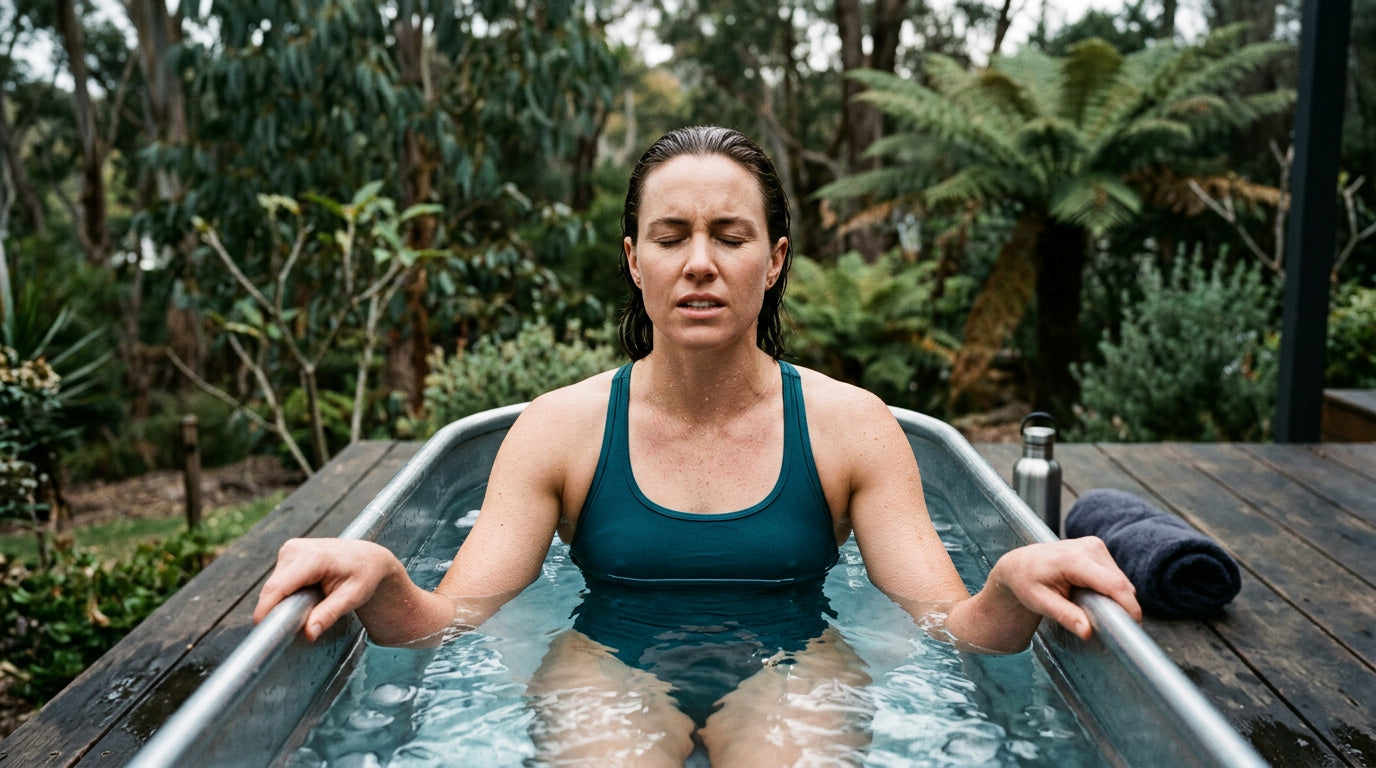
The Psycle Contrast Kit pairs the Genesis sauna with the Origin cold plunge. The protocol is straightforward: 15-20 minutes in the sauna at 80-100°C, 2-3 minutes in the cold plunge, repeat up to three cycles. Heat recovers you. Cold hardens you. Together, they transform you.
For the complete evidence base on contrast therapy in Australia, see our guide to contrast therapy Australia. For cold immersion specifics, our cold plunge benefits Australia guide covers the dopamine, cortisol, and recovery data in full. For ice bath temperature guidance, see our ice bath temperature complete guide.
Frequently Asked Questions: Sauna Longevity Australia
Does sauna increase lifespan?
Regular sauna use is associated with significantly reduced all-cause and cardiovascular mortality in long-term cohort data. A 20-year study of 2,315 Finnish men (Laukkanen et al., JAMA Internal Medicine, 2015) found that 4-7 sessions per week reduced fatal cardiovascular disease risk by 50%. While "increases lifespan" is difficult to prove in controlled human trials, the mortality reduction data is among the strongest for any non-pharmacological lifestyle intervention in the literature.
How many times per week do you need to sauna for longevity benefits?
The longevity data shows a clear dose-response: 4-7 sessions per week produces the strongest outcomes. Two to three sessions per week reduced cardiovascular mortality by 27% in the Laukkanen cohort - meaningful, but roughly half the benefit of daily use. For anyone serious about longevity outcomes, 4+ sessions per week at 80-100°C for 20-30 minutes is the target protocol. See our full guide to how often you should sauna for a breakdown by goal.
What temperature should a sauna be for longevity?
The longevity studies used Finnish-style saunas operating at 80-100°C. This temperature range is required to produce a strong heat shock protein response, significant cardiovascular loading, and the growth hormone spike associated with the protocols. Sessions below 80°C - including most infrared saunas operating at 50-70°C - do not replicate the conditions of the research. For a precise guide to sauna temperatures by goal, see our article on how hot a sauna should be.
Is traditional sauna better than infrared for longevity?
Yes, based on the current evidence base. Every major longevity study - including the Laukkanen cardiovascular and stroke research - was conducted using traditional Finnish saunas at 80-100°C. Infrared saunas operate at 50-70°C, which does not generate the same heat shock protein response, cardiovascular loading, or hormonal signals. The findings from Finnish sauna research cannot be assumed to transfer to infrared. For a full comparison, see our guide to traditional vs infrared sauna.
Does sauna reduce inflammation?
Regular sauna use is associated with reductions in CRP (C-reactive protein) and IL-6, two of the primary biomarkers of systemic inflammation and accelerated biological ageing. The effect is frequency-dependent - once-weekly sessions show minimal change in inflammatory markers, while 4+ sessions per week is associated with the clinically meaningful reductions observed in the Laukkanen cohort. Chronic inflammation reduction is considered one of the central longevity mechanisms of regular sauna use.
Can sauna replace exercise for cardiovascular health?
Sauna should not replace exercise - but the cardiovascular loading it produces is real and complementary. During a session at 80-100°C, heart rate rises to 100-150 beats per minute, cardiac output increases substantially, and endothelial function is stimulated through nitric oxide release. For individuals with limited exercise capacity, sauna provides a meaningful cardiovascular stress. For active individuals, it adds a daily cardiovascular stimulus that compounds over time. The Laukkanen findings controlled for exercise levels and the association with reduced cardiovascular mortality held independently.
What are the health risks of sauna in Australia?
Sauna is safe for most healthy adults when used correctly. The primary risks are dehydration, orthostatic hypotension (dizziness on standing), and contraindication with certain cardiovascular conditions or medications. In the Australian climate, adequate pre-hydration is particularly important given ambient temperatures. Individuals with hypertension, heart conditions, or who are pregnant should consult a GP before starting a sauna protocol. For a complete safety guide, see our article on sauna health risks Australia.
Build the Protocol. Own the Infrastructure.
Free Australia-wide delivery. 3-year cabin warranty. 120-day build - order now and your Genesis is ready before the end of the year. $1,000 refundable deposit to begin.
SHOP THE GENESIS →