
Traditional Sauna Benefits Australia: Science-Backed Guide
Traditional Sauna Benefits Australia: Science-Backed Guide

Key Takeaways
- Regular sauna use 4–7 times per week cuts fatal cardiovascular event risk by 50% compared to once-weekly use, per a 20-year Finnish study of 2,315 men (Laukkanen et al., 2015, JAMA Internal Medicine)
- Men using saunas 4–7 times per week showed a 63% reduction in sudden cardiac death versus once-weekly users in the same Finnish cohort
- Eight weeks of consistent traditional sauna use improved endothelial function by 30%, a key predictor of long-term cardiovascular health (European Journal of Preventive Cardiology, 2018)
- 19 minutes is the minimum session threshold for meaningful cardiovascular adaptation – shorter sessions do not deliver sufficient thermal load
- Sessions must reach 80–100°C to replicate Finnish research conditions – cheaper home saunas that struggle to hold 70°C do not deliver the studied benefits
- MDF and particle board saunas off-gas formaldehyde – a WHO Group 1 carcinogen – at an accelerating rate above 80°C, directly undermining recovery outcomes
- Heat shock protein activation from sauna use accelerates muscle repair by 32%, making post-training heat sessions a measurable recovery tool for athletes (Journal of Science and Medicine in Sport, 2007)
Traditional sauna benefits – validated across decades of Finnish research – are among the most comprehensively studied outcomes in preventive medicine. A landmark 20-year study tracking 2,315 men found that sauna use four to seven times per week cut fatal cardiovascular event risk by 50% compared to once-weekly use (Laukkanen et al., 2015, JAMA Internal Medicine). These benefits are dose-dependent, temperature-dependent, and construction-dependent. Real heat. Real timber. Real ventilation. Not a flat-pack box.
Most Australians who buy a home sauna never access these benefits. They get a particle board cabin with passive vents and an undersized heater that struggles to hold 70°C. The Finnish studies that produced the 50% cardiac risk reduction data were not run in flat-pack kits. They were run in authentic traditional Finnish saunas hitting 80–100°C with proper ventilation. Construction is not a secondary consideration. It is the primary one.
Why Construction Determines Whether You Get the Benefits
This is the part most sauna marketing skips. Scroll through the cheaper end of the Australian sauna market and you will find the same thing: MDF panels with a timber veneer, particle board cores, glued joints, and passive ventilation holes drilled into the walls.
Heat those materials to 80°C – the minimum temperature for meaningful cardiovascular adaptation – and the off-gassing begins. Formaldehyde is classified by the World Health Organization as a Group 1 carcinogen (WHO, 2010). It is released by the urea-formaldehyde resins that bind MDF and particle board together. The rate of release accelerates with heat. At 90°C, a session in a cheap sauna is a session breathing chemical steam. That is not recovery. That is the opposite of it.
The ventilation problem compounds this. Passive vents – holes in the cabin walls – cannot exchange air fast enough at operating temperature. CO2 levels climb. Oxygen concentration drops. The off-gassing recirculates. You are not in a recovery tool. You are in a sealed box filling with formaldehyde vapour while your heart rate climbs.
If you are going to invest the time in a daily sauna protocol, the infrastructure has to be built correctly. You can read every study published on traditional sauna benefits and still get none of them if you are sitting in a poorly built box at 60°C breathing glue fumes. Our complete guide to the best home saunas in Australia covers every construction standard, electrical requirement, and specification worth verifying before you commit.
Zero-Toxin Sauna Therapy, Built for Australians
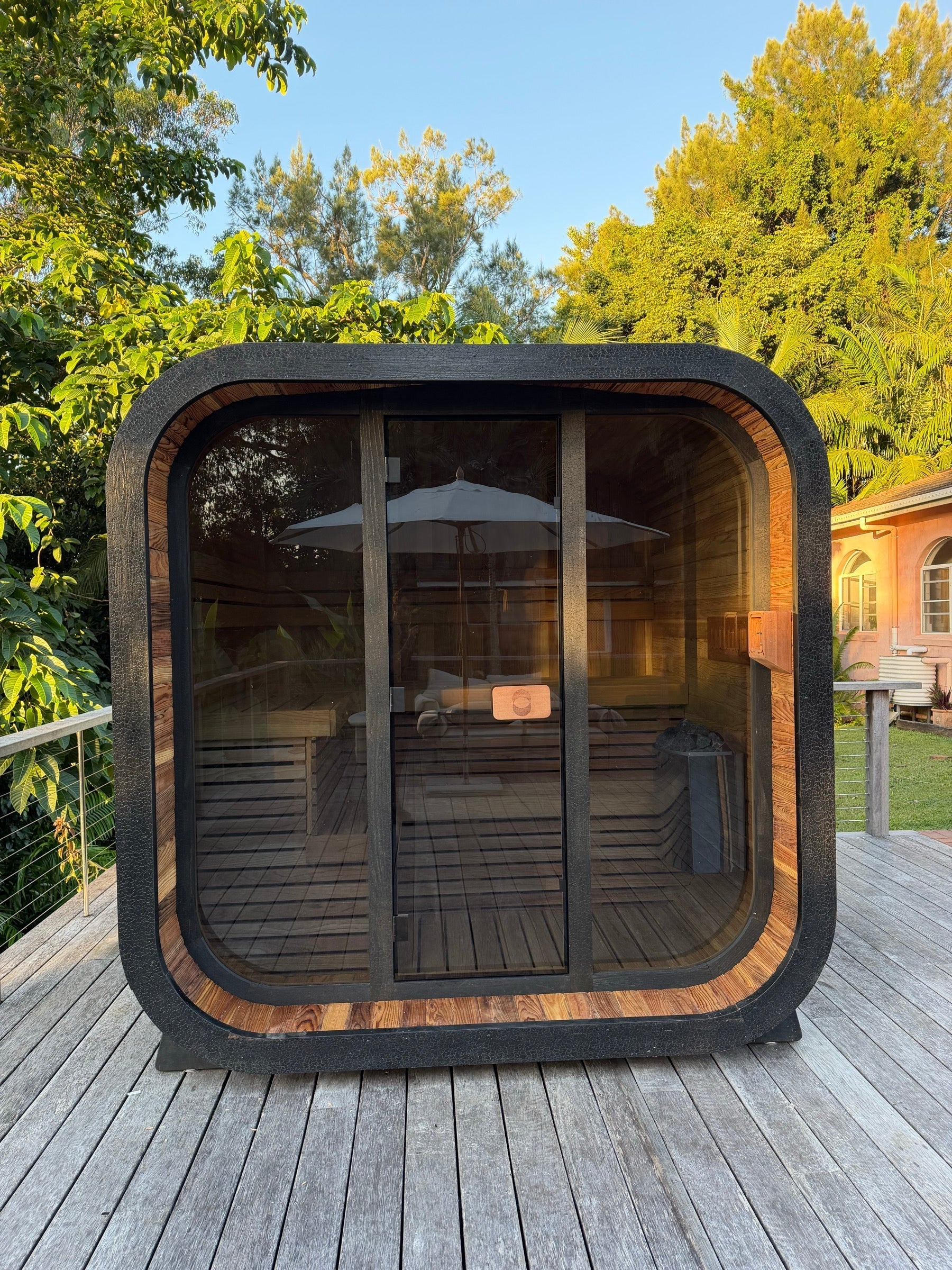
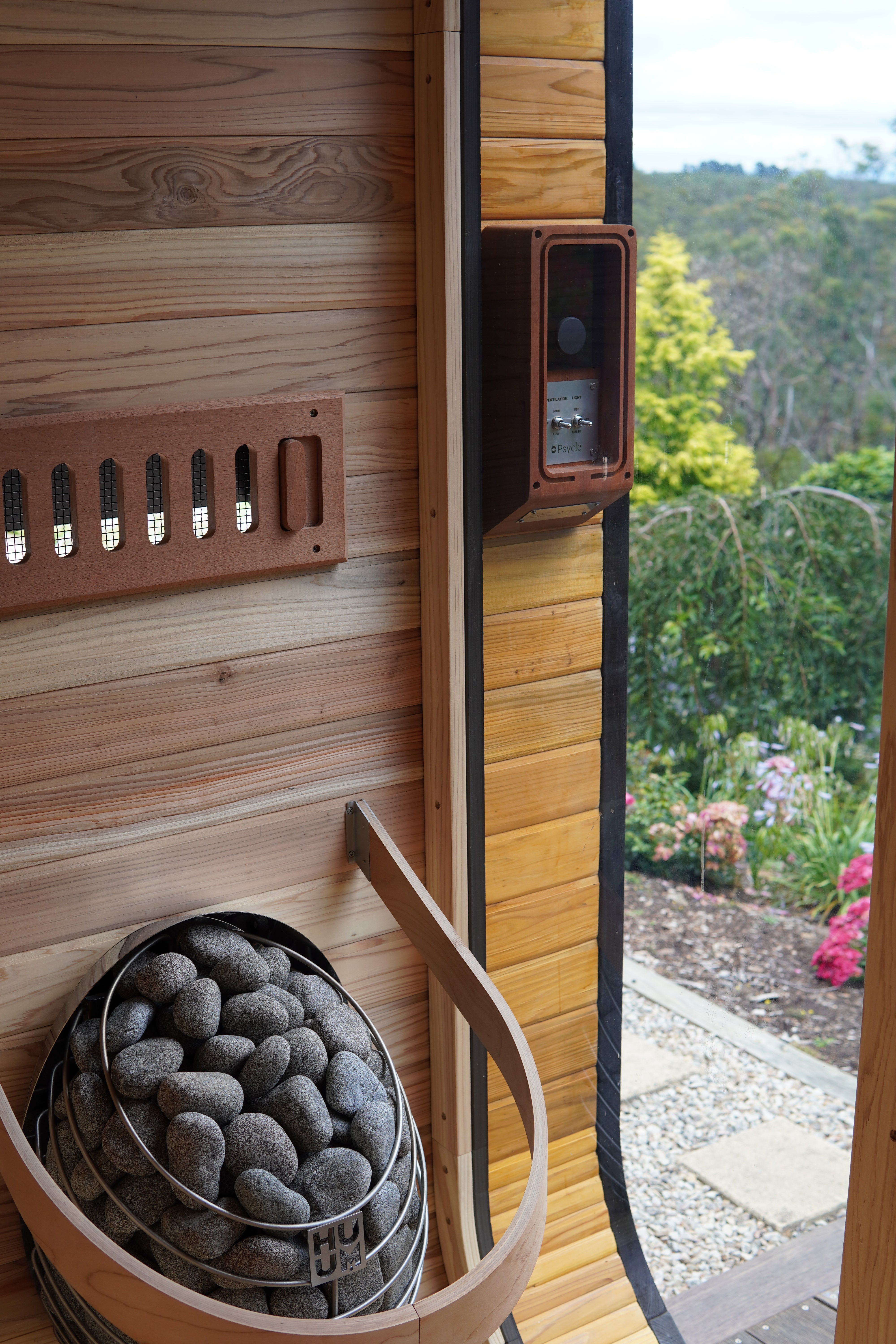
Japanese Cedar 38mm walls. Zero-glue mechanical joints. HUUM DROP 9kW heater with 60kg Olivine diabase stones. Active ventilation at 88–120 m³/hr. Every detail engineered – nothing is an afterthought.
SEE THE GENESIS →Cardiovascular Benefits: What the Research Actually Shows
The Kuopio Ischemic Heart Disease Risk Factor Study is the most cited piece of sauna research in existence. Run over 20 years in Finland, it tracked 2,315 middle-aged men through detailed health assessments and sauna habits. The results, published by Laukkanen et al. in JAMA Internal Medicine in 2015, showed cardiovascular benefit scaling directly with sauna frequency.
Men bathing four to seven times per week versus once per week showed a 50% reduction in fatal cardiovascular events, a 63% reduction in sudden cardiac death, and a 40% reduction in all-cause mortality. The dose-response relationship was linear: more sessions produced greater protection. The operating temperature in this population was 80–100°C – the authentic Finnish range.
A 2018 follow-up in the European Journal of Preventive Cardiology by the same research group found that regular traditional sauna use improved endothelial function by 30% over eight weeks. Endothelial function – the ability of blood vessels to dilate and contract in response to demand – is one of the most reliable predictors of long-term cardiovascular health. Eight weeks of consistent heat exposure produced a clinically meaningful improvement.
The mechanism is well understood. During a sauna session at 80–100°C, heart rate climbs to 120–150 beats per minute, comparable to moderate-intensity aerobic exercise. Stroke volume increases. Peripheral blood vessels dilate. The cardiovascular system is trained without the mechanical load of physical exercise. For athletes already accumulating heavy training volume, this is additional cardiovascular stimulus with zero joint stress. For anyone managing physical limitations, including joint conditions like arthritis, it is cardiovascular training that does not require it.
Session duration matters. The Finnish research identified 19 minutes as the threshold for meaningful cardiovascular adaptation. Shorter sessions do not provide sufficient thermal load. The effective range is 20–25 minutes at 80–90°C, repeated four to seven times per week. For a full breakdown of session timing by goal, see our guide on how long to stay in a sauna.
Athletic Recovery: Heat Shock Proteins and Peripheral Blood Flow
Sauna recovery is not a vague wellness concept. The mechanisms are specific, the research is real, and the applications are practical for anyone training seriously.
Heat shock proteins (HSPs) are molecular chaperones – proteins that repair other damaged proteins inside cells. Exercise-induced muscle damage triggers their production, but heat exposure accelerates the process significantly. A 2007 study in the Journal of Science and Medicine in Sport found that heat exposure post-exercise increased HSP expression by 32% and measurably reduced muscle repair time. The peak expression window is 24–48 hours post-exposure, aligning precisely with the delayed onset muscle soreness (DOMS) window most athletes are trying to manage.
The peripheral blood flow mechanism is equally important. At sauna temperatures, blood flow to skeletal muscle increases dramatically as the body attempts to offload heat. This increased perfusion delivers oxygen and nutrients to recovering tissue while flushing metabolic waste products – lactate, inflammatory cytokines – out more efficiently than passive rest. Faster clearance of biochemical markers associated with muscle fatigue is the measurable result.
Timing matters for athletes. The optimal protocol is post-training sauna use, with a minimum 60-minute gap after the training session ends. This allows the initial anabolic signalling window to complete without thermal interference. Sauna immediately pre-training impairs force production – elevated core temperature reduces the contractile efficiency of skeletal muscle. Evening sessions, standalone or 60–90 minutes post-training, deliver the best recovery outcomes. See our guide to sauna after workout: timing and protocols for a full breakdown.
The undersized heater problem is critical here. An underpowered heater that cannot maintain temperature above 75°C throughout a 20-minute session will not produce meaningful HSP activation. The HUUM DROP 9kW heater in the Genesis, loaded with 60kg of Olivine diabase stones, maintains stable temperature for the full session. 60kg of volcanic stone holds heat the way it needs to – the temperature does not drop the moment you add water or open the door.
Mental Health Benefits: Endorphins, Beta-Endorphins, and the Thermal Reset
The psychological benefits of traditional sauna use are documented, mechanistic, and measurable – not anecdotal. Heat exposure stimulates the release of beta-endorphins, the same endogenous opioid compounds triggered by sustained aerobic exercise. A 2018 study published in Psychotherapy and Psychosomatics found that whole-body hyperthermia – the clinical term for therapeutic heat exposure – produced antidepressant effects equivalent to a full course of antidepressant medication in a single session, with effects persisting for six weeks.
The thermal mechanism matters. Core temperature elevation activates the raphe nucleus – the brain region responsible for serotonin production. Serotonin is the primary neurotransmitter implicated in mood regulation, sleep quality, and anxiety reduction. Traditional sauna at 80–100°C produces a core temperature rise of 1–2°C, enough to trigger this pathway meaningfully. A 50°C infrared session does not achieve the same core temperature elevation and does not produce the same neurochemical response.
Post-session parasympathetic activation is the other half of this. As the body cools after heat exposure, heart rate drops, cortisol falls, and the nervous system shifts decisively into recovery mode. Regular sauna users consistently report improved sleep quality – a finding supported by a 2019 review in Sleep Medicine Reviews, which identified heat-induced thermoregulatory changes as a reliable mechanism for improving sleep onset and deep sleep duration. Our guide to sauna and sleep quality covers the full research on this.
How Traditional Sauna Compares to Infrared
The traditional versus infrared question comes up in every serious sauna conversation in Australia. The answer is not complicated, but it requires honesty about what the research actually covers.
| Factor | Traditional Sauna | Infrared Sauna |
|---|---|---|
| Operating temperature | 80–100°C | 45–65°C |
| Core temperature rise | 1–2°C (clinically significant) | 0.5–1°C (lower thermal load) |
| Cardiovascular research | 20+ years, 2,315-person cohort studies | Limited, smaller-scale studies |
| Löyly (steam) | Yes – core to the experience | No |
| Heat shock protein activation | Strong – sufficient thermal load | Weaker – insufficient temperature |
| Construction risk | High if cheap materials used | High – often uses MDF interiors |
The 20-year Finnish cardiovascular data applies specifically to traditional sauna at 80–100°C. No equivalent long-term dataset exists for infrared. That is not a criticism of infrared – it is a statement of what the evidence covers. If your priority is accessing the cardiovascular benefits documented in the peer-reviewed literature, traditional Finnish sauna at the correct temperature is the only option backed by that evidence base. For a detailed breakdown, see our traditional vs infrared sauna comparison.
The Löyly Effect: Why Steam at 80–100°C Is Not Optional
Löyly is the steam created by pouring water over heated sauna stones. In Finnish sauna culture, it is not an optional feature – it is the defining act of the ritual. And the physiology behind it is specific.
When water contacts stones at 80–100°C, it flash-vaporises into a burst of superheated steam. This instantly raises the perceived humidity and the convective heat load on the skin. The body responds by accelerating sweat production. Heart rate increases. Peripheral vasodilation intensifies. The thermal stimulus is significantly greater than dry heat alone at the same temperature. Our full guide to löyly in sauna covers the technique, stone volume, and why it matters for the quality of your session.
This is why stone volume is not a marketing statistic – it is a functional specification. The HUUM DROP in the Genesis carries 60kg of Olivine diabase stone. The Harvia Vega option carries 20kg. Both deliver authentic löyly. But 60kg of volcanic rock holds temperature across repeated water pours in a way that 20kg cannot. The steam stays consistent. The thermal load stays elevated. The session stays what it is supposed to be.
Cheaper heaters with minimal stone volume produce a single burst of steam before the stones cool. That is not löyly. That is theatre.
The Sauna That Does Not Compromise
Active mechanical ventilation at 88–120 m³/hr. Blue-light-free amber and red lighting. IP67-rated fittings. 3-year cabin warranty. Every detail of the Genesis is engineered to the standard the research demands.
EXPLORE THE GENESIS →Contrast Therapy: Pairing Sauna Heat with Cold Immersion
Traditional sauna and cold plunge are the two halves of the most evidence-backed recovery protocol in existence. Heat expands peripheral blood vessels and drives blood to the surface. Cold contracts them sharply, flushing that blood back to the core. The alternating cycle – heat, cold, heat, cold – produces a vascular pumping effect that accelerates metabolic waste clearance and reduces systemic inflammation.
A 2021 study in the International Journal of Environmental Research and Public Health found that contrast therapy produced significantly greater reductions in perceived muscle soreness and inflammatory markers (CRP and IL-6) compared to passive recovery or either modality alone. The combination is not additive – it is multiplicative. Heat recovers you. Cold hardens you. Together, they transform you.
The practical protocol: 15–20 minutes in the sauna at 80–90°C, followed immediately by 2–4 minutes in cold water at 10–15°C. Repeat two to three cycles. Finish cold for maximum sympathetic activation, or finish warm for a parasympathetic recovery effect – depending on whether you are about to train or about to sleep.
For Australians building a home recovery setup, the Genesis paired with the Origin cold plunge is the complete contrast protocol in one installation. Our complete guide to contrast therapy in Australia covers the full research, timing protocols, and how to build the habit.
How Often Should You Use a Traditional Sauna?
The Finnish research is clear on frequency. The cardiovascular benefits are dose-dependent – and the threshold for peak benefit is four to seven sessions per week. Once or twice per week produces measurable benefit but not the full risk reduction documented in the Laukkanen cohort. The 50% cardiac event reduction and 63% sudden cardiac death reduction figures are specific to the four to seven sessions per week group.
For most high-performing Australians, the realistic starting point is three to four sessions per week. That still puts you well above the baseline and well into the range where meaningful cardiovascular adaptation occurs. Daily use – the Finnish cultural default – is the target for anyone using sauna as a primary health and longevity tool.
Home ownership is the only way to make this frequency practically achievable. Commercial sauna facilities charge $25–$60 per session. At four sessions per week, that is $400–$1,000 per month. Over five years, the Genesis pays for itself many times over against that benchmark – and you are not working around someone else’s schedule or sharing infrastructure with strangers. Our guide to sauna frequency breaks down the optimal protocols by health goal.
What to Look for When Buying a Traditional Sauna in Australia
There are five non-negotiable specifications for any traditional sauna that is going to deliver the benefits documented in the Finnish research.
Zero-toxin construction
No MDF, no particle board, no glued joints. Any cabin that uses these materials will off-gas formaldehyde above 80°C. The Genesis uses zero-glue mechanical joints and Japanese Cedar throughout – no exceptions.
Adequate heater output and stone volume
Minimum 9kW for a 3–5 person cabin. Stone volume of at least 20kg for consistent löyly – 60kg for sessions where the heat does not waver. An undersized heater cannot hold 80–100°C through repeated water pours or when the door is opened.
Active mechanical ventilation
Passive vents cannot exchange air fast enough at operating temperature. Forced ventilation at 88–120 m³/hr keeps oxygen levels stable, CO2 from accumulating, and the thermal environment clean. This is the specification the Finnish studies operated in.
Structural timber walls at minimum 38mm
Wall thickness directly affects heat retention. Thin walls bleed heat, forcing the heater to work harder to maintain temperature. The Genesis uses 38mm Japanese Cedar – the same structural standard as Scandinavian sauna construction.
Blue-light-free lighting
Standard white LED lighting in a sauna suppresses melatonin production – directly undermining sleep quality. The Genesis uses amber (585–590nm) and red (630–635nm) lighting, IP67 rated and built for 200°C. The session promotes sleep rather than disrupting it.
Traditional Sauna Safety: Who Should Be Cautious
Traditional sauna is safe for the overwhelming majority of healthy adults. The Finnish research cohort – 2,315 men tracked over 20 years – found no adverse cardiovascular outcomes attributable to sauna use in individuals without pre-existing cardiovascular disease. The cardiovascular stress of an 80–100°C session is equivalent to moderate aerobic exercise – which is considered safe for most healthy adults.
There are specific populations who require medical clearance before regular sauna use. Anyone with uncontrolled hypertension, recent cardiac events, or active heart failure should consult their cardiologist first. Our complete guide to sauna health risks covers every contraindication in detail, with the supporting evidence for each.
Sauna during pregnancy requires specific guidance – core temperature elevation above 38.9°C in the first trimester carries documented foetal risk. This is a separate clinical topic covered in our evidence-based guide to sauna and pregnancy.
Hydration is non-negotiable. A 20-minute session at 90°C produces 0.5–1.0 litres of sweat loss. Entering a sauna dehydrated amplifies cardiovascular strain. Drink 500ml of water before the session and rehydrate fully afterwards. Alcohol before sauna significantly impairs thermoregulatory function – it is not recommended under any circumstances.
Frequently Asked Questions
What are the main benefits of traditional sauna use?
Traditional sauna benefits include a 50% reduction in fatal cardiovascular events with 4–7 weekly sessions (Laukkanen et al., 2015), 30% improvement in endothelial function after 8 weeks (European Journal of Preventive Cardiology, 2018), accelerated muscle recovery via heat shock protein activation, improved sleep quality through post-session thermoregulatory changes, and documented antidepressant effects from beta-endorphin and serotonin pathway activation.
How hot does a sauna need to be to get health benefits?
The Finnish research that produced the cardiovascular benefit data was conducted at 80–100°C. This is the temperature range required for meaningful heat shock protein activation, sufficient core temperature elevation, and the cardiovascular stimulus that drives adaptation. Saunas operating below 70°C do not replicate the thermal load of the studied conditions and do not deliver the same physiological outcomes.
How often should you use a traditional sauna for cardiovascular benefits?
The Laukkanen et al. (2015) Finnish cohort study found a clear dose-response relationship. Once per week produced measurable benefit. Four to seven times per week produced a 50% reduction in fatal cardiovascular events and a 63% reduction in sudden cardiac death compared to once-weekly use. Daily use – the Finnish cultural norm – is the frequency that maximises long-term cardiovascular and longevity outcomes.
Is traditional sauna better than infrared for health benefits?
Traditional Finnish sauna at 80–100°C is backed by 20+ years of large-cohort cardiovascular research. Infrared sauna operates at 45–65°C, produces a lower core temperature rise, and does not have an equivalent long-term evidence base. For cardiovascular benefit, heat shock protein activation, and the löyly experience, traditional sauna at the correct temperature is the only option with the research to support it.
Can you use a sauna every day?
Yes – and for maximum benefit, daily use is the target. The Finnish population data was drawn from daily sauna users. No adverse health outcomes were associated with daily use in healthy adults. The practical barrier for most Australians is access, which is why home ownership – rather than relying on commercial facilities – is the only way to realistically achieve a daily protocol.
What is löyly and why does it matter?
Löyly is the steam produced by pouring water over heated sauna stones. It increases the convective heat load on the skin, accelerates sweat production, and amplifies the thermal stimulus beyond what dry heat alone produces at the same temperature. Stone volume determines how consistently löyly can be produced – 60kg of volcanic stone sustains the effect across repeated pours in a way that 20kg cannot.
Ready to Build This Into Your Routine?
Free Australia-wide delivery. 3-year cabin warranty – the longest in the Australian market. $1,000 refundable deposit. 120-day build time means you can research, inspect, and decide before production begins.
SHOP THE GENESIS →