
Cold Water Therapy Australia: Complete Guide | Psycle
Cold Water Therapy Australia: The Complete Science and Practice Guide

Key Takeaways
- Cold water therapy (CWT) refers to deliberate immersion in water at 10–15°C — meaningfully different from a cold shower and with distinct physiological effects on norepinephrine, vagal tone, and brown adipose tissue activation.
- A 2018 meta-analysis by Dupuy et al. in Frontiers in Physiology, covering 99 studies and over 1,000 athletes, found cold-water immersion and contrast water therapy to be among the most effective recovery modalities for reducing muscle soreness and perceived fatigue.
- The Huberman Protocol recommends an 11-minute weekly aggregate of cold immersion across 2–4 sessions, with individual sessions lasting 2–4 minutes at 10–15°C — not longer, not colder.
- Cold immersion immediately post-strength training blunts the hypertrophic signalling cascade — time your sessions accordingly if muscle growth is the goal.
- DIY setups (chest freezers, wheelie bins) compromise hygiene, temperature precision, and safety. Purpose-built cold plunges like the Psycle Origin solve all three.
- Contrast therapy — alternating heat and cold — produces compounding cardiovascular, recovery, and mood benefits that neither modality achieves alone.
- Australia's climate is an advantage for cold plunge ownership: outdoor installation year-round, ambient air cooling in southern states, and the coastal lifestyle already primes the habit.
By Psycle Wellness · Last updated: May 2026 · 16 min read
Cold water therapy in Australia is the practice of deliberate, controlled immersion in water at 10–15°C for 2–4 minutes per session. It is distinct from a cold shower and backed by peer-reviewed evidence on norepinephrine release, brown adipose tissue activation, inflammation reduction, and mood regulation. It is one of the most research-validated recovery and resilience tools available without a prescription.
Why Most Australians Are Getting Cold Therapy Wrong
A cold shower is not cold water therapy. Turning the tap cold for 90 seconds at the end of your morning shower produces a mild sympathetic response — a brief cortisol spike, a few seconds of shallow breathing — and then it is over. The water temperature in most Australian showers sits between 18°C and 22°C. That is not a physiological stressor. That is a habit with a wellness rebrand.
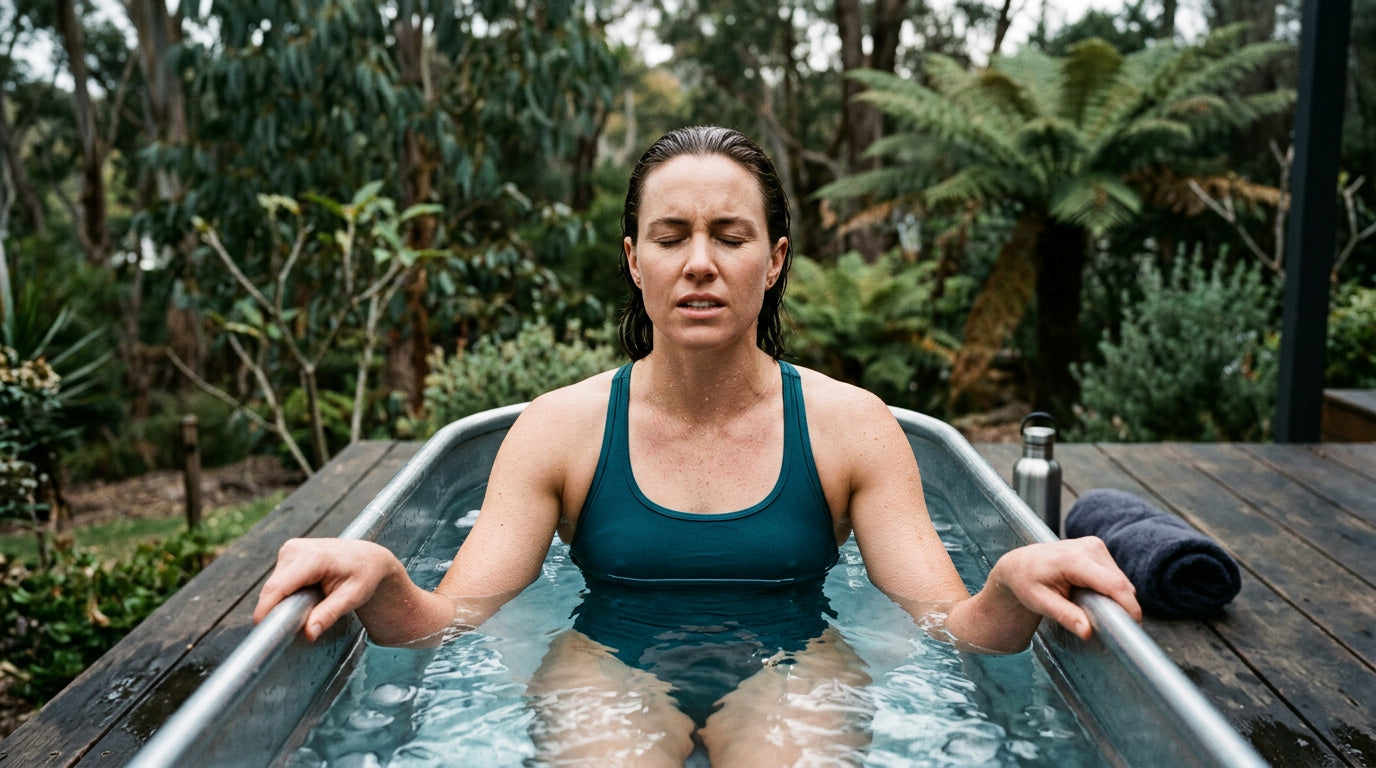
Real cold water immersion means submerging to the neck in water at 10–15°C for a minimum of 2 minutes. It means maintaining that temperature across every session, every week, regardless of ambient conditions. The benefits — norepinephrine release, brown fat activation, vagal tone improvement — are dose-dependent. The stimulus has to be specific, or the adaptation will not follow.
The gap between what most Australians are doing and what the research actually prescribes is where cold water therapy's reputation gets confused. People try a cold shower, feel nothing after two weeks, and conclude the science is overhyped. The science is not overhyped. The stimulus was just wrong.
For the full breakdown of what cold plunge immersion delivers that cold showers cannot, our complete guide to cold plunge benefits in Australia covers the physiological mechanisms in depth.
What Is Cold Water Therapy, Cold Water Immersion, and Cold Plunge — and Why the Difference Matters
Cold water therapy (CWT) is the umbrella term for any therapeutic use of cold water applied to the body — including ice baths, cold plunges, river immersion, and contrast protocols. Cold water immersion (CWI) is the specific practice of submerging the body (typically to shoulder level) in water at or below 15°C for a defined duration. A cold plunge is the infrastructure: a purpose-built vessel engineered to hold water at a precise, stable temperature for repeated use.
These are not interchangeable terms. Lumping them together creates the confusion that leads people to conflate a post-surf rinse with a clinical recovery protocol. The distinctions matter because the evidence base is specific to CWI — not to cold exposure in general.
The research underpinning cold water therapy's credibility uses controlled immersion at defined temperatures and durations. When Dr Andrew Huberman synthesised the evidence into a practical protocol, the recommendation was precise: 10–15°C, 2–4 minutes per session, 2–4 sessions per week, targeting an 11-minute weekly aggregate. Not colder. Not longer. Not more frequent than necessary. The specificity is the point.
For a side-by-side breakdown of how ice baths compare to purpose-built cold plunges as delivery mechanisms, see our guide to cold plunge vs ice bath in Australia. If you are specifically researching ice bath setups, our complete guide to ice baths in Australia covers the full field.
Cold Immersion, Done Properly
The Psycle Origin is engineered for precise, repeatable cold water immersion at home — stable temperature, premium materials, designed for daily use in the Australian climate.
DISCOVER THE ORIGIN →The Science Behind Cold Water Therapy Benefits
Cold water immersion triggers a specific and well-mapped cascade of physiological responses. Each one compounds the next. Understanding the mechanism is what separates informed practice from performance.
Norepinephrine: The Core Signal
The most immediate and significant effect of cold water immersion is a dramatic spike in norepinephrine — the neurotransmitter and hormone responsible for alertness, focus, and mood elevation. Research by Šrámek et al. published in the European Journal of Applied Physiology documented norepinephrine increases of 200–300% following cold water immersion at 14°C. This response is not replicable by a cold shower or cold air exposure at comparable temperatures. Full immersion drives a peripheral vasoconstriction signal that cold air alone does not produce.
Norepinephrine acts on alpha-adrenergic receptors to produce vasoconstriction, reducing peripheral blood flow and shunting circulation to the core. As the body rewarms, vasodilation follows — increasing peripheral blood flow beyond baseline. This flush-and-fill cycle is a primary driver of the circulation and skin quality benefits attributed to CWT.
Brown Adipose Tissue Activation
Brown adipose tissue (BAT) is metabolically active fat that generates heat through a process called non-shivering thermogenesis. Unlike white fat, which stores energy, brown fat burns it. Cold exposure is the primary physiological stimulus for BAT activation.
A study by Søberg et al. published in Cell Metabolism (2021) showed that a protocol of deliberate cold exposure — including cold water immersion — significantly increased brown adipose tissue activity and cold-induced thermogenesis in human subjects. Critically, the study found that allowing the body to rewarm naturally (without external heat immediately after immersion) produced a greater thermogenic and metabolic response. Reaching for a towel and a hot coffee the moment you step out undermines the adaptation.
For Australian practitioners, the practical implication is clear: build cold plunge sessions into your morning before sun exposure, allow 5–10 minutes of natural rewarming, and let the metabolic signal complete.
Vagal Tone and the Nervous System Response
The cold shock response on first immersion is a sympathetic nervous system activation — elevated heart rate, shallow breathing, cortisol spike. This is acute stress. The practice, over time, trains your ability to modulate that response through controlled breathing and deliberate calm — which is precisely the vagal tone training that makes cold immersion a resilience tool, not just a recovery one.
Vagal tone — the activity level of the vagus nerve — is a reliable predictor of stress resilience, heart rate variability (HRV), and parasympathetic recovery capacity. Regular cold water immersion has been associated with improved HRV and reduced resting heart rate in trained individuals. The mechanism is practice: each session is a controlled exposure to acute stress, followed by a deliberate return to calm. The nervous system adapts.
Inflammation Reduction and Recovery
A 2018 meta-analysis by Dupuy et al. in Frontiers in Physiology, covering 99 studies and over 1,000 athletes, found cold-water immersion and contrast water therapy to be among the most effective recovery modalities for reducing muscle soreness and perceived fatigue. The anti-inflammatory effect works through localised vasoconstriction — reducing metabolic waste accumulation in muscle tissue following high-load training — and through the attenuation of pro-inflammatory cytokine signalling.
The caveat is important: this anti-inflammatory effect is a feature for recovery but a bug for adaptation. If the goal is building maximum muscle hypertrophy, blunting the post-training inflammatory signal is counterproductive. For endurance athletes, skill athletes, and anyone prioritising recovery over growth in a given training block, cold water immersion post-training is a highly effective tool. For strength athletes mid-programme, time it away from resistance training sessions. Our dedicated guide on cold plunge for recovery in Australia covers this split in full.
Mood Regulation and Mental Resilience
The norepinephrine release from CWI produces a mood elevation effect that has driven significant research interest into cold water immersion as an adjunct for anxiety and depression management. Van Tulleken et al. published a case report in BMJ Case Reports (2018) documenting complete remission of major depressive disorder following a structured open-water swimming protocol. While this is a single case, the proposed mechanism — sustained norepinephrine and beta-endorphin elevation — is consistent with the broader neuroscience literature.
The mental resilience effect is harder to quantify but consistently reported by practitioners. Entering cold water deliberately — choosing the discomfort — trains the prefrontal cortex's capacity to override the limbic system's threat response. Over weeks and months, this transfer of control has real-world implications for stress management, decision-making under pressure, and emotional regulation. Cold water therapy is training. Not just for the body.
Cold Water Therapy Protocols: Temperature, Duration, and Timing
Cold water therapy protocols are not one-size-fits-all, but the evidence converges on a clear framework. The variables that matter are water temperature, session duration, weekly frequency, and timing relative to exercise. Get these right and the adaptation follows. Get them wrong and you are either leaving results behind or actively working against your training.
Optimal Temperature Range
The evidence-supported range for therapeutic cold water immersion is 10–15°C. Below 10°C introduces meaningful cold shock risk — rapid cardiovascular strain, uncontrolled hyperventilation — without producing proportionally greater physiological benefit. Above 15°C, the vasoconstriction and norepinephrine response is attenuated. The 10–15°C window is where the signal is optimal and the risk profile is manageable for healthy adults.
For beginners, start at 15°C and reduce by 1–2 degrees per week as tolerance builds. For experienced practitioners, 10–12°C is the working range. For the full temperature protocol breakdown by experience level, our guide to ice bath temperature in Australia covers every threshold in detail.
Duration Guidelines
Duration and temperature are inversely related: colder water, shorter session. The Huberman Protocol targets an 11-minute weekly aggregate spread across 2–4 sessions. For a beginner at 15°C, that is 3–4 sessions of 2–3 minutes. For an intermediate practitioner at 12°C, that is 2–3 sessions of 3–4 minutes. There is no evidence that sessions beyond 6 minutes at therapeutic temperatures produce additional benefit — and meaningful hypothermia risk begins above that threshold.
The protocol is deliberately conservative because the adaptation is cumulative. Week 1 feels brutal. Week 8 feels controlled. The nervous system has adapted. The brown fat has activated. The norepinephrine response has recalibrated. This is not achieved by going colder and longer from session one — it is achieved by consistent, precise exposure over time.
Timing Relative to Exercise
Timing cold immersion relative to training is the most commonly misunderstood variable in cold water therapy protocols. Cold immersion immediately after strength training blunts the mTOR signalling cascade and the acute inflammatory response that drives muscle protein synthesis. If hypertrophy is your primary goal in a given training block, separate cold immersion from your resistance training by a minimum of 4–6 hours, or schedule it on non-training days.
For endurance athletes, skill athletes, or anyone in a performance phase where recovery speed matters more than maximum muscle growth, post-training CWI is a high-value intervention. The Dupuy et al. 2018 meta-analysis in Frontiers in Physiology, covering 99 studies and over 1,000 athletes, found cold-water immersion and contrast water therapy to be among the most effective recovery modalities for reducing muscle soreness and perceived fatigue — precisely in this context.
Set temperature
Target 15°C for your first 2 weeks. Reduce by 1°C per week to your working range of 10–12°C.
Immerse to shoulder level
Neck-depth immersion activates the full norepinephrine response. Submerging to the waist delivers a fraction of the signal.
Control your breathing
Slow nasal breathing overrides the cold shock reflex and activates the parasympathetic response. This is the training.
Duration: 2–4 minutes
Target your weekly aggregate of 11 minutes across 2–4 sessions. Session length is less important than consistency.
Rewarm naturally
Allow 5–10 minutes of natural rewarming before entering a heated environment. Per Søberg et al., this maximises the thermogenic and brown fat adaptation signal.
What Australians Doing Cold Water Therapy Every Day Actually Report
The people who have built cold water therapy into a daily non-negotiable are not doing it because it feels good in the moment. They are doing it because of what it produces. The language is consistent across the community.
“I've run this protocol daily for 90 days. My recovery markers don't lie. HRV up, resting heart rate down, and I'm sleeping deeper than I have in years. The cold plunge is now the anchor of every morning.”
Psycle Origin owners across Australia — from coastal Queensland properties to inner-Sydney courtyards to rural Victoria acreages — report the same shift: the first two weeks are brutal, weeks three and four are controlled, and from week six onwards the session is something they look forward to. Not because the cold gets easier — it does not — but because the state it produces is one they have learned to want.
“I was sceptical. I'd tried cold showers for years and felt nothing consistent. The difference with a purpose-built plunge at a stable 11°C is not subtle. The norepinephrine hit is real. I understand now why the protocol specifies temperature so precisely.”
The feedback from practitioners who also use sauna is even more emphatic. The contrast protocol — heat followed by cold, repeated — produces a subjective state that both modalities alone do not approach. For a full account of how Australians are building this into their homes, see our complete guide to contrast therapy in Australia.

Built for the Protocol. Not the Trend.
The Psycle Origin is engineered for Australians who take cold water immersion seriously — precise temperature control, premium materials, designed for daily outdoor use.
EXPLORE THE ORIGIN →Cold Water Therapy at Home in Australia: Setup, Climate, and Practical Considerations
Cold water therapy at home in Australia is more accessible than in most countries. The climate, the outdoor lifestyle, and the deck-and-garden culture that defines how Australians use their homes all make year-round outdoor cold plunge installation practical in a way that simply is not the case in Northern Europe or most of North America.
Climate Advantages by Region
In coastal Queensland and northern New South Wales — Byron Bay, the Gold Coast, the Sunshine Coast — ambient summer temperatures mean cold water maintenance requires more active cooling than in southern states. A purpose-built cold plunge with active temperature control is essential in this climate: without it, a plunge sitting outdoors in 35°C heat will drift above therapeutic range within hours. This is where DIY setups fail first.
In Sydney, Melbourne, and Adelaide, cooler winter months mean ambient temperature assists cooling — reducing running costs for active refrigeration. In these climates, the primary engineering requirement is insulation: retaining the cold once achieved, rather than constantly fighting ambient heat. In the Southern Highlands and alpine regions of Victoria and NSW, the challenge in winter shifts to ice control and preventing freeze damage — a design consideration that purpose-built plunges are engineered around.
Running Costs for Cold Plunge in Australia
The running cost of a purpose-built cold plunge in Australia depends on ambient conditions, insulation quality, and target temperature. In a subtropical Queensland climate targeting 12°C, active refrigeration is working harder — and running costs are meaningfully higher than in a Melbourne winter. As a benchmark, well-insulated active cold plunges in Australian conditions run at approximately AU$0.50–$1.50 per day depending on climate and usage frequency.
Compare that to a weekly sports massage at AU$100–$160 per session, a gym membership with recovery suite access at AU$1,200–$2,400 per year, or commercial cold plunge drop-ins at AU$30–$50 per session. At 5 sessions per week, a commercial plunge habit costs AU$7,800 per year. The Origin pays for itself in under two years at that frequency — and it is available every morning at 5am without a booking system.
Installation Considerations
Cold plunge installation in Australian homes is predominantly outdoor — on a deck, beside a pool area, or in a garden setting. The key requirements are a level surface capable of bearing the loaded weight, access to a standard power circuit for the chiller unit, and a drainage point for periodic water changes. Outdoor placement in direct sun should be avoided where possible to reduce thermal load on the chilling system. Shade structures, timber screens, or positioning under a pergola are the practical solutions most Psycle Origin customers use.
For the full breakdown of what to look for when selecting a cold plunge for Australian conditions, our complete guide to cold plunge tubs in Australia covers materials, sizing, filtration, and installation in detail.
Cold Plunge vs DIY Options: Chest Freezers, Wheelie Bins, and Purpose-Built Plunges
If you have researched cold water therapy at home, you have encountered the chest freezer conversion. It is cheap, it is cold, and it is everywhere on social media. Here is what the photographs do not show.
An unmodified chest freezer has no water filtration, no circulation, and no sanitisation system. The water stratifies: the coldest layer sits at the bottom, the warmest at the surface. Temperature uniformity — the thing that determines whether your protocol is consistent — is non-existent. After two weeks of daily immersion without filtration, you are sitting in biofilm. After a month, the water quality problem is serious.
Wheelie bins sit at ambient temperature at best in most Australian climates, which puts them at 18–25°C for most of the year in QLD and NSW — nowhere near therapeutic range. Adding ice brings the temperature down temporarily but introduces inconsistency and ongoing cost. They are also not designed to hold human weight against the side walls under repeated use.
| Feature | Chest Freezer DIY | Wheelie Bin | Psycle Origin |
|---|---|---|---|
| Temperature precision | Approximate — no display | No control | Precise digital control |
| Temperature uniformity | Poor — stratified water | None | Circulated, uniform |
| Water filtration | None | None | Active filtration system |
| Sanitisation | Manual, irregular | None | Engineered into the system |
| Australian climate suitability | Struggles in QLD/NSW heat | Unusable in summer | Engineered for AU conditions |
| Aesthetic | Industrial appliance | Wheelie bin | Premium outdoor design |
| Protocol consistency | Variable | Unpredictable | Repeatable, daily |
| Safety design | Not purpose-built | None | Purpose-built for immersion |
The chest freezer works as a proof of concept. It answers the question: is cold water immersion something I want to build into my life? If the answer is yes — and after two weeks of consistent protocol, the answer is almost always yes — then the infrastructure question becomes serious. Protocol consistency requires temperature precision. Temperature precision requires engineering. That is what the Origin is built for.
How does this decision compare to choosing between a cold plunge and an ice bath more broadly? Our complete guide to ice baths in Australia and our cold plunge vs ice bath comparison break down the full spectrum of options for Australian buyers.
Contrast Therapy: Why Cold Water Therapy and Sauna Together Are Greater Than the Sum
Cold water therapy is powerful on its own. Paired with Finnish sauna heat in a structured contrast protocol, it produces physiological and psychological effects that neither modality achieves independently. The cardiovascular demand of moving between 80–100°C heat and 10–15°C cold — repeated 2–4 cycles — is significant. Sauna drives growth hormone, heat shock proteins, and BDNF (brain-derived neurotrophic factor); cold drives norepinephrine, brown fat activation, and vagal tone. The combination produces a state that experienced practitioners describe consistently as clarity, physical lightness, and a durable mood elevation that carries through the day.
Research from the University of New Mexico found that sauna use can increase growth hormone levels by 200–300%, with two 20-minute sessions separated by a 30-minute cool-down period producing the most pronounced effect. When that cool-down is replaced with a 3–4 minute cold plunge, the cardiovascular and hormonal stimulus compounds — and the cool-down becomes a performance intervention rather than passive rest.
The standard contrast protocol used by Psycle customers is: 15–20 minutes in the sauna at 80–90°C, followed by 2–4 minutes in the cold plunge at 10–12°C, repeated for 2–3 cycles. The session ends on cold. This sequencing is deliberate: finishing on cold maximises the norepinephrine and brown fat activation signal, and sends you into the rest of your day in a state of heightened alertness rather than heat-induced somnolence.
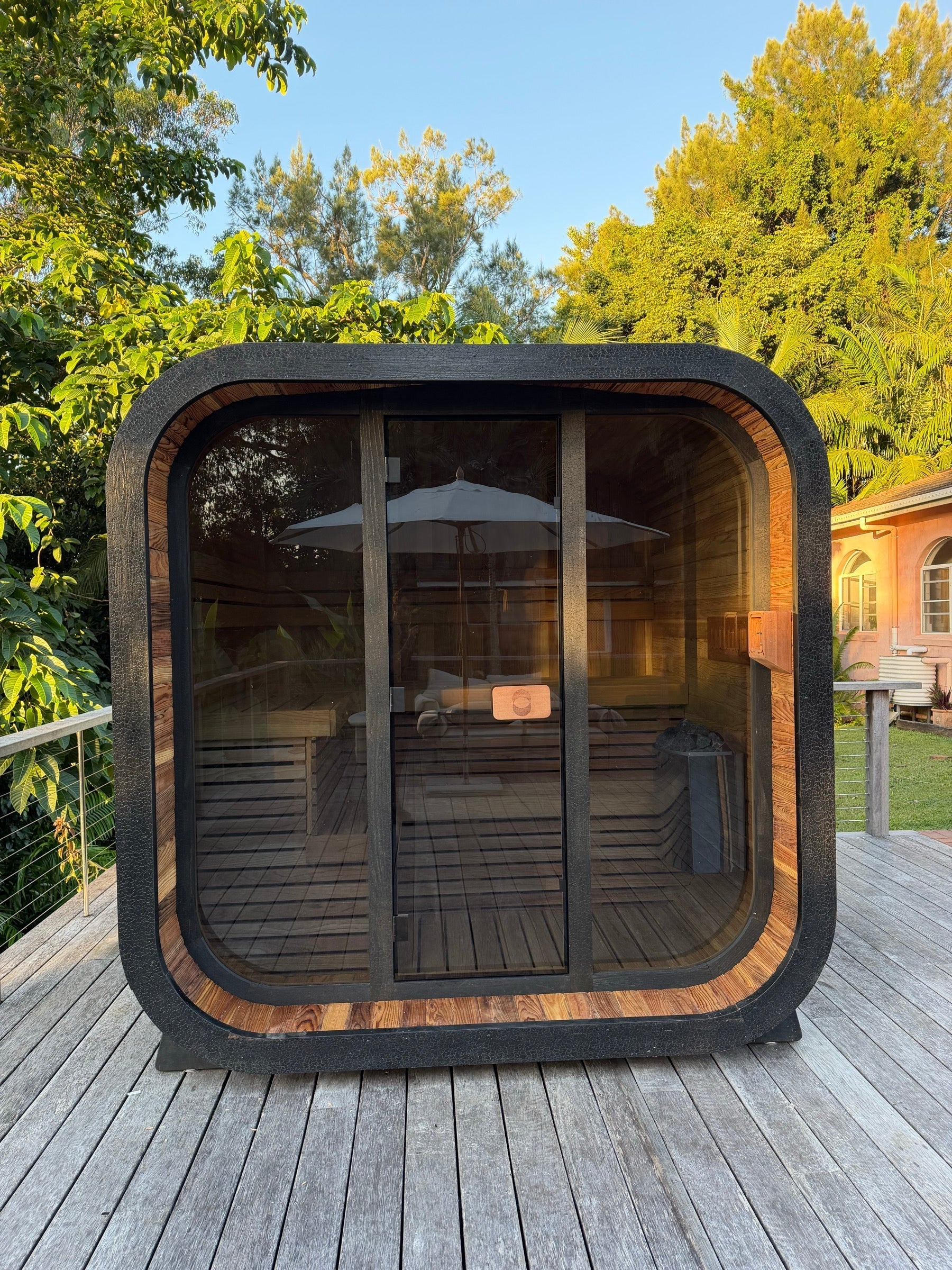
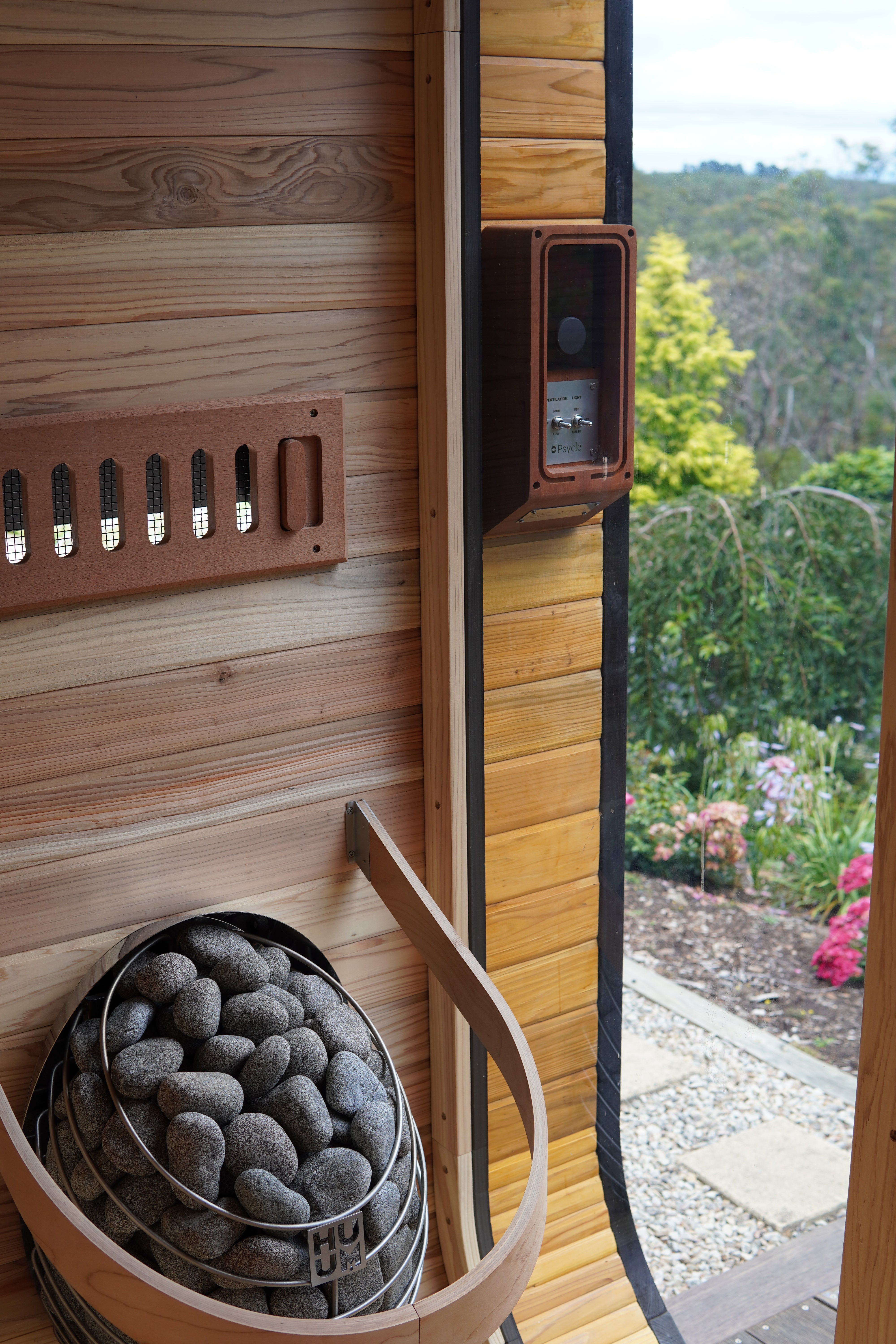
The Psycle Contrast Kit — Genesis sauna plus Origin cold plunge — is built exactly for this protocol. The Genesis delivers real Finnish heat: Japanese Cedar walls, HUUM DROP 9kW heater loaded with 60kg of Olivine diabase stones, active mechanical ventilation at 88–120 m³/hr, and zero-glue zero-toxin construction throughout. No formaldehyde. No MDF. No compromises. The Origin delivers the cold side of the equation with the same engineering standard.
For the complete contrast therapy protocol — including cycle timing, safety thresholds, and how to build the practice from scratch — see our guide to contrast therapy in Australia. For a direct comparison of the best sauna and cold plunge combination setups available in 2026, our guide to the best sauna cold plunge combo in Australia covers the full market.

The Genesis is also a compelling standalone investment. A 20-year cohort study of 2,315 Finnish men by Laukkanen et al., published in JAMA Internal Medicine (2015), found that sauna use 4–7 times per week reduced the risk of fatal cardiovascular disease by 50% compared to once-weekly bathing. The research case for owning a home sauna is as strong as for any single lifestyle intervention in the literature. For a deeper look at the cardiovascular evidence, our guide to sauna and cardiovascular health in Australia covers the Laukkanen data and subsequent research in full.
The full benefits of home sauna ownership in the Australian context — from mental health to longevity to sleep quality — are covered in our evidence-based guide to sauna benefits in Australia. For mental health specifically, our guide to sauna and mental health in Australia covers the BDNF and norepinephrine mechanisms in depth.
Cold Water Therapy Safety: Contraindications, Cold Shock Response, and Gradual Adaptation
Cold water therapy is safe for the vast majority of healthy adults when practised within evidence-based temperature and duration parameters. The risks are real but manageable — and understanding them is what makes the practice safe over the long term, not what makes it inadvisable.
Cold Shock Response
The cold shock response is the involuntary physiological reaction to sudden immersion in cold water: gasping, hyperventilation, elevated heart rate, peripheral vasoconstriction, and a sharp increase in blood pressure. It peaks in the first 30–90 seconds of immersion and subsides as the body adapts. The risk is not the temperature — it is the loss of breathing control in the first moments of entry, which in open-water settings creates a drowning risk even in shallow water.
In a controlled home cold plunge environment, the cold shock response is a training target, not a threat. Controlled breathing during entry — slow nasal inhale, extended exhale — directly overrides the hyperventilation reflex. This is why entry technique matters more than bravado: step in slowly, submerge deliberately, breathe through the first 30 seconds, and the nervous system will follow.
Contraindications: Who Should Not Use Cold Water Immersion
Cold water immersion is contraindicated for individuals with uncontrolled hypertension, a history of cardiac arrhythmia, Raynaud's syndrome, or peripheral neuropathy. The cardiovascular demand of immersion — rapid blood pressure elevation, heart rate spike, intense vasoconstriction — is significant. Anyone with a diagnosed cardiovascular condition should consult their GP or cardiologist before beginning a cold water therapy protocol. For a full review of sauna and cold therapy health risk considerations in the Australian context, our guide to sauna health risks in Australia is required reading.
Pregnancy is a specific contraindication for both cold water immersion and sauna use at therapeutic temperatures. For Australians with questions about sauna use during pregnancy specifically, our evidence-based guide to sauna in pregnancy covers the clinical evidence and safe practice guidelines.
Gradual Adaptation: The Right Way to Build Tolerance
The worst thing you can do in week one of a cold water therapy practice is go as cold as possible for as long as possible. The adaptation takes time, and forcing it produces a cortisol and sympathetic load that leaves you exhausted rather than energised. Start at 15°C for 2 minutes, twice per week. Build duration before temperature. Reduce temperature by 1°C per week once 3–4 minutes at the current level feels controlled rather than overwhelming. The 11-minute weekly aggregate is a target for an established practice — not a week-one goal.
The rule for adaptation: the session should feel challenging but not uncontrolled. If you cannot regulate your breathing after 45 seconds, the temperature is too low or the duration is too long. Back off one variable. The nervous system adapts faster than most people expect — but only if the stimulus is appropriate to the current adaptation level.
Frequently Asked Questions About Cold Water Therapy in Australia
What temperature should cold water therapy be in Australia?
Cold water therapy is most effective at 10–15°C. This range produces the norepinephrine, brown fat activation, and recovery benefits documented in peer-reviewed research without introducing the cardiovascular risk associated with temperatures below 10°C. Beginners should start at 15°C and reduce gradually over several weeks. Most Australian tap water in summer sits well above this range, which is why purpose-built cold plunges with active chilling are necessary for a consistent therapeutic protocol in climates like Queensland and northern New South Wales.
How long should you stay in a cold plunge?
The evidence-supported duration for cold water immersion is 2–4 minutes per session, targeting an 11-minute weekly aggregate across 2–4 sessions per week. This is the protocol synthesised by Dr Andrew Huberman from the cold water immersion research literature. Beyond 6 minutes at therapeutic temperatures, there is no additional benefit — and meaningful hypothermia risk begins. Duration and temperature are inversely related: the colder the water, the shorter the session. For a complete breakdown by experience level and goal, our guide to ice bath temperature covers every threshold.
Is cold water therapy safe for everyone?
Cold water therapy is safe for most healthy adults when practised within evidence-based parameters. It is contraindicated for individuals with uncontrolled hypertension, cardiac arrhythmia, Raynaud's syndrome, peripheral neuropathy, and pregnancy. Anyone with a diagnosed cardiovascular condition should seek GP or cardiologist clearance before starting a cold water immersion protocol. The cold shock response — gasping, heart rate spike, blood pressure elevation — is the primary acute risk and is managed through controlled entry and deliberate breathing technique.
What is the difference between a cold shower and cold water immersion?
A cold shower and cold water immersion are not interchangeable. Australian shower water in summer typically sits at 18–22°C — well above the 10–15°C required for the physiological adaptations associated with CWT. Full body immersion to shoulder level drives a systemic norepinephrine response that localised cold shower spray does not replicate. The research evidence base for cold water therapy benefits — norepinephrine release, brown fat activation, inflammation reduction, mood regulation — is specific to defined-temperature immersion, not cold shower exposure.
Should you do cold water therapy before or after a workout?
Timing cold water therapy relative to training depends on your goal. Cold immersion immediately after strength training blunts the inflammatory signal that drives muscle protein synthesis — counterproductive if maximum hypertrophy is the goal. Separate cold immersion from resistance training by at least 4–6 hours, or schedule it on non-training days. For endurance athletes or anyone prioritising recovery speed over muscle growth, post-training cold immersion is highly effective — supported by the Dupuy et al. 2018 meta-analysis across 99 studies. Our cold plunge recovery guide covers the full evidence and timing recommendations.
What is contrast therapy and how does it differ from cold water therapy alone?
Contrast therapy is the structured alternation of heat and cold — typically Finnish sauna at 80–100°C followed by cold plunge at 10–15°C, repeated for 2–3 cycles. Cold water therapy refers to cold immersion alone. The combined contrast protocol produces cardiovascular, hormonal, and mood benefits that exceed what either modality achieves independently, including compounded growth hormone release, enhanced circulation through repeated vasodilation and vasoconstriction, and a more pronounced norepinephrine response. Our contrast therapy guide covers the full protocol and research evidence.
How much does it cost to run a cold plunge at home in Australia?
Running costs for a purpose-built cold plunge in Australia are approximately AU$0.50–$1.50 per day depending on ambient climate, insulation quality, and target temperature. Active chilling systems work harder in subtropical climates like Queensland than in Melbourne or Adelaide winters. This compares favourably to commercial cold plunge drop-ins at AU$30–$50 per session, or a weekly physio at AU$100–$160. At 5 sessions per week, a commercial plunge habit costs over AU$7,800 per year. Home infrastructure pays for itself rapidly at that frequency. For a full cost analysis of home cold plunge vs commercial alternatives, see our home sauna and cold plunge cost guide.
Ready to Build This Into Your Routine?
The Psycle Origin is engineered for precise, repeatable cold water therapy at home. Australia-wide delivery. 120-day build. Purpose-built for the protocol, not the trend.
SHOP THE ORIGIN →