
Does Sauna Burn Calories? The Science Explained
Does Sauna Burn Calories? The Science Behind Heat and Weight Loss
Key Takeaways
- A 30-minute sauna session at 80°C burns an estimated 150-300 calories for most people, with a ceiling of 300-500 calories for larger individuals in high-heat sessions
- Sauna-induced heart rate climbs to 100-150 BPM during extended sessions - comparable to moderate aerobic exercise, per Laukkanen et al. (2018) in Mayo Clinic Proceedings
- The 1-2kg of weight lost after a sauna session is fluid, not fat - rehydrating after the session fully restores it
- Infrared saunas operating at 50-70°C produce a measurably weaker caloric and cardiovascular stimulus than traditional Finnish saunas running at 90-100°C
- Heat shock proteins activated during a sauna session continue influencing cellular repair and metabolic signalling for several hours post-session, per a 2021 Cell Metabolism study
- Regular sauna use improves sleep quality and reduces cortisol - both of which directly affect body composition by regulating appetite hormones and reducing visceral fat storage
- Using sauna 4-7 times per week is associated with a 4-7x reduction in all-cause mortality risk, according to Laukkanen (2018)
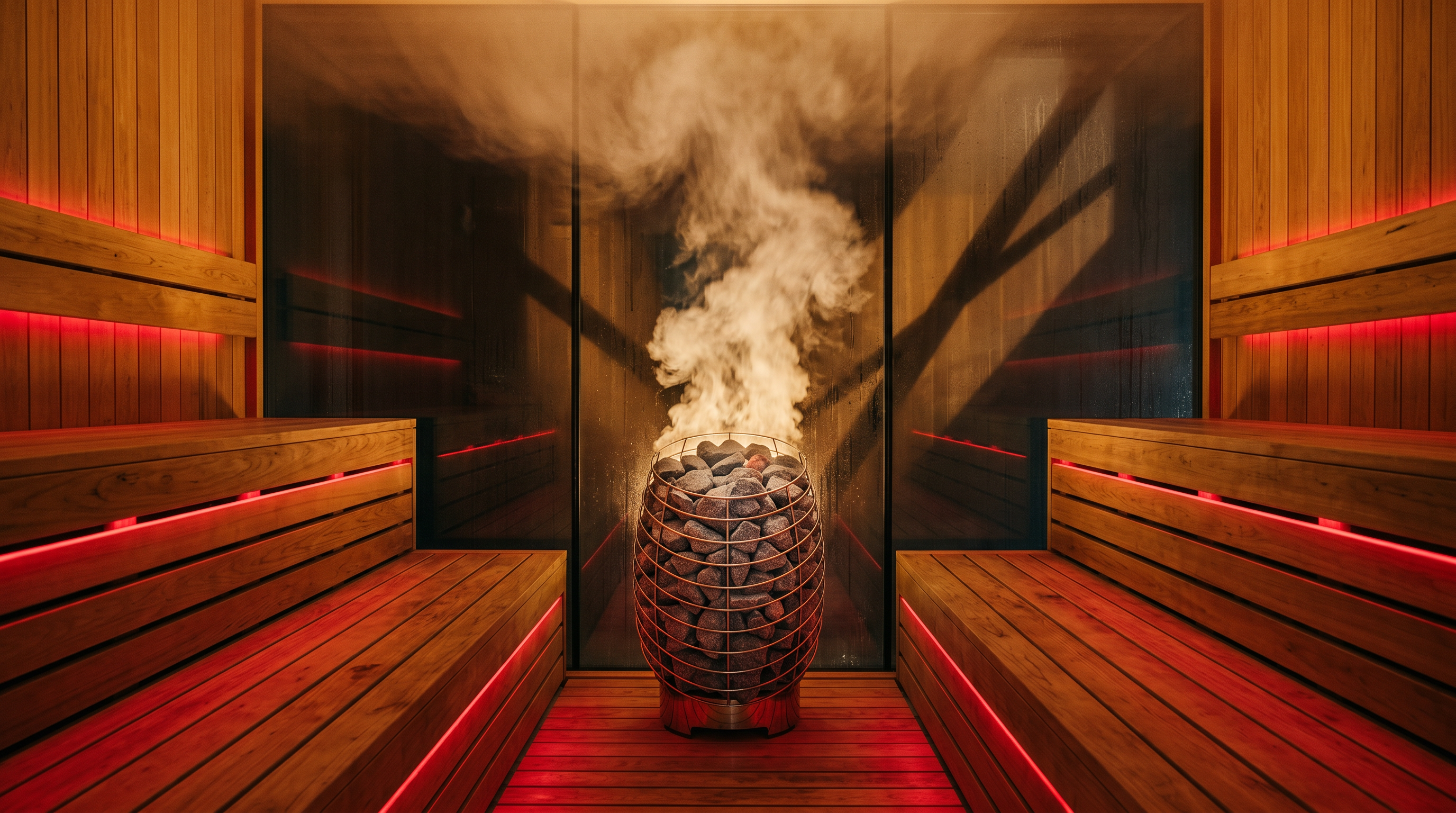
A sauna session does burn calories — a genuine metabolic response driven by your body working to regulate core temperature under heat stress. A 2019 review published in Temperature (Taylor & Francis) found that passive heat exposure elevates heart rate to levels comparable with moderate-intensity exercise, triggering thermogenesis that burns an estimated 300–500 calories in a 30-minute session at 80–100°C. That number varies with body weight, fitness level, and session temperature — but the mechanism is real and measurable.
What it is not, however, is a fat-loss tool on its own. Most of the weight you lose during a sauna session is fluid. Rehydrate after, and it comes back. The genuine calorie burn matters — but only as part of a broader recovery and performance protocol, not as a replacement for training. Here is what the science actually says.
Zero-Toxin Sauna Therapy, Built for Australians
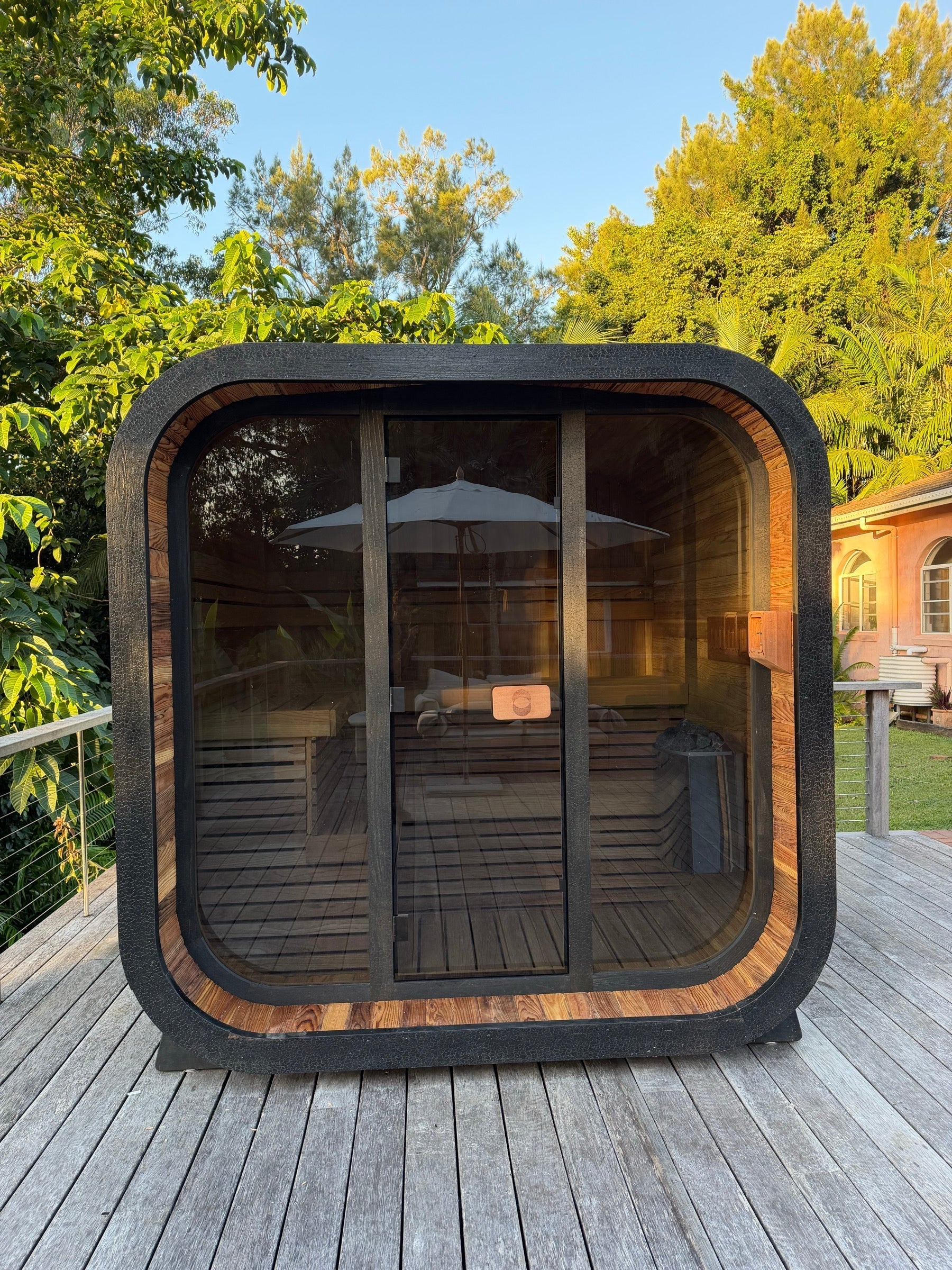
Japanese Cedar exterior. Zero-glue construction. HUUM Drop heater. Built to last decades.
SEE THE GENESIS →How Does a Sauna Actually Burn Calories?
The mechanism is thermogenesis — the process by which your body produces and dissipates heat. Step into a traditional Finnish sauna at 80–100°C and your hypothalamus immediately registers thermal stress. Your heart rate climbs. Blood is redirected to the skin. Sweat glands activate. Every one of those physiological responses costs energy.
A 2018 study by Laukkanen et al. published in Mayo Clinic Proceedings confirmed that sauna-induced heart rate elevation mirrors moderate aerobic exercise — reaching 100–150 beats per minute in extended sessions. Your cardiovascular system is working. Your metabolic rate is elevated. Calories are being spent.
The type of thermogenesis triggered in a sauna is classified as passive — your body generates heat in response to an external temperature stimulus rather than muscular contraction. Researchers distinguish this from exercise-associated thermogenesis, but the caloric cost is still real. For anyone interested in the deeper research behind heat therapy, our evidence-based guide to sauna benefits in Australia covers the full physiological picture.
How Many Calories Does a Sauna Session Burn?
The honest answer: it depends. Body weight, session duration, temperature, and individual metabolic rate all influence the outcome. The widely cited figure of 300–500 calories per 30-minute session at 80°C comes from thermogenic research — but that ceiling applies to larger individuals in high-heat, longer sessions.
A more conservative and accurate range for most Australians is 150–300 calories per 30-minute session at moderate temperature. Here is an evidence-based estimate table across common session parameters:
| Session Duration | Body Weight (kg) | Temperature | Estimated Calories Burned |
|---|---|---|---|
| 15 min | 60 kg | 80°C | 72 kcal |
| 15 min | 80 kg | 80°C | 96 kcal |
| 30 min | 60 kg | 80°C | 216 kcal |
| 30 min | 70 kg | 80°C | 252 kcal |
| 30 min | 80 kg | 80°C | 288 kcal |
| 45 min | 70 kg | 90°C | 504 kcal |
| 45 min | 80 kg | 90°C | 576 kcal |
Temperature matters more than most people realise. A traditional Finnish sauna running at 90–100°C drives significantly greater thermogenic response than a unit that tops out at 70°C. This is one of the reasons infrared saunas — which typically operate at 50–70°C — produce a weaker caloric and cardiovascular stimulus than traditional steam saunas. For a direct breakdown of the two, our comparison of traditional sauna vs infrared covers the physiological differences in full.
Sauna Weight Loss vs Water Weight Loss — What Is the Difference?
This is where most sauna-and-weight-loss content misleads people. The number on the scales drops after a session. That is not fat loss. It is fluid.
When you sweat at 80–100°C, your body loses between 0.5 and 1.5 litres of water per 30 minutes, depending on session intensity and individual sweat rate. That fluid loss registers as a temporary weight reduction — sometimes 1–2kg after an extended session. Rehydrate, and it returns. Fluid loss is not fat loss. The two are not the same thing and should not be conflated.
True fat loss requires a sustained caloric deficit — more calories expended than consumed, over time. The genuine thermogenic calorie burn from sauna (150–300+ calories per session) contributes to that deficit meaningfully — but only if the session is part of a consistent protocol alongside training and nutrition. Treat it as a complement to your training stack, not a substitute for it.
Does Sauna Boost Metabolism After the Session?
There is evidence that the metabolic elevation from heat exposure persists beyond the session itself. A 2021 study published in Cell Metabolism found that heat shock proteins activated during thermal stress continue influencing cellular repair and metabolic signalling for several hours post-session. This is not a dramatic effect — but it is a real one.
The more significant metabolic benefit of regular sauna use is indirect: improved sleep quality, reduced cortisol, and accelerated muscle recovery. All three directly influence body composition over time. Poor sleep disrupts ghrelin and leptin — the hormones that regulate appetite and satiety — driving overconsumption. Elevated cortisol promotes visceral fat storage. If sauna sessions are helping you sleep harder and recover faster, the downstream body composition benefit is real — even if the calorie burn per session is modest.
For the research on how sauna frequency affects these outcomes, our guide to sauna frequency breaks down the optimal weekly protocol by goal.
Why Sauna Temperature Determines the Calorie Burn
Not all saunas produce the same thermogenic stimulus. The temperature ceiling is everything.
Most flat-pack home saunas sold in Australia operate at 60–75°C. They feel warm. They produce some sweat. The thermogenic response is limited. A traditional Finnish sauna running at 80–100°C with proper stone volume and active ventilation creates a fundamentally different physiological environment — one that drives the cardiovascular and metabolic response the research is actually measuring.
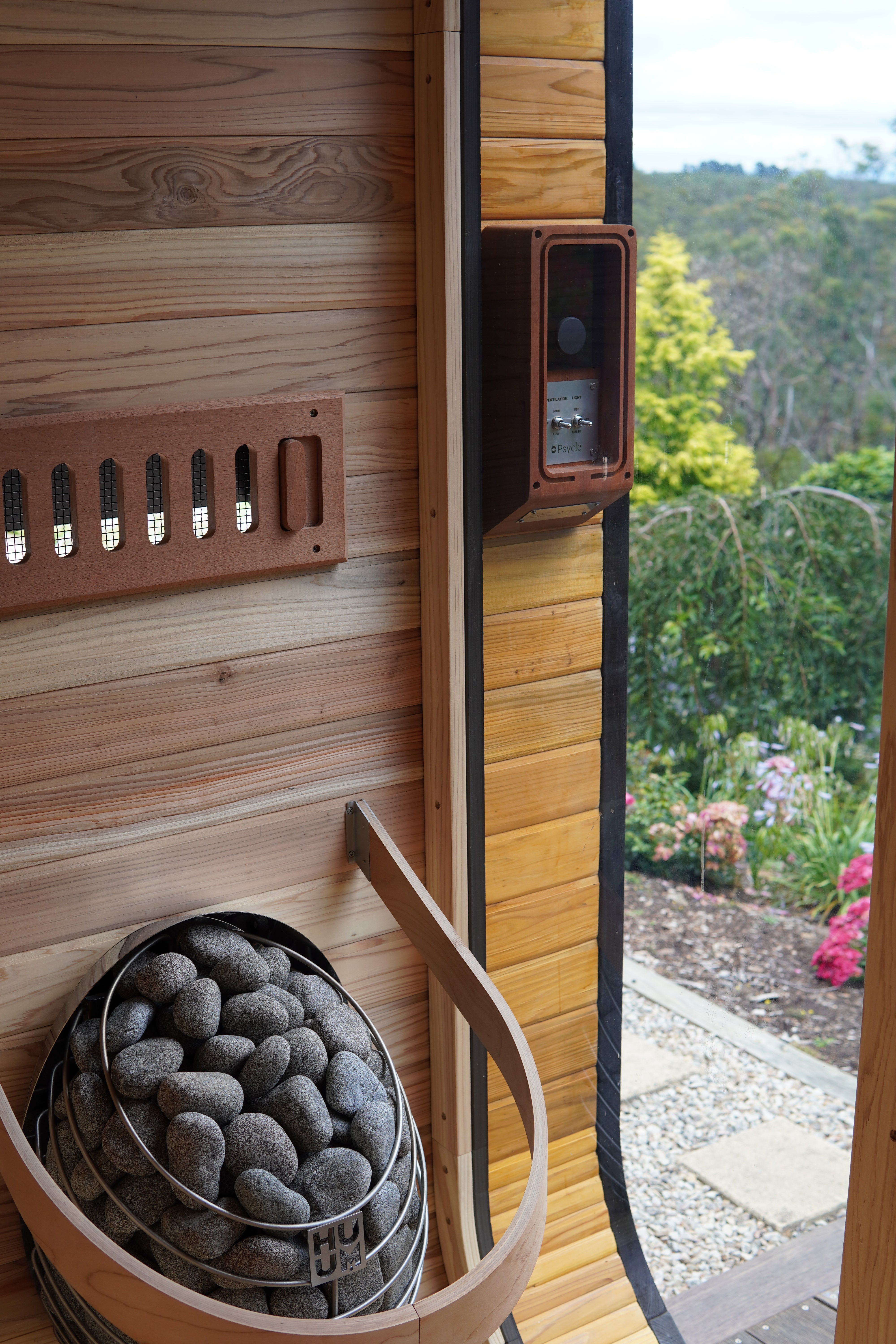
The Genesis runs at 70–100°C. The HUUM Drop 9kW heater sits on 60kg of volcanic stone — that mass holds temperature through repeated löyly pours without the heat dropping off mid-session. That stability is what sustains the thermogenic response. A lightweight heater with minimal stone volume spikes and crashes. You are not getting the same session.
If you want to understand what proper heat delivery actually requires, our complete guide to sauna temperature covers the physics, the Finnish standards, and what to look for in a home unit.
The Sauna That Does Not Compromise
Active mechanical ventilation. Zero glue. Blue light blocking lighting. Rated for outdoor installation. Every detail engineered.
EXPLORE THE GENESIS →What Most Home Saunas Get Wrong
Most home saunas sold in Australia are built with glued MDF panels and particle board. Heat that to 90°C and you are not just sweating — you are breathing formaldehyde off-gassing with every session. The adhesives used in cheap flat-pack construction off-gas volatile organic compounds (VOCs) under sustained heat. That is not a small compromise. That is the opposite of what you are trying to achieve.
The Genesis uses zero-glue mechanical joints throughout. Japanese Cedar exterior. Nordic Spruce benches. Zero synthetic adhesives anywhere in the cabin. At 90°C, you are breathing clean air — not chemical steam from a flat-pack box that was never engineered for sustained heat exposure.
If you are using a sauna for its health benefits — thermogenesis, cardiovascular conditioning, recovery — the construction standard of the unit matters. A sauna built to cut costs at $3,000 is not delivering the research outcomes. The research was conducted in properly constructed, high-temperature traditional saunas. That is the standard the Genesis is built to. If you want to understand what separates a genuine build from the alternatives, our home sauna buyer's guide for Australia covers what to look for before spending a dollar.
How to Maximise Calorie Burn in a Sauna Session
Set the temperature properly
80–100°C is the target range for meaningful thermogenesis. Below 75°C the cardiovascular stimulus weakens significantly. Do not settle for a unit that cannot reach this range consistently.
Session duration: 20–30 minutes minimum
The thermogenic response builds over the first 10–15 minutes as core temperature rises. Short sessions of under 15 minutes produce a modest caloric stimulus. 20–30 minutes at full temperature is where the measurable effect sits.
Use löyly strategically
Pouring water over the stones (löyly) spikes perceived heat and drives a sharp increase in sweat rate. Done at 10–15 minute intervals, this amplifies the thermogenic load without requiring you to increase ambient temperature further.
Pair with cold exposure post-session
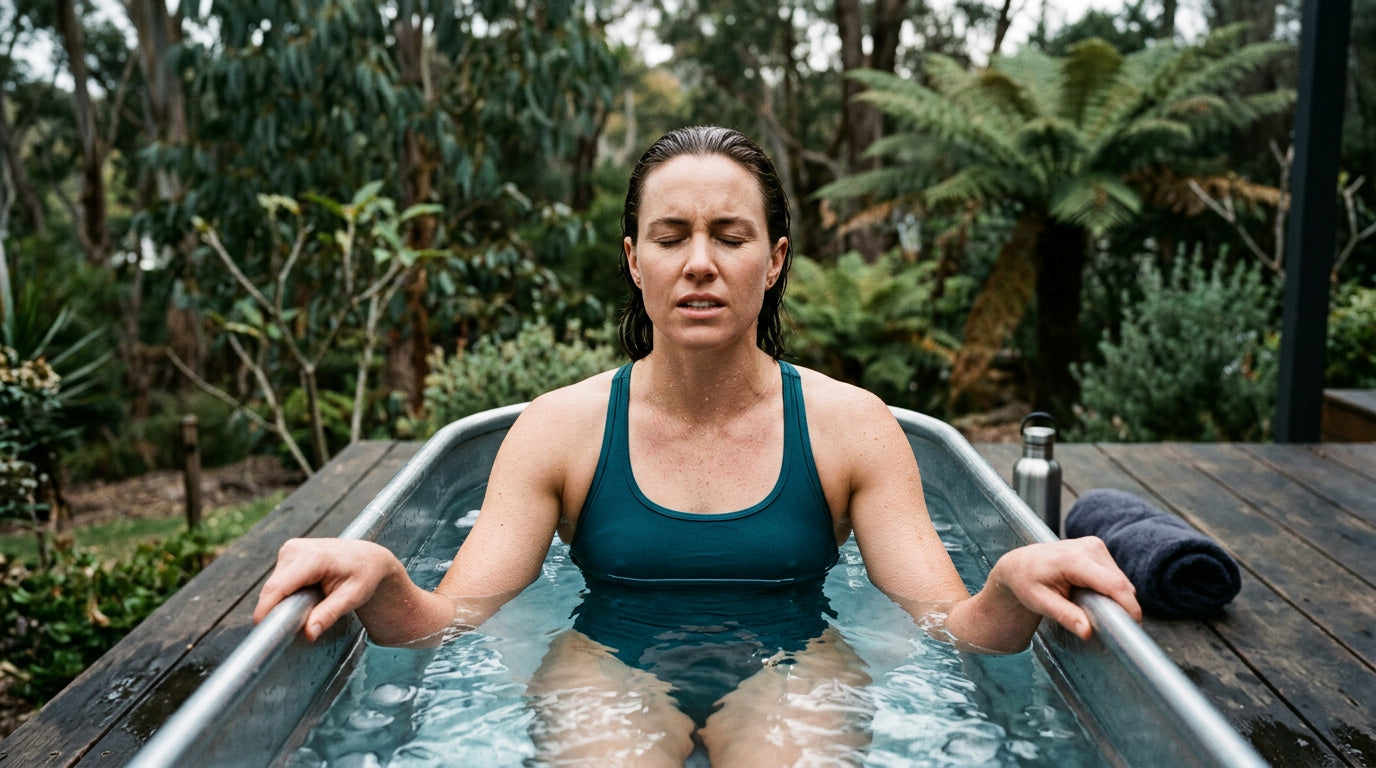
Cold water immersion after heat drives a second wave of thermogenesis as the body works to rewarm. The contrast protocol — heat followed by cold — produces a cumulative metabolic and recovery stimulus that neither modality achieves alone.
Hydrate before, not during
Enter hydrated. Drinking during the session moderates sweat rate and reduces thermogenic intensity. Rehydrate thoroughly after — 500ml minimum for a 30-minute session, more in Australian summer conditions.
For a detailed breakdown of session timing and what duration optimises each health outcome, our guide to sauna session duration provides protocol-specific recommendations.
Is Sauna Good for Weight Loss Long-Term?
Sauna alone will not produce meaningful long-term fat loss. That needs to be stated plainly. But sauna as a consistent element of a performance and recovery protocol produces compounding benefits that directly support body composition goals.
The research is unambiguous on the downstream effects: better sleep quality, lower resting cortisol, faster muscle recovery, and improved cardiovascular conditioning over months of regular use. A 2018 study by Laukkanen et al. in Mayo Clinic Proceedings tracked sauna users over 20 years and found that those who used a sauna 4–7 times per week had dramatically lower rates of cardiovascular disease and all-cause mortality compared to once-weekly users. The mechanism driving those outcomes — sustained cardiovascular stress and recovery adaptation — is the same mechanism driving the calorie burn.
Used 4–7 times per week at 80–100°C, a genuine traditional sauna becomes a recovery and conditioning tool that supports every other element of your training and nutrition stack. That is the case for owning one — not the 300 calories per session.
FAQ: Does Sauna Burn Calories?
How many calories does a 20-minute sauna session burn?
At 80°C, a 20-minute session burns approximately 100–180 calories depending on body weight and individual metabolic rate. Heavier individuals and higher temperatures produce greater caloric expenditure.
Does sauna help with belly fat?
Sauna does not directly target fat stored in any specific area. The calorie burn from thermogenesis contributes to a general caloric deficit over time. The more relevant mechanism is cortisol reduction — chronic cortisol elevation is directly linked to visceral fat accumulation, and regular sauna use has been shown to lower resting cortisol levels.
Is sauna better than exercise for burning calories?
No. A 30-minute moderate-intensity run burns 400–600 calories and produces superior cardiovascular conditioning, muscle stimulus, and metabolic adaptation. Sauna is not a replacement for exercise. It is a recovery and adjunct conditioning tool that works best alongside training.
Does sauna increase metabolism?
Yes — during the session and for a period after. Heat shock protein activation and sustained cardiovascular elevation drive a temporary metabolic increase. Regular sauna use also improves sleep quality and lowers cortisol, both of which support long-term metabolic health.
Does sweating in a sauna burn fat?
Sweating itself does not burn fat. The energy expenditure required to produce sweat and regulate core temperature burns calories — but the sweat is water, not fat. The weight lost immediately after a session is almost entirely fluid, not adipose tissue.
Ready to Build This Into Your Routine?
Free Australia-wide delivery. 3-year cabin warranty. 120-day build — order now to lock in your delivery window.
SHOP THE GENESIS →